
- Hem

- Reproduktion av oljemålning
- Douglas Coupland
- Thomson No. 3 (Sunset Bay)

 Köp tryck Köp högupplöst digital bild
 Skicka
 Dela
Dela
 Details
 Lägg till i favoriter

 Ladda ner
 Liknande objekt
 X-Ray
X-Ray
 Bildspel
Thomson No. 3 (Sunset Bay)
 Acrylic On Canvas
- WallArt
- Contemporary Abstract
 79.0 x 58.0 cm
 Vancouver Art Gallery
Handgjord oljereproduktion
Handmålad olja på duk i din valda storlek och ram, tillverkad efter beställning av våra konstnärer.




P118B $10

P118H $10

P118W $10

P438Z $10

P508JH $12

P508YH $12

P805H $10

P805Z $10

P919BZ $10

P919G $10

P919XJ $10

P959ZH $10

P968JZ $12

W106C $8

W218G $10

W218JH $8

W218Y $10

W307PJ $10

W316G $10

W316PJ $8

W316Y $10

W398PJ $8

W4111J $10

W500HY $15

W500JH $15

W692G $12

W849H $8

W940BG $15

W953PJ $8




 Läs mer
Välj bland våra förinställda storlekar som motsvarar konstverkets ursprungliga proportioner.

Du kan ange egna mått för att passa en specifik ram eller yta. Om den valda storleken inte matchar originalbildens proportioner kommer vi antingen att beskära konstverket eller utöka målningen med ytterligare handmålade element. En digital skiss skickas till dig för godkännande innan produktionen påbörjas.
Observera att förhandsvisningen på skärmen inte återspeglar den faktiska beskärningen eller utökningen. Endast skissen visar den slutgiltiga kompositionen korrekt.
Även om anpassade storlekar är möjliga, rekommenderar vi att du väljer en dimension från den fördefinierade listan för att bevara originalproportionerna.
Efter beställning kommer ArtsDot.com team att mejla kunden för instruktioner och tillhandahålla en skissförhandsvisning
Leverans över hela världen () på 3–4 veckor istället för standard 5 veckor. (1 juli). Inga kompromisser med kvaliteten.

Fri expressfrakt över hela världen

Högkvalitativ linnecanvas

Fullständig fraktförsäkring

Garantier för återbetalning av tullavgifter

Garantier för exakt färgåtergivning

60 dagars returrätt (endast vid fabrikationsfel)

100% pengarna tillbaka-garanti

Mängdrabatt erbjuds
 Glasalternativet är endast tillgängligt i storlekar under 110 cm.

Thomson No. 3 (Sunset Bay)
Teknik för reproduktion
Storlek på reproduktion
-


Slutgiltigt pris
-
Beskrivning av konstverket
The Genesis of a Fragmented Vision
Douglas Coupland’s “Thomson No. 3 (Sunset Bay)” isn't merely a depiction of a sunset over rolling hills; it’s an interrogation, a deliberate dismantling and reimagining of the very notion of ‘Canadianness.’ Born from a digital alchemy – a process of meticulously reducing iconic landscapes to their most fundamental geometric components – this artwork invites us to consider what remains when the romanticism of nature is stripped bare. Coupland began his exploration with degraded digital images of masterpieces by Emily Carr, the Group of Seven, and Tom Thomson, artists deeply intertwined with the formation of Canada’s visual identity. He then employed a unique, almost architectural language, breaking down these familiar vistas into a series of angular planes and bold blocks of color, creating an effect both strikingly modern and profoundly nostalgic.
The work's foundation lies in the legacy of Tom Thomson, a tragically short-lived artist whose evocative depictions of Ontario’s wilderness captured the spirit of a nascent nation. Coupland’s choice to reference Thomson is particularly potent; the painter’s romanticized portrayal of nature – his emphasis on light, color, and the sublime beauty of the Canadian landscape – provides a crucial counterpoint to the geometric austerity of Coupland's approach. Coupland isn’t simply replicating these scenes; he’s using them as a springboard for a commentary on how we perceive and represent our national identity in the 21st century.
Deconstructing the Sublime: A Geometric Language
Technically, “Thomson No. 3 (Sunset Bay)” is a masterful example of digital painting, executed with an almost clinical precision. Coupland’s process involved manipulating these images through sophisticated software, reducing them to their essential shapes and colors. The result is a flattened, abstracted landscape where the familiar forms of hills and sky are rendered as interlocking triangles and polygons. This deliberate simplification isn't intended to diminish the beauty of the original scenes; rather, it forces us to reconsider how we experience them. The absence of traditional perspective creates a sense of detachment, inviting the viewer to actively engage with the composition and interpret its meaning.
Coupland’s use of color is equally significant. The palette – dominated by warm oranges, yellows, and reds – evokes the drama of a sunset, yet these colors are presented in a deliberately flat, almost schematic manner. This contrasts sharply with the nuanced gradations of light and shadow found in traditional landscape paintings. The effect is both visually arresting and subtly unsettling, suggesting that even our most cherished memories and experiences can be reduced to their basic components.
Symbolism and the Shifting Landscape of Identity
Beyond its purely formal qualities, “Thomson No. 3 (Sunset Bay)” carries a potent symbolic weight. By referencing both Tom Thomson and the Group of Seven – two pivotal figures in Canadian art history – Coupland raises questions about how we define ‘Canadianness’ today. The artwork suggests that this identity is no longer solely rooted in a romanticized connection with nature, but rather shaped by contemporary tools and perspectives. The geometric abstraction can be interpreted as a metaphor for the fragmented and increasingly mediated reality of modern life.
Furthermore, Coupland's choice to utilize degraded digital images adds another layer of meaning. These aren’t pristine reproductions; they are remnants of a bygone era, hinting at the ephemeral nature of memory and representation. The artwork becomes a meditation on how our understanding of the past is constantly being reshaped by technology and cultural shifts. The title itself – “Thomson No. 3 (Sunset Bay)” – subtly underscores this process of deconstruction and reinterpretation.
A Contemporary Masterpiece: Reproduction and Reflection
“Thomson No. 3 (Sunset Bay)” is a compelling work that transcends the boundaries between art history, digital technology, and cultural commentary. Its striking visual impact, combined with its layered symbolism, makes it a significant addition to Coupland’s body of work. A high-quality reproduction captures much of the original's power, offering an accessible way to engage with this thought-provoking piece. Consider framing this artwork in a contemporary setting – its bold geometric forms will complement a range of interior design styles, sparking conversation and inviting contemplation about the nature of Canadian identity.
Liknande konstverk


Konstnärsbiografi
Douglas Coupland: Cartographer of Contemporary Culture
Douglas Coupland emerged onto the cultural landscape in the early 1990s, not simply as a novelist, but as a diagnostician of an era. Born on December 30, 1961, on a Canadian military base in Baden-Söllingen, Germany, his upbringing was one of constant relocation, eventually settling in Vancouver, Canada – a city that would profoundly shape his artistic sensibility. This early experience instilled within him a keen observer’s eye, attuned to the subtle shifts and anxieties of modern life. While initially pursuing sculpture at Emily Carr College of Art and Design, Coupland found his true calling not in molding physical forms but in articulating the intangible textures of contemporary existence through words, and later, through a fascinating blend of visual art and digital technology. He wasn’t merely reflecting culture; he was naming it, giving voice to the unspoken feelings of a generation adrift in a rapidly accelerating world.Early Life & Artistic Beginnings
Coupland’s formative years instilled a fascination with observation and a sensitivity to cultural nuances—qualities that would permeate his subsequent artistic endeavors. His early education fostered an appreciation for diverse perspectives, influencing his approach to storytelling and visual representation. Initially drawn to sculpture, he honed his craft at Emily Carr College of Art and Design, recognizing the power of form to convey complex ideas. This grounding in sculptural practice provided a foundational understanding of materiality and spatial relationships that would inform his later explorations into painting and digital media.Generation X & Literary Breakthrough
Coupland’s literary debut arrived with *Generation X: Tales for an Accelerated Culture* (1991), instantly establishing him as a voice of his generation. The novel captured the zeitgeist of the early 1990s, diagnosing anxieties surrounding identity and purpose in a society grappling with the repercussions of industrial decline. Terms like “McJob” entered the lexicon, encapsulating the precariousness and alienation experienced by many workers during this period. However, Coupland’s ambition extended far beyond labeling a generation; he sought to delve into the psychological landscape shaped by media saturation, consumerism, and technological advancement. This exploration wasn't confined to prose—he seamlessly transitioned into visual art, driven by an unwavering desire to express his ideas through diverse mediums.Visual Art: QR Codes & Symbolic Exploration
Coupland’s artistic practice is remarkably varied, encompassing painting, sculpture, photography, and design – all united by a recurring thematic preoccupation: an interrogation of modern life. He gained prominence for incorporating QR codes into his paintings, transforming them from mere decorative elements into portals to hidden layers of meaning. Scanning these codes unveiled concise commentaries, enriching the viewer’s experience and highlighting Coupland's fascination with the intersection between art and technology. Beyond this innovative technique, his artwork frequently grappled with profound themes of loss and mortality—particularly evident in *The Dead Grads Series*, a poignant tribute to young lives tragically cut short. Pieces like “Gun,” “Car Crash,” and “Overdose” served as stark reminders of life’s fragility and the enduring impact of grief. Furthermore, *Silver Boogeyman,* featuring Osama bin Laden's face viewed through a smartphone screen, powerfully confronted viewers with uncomfortable truths about the post-9/11 world.Sculptural Statements & Canadian Identity
Coupland’s artistic vision extended beyond canvases into monumental sculptural forms. *The Ice Storm*, constructed from steel, stands as a potent reflection on Canadian identity and vulnerability—a structure mirroring the nation's history and its relationship with the natural environment. His mixed media collages, such as *God,* demonstrated masterful layering techniques and graphic design skills, integrating symbolic elements like “Lord Jim” and a geometric ‘D’ to create visually arresting compositions that invited multiple interpretations. These works weren’t simply aesthetic objects; they functioned as intellectual puzzles, demanding active engagement from the audience. His exhibitions at institutions like the Vancouver Art Gallery and McMichael Canadian Art Collection solidified his position as a significant figure in contemporary art.Legacy & Recognition
Douglas Coupland's contributions to literature and visual art have garnered widespread acclaim—including being appointed an Officer of the Order of Canada (2013) and membership in the Order of British Columbia (2014). He remains a vital voice in Canadian arts and letters, characterized by insightful observations, innovative artistic expression, and a willingness to confront complex social and cultural issues. His work continues to resonate globally, prompting dialogue on contemporary culture, technology, and the human condition—ensuring his enduring place as one of Canada’s most influential artists.
Douglas Coupland
1961 - , Tyskland
Kortfattad information
- Artistic Movement Or Style: Pop art, minimalism, konstruktivism
- Artists Or Movements Influenced By This Artist: ['Kontruktivism']
- Artists Who Influenced This Artist:
- Pop Art
- Minimalism
- Date Of Birth: December 30, 1961
- Full Name: Douglas Campbell Coupland
- Nationality: Kanadensisk
- Notable Artworks:
- Generation X
- Microserfs
- JPod
- Place Of Birth: Vancouver, Kanada
Relaterade artiklar
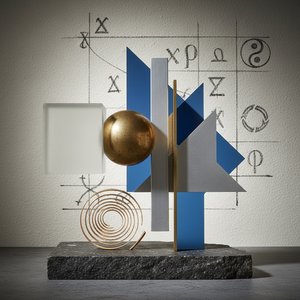
Beyond Form: Exploring the Philosophical Foundations of Geometric Abstraction
Explore the philosophical roots & artistic evolution of geometric abstraction with ArtsDot. Discover Mondrian, Malevich, De Stijl & more. Expert insights for collectors and art enthusiasts.


Geometrisk Abstraktion: Topp 10 Mästverk som Formade Konsten | ArtsDot.com
Utforska de 10 mästerverk som definierade geometrisk abstraktion! Lär känna Mondrian, Kandinsky & Malevich. Hitta inspiration och museumskvalitativa konsttryck för ditt hem på ArtsDot.com. Upptäck hela samlingen online!

Beyond Form & Color: Geometric Abstraction's Evolution in 20th/21st Century Art
Explore the evolution of geometric abstraction from Cubism to contemporary art. Discover key artists like Malevich & Mondrian, investment insights, and expert collecting advice at ArtsDot.

Beyond Form & Color: Geometric Abstraction's Enduring Legacy in Art History
Explore the captivating world of geometric abstraction! Discover its origins, key artists like Malevich & Mondrian, and why this movement remains highly valued by art collectors today. Expert insights at ArtsDot.

Beyond Form: Exploring Geometric Abstraction's Enduring Legacy in Art History
Explore the captivating world of geometric abstraction! Discover its origins, key artists like Kandinsky & Mondrian, and why this movement remains highly valued by art collectors today. Expert insights at ArtsDot.

