

 Förhandsvisa
 Skicka
 Dela
Dela
 Visa detaljer
 Guide
Guide

 Ladda ner
 Liknande objekt
 Röntgen
 Bildspel
 Frågor och svar
 Statistik
Huvudet


 Visa mer
Konstverket som visas på denna sida skyddas av upphovsrättslagen, vilket innebär att vi inte lagligt kan skapa eller sälja en identisk reproduktion. Detta skydd upprätthålls genom internationella avtal såsom den Bernkonventionen och genom nationella lagar, inklusive de som fastställs av Amerikansk upphovsrättslag – Titel 17. Alla rättigheter förbehållna. Återgivning av konstverk är förbjuden utan skriftligt tillstånd från WahooArt.
Denna metod följer fullt ut upphovsrättsliga regler eftersom den inte innebär kopiering eller duplicering av det skyddade konstverket. Istället är det en kreativ nytolkning – en ny målning som är influerad av originalet men inte identisk med det.
Giclée / Konsttryck
Giclée- eller canvasprint av museumskvalitet med snabb produktion och flexibla ytbehandlingsalternativ. ( Beställ handmålad reproduktion Byt till digital bild)




P118B Skr10

P118H Skr10

P118W Skr10

P438Z Skr10

P508JH Skr12

P508YH Skr12

P805H Skr10

P805Z Skr10

P919BZ Skr10

P919G Skr10

P919XJ Skr10

P959ZH Skr10

P968JZ Skr12

W106C Skr8

W218G Skr10

W218JH Skr8

W218Y Skr10

W307PJ Skr10

W316G Skr10

W316PJ Skr8

W316Y Skr10

W398PJ Skr8

W4111J Skr10

W500HY Skr15

W500JH Skr15

W692G Skr12

W849H Skr8

W940BG Skr15

W953PJ Skr8




Välj bland våra förinställda storlekar som motsvarar konstverkets ursprungliga proportioner.

Ange den bredd och höjd du behöver för att passa din ram eller vägg. Ett tryck kan endast beskäras, aldrig göras större än originalbilden, vilket innebär att ett format med en annan proportion leder till att en del av bilden går förlorad. Vi skickar en digital mockup för godkännande innan vi påbörjar tryckningen. Bilden som visas på denna sida visar inte den faktiska beskärningen — det är endast mockuppen som gör det.
Leverans över hela världen () på 2 veckor istället för standard 4/5 veckor. (5 november)

Fri expressfrakt över hela världen

Högkvalitativ linnecanvas

Fullständig fraktförsäkring

Garantier för återbetalning av tullavgifter

Garantier för exakt färgåtergivning

100 dagars returrätt (endast vid fel)

100% pengarna tillbaka-garanti

Mängdrabatt erbjuds
 Glasalternativet är endast tillgängligt i storlekar under 110 cm.

Huvudet
Giclée / Konsttryck
Storlek på reproduktion
-


Slutgiltigt pris
Skr 630
Deimantas Narkevičius och Monumentets Fragment
Deimantas Narkevičius är en litauenisk konstnär vars verk präglas av ett djupgående engagemang för både film och skulptur. Hans konstnärliga resa har tagits fram genom att utforska komplexa frågor om minne, identitet och hur historien formar vår uppfattning av oss själva och vår plats i världen – särskilt inom ramen för Litauen’s turbulenta historia under Sovjetstyre. Detta arbete är inget mindre än ett dokument över skapandet av Karl Marx Monumentet, ett projekt som genom filmdokumentation fångar ögonblicket när konstnären Lev Kerbel återuppväckte en klassisk ikon och satte upp monumentet i Karl-Marx-Stadt (nu Chemnitz) år 1971. Fotografierna är produkt av DDR:s propagandistiska kommunikation och erbjuder ett unikt perspektiv på den estetiska och politiska atmosfären under tiden.- Ämne och Kontext Monumentet är en imponerande representation av Karl Marx, en ikon inom marxismen och arbetarrörelsen. Skulptören Lev Kerbel valde att skapa detta verk mitt i Sovjetunionens dominans, vilket speglas i monumentets stil och dess symboliska betydelse. Projektet var ett svar på behovet av att hedra Marx’s arv och hans filosofi inom den kommunistiska staten.
- Stil och Teknik Narkevičius använder sig av fotografisk dokumentation för att fånga monumentets skapande process. Detta innebär en realistisk stil där fokus ligger på att återskapa objektets fysiska form så korrekt som möjligt. Bildens komposition är dominerad av huvud och axlar, vilket betonar monumentets skala och dess kraftfulla närvaro. Linjerna är starkt definierade och skulptörens yta är detaljerat återgiven genom användningen av olika tekniker.
- Symbolism Monumentets fragmenterade tillstånd kan tolkas som ett uttryck för komplexiteten i att skapa något varaktigt och betydelsefullt. Det avslöjar också hur ideologiska perspektiv påverkar konstnärlig gestaltning och hur historien formar vår förmåga att komma ihåg och förstå det förflutna.
- Emotionell Impact Detta verk väcker frågor om monumentets roll i samhället och dess förmåga att inspirera till reflektion över klasskamp och politisk historia. Fotografin fångar ögonblicket när monumentet skapades, vilket ger oss möjlighet att uppleva konstnärligheten och dess betydelse för tiden.
Detaljerad Teknik och Material
Narkevičius använder sig av svartvita fotografier för att dokumentera monumentets skapande process. Detta innebär noggrann återgivning av både huvudets komplexa anatomi och arbetsplatsens miljö – inklusive användningen av stödjande strukturer och verktyg som chisel marks och andra detaljer som avslöjar konstnärligheten i arbetet. Materialen inkluderar marmor och byggmaterial, vilket ytterligare förstärker monumentets fysiska närvaro och dess historiska kontext.För Inspiration och Dekorativa Möjligheter
En högkvalitativ reproduktion av ”The Head” kan vara ett fantastiskt tillskott till hemmet eller kontoret. Detta verk erbjuder inte bara konstnärligt värde utan också en möjlighet att fördjupa sig i Litauen’s historia och kultur genom ett mästerverk av samtida skulptur och fotografi. Låt detta fragment av monumentets skapelse inspirera till reflektion över konstens kraft och dess förmåga att kommunicera komplexa idéer och känslor.Frågor och svar
Vilken fas av Deimantas Narkevičiuss konstnärliga utveckling representerar "Huvudet"?
Inom Deimantas Narkevičiuss karriär tillhör "Huvudet" perioden Late Career. Denna fas underlättar jämförelser med konstnärens övriga verk.
Hur förhåller sig "Huvudet" till Deimantas Narkevičiuss återkommande motiv?
Bland Deimantas Narkevičiuss dokumenterade teman – memory, sculpture, soviet critique, lithuanian identity, historical reflection, political symbolism, monumental form, film documentation – har "Huvudet" ett eget fokus på sculpture, marx monument, gdr art, photography, marble bust, soviet era, construction, lithuania.
Hur kan jag få en digital fil av "Huvudet" av Deimantas Narkevičius?
En digital bild av "Huvudet" av Deimantas Narkevičius kan köpas på dess sida för Digital bild i hög upplösning: en högupplöst digital bildnedladdning.
Liknande konstverk


Konstnärsbiografi
The Cinematic Architect of Memory
In the quiet, evocative landscapes of Lithuania, where the echoes of a complex Soviet past still linger in the architecture and the atmosphere, the work of Deimantas Narkevičius emerges as a profound meditation on time itself. Born in 1964 in Utena, Narkevičius began his artistic journey not with the lens of a camera, but with the tactile discipline of a sculptor. This foundational training at the Vilnius Art Institute instilled in him a unique sensitivity to form, space, and materiality—a sensibility that would later breathe life into his cinematic explorations. While many artists use film merely as a medium for documentation, Narkevičius treats the moving image as a sculptural element, carving out narratives from the raw materials of historical footage, found photographs, and the heavy silence of abandoned industrial sites.
His transition from the physical weight of sculpture to the ephemeral nature of video and film was not a departure, but an evolution. As Lithuania navigated the turbulent disintegration of the Soviet Union and its subsequent rebirth as a democratic state, Narkeyičius found himself at the intersection of personal recollection and political upheaval. He became a chronicler of the "rupture"—that delicate, often painful space between what was lived and what is remembered. His work does not simply present history; it interrogates the very mechanisms by which we construct myths from reality, using techniques such as voice-overs, interviews, and carefully staged re-enactments to blur the lines between documentary truth and cinematic imagination.
Layers of History and the Poetics of Space
The brilliance of Narkevičius’s practice lies in his ability to transform historical trauma into a poetic inquiry. He often directs his gaze toward the remnants of the Soviet era—monumental structures, decommissioned missile bases, and industrial hubs like the town of Elektrėnai. In works such as Energy Lithuania, he explores the symbiotic relationship between human vitality and the mechanical energy of power plants, treating these sites not merely as relics of a failed ideology, but as melancholic monuments to an era of vanished utopias. Through his lens, the decay of an industrial landscape becomes a metaphor for the fragility of political structures and the enduring persistence of cultural identity.
Influenced by the atmospheric depth of filmmakers like Andrei Tarkovsky and the structural experimentation of Peter Watkins, Narkevičius employs a visual language that is both intimate and expansive. He frequently utilizes close-ups to capture the nuances of human expression, grounding his larger political critiques in the lived experiences of individuals. This approach allows him to navigate the tension between the macro-history of nations and the micro-histories of the soul. His films act as a bridge, connecting the viewer to a past that may feel unrecognizable, yet remains fundamentally intertwined with the present through the persistent pull of collective memory.
A Global Presence and Lasting Legacy
The international recognition of Deimantas Narkevičius has solidified his position as one of the most significant voices in contemporary moving-image art. His presence on the global stage is marked by participation in the world's most prestigious cultural institutions, where his work challenges audiences to confront the fluidity of truth. His achievements include:
- Representing Lithuania at the 49th Venice Biennale, a pivotal moment that introduced his nuanced explorations of identity to a global audience.
- Exhibiting in premier institutions such as the Centre Pompidou in Paris, the Tate Modern in London, and the Museum of Modern Art (MoMA) in New York.
- Contributing to the discourse of contemporary curation through his roles as an art critic and exhibition curator, further enriching the dialogue surrounding political and social art.
Ultimately, the significance of Narkevičius’s oeuvre lies in its refusal to offer easy answers. He does not seek to provide a definitive record of history, but rather to highlight the cracks and shadows where memory resides. By treating history as both material and methodology, he invites us to witness the ongoing process of creation—the way we constantly mold our past to make sense of our present. His work remains a vital, haunting testament to the power of art to navigate the complexities of time, identity, and the enduring human spirit.

Deimantas Narkevičius
1964 - , Lithuania
Kortfakta
- Full Name: Deimantas Narkevičius
- Nationality: Lithuanian
- Date Of Birth: 1964
- Date Of Death: (Living)
- Place Of Birth: Utena, Lithuania
- Notable Artworks:
- The Head
- Energy Lithuania
- Scena
- Legend Coming True
- Artistic Movement Or Style: Film and video art
- Artists Who Influenced This Artist: ['Peter Watkins']
- Artists Or Movements Influenced By This Artist: ['Soviet Cinema']
Relaterade artiklar

Storslagen Närvaro: Arkitektonisk Integration och Proportional Strategier för Monumentala Konstverk i Lyxinteriörer
Upptäck hur monumentala konstverk integreras sömlöst i lyxinteriörer. Expertstrategier för skala, proportioner och arkitektonisk harmoni. Skapa en storslagen närvaro i ditt hem.
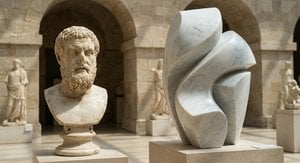
The Enduring Allure of Marble in Art History: From Classical Sculpture to Modern Abstraction
Explore the captivating history of marble sculpture from ancient Greece to modern art. Discover renowned artists like Canova & Michelangelo, carving techniques, and investment insights at ArtsDot.

Karl Blossfeldt's 'Urformen der Kunst': Pioneering Botanical Photomicrography & Aesthetic Form
Explore Karl Blossfeldt's groundbreaking *Urformen der Kunst* & pioneering botanical photography. Discover the aesthetic power of nature, New Objectivity influences, and his lasting impact on modern art. Learn about collecting key works.

Karl Bodmer: Capturing Indigenous Life & Landscapes of the American West
Explore the captivating art of Karl Bodmer, whose detailed paintings documented Indigenous life along the Missouri River in the 19th century. Discover his legacy and lasting impact on Western art history.

The Enduring Legacy of Marble: A Comprehensive Exploration of Technique, Symbolism & Artistic Expression
Explore the rich history of marble sculpture from antiquity to the Renaissance! Discover key techniques, influential artists & enduring themes in classical art. Expert insights for collectors and enthusiasts at ArtsDot.
