

 Förhandsvisa
 Skicka
 Dela
Dela
 Visa detaljer
 Guide
Guide

 Ladda ner
 Liknande objekt
 Röntgen
 Bildspel
 Frågor och svar
 Statistik
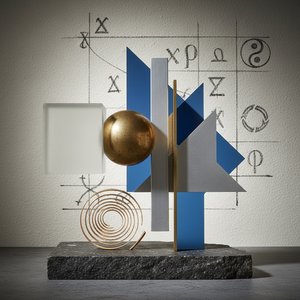
Untitled

- 22.0 x 29.0 cm


 Visa mer
Konstverket som visas på denna sida skyddas av upphovsrättslagen, vilket innebär att vi inte lagligt kan skapa eller sälja en identisk reproduktion. Detta skydd upprätthålls genom internationella avtal såsom den Bernkonventionen och genom nationella lagar, inklusive de som fastställs av Amerikansk upphovsrättslag – Titel 17. Alla rättigheter förbehållna. Återgivning av konstverk är förbjuden utan skriftligt tillstånd från WahooArt.
Denna metod följer fullt ut upphovsrättsliga regler eftersom den inte innebär kopiering eller duplicering av det skyddade konstverket. Istället är det en kreativ nytolkning – en ny målning som är influerad av originalet men inte identisk med det.
Giclée / Konsttryck
Giclée- eller canvasprint av museumskvalitet med snabb produktion och flexibla ytbehandlingsalternativ. ( Beställ handmålad reproduktion Byt till digital bild)




































Välj bland våra förinställda storlekar som motsvarar konstverkets ursprungliga proportioner.

Ange den bredd och höjd du behöver för att passa din ram eller vägg. Ett tryck kan endast beskäras, aldrig göras större än originalbilden, vilket innebär att ett format med en annan proportion leder till att en del av bilden går förlorad. Vi skickar en digital mockup för godkännande innan vi påbörjar tryckningen. Bilden som visas på denna sida visar inte den faktiska beskärningen — det är endast mockuppen som gör det.
Leverans över hela världen () på 2 veckor istället för standard 4/5 veckor. (11 november)

Fri expressfrakt över hela världen

Högkvalitativ linnecanvas

Fullständig fraktförsäkring

Garantier för återbetalning av tullavgifter

Garantier för exakt färgåtergivning

100 dagars returrätt (endast vid fel)

100% pengarna tillbaka-garanti

Mängdrabatt erbjuds
 Glasalternativet är endast tillgängligt i storlekar under 110 cm.

Untitled
Giclée / Konsttryck
Storlek på reproduktion
-


Slutgiltigt pris
Skr 632
Liknande konstverk


Konstnärsbiografi
The Architect of Abstraction: The Life and Vision of Charles Green Shaw
In the vibrant, pulse-quickening atmosphere of 1920s New York, where the jazz age roared through smoky cafés and theatrical halls, a unique creative spirit began to emerge. Charles Green Shaw was not merely an observer of this era but a chronicler of its wit and social complexity. Before he became a titan of American geometric abstraction, Shaw established himself as a sharp-witted writer and illustrator, lending his pen to prestigious publications such as The New Yorker, Vanity Fair, and Smart Set. His early literary career allowed him to navigate the intellectual currents of Manhattan, documenting the theatrical world with a precision that would later translate into his meticulous approach to canvas and form.
While his initial inclinations were rooted in the written word and the social satire of the urban landscape, a profound artistic metamorphosis was simmering beneath the surface. His formal training at the Art Students League, particularly under the guidance of Thomas Hart Benton in 1927, provided the structural discipline necessary to transition from prose to paint. This period of study, supplemented by private lessons with the legendary George Luks, instilled in Shaw a deep respect for observation and the fundamental mechanics of composition. Yet, it was his transformative journey through Europe between 1930 and 1933 that would forever alter his artistic trajectory.
A Journey Through Form and Geometry
Traveling through Italy, France, and Spain, Shaw encountered the burgeoning movements of Modernism that were reshaping the global art landscape. The influence of Piet Mondrian and Josef Albers became palpable in his evolving technique, as he moved away from representational narratives toward a profound exploration of geometric abstraction. He began to embrace a language of polygons and intersecting planes, creating small, meticulously crafted works that possessed an almost architectural weight. These canvases often seemed to echo the soaring, structural grandeur of the New York skyscrapers he knew so well, distilling the chaotic energy of the metropolis into a rhythmic, balanced arrangement of shapes.
This period marked the birth of his most celebrated stylistic contributions, where the boundaries between organic life and mathematical precision began to blur. His work often navigated the delicate space between Concretionism and a more biomorphic abstraction, a tension that gave his paintings a breathing, vital quality despite their rigid geometric foundations. Through his mastery of color and form, Shaw achieved a sense of "plasticity" within the polygon, making each shape feel as though it possessed its own internal volume and light.
Legacy and the Geometry of Silence
As his career progressed into the mid-20th century, Shaw’s work became a cornerstone of the American Abstract Artists movement. His ability to synthesize the structural rigor of the Bauhaus with a uniquely American sensibility ensured his place in the pantheon of modern masters. His paintings, characterized by their contemplative depth and rhythmic precision, found permanent homes in the world's most esteemed institutions, including:
- The Metropolitan Museum of Art
- The Museum of Modern Art (MoMA)
- The Smithsonian American Art Museum
- The Whitney Museum of American Art
- The Art Institute of Chicago
Beyond the technical brilliance of his 'Plastic Polygon' series, Shaw’s historical significance lies in his role as a bridge between the social realism of his contemporaries and the pure abstraction that would define much of post-war art. He transformed the visual noise of the modern age into a "geometry of silence," inviting viewers to find peace within the structured interplay of triangles, circles, and light. Today, Charles Green Shaw remains a pivotal figure whose work continues to resonate as a testament to the power of distilled form and the enduring beauty of the abstract intellect.

Charles Shaw
1892 - 1974
Kortfakta
- Full Name: Charles Green Shaw
- Nationality: American
- Date Of Birth: 1892
- Date Of Death: 1974
- Notable Artworks:
- Plastic Polygon
- Space Curve
- Artistic Movement Or Style: Geometric Abstraction, Concretionism
- Artists Who Influenced This Artist: ['Thomas Hart Benton']
- Artists Or Movements Influenced By This Artist: ['Minimal Art']
Relaterade artiklar

Kandinskys 25 Mästerverk: En Färgstark Resa i Abstrakt Konst | ArtsDot
Utforska Wassily Kandinskys 25 mest ikoniska verk – från expressionism till abstrakt konst. Lär känna historien bakom mästerverken och hitta inspiration för din heminredning med ArtsDot.com. Upptäck hela samlingen online!

Beyond Form & Color: Geometric Abstraction's Enduring Legacy in Art History
Explore the captivating world of geometric abstraction! Discover its origins, key artists like Malevich & Mondrian, and why this movement remains highly valued by art collectors today. Expert insights at ArtsDot.
Beyond Form: Exploring the Philosophical Foundations of Geometric Abstraction
Explore the philosophical roots & artistic evolution of geometric abstraction with ArtsDot. Discover Mondrian, Malevich, De Stijl & more. Expert insights for collectors and art enthusiasts.

Geometrisk Abstraktion: Topp 10 Mästverk som Formade Konsten | ArtsDot.com
Utforska de 10 mästerverk som definierade geometrisk abstraktion! Lär känna Mondrian, Kandinsky & Malevich. Hitta inspiration och museumskvalitativa konsttryck för ditt hem på ArtsDot.com. Upptäck hela samlingen online!

Beyond Form & Color: Geometric Abstraction's Evolution in 20th/21st Century Art
Explore the evolution of geometric abstraction from Cubism to contemporary art. Discover key artists like Malevich & Mondrian, investment insights, and expert collecting advice at ArtsDot.