

 Förhandsvisa
 Skicka
 Dela
Dela
 Visa detaljer
 Guide
Guide

 Ladda ner
 Liknande objekt
 Röntgen
 Bildspel
 Q&A
Q&A Statistik
Florence

- 50.0 x 60.0 cm


 Visa mer
Konstverket som visas på denna sida skyddas av upphovsrättslagen, vilket innebär att vi inte lagligt kan skapa eller sälja en identisk reproduktion. Detta skydd upprätthålls genom internationella avtal såsom den Bernkonventionen och genom nationella lagar, inklusive de som fastställs av Amerikansk upphovsrättslag – Titel 17. Alla rättigheter förbehållna. Återgivning av konstverk är förbjuden utan skriftligt tillstånd från WahooArt.
Denna metod följer fullt ut upphovsrättsliga regler eftersom den inte innebär kopiering eller duplicering av det skyddade konstverket. Istället är det en kreativ nytolkning – en ny målning som är influerad av originalet men inte identisk med det.
Giclée / Konsttryck
Giclée- eller canvasprint av museumskvalitet med snabb produktion och flexibla ytbehandlingsalternativ. ( Beställ handmålad reproduktion Byt till digital bild)




P118B Skr10

P118H Skr10

P118W Skr10

P438Z Skr10

P508JH Skr12

P508YH Skr12

P805H Skr10

P805Z Skr10

P919BZ Skr10

P919G Skr10

P919XJ Skr10

P959ZH Skr10

P968JZ Skr12

W106C Skr8

W218G Skr10

W218JH Skr8

W218Y Skr10

W307PJ Skr10

W316G Skr10

W316PJ Skr8

W316Y Skr10

W398PJ Skr8

W4111J Skr10

W500HY Skr15

W500JH Skr15

W692G Skr12

W849H Skr8

W940BG Skr15

W953PJ Skr8




Välj bland våra förinställda storlekar som motsvarar konstverkets ursprungliga proportioner.

Ange den bredd och höjd du behöver för att passa din ram eller vägg. Ett tryck kan endast beskäras, aldrig göras större än originalbilden, vilket innebär att ett format med en annan proportion leder till att en del av bilden går förlorad. Vi skickar en digital mockup för godkännande innan vi påbörjar tryckningen. Bilden som visas på denna sida visar inte den faktiska beskärningen — det är endast mockuppen som gör det.
Leverans över hela världen () på 2 veckor istället för standard 4/5 veckor. (3 november)

Fri expressfrakt över hela världen

Högkvalitativ linnecanvas

Fullständig fraktförsäkring

Garantier för återbetalning av tullavgifter

Garantier för exakt färgåtergivning

100 dagars returrätt (endast vid fel)

100% pengarna tillbaka-garanti

Mängdrabatt erbjuds
 Glasalternativet är endast tillgängligt i storlekar under 110 cm.

Florence
Giclée / Konsttryck
Storlek på reproduktion
-


Slutgiltigt pris
Skr 622
A Vision of Eternal Florence
To gaze upon this depiction of Florence is to step through a veil of time, into a moment suspended between vibrant history and quiet contemplation. Carlo Carrà’s vision captures more than just the magnificent dome of Santa Maria del Fiore; it encapsulates the very soul of Florentine artistry—a spirit rooted in the rigorous beauty of the Quattrocento. The composition itself feels like an archaeological discovery rendered in paint, presenting the city not as a mere collection of buildings, but as a unified, breathing volume. Carrà masterfully guides the eye across this aerial panorama, where every overlapping block and delicate curve speaks to centuries of human endeavor and artistic devotion.
Mastery in Light and Line: Technique and Form
Technically, the painting is a profound study in restraint. Carrà employs a technique characterized by light, quick brushstrokes and the exquisite layering of transparent glazes, or velature. This process allows the color to build up luminosity from within, giving the entire scene an ethereal, almost spiritual glow that seems to emanate from the very stone of the city. The structure is defined by thin, delicate black outlines—lines that are structural rather than restrictive. These lines serve to delineate the cubic forms of the architecture, suggesting a geometric order beneath the soft wash of color. It is this interplay between the rigid geometry suggested by the outlines and the atmospheric softness achieved through glazing that gives the piece its unique visual tension.
Historical Echoes: Carrà’s Late Period Synthesis
This work stands as a beautiful testament to the breadth of Carrà's artistic journey. Having navigated the turbulent waters of Futurism, Metaphysics, and various avant-garde movements throughout the twentieth century, here he finds a profound synthesis. In this later period, his focus turns inward, toward essential forms and pictorial simplicity. The painting moves away from overt naturalism or dramatic impressionism, instead achieving an equilibrium between concrete reality and sublime abstraction. It is Carrà distilling the monumental into its most fundamental visual components—a mature artist finding quiet power in elegant reduction.
Symbolism of Place and Spirit
The subject matter itself carries immense symbolic weight. Florence, particularly viewed through the lens of Brunelleschi’s dome, represents the pinnacle of Renaissance humanism and artistic revival. For Carrà, this city was not just a backdrop; it was a cultural touchstone. The muted palette—of soft blues, earthy grays, and pale terracotta—contributes to an overwhelming sense of tranquility. It invites the viewer into a meditative state, suggesting that true beauty lies in the enduring structure of culture itself. Owning this piece is acquiring not just art, but a tangible connection to the deep, abiding spirit of Italian artistic heritage.
Bringing the Masterpiece Home
For collectors and designers seeking an object imbued with history and quiet grandeur, this reproduction offers unparalleled depth. The soft luminosity achieved through Carrà’s glazing technique translates beautifully into interior spaces, acting as a focal point that uplifts any room without overwhelming it. It speaks to those who appreciate art that rewards close looking—a piece where the eye can wander from the defined geometry of the foreground blocks to the hazy, luminous expanse of the sky, finding continuous beauty in every subtle shift of tone.
Frågor och svar
Finns "Florence" tillgänglig som ett konsttryck?
"Florence" finns tillgänglig som ett konsttryck på bomullscanvas eller arkivbeständigt canvaspapper. Beställningar görs via dess Konsttryck i hög kvalitet-sida, i den storlek du själv väljer.
Under vilka andra namn är Carlo Carrà känd?
Carlo Carrà är även känd som Carlo Carra.
Vilket medium och vilka mått har "Florence" av Carlo Carrà?
"Florence" är utförd i Oil On Canvas och mäter 50 x 60 cm i sin ursprungliga form.
Liknande konstverk


Konstnärsbiografi
Early Life and the Seeds of Artistic Rebellion
Carlo Carrà, född den 11 februari 1881 i Quargnento nära Alessandria, Italien, embarked on a path diverging sharply from academic tradition. His youth was marked by necessity; at twelve år gammal lämnade han familjen för att arbeta som mural dekoratör. Detta formativa erfarenhet, präglad av fysiskheten i konstskapande och hantverksskicklighet, indelade honom djupgående påverkad hans konstnärliga känslor. Det var inte bara applicera färg—det var immersion till färger, form och visuellt kommunikation. En vistelse till Paris vid början av sekletet, dekorera paviljonger för Exposition Universelle, exponerades han för växande strömningar av samtida fransk konst, en avgörande uppvaknande som breddade hans horisonter bortom italiensk provinsiellism. Detta följdes av en kort period i London där han mötte exil italienska anarchister—en politisk underton subtilt påverkad hans tidiga verk med teman om social oro och uppror. Återkomsten till Milano 1901 förfinade sina färdigheter, slutligen registrerades vid Brera Akademien 1906 där han studerade under Cesare Tallone. Även inom akademin strukturen var en rastlös själ längtande efter konstnärlig innovation.Embracing Dynamism: The Futurist Years
Året 1910 blev avgörande. Carrà gick med Umberto Boccioni, Luigi Russolo och Giacomo Balla där han signerade manifestet av futurist målargörer—en deklaration häpnadsväckande förändra italiensk konst kursen. Futurism var en radikal ideologi, ett explosivt firande av modernitet, hastighet, teknik, ungdom och maskinålderns obevekliga energi. Det förkastade det gamla, omfamnade dynamik och förutspår framtiden definierad av framsteg. Carràs tidiga futurist verk, såsom *Funerale dell'Anarchico Galli* (1911) och *Ritm av objekt* (1911), återspeglar dessa principer skarpt. *Funerale dell'Anarchico Galli*, en kaotisk men övertygande bild av sorg och protest är inte bara representation utan ett visceral upplevelse av rörelse och känslor. De spräckliga formerna och skrämmande färgerna förmedlar den råa energin av folkmassan och störande politiska kraft. *Ritm av objekt* visar vidare hans utforskning av dynamik, bryt ner vardagsföremål till fragmenterade former föreslå rörelse och omvandling. Dessa målningar var inte bara vad som gjordes utan hur det uppfattades—en revolutionerande metod för representation. Carrà var inte bara målande scener; han försökte fånga själva essensen av modernt liv i allt dess frenetiska praktikalitet. Han var en pionjär inom konstnärliga idéer och tekniker som skulle komma att påverka hela den italienska konstvärlden framöver.Stigen till Monte Carlo
- Claude Monets ikoniska mål “Stigen till Monte Carlo” fångar ljus och atmosfär i den franska rivieran. En fascinerande resa tillbaka till impressionismens tid.
Carlo Carrà - Wikipedia
Influences and Artistic Style
Carrà’s konstnärliga stil utvecklades genom flera viktiga influenser, vilket inkluderar både italienska och internationella rörelser. Han började sitt konstnärliga arbete med divisionism, där han använde små färger placerade sida vid sida för att skapa komplexa bilder. Detta skulle senare komma att påverka hans utforskning av kubismen och dess fokus på geometriska former och perspektiv. Eftersom Carrà var särskilt imponerad av Henri Rousseau’s konstverk, så utvecklades hans stil till en enkel realism där han försökte återfå stabiliteten hos form och stillhet. Detta skulle senare komma att påverka hans arbete inom den italienska surrealiströrelsen och skapa ett verk som är både komplex och lättillgängligt för publiken. ## Major Achievements and Legacy Carrà var en av de mest inflytelserika italienska konstnärerna på första halvan av sekletet och är särskilt känd för sina stillifter i stil med metafysisk målning (*Pittura Metafisica*). Han var också en pionjär inom futurismen och dess koncept om dynamik där han introducerade gruppen till synästesi—idéen att exponering för ett externt stimuli (som ljud eller lukt) skulle väcka parallell visualisering (som färg). Detta var en kraftfull och befriande idé som stimulerade praktiken inom futurismen och hans verk är idag ett exempel på konstnärlig innovation och kreativitet. Carràs konstverk fortsätter att inspirera konsthistoriker och konstälskare världen över och hans namn kommer alltid att vara förknippat med italiensk konsthistoria och konstnärliga utveckling.
Carlo Carrà
1881 - 1966 , Italien
Kortfakta
- Artistic Movement Or Style: Futurism, Metaphysical art
- Artists Who Influenced This Artist:
- Umberto Boccioni
- Giorgio de Chirico
- Date Of Birth: Feb 11, 1881
- Date Of Death: Apr 13, 1966
- Full Name: Carlo Carrà
- Nationality: Italian
- Notable Artworks:
- Funeral dell'Anarchico Galli
- Rhythms of Objects
- Daughters of Lot
- Place Of Birth: Alessandria, Italien
Relaterade artiklar
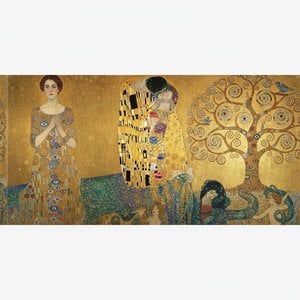
Gustav Klimts 25 Mästerverk: En Konstresa för Hemmet & Själens Frid
Utforska Gustav Klimts 25 mest ikoniska målningar! Fördjupa dig i symbolik, Art Nouveau och den gyllene fasen. Hitta inspiration för din heminredning & köp museumkvalitativa reproduktioner på ArtsDot.com.

Galleria degli Uffizi: Topp 25 Mästerverk – Renässansens Skönhet för Ditt Hem
Upptäck de 25 mest ikoniska mästerverken på Galleria degli Uffizi i Florens! Fördjupa dig i renässanskonst av Botticelli, Leonardo da Vinci & Michelangelo. Köp museumkvalitativa konsttryck och inred ditt hem med tidlös skönhet – utforska samlingen online hos ArtsDot.com.

Carlo Carrà: Futurist Visions & Metaphysical Transformations in Early 20th-Century Italian Painting
Explore the artistic journey of Carlo Carrà, a pivotal figure in Italian Futurism & Metaphysical painting. Discover his dynamic compositions, collaborations with de Chirico, and lasting influence on modern art history.

Mario Sironi: A Poetic of Modern Italian Identity Through Symbolism & Social Commentary
Explore the profound works of Mario Sironi, a key figure in Italian Modernism. Discover his evolution from Futurism to Metaphysical painting and his powerful social commentary. Learn about his legacy at ArtsDot.

Topp 10 berömda målningar för vardagsrummet – konst som lyfter ditt hem
Upptäck de 10 mest berömda målningarna som förvandlar ditt vardagsrum! Lär känna Monet, Van Gogh & andra mästare. Inred med klassisk konst och hitta din perfekta tavla på ArtsDot.com – museumkvalitet hem till dig.
