

 Förhandsvisa
 Skicka
 Dela
Dela
 Visa detaljer
 Guide
Guide

 Ladda ner
 Liknande objekt
 Röntgen
 Bildspel
 Frågor och svar
 Statistik
Classical Landscape with Ruins

- 21.0 x 21.0 cm


 Visa mer
Giclée / Konsttryck
Giclée- eller canvasprint av museumskvalitet med snabb produktion och flexibla ytbehandlingsalternativ. ( Beställ handmålad reproduktion Byt till digital bild)




P118B Skr10

P118H Skr10

P118W Skr10

P438Z Skr10

P508JH Skr12

P508YH Skr12

P805H Skr10

P805Z Skr10

P919BZ Skr10

P919G Skr10

P919XJ Skr10

P959ZH Skr10

P968JZ Skr12

W106C Skr8

W218G Skr10

W218JH Skr8

W218Y Skr10

W307PJ Skr10

W316G Skr10

W316PJ Skr8

W316Y Skr10

W398PJ Skr8

W4111J Skr10

W500HY Skr15

W500JH Skr15

W692G Skr12

W849H Skr8

W940BG Skr15

W953PJ Skr8




Välj bland våra förinställda storlekar som motsvarar konstverkets ursprungliga proportioner.

Ange den bredd och höjd du behöver för att passa din ram eller vägg. Ett tryck kan endast beskäras, aldrig göras större än originalbilden, vilket innebär att ett format med en annan proportion leder till att en del av bilden går förlorad. Vi skickar en digital mockup för godkännande innan vi påbörjar tryckningen. Bilden som visas på denna sida visar inte den faktiska beskärningen — det är endast mockuppen som gör det.
Leverans över hela världen () på 2 veckor istället för standard 4/5 veckor. (4 november)

Fri expressfrakt över hela världen

Högkvalitativ linnecanvas

Fullständig fraktförsäkring

Garantier för återbetalning av tullavgifter

Garantier för exakt färgåtergivning

100 dagars returrätt (endast vid fel)

100% pengarna tillbaka-garanti

Mängdrabatt erbjuds
 Glasalternativet är endast tillgängligt i storlekar under 110 cm.

Classical Landscape with Ruins
Giclée / Konsttryck
Storlek på reproduktion
-


Slutgiltigt pris
Skr 630
A Vision of Roman Decay: The Melancholy Beauty of Breenbergh
In the quiet corners of the Fitzwilliam Museum, there exists a window into a lost era—a watercolor titled Classical Landscape with Ruins by the Dutch master Bartholomeus Breenbergh. Created around 1629, this delicate work is far more than a mere topographical record; it is a profound meditation on the passage of time and the inevitable triumph of nature over human ambition. As one gazes upon the crumbling stone structures in the foreground, there is an immediate sense of the sublime—that intoxicating mixture of awe and terror that comes from witnessing the slow, relentless decay of once-great civilizations. Breenbergh captures a moment where the grandeur of Rome meets the quiet persistence of the earth, inviting the viewer to contemplate their own place within the vast, cyclical rhythm of history.
The composition is masterfully orchestrated to lead the eye through a narrative of light and shadow. In the foreground, the skeletal remains of classical architecture serve as a poignant memento mori, while life continues in its humble, unbothered forms around them. Two figures wander near the ruins, perhaps travelers or shepherds lost in thought, their small scale emphasizing the monumental weight of the past. Scattered throughout this pastoral scene are the gentle rhythms of rural life: cows and sheep graze peacefully, a horse rests in the mid-ground, and a solitary bird drifts through the sky. Even the presence of a tranquil body of water near the right edge of the frame adds a layer of reflective stillness, mirroring the contemplative mood that permeates the entire landscape.
The Alchemy of Light and Italianate Grace
Technically, Breenbergh departs from the rigid, microscopic realism often associated with his Dutch contemporaries. Instead, he embraces an Italianate sensibility, characterized by a soft, atmospheric perspective that breathes life into the paper. His brushwork is loose and expressive, eschewing sharp outlines in favor of luminous transitions. Light is the true protagonist of this piece; shafts of sunlight pierce through the architectural debris, illuminating patches of verdant foliage and casting long, dramatic shadows that stretch across the terrain. This manipulation of light creates a sense of depth and drama, pulling the viewer into a world where the air feels heavy with humidity and history.
The color palette is a sophisticated study in muted elegance. Dominated by earthy browns, deep ochres, and mossy greens, the painting evokes the feeling of an ancient, sun-drenched landscape. Yet, Breenbergh punctuates these somber tones with subtle splashes of crimson and gold, reminiscent of the dramatic chiaroscuro found in the works of Caravaggio. For the discerning collector or interior designer, this piece offers a remarkable versatility. Its tonal depth and classical subject matter allow it to serve as a sophisticated focal point in a traditional study, a serene anchor in a contemporary minimalist space, or a soulful addition to a gallery wall dedicated to the Golden Age of painting.
An Eternal Echo for the Modern Collector
To possess a reproduction of this work is to bring a piece of the 17th-century soul into the modern home. Breenbergh’s ability to weave together the architectural ghosts of antiquity with the living, breathing pulse of nature creates an emotional resonance that transcends centuries. The painting does not merely depict a scene; it evokes a feeling of nostalgia for a greatness we can no longer touch, yet still deeply admire. It is an invitation to slow down, to observe the play of light upon stone, and to find beauty in the ephemeral. Whether you are drawn to its historical significance, its masterful use of atmospheric perspective, or its quiet, melancholic grace, this artwork remains a timeless testament to the enduring power of the classical spirit.
Frågor och svar
Finns det ett faktablad om "Classical Landscape with Ruins" av Bartholomeus Breenbergh för studenter?
Guiden till "Classical Landscape with Ruins" är konstverkets Faktablad för elever-sida – ett utskrivbart faktablad som visar konstverket tillsammans med dess bildtext, källhänvisning och identitetstabell (konstnär, datum, medium, originalstorlek, samling).
Hur förhåller sig "Classical Landscape with Ruins" till Bartholomeus Breenberghs återkommande motiv?
Bartholomeus Breenberghs återkommande teman inkluderar italianate style, baroque legacy, religious faith, moral reflection, roman decay, pastoral vision, landscape narrative, dramatic flair; "Classical Landscape with Ruins" fokuserar på landscape, ruins, classical art, religious scene, roman influence, dutch golden age, pastoral imagery, biblical narrative.
Kan jag förhandsgranska "Classical Landscape with Ruins" av Bartholomeus Breenbergh innan jag beställer?
För att förhandsgranska en reproduktion av "Classical Landscape with Ruins" av Bartholomeus Breenbergh, öppna konstverkets sida för Förhandsvisning.
Liknande konstverk


Konstnärsbiografi
Tidigt liv och formande
Berättelsen om Bartholomeus Breenbergh, en central gestalt under den nederländska stormaktstiden, inleds i ett visst dunkel. Han föddes före den 13 november 1598, sannolikt i Deventer i Nederländerna, och hans tidiga år är endast sparsamt dokumenterade. En avgörande vändpunkt i den unge Breenberghs liv inträffade när hans far gick bort 1607, vilket ledde till att familjen flyttade till Hoorn. Det var här, i denna livliga hamnstad, som han för första gången mötte konstens värld. Han blev en samtida till Jacques Waben och fick sin första utbildning – om än från en av de många mindre kända landskapsmålare som var verksamma i Amsterdam under dessa år. Den formella undervisningen fortsatte senare under ledning av Pieter Lastman och Jacob Symonsz Pyskland, vilket lade grunden för hans framtida konstnärliga utforskningar. Dessa tidiga influenser skulle subtilt vävas in i hans mogna stil, särskilt Lastmans dramatiska berättarglädje.Romerskt uppehåll och den italienska stilen
År 1619 påbörjade Breenbergh en transformativ resa till Rom, en stad som skulle sätta ett outplånligt avtryck på hans konstnärliga vision. Under ungefär elva år fördjupade han sig i den livfulla romerska konstscenen, där han samarbetade med den flamländska målaren Frans van de Kasteele och föll under förtrollningen av Paul Brils ljusfyllda landskap. Det var under denna period som Breenbergh började utveckla sin signaturstil, den så kallade italienska stilen – idealiserade skildringar av den romerska Campagna, badande i ett varmt, gyllene ljus. Han betraktade med stor vaksamhet de klassiska ruinerna som låg utspridda över landsbygden och vävde in dem i kompositioner som frammanade en känsla av tidlös skönhet och melankolisk storslagenhet. Hans arbete resonerade alltmer med Cornelis van Poelenburghs verk, så pass att det ibland kunde vara utmanande att skilja deras målningar åt. Breenberghs omfamnande av denna stil var inte enbart estetiskt; det speglade en bredare europeisk fascination för antiken och lockelsen i det italienska landskapet. Han blev även en av grundarna till Bentvueghels, ett sällskap av nederländska och flamländska målare i Rom känt för sin livliga kamratskap och sina ofta satiriska smeknamn – Breenbergh förtjänade epitetet ”het fret” (mård).Återkomsten till Amsterdam och konstnärlig mognad
Omkring år 1630 återvände Breenbergh till Amsterdam, bärande med sig de konstnärliga förfiningar han förvärvat under sina år i Rom. Han etablerade sig snabikt som en eftertraktad målare, gifte sig 1633 och säkrade till och med ett årligt stipendium från den brittiske kung Charles I – ett bevis på hans växande rykte. Hans arbete började dock utvecklas bortom det rena landskapsmåleriet. Inspirerad av konstnärer som Pieter Lastman återigen, började han integrera mytologiska och bibliska figurer i sina italienska miljöer, vilket skapade scener som var både visuellt fängslande och rika på narrativt djup. Denna fusion av nordeuropeiskt berättande och sydeuropeiska landskap resulterade i en monumental stil, kännetecknad av uttrycksfulla figurer och dramatiska ljuseffekter. Även om Breenbergh endast tog emot en registrerad elev, Jan de Bisschop, som studerade under honom under 1640-talet, sträckte sig hans inflytande till en bredare krets av konstnärer, däribland Jan Linsen, Scipione Compagno, Laurens Barata och Charles Cornelisz. de Hooch.Arv och historisk betydelse
Bartholomeus Breenberghs bidrag till det nederländska guldåldersmåleriet ligger i hans pionjärroll i att etablera den italienska landskapsstilen inom den nordeuropeiska konsttraditionen. Han syntetiserade mästerligt influenser från Pieter Lastman, Nicolaes Moeyaert, Paul Bril och Cornelis van Poelenburgh, och skapade därmed en unik och igenkännlig konstnärlig röst. Hans förmåga att sömlöst sammanföra klassiska ruiner, idealiserade landskap och gripande berättelser fångade publiken och inspirerade efterföljande generationer av landskapsmålare. Han överbryggade klyftan mellan tidigare nederländska mästare och senare, mer förfinade utövare som Claude Lorrain, vilket banade väg för en ny uppskattning av det italienska landskapet i nordeuropeisk konst. Breenberghs verk bidrog till att popularisera skildringar av antiken och idealiserade naturscenerier, vilket formade sin tids estetiska preferenser och lämnade ett bestående avtryck på landskapsmåleriets historia. Hans målningar fortsätter att tala till oss än idag, och erbjuder betraktaren en glimt av en värld där myt, religion och natur sammanstrålar i harmonisk skönhet.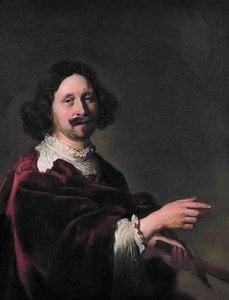
Bartholomeus Breenbergh
1598 - 1657 , Nederländerna
Kortfakta
- Artistic Movement Or Style: Italiensk landskapsstil
- Artists Or Movements Influenced By This Artist:
- Jan Linsen
- Claude Lorrain
- Artists Who Influenced This Artist:
- Pieter Lastman
- Paul Bril
- Cornelis van Poelenburgh
- Date Of Birth: Före 13 nov 1598
- Date Of Death: Efter 3 okt 1657
- Full Name: Bartholomeus Breenbergh
- Nationality: Holländsk
- Notable Artworks:
- Jakob brottas med ängeln
- De tre vise männens tillbedjan
- Johannes Döparens predikan
- Place Of Birth: Deventer, Nederländerna
Relaterade artiklar

Golden Light & Dutch Skies: Bringing the Magic of Dutch Golden Age Landscapes into Your Home
Transform your home with the breathtaking light of Dutch Golden Age landscapes. Discover how hand-painted oil reproductions of masterworks like Ruisdael and Vermeer bring timeless elegance, atmosphere, and soulful texture to modern interiors. Elevate your space with museum-quality art.

Nederländsk Guldålder: Topp 10 mästerverk som definierade epoken – konst & heminredning
Utforska de 10 ikoniska mästerverken från den nederländska guldåldern! Lär känna Rembrandt, Vermeer och Hals – deras teknik & berättelser. Hitta konsttryck och inspiration för din heminredning på ArtsDot.com. Upptäck hela samlingen online!
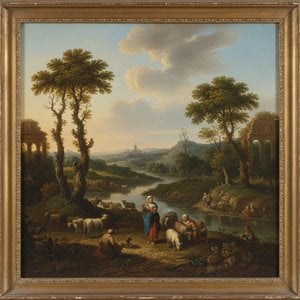
Nicolaes Berchem: Dutch Golden Age Pastoralism & the Evolution of Landscape Painting
Explore the captivating world of Nicolaes Berchem, a leading Dutch Golden Age painter. Discover his idyllic landscapes, masterful technique & lasting influence on art history. Learn more at ArtsDot.

Charles Leickert: Capturing the Dutch Golden Age Light – A Comprehensive Study of Technique, Context, and Legacy
Explore the captivating winter landscapes of Charles Leickert, a master of Dutch Golden Age light & atmosphere. Discover his techniques, symbolism, and lasting legacy – a comprehensive study for art enthusiasts and collectors.

Golden Age Reflections: Dutch Baroque Painting & Cultural Innovation
Explore the Dutch Golden Age of painting! Discover key artists like Vermeer & ter Borch, their innovative techniques, and the rich cultural context behind these Baroque masterpieces. Learn about collecting & appreciating this iconic art period.
