

 Förhandsvisa
 Skicka
 Dela
Dela
 Visa detaljer
 Guide
Guide

 Ladda ner
 Liknande objekt
 Röntgen
 Bildspel
 Q&A
Q&A Statistik
Ursula von Weichs

- 69.0 x 57.0 cm


 Visa mer
Giclée / Konsttryck
Giclée- eller canvasprint av museumskvalitet med snabb produktion och flexibla ytbehandlingsalternativ. ( Beställ handmålad reproduktion Byt till digital bild)




P118B Skr10

P118H Skr10

P118W Skr10

P438Z Skr10

P508JH Skr12

P508YH Skr12

P805H Skr10

P805Z Skr10

P919BZ Skr10

P919G Skr10

P919XJ Skr10

P959ZH Skr10

P968JZ Skr12

W106C Skr8

W218G Skr10

W218JH Skr8

W218Y Skr10

W307PJ Skr10

W316G Skr10

W316PJ Skr8

W316Y Skr10

W398PJ Skr8

W4111J Skr10

W500HY Skr15

W500JH Skr15

W692G Skr12

W849H Skr8

W940BG Skr15

W953PJ Skr8




Välj bland våra förinställda storlekar som motsvarar konstverkets ursprungliga proportioner.

Ange den bredd och höjd du behöver för att passa din ram eller vägg. Ett tryck kan endast beskäras, aldrig göras större än originalbilden, vilket innebär att ett format med en annan proportion leder till att en del av bilden går förlorad. Vi skickar en digital mockup för godkännande innan vi påbörjar tryckningen. Bilden som visas på denna sida visar inte den faktiska beskärningen — det är endast mockuppen som gör det.
Leverans över hela världen () på 2 veckor istället för standard 4/5 veckor. (2 november)

Fri expressfrakt över hela världen

Högkvalitativ linnecanvas

Fullständig fraktförsäkring

Garantier för återbetalning av tullavgifter

Garantier för exakt färgåtergivning

100 dagars returrätt (endast vid fel)

100% pengarna tillbaka-garanti

Mängdrabatt erbjuds
 Glasalternativet är endast tillgängligt i storlekar under 110 cm.

Ursula von Weichs
Giclée / Konsttryck
Storlek på reproduktion
-


Slutgiltigt pris
Skr 622
Liknande konstverk


Konstnärsbiografi
Barthel Beham (1502–1540): The Little Master of Nuremberg
Barthel Beham (1502–1540) stands as a pivotal figure in the German Renaissance printmaking tradition, earning him the moniker “Little Master” – a testament to his extraordinary skill and meticulous detail. Born in Nuremberg, Germany, he was steeped in artistic heritage from birth, inheriting talent from his elder brother Hans Sebald Beham and absorbing invaluable lessons from Albrecht Dürer himself. This formative influence shaped his distinctive style and propelled him to become one of the most celebrated engravers of his era.- Early Life & Training: Barthel’s artistic journey commenced under the tutelage of Hans Sebald, who instilled in him a profound understanding of engraving techniques – a craft that would define Beham's career. Dürer’s workshop served as another crucible for innovation and stylistic refinement, fostering Beham’s fascination with realism and compositional complexity.
- Engraving Mastery: Beham quickly established himself as a prodigious engraver, producing stunningly precise miniature prints that captivated audiences across Europe. His output during the 1520s exemplifies the “Little Masters” school – characterized by unparalleled accuracy and artistic ambition. Subjects ranged from biblical narratives to portraits of noblemen and humanist scholars, demonstrating his versatility and technical prowess.
- The Godless Painters & Exile: Beham’s unwavering skepticism regarding Lutheran dogma led to his expulsion from Nuremberg in 1525 alongside Hans Sebald and Georg Pencz – a controversial decision that nonetheless spurred him toward intellectual exploration and artistic experimentation. This exile fostered connections with humanist circles and broadened his horizons beyond the confines of Nuremberg’s religious conservatism.
- Munich & Patronage: Following papal pardon, Beham relocated to Munich where he found favor with Duke William IV and Ludwig X – securing lucrative commissions that allowed him to hone his artistic skills further. He became renowned for his portraiture, capturing the dignity and grandeur of Bavarian royalty with remarkable sensitivity and detail.
- Legacy & Influence: Barthel Beham died in Italy during a diplomatic mission under the patronage of William IV, marking the end of an illustrious career. His work continues to inspire admiration for its technical brilliance and humanist vision—a lasting contribution to German art history and a cornerstone of Renaissance printmaking.
Notable Works & Artistic Style
Beham’s artistic style is instantly recognizable by its meticulous realism, achieved through painstaking engraving processes. He prioritized capturing subtle nuances of expression and anatomical accuracy—a hallmark of Dürer's influence. His prints often incorporated complex compositions and dramatic lighting effects, elevating them beyond mere reproductions to become independent works of art. Consider his depiction of Chancellor Leonhard von Eck (1480–1550), a masterpiece showcasing the artist’s ability to convey psychological depth through portraiture. Similarly, “Portrait of a Man” exemplifies Beham's dedication to capturing human form with unparalleled precision and artistic sensitivity.Connections & Collaborations
Barthel Beham benefited greatly from collaborations with prominent artists of his time, notably Marcantonio Raimondi—with whom he worked in Bologna and Rome during the early 1530s. These partnerships exposed him to innovative techniques and broadened his artistic repertoire. Furthermore, his brother Hans Sebald’s involvement ensured a shared artistic vision and fostered a dynamic creative environment within Nuremberg's artistic community.
Barthel Beham
1502 - 1540 , Germany
Kortfakta
- Full Name: Barthel Beham
- Nationality: German
- Date Of Birth: 1502
- Date Of Death: 1540
- Place Of Birth: Nuremberg, Germany
- Notable Artworks:
- Portrait of a Man
- Portrait of Duke Ludwig X of Bavaria
- Artistic Movement Or Style: Little Masters
- Artists Who Influenced This Artist: ['Albrecht Dürer']
- Artists Or Movements Influenced By This Artist: ['Marcantonio Raimondi']
Relaterade artiklar

Tysk Expressionism: 10 Mästerverk som Definierade en Epok – Konst & Inredning
Utforska 10 ikoniska mästerverk inom tysk expressionism! Lär känna konstnärer som Nolde, Kirchner & Heckel. Upptäck historien bakom dessa färgstarka målningar och finn inspiration till din inredning med ArtsDot.com – museumkvalitet för ditt hem.

Mästverk i svart: Topp 10 målningar som fascinerar – ArtsDot.se
Utforska 10 ikoniska målningar dominerade av svart – från Rembrandts djupa skuggor till Munchs ångest. Lär känna historien bakom mästerverken och hitta inspiration för din inredning på ArtsDot.se. Upptäck hela kollektionen online!

Anton von Werner: Imperial Painter, Historical Witness & Shifting German Identity
Explore the life & work of Anton von Werner, Imperial Germany's leading painter. Discover his dramatic depictions of war, unification, and court life – a fascinating insight into 19th-century German history & art.
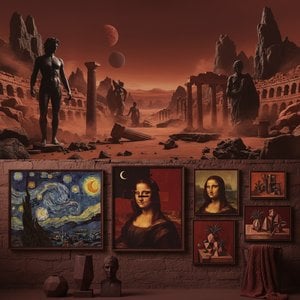
Mästverk i svart: Topp 10 målningar som domineras av Mars Black – Konst & Inredning
Utforska 10 ikoniska målningar där Mars Black dominerar – från romantik till expressionism. Lär känna konstnärer, tekniker och historien bakom tidlösa verk. Köp museumkvalitets reproduktioner på ArtsDot.com och förvandla ditt hem med klassisk konst!

Fritz von Uhde: Bridging Realism & Symbolism in Late 19th-Century German Painting
Explore the captivating world of Fritz von Uhde, a pivotal German painter bridging Realism & Symbolism. Discover his plein-air techniques, religious themes, and influence on modern art. Learn about this fascinating artist at ArtsDot.