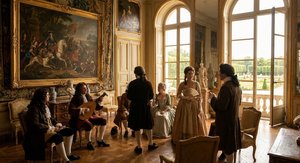
The Elegance of an Era: The Life and Art of Giorgio Domenico Duprà
In the shimmering tapestry of the eighteenth century, few artists captured the delicate pulse of aristocratic splendor quite like Giorgio Domenico Duprà. Born in the historic city of Turin in 1689, Duprà emerged as a master of the Rococo style, an era defined by grace, light, and an almost ethereal sense of movement. His life was a journey through the most prestigious courts of Europe, a nomadic existence that allowed him to weave together the diverse artistic threads of Italy, Portugal, and England into a singular, sophisticated visual language.
Duprà’s artistic soul was forged in the crucible of Roman training. Under the watchful eye of Francesco Trevisani, he absorbed the profound lessons of classical composition while simultaneously leaning toward the burgeoning influence of the French school of portraiture. This duality became his hallmark; he possessed the structural integrity of the Italian tradition paired with a soft, luminous sensibility that echoed the refined tastes of Paris. His brushwork did not merely record a face; it captured the very essence of status, draped in the silken textures and pastel tonalities that would become his signature.
A Wanderer Through Royal Courts
The career of Duprà was as much a diplomatic voyage as an artistic one. His movements across the continent mirrored the shifting political landscapes of the 1700s, leading him to serve some of the most influential dynasties of his time. Between 1719 and 1730, he found himself in Lisbon, serving the illustrious House of Braganza under King John V. In the Portuguese court, his ability to render the grandeur of the nobility solidified his reputation as a premier portraitist capable of translating royal power into aesthetic beauty.
Following his time in Portugal, Duprà’s path led him back to Rome, where he navigated the complex social circles of the exiled Stuart family. Working at the Palazzo Muti, he became a preferred chronicler for the Jacobite court and various British aristocrats traversing Europe on their Grand Tours. This period of his life was marked by an intimate engagement with the transient elite, capturing the fleeting dignity of those in political exile. Later, returning to his roots in Turin, he collaborated with his brother, Giuseppe Duprà, to serve the House of Savoy, bringing his refined Rococo touch to the heart of Piedmontese royalty.
Legacy and Artistic Mastery
The enduring significance of Duprà’s work lies in its ability to evoke the atmosphere of a lost world. His portraits are more than mere likenesses; they are windows into the 18th-century psyche, characterized by a certain delicate and blushing tonality that suggests the softness of skin and the richness of velvet. The presence of his masterpieces in prestigious institutions like the Prado Museum serves as a testament to his lasting impact on European art history.
To reflect upon the breadth of his contributions, one might consider the following pillars of his career:
- Stylistic Synthesis: The seamless blending of Roman classical training with the light, decorative elegance of French Rococo portraiture.
- Courtly Service: A distinguished career serving the House of Braganza in Portugal, the Stuart family in Rome, and the House of Savoy in Italy.
- Technical Brilliance: An unparalleled mastery of texture and color, particularly his ability to use soft palettes to convey the nobility of his subjects.
- Historical Witness: His role as a visual historian of the European aristocracy during a period of profound cultural and political transition.
Ultimately, Giorgio Domenico Duprà remains a visionary of the Rococo movement. Through his eyes, we see the 18th century not as a collection of static figures, but as a vibrant, breathing era of elegance, where every brushstroke contributed to the enduring myth of aristocratic splendor.
Pitanja i odgovori
Postoji li hronološki pregled radova umetnika Domenico Duprà?
Hronološki prikaz radova umetnika Domenico Duprà dostupan je na njegovoj stranici Hronika, gde se dela predstavljaju redom stvaranja, poglavlje po poglavlje.
Postoji li 3D virtuelna obilaznica kroz dela umetnika Domenico Duprà?
3D galerija umetnika Domenico Duprà je stranica koja prikazuje umetnikova dela u virtuelnoj trodimenzionalnoj galeriji.
Pod kojim drugim imenima je Domenico Duprà poznat/a?
Domenico Duprà je poznat/a i pod imenom Domenico Duprat, Giorgio Domenico Dupraz, Giorgio Domenico Duprat, Giorgio Domenico Dupra, Domenico Dupuis.