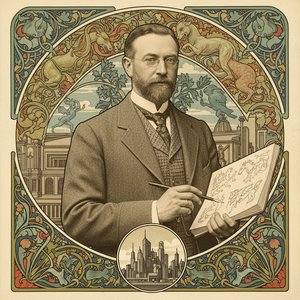
The Life and Art of Daniel MacDonald
Daniel MacDonald emerged from an Irish background, born in 1821 to James McDonald and Catherine McCarthy. His creative environment was clearly a family affair, as his sister Jane also pursued a life as an artist. Moving between the urban centers of Cork, Ireland, and London, England, MacDonald developed a versatile technical range that defied the narrow specializations of many of his contemporaries. He was not a one-dimensional painter; instead, he operated as a sketcher, portrait artist, and caricaturist.
His proficiency in various media, including pen and ink, allowed him to navigate different social and artistic circles. This versatility was essential for a professional working in the mid-19th century. While many artists of the era remained tethered to a single genre, MacDonald’s ability to shift from the precision of caricature to the formal requirements of portraiture suggests a highly adaptable technical mind. His work reflects a direct engagement with the visual realities of his time, utilizing a wide array of media to capture both character and likeness.
Exhibitions and Artistic Activity
MacDonald’s presence in the mid-19th-century exhibition circuit demonstrates a steady progression toward the center of the British art world. Between 1849 and 1851, he secured a place at the British Institution, a move that signaled his growing relevance among contemporary painters. This period of activity was not limited to London; he also brought his work to the Cork Institution in 1852, maintaining a connection to his Irish roots even as his professional reach expanded.
The year 1853 marked a significant milestone in his career. He achieved his first exhibition at the London Royal Academy, a venue that demanded a high level of technical proficiency. At this stage, his output included a portrait of Mrs Edward Fulcher, a work that showcased his ability to handle formal portraiture alongside his other interests. His career was cut short just as his technical skill reached a point of maturity, leaving his exhibition history as a fragmented record of a developing talent.
Significant Works and Subject Matter
MacDonald’s historical weight stems from his direct engagement with the Great Famine. He executed the only known painting that deals with the catastrophe while the famine itself was occurring. His 1847 work, An Irish Peasant Family Discovering the Blight of their Store, captures a specific, harrowing moment of realization. This piece, measuring 33 x 40″, functions as a central piece of historical record, documenting the immediate impact of the potato blight on Irish life.
Beyond this singular focus on famine, his output included varied subject matter. He produced A Vision of the Sea and The Gun of Distress, works that demonstrate a range beyond his most famous historical documentation. His ability to navigate different themes—from maritime scenes to the grim realities of agricultural disaster—marks him as a versatile observer of his era. He was a natural artist with an outstanding ability in drawing, often utilizing pen and ink alongside other media to capture his subjects.
Death and Artistic Legacy
Daniel MacDonald died in 1853 at the age of 32 or 33, succumbing to a fever just as his artistic development was reaching maturity. This premature end cut short a career that was beginning to gain traction in major London exhibition circles. His death occurred at a moment when his technical proficiency across various media was becoming increasingly evident to the public.
His historical importance rests largely on his decision to confront the Great Famine through his art. He was one of the few 19th-century artists to direct his focus toward this specific catastrophe. This choice distinguishes his body of work from many of his contemporaries who avoided such heavy subject matter. His ability to document the human reality of the famine provides a rare visual record of that period.
Today, his relevance is maintained through specialized exhibitions such as In the Lion's Den: Daniel Macdonald, Ireland and Empire. This exhibition highlights his contribution to the visual history of Ireland. His work remains a specific point of study for those examining the intersection of art and historical crisis.
Pitanja i odgovori
Koje je boje Daniel MacDonald najčešće koristio/la?
Genom palete umetnika Daniel MacDonald je stranica koja predstavlja koloristički profil celokupnog umetničkog dela ovog autora.
Kako mogu da pronađem sva dela umetnika Daniel MacDonald prema određenom mediju?
Radove umetnika Daniel MacDonald možete pregledati prema tehnici na stranici Svi mediji.
Gde se mogu pronaći dela umetnika Daniel MacDonald grupisanom prema ključnim rečima?
Stranica Preko ključnih reči umetnika Daniel MacDonald grupiše njegova dela prema ključnim rečima.
Koja raspoloženja izražavaju dela umetnika Daniel MacDonald?
Na stranici Soba po raspoloženju umetnik Daniel MacDonald prikazuje svoja dela poređana prema njihovoj atmosferi.