


 Pregledaj u prostoru
 Podeli
 Podeli
 Detalji
 Vodič
Vodič

 Preuzmi sliku
 Slični predmeti
 Rendgenski snimak
 Automatska prezentacija
 Statistika
Цвеће
 Ulje na platnu
- Umetnost za zidove
- Romanticism
 1856
1856- 19. vek
 47.0 x 38.0 cm
 Hermitage Museum
 Pročitaj više
Ručno rađena uljana reprodukcija
Ručno oslikano uljanim bojama na platnu u dimenzijama i okviru po vašem izboru, izrađeno po porudžbini od strane naših umetnika. ( Pređi na prodaju štampanih primeraka Pređi na prodaju digitalnih slika)




P118B дин10

P118H дин10

P118W дин10

P438Z дин10

P508JH дин12

P508YH дин12

P805H дин10

P805Z дин10

P919BZ дин10

P919G дин10

P919XJ дин10

P959ZH дин10

P968JZ дин12

W106C дин8

W218G дин10

W218JH дин8

W218Y дин10

W307PJ дин10

W316G дин10

W316PJ дин8

W316Y дин10

W398PJ дин8

W4111J дин10

W500HY дин15

W500JH дин15

W692G дин12

W849H дин8

W940BG дин15

W953PJ дин8




Izaberite jednu od naših unapred definisanih veličina koje odgovaraju originalnim proporcijama umetničkog dela.

Unesite širinu i visinu koja vam je potrebna, kako bi se uklopili u vaš ram ili zid. Pošto je ovo ručno oslikano delo, umetnik može naslikati malo više prostora oko slike ili malo skratiti ivice za dimenzije drugačijeg oblika — izbor je na vama. Pre početka rada, poslaćemo vam digitalni prikaz radi potvrde. Slika prikazana na ovoj stranici ne predstavlja konačan rezultat — samo digitalni prikaz pokazuje stvarnu sliku.
Nakon narudžbine, tim ArtsDot.com će klijentu putem e-pošte poslati uputstva i dostaviti prikaz predloženog rešenja
Svetska isporuka () za 3/4 nedelje umesto uobičajenih 5 nedelja. (27 октобар). Bez kompromisa po pitanju kvaliteta.

Besplatna ekspresna dostava širom sveta

Visokokvalitetno laneno platno

Sveobuhvatno osiguranje transporta

Garancija povraćaja carine i uvoznih dažbina

Garancija vernosti boja i autentičnosti pri reprodukciji

Politika povraćaja u roku od 100 dana (samo u slučaju nedostataka)

Garancija povrata 100% novca

Popust pri većoj količini
 Opcija sa staklom dostupna je samo za dimenzije manje od 110 cm

Цвеће
Tehnika izrade reprodukcije
Veličina reprodukcije
-


Ukupna cena
дин 27120
A Symphony of Petals: The Luminous World of Simon Saint Jean
In the grand tapestry of French art history, few threads are as delicate or as luminous as those woven by Simon Saint Jean. Known affectionately as "The Poet of Flowers," Saint Jean eschewed the turbulent landscapes and sweeping historical dramas that dominated his era, choosing instead to find the infinite within the infinitesimal. His masterpiece, "Flowers," painted in 1856, serves as a breathtaking window into the Romantic sentiment, where the botanical world is transformed into a profound exploration of virtue, spirituality, and the ephemeral nature of life. To gaze upon this work is to step into a quiet sanctuary, far removed from the noise of the industrial age, finding solace in the meticulous arrangement of nature's most exquisite offerings.
The composition of "Flowers" is a masterclass in balanced abundance. At its heart sits a vibrant red vase, acting as a bold anchor for a lush collection of roses, daisies, and carnations. This central arrangement is not merely a static display but a living, breathing moment captured in time. The artist’s eye wanders across the wooden table, where scattered yellow blossoms dance around the primary vessel, creating a rhythmic movement that guides the viewer through the scene. The inclusion of two smaller vases—one tucked near the top left and another resting toward the bottom right—adds a layer of visual depth and complexity, suggesting a larger, unseen garden from which these specimens were lovingly gathered.
Technique and the Mastery of Light
What distinguishes Saint Jean from his contemporaries is his uncanny ability to marry scientific botanical accuracy with an unprecedented emotional depth. Utilizing oil on canvas, he employed a technique that favored luminous effects over heavy, obscuring brushstrokes. He possessed a rare talent for manipulating light, allowing it to filter through the petals as if they were made of fine silk or translucent parchment. This creates an internal glow, an ethereal quality that makes the flowers appear to radiate their own soft light from within.
Every texture is rendered with painstaking precision; one can almost feel the velvety softness of the rose petals and the delicate, papery edges of the daisies. This commitment to realism does not result in a cold, clinical illustration but rather an evocative experience. By layering pigments to achieve these translucent effects, Saint Jean captures the very essence of life—the way light interacts with organic matter to create beauty that is both tangible and transcendent. For the collector or interior designer, this technique ensures that the artwork possesses a dynamic presence, changing character as the ambient light in a room shifts throughout the day.
Symbolism and Emotional Resonance
Beyond its undeniable aesthetic appeal, "Flowers" resonates with the deeper symbolic language of the Romantic movement. In the mid-19th century, flowers were far more than mere decoration; they were a vocabulary of the soul. The rose often whispered of love and passion, while the purity of the daisy spoke to innocence and virtue. Through this arrangement, Saint Jean invites the viewer into a meditative state, reflecting on the fleeting splendor of the natural world. There is a poignant beauty in the way he captures these blooms—at the very height of their perfection, yet inherently temporary.
For those seeking to bring a sense of tranquility and sophisticated grace into a living space, this painting offers more than just color; it offers an atmosphere. It is a piece that commands attention through its quietude rather than through volume. Whether placed in a sun-drenched morning room or a stately library, "Flowers" acts as a perennial spring, injecting a sense of organic vitality and timeless elegance into any interior design scheme. It remains a testament to the idea that true greatness is often found not in the monumental, but in the delicate, well-observed details of the world around us.
Pitanja i odgovori
Kome je „Цвеће”, Simon Saint Jean preporučeno kao poklon?
Kao poklon, za Dan majke se predlaže „Цвеће”, Simon Saint Jean. Odličan izbor može biti i za druge prilike.
Da li je „Цвеће”, Simon Saint Jean u javnom vlasništvu?
Što se tiče autorskih prava, "Цвеће" je u javnom vlasništvu – autorska prava su istekla.
Mogu li da vidim rendgenski prikaz dela „Цвеће”, Simon Saint Jean?
Stranica Rentgenski snimak za delo „Цвеће”, Simon Saint Jean predstavlja interaktivni preglednik koji vam omogućava da prolazite kroz jedanaest optičkih slojeva slike dela, uključujući i prikaz u stilu rendgenskog snimka.
Srodna umetnička dela


Biografija umetnika
The Poet of Flowers: The Ethereal World of Simon Saint Jean
In the grand tapestry of French art history, few threads are as delicate or as luminous as those woven by Simon Saint Jean. Born in Millery, France, in 1743, Saint Jean emerged not as a painter of sweeping historical dramas or turbulent landscapes, but as a master of the miniature soul. His life, though marked early on by the profound tragedy of his father's untimely death, became a testament to the beauty found in the quietest corners of nature. This early encounter with loss perhaps instilled in him a deep reverence for the ephemeral, leading him to dedicate his life to capturing the fleeting splendor of the botanical world—a pursuit that would eventually earn him the poetic moniker, The Poet of Flowers.
His artistic journey was shaped by the rigorous academic traditions of his era. Seeking to refine his innate talent for drawing, Saint Jean entered the École de beaux-arts de Lyon, where he studied under the esteemed masters Pierre Révoil and Augustin Alexandre Thierriat. From these mentors, he absorbed the precision of Neoclassical idealism, yet he possessed a spirit that leaned toward the burgeoning Romantic movement. This unique duality allowed him to marry scientific botanical accuracy with an unprecedented emotional depth. His work was never merely a record of species; it was an exploration of the spiritual essence residing within every petal and stem.
Luminosity and Technique: A Master of Translucent Light
To gaze upon a Saint Jean original is to witness a mastery of light that transcends the medium itself. While many of his contemporaries relied on heavy brushstrokes and dramatic chiaroscuro to command attention, Saint Jean moved in the opposite direction. He favored a technique defined by meticulous observation and the use of translucent watercolor washes. By layering thin, delicate pigments, he allowed light to pass through the paint and reflect off the surface, creating an internal glow that made his floral arrangements appear almost self-illuminated.
His compositions are characterized by a sense of weightless grace. He eschewed the cluttered, dense still lifes common in the Baroque tradition, opting instead for arrangements that breathed with space and air. This technique allowed him to capture the subtle complexities of texture—the velvety softness of a rose, the waxy sheen of a lily, or the fragile transparency of a petal. Through this method, he transformed botanical illustration into a high art form, where the subject matter served as an emblem of virtue, spirituality, and the sublime beauty of the natural order.
Legacy and Historical Significance
The reach of Saint Jean’s influence extended far beyond the studios of Lyon, finding resonance within the highest echelons of French society. His ability to imbue nature with moral and religious symbolism caught the attention of significant patrons, most notably Louis XVIII, who commissioned a monumental watercolor of lilies for the church of Sainte-Marie-Madeleine. Such works solidified his reputation as an artist capable of expressing the divine through the earthly.
Even figures as controversial as the Marquis de Sade found a connection to his art, recognizing in Saint Jean’s delicate compositions a profound sense of contemplation and purity. His historical significance lies in this ability to bridge the gap between the scientific and the sentimental. As the centuries progressed, his work remained a vital link between the structured elegance of the 18th century and the emotive freedom of Romanticism. Today, the legacy of Simon Saint Jean lives on through his captivating floral still lifes, which continue to offer viewers a sanctuary of peace and a profound meditation on the fleeting beauty of life.

Simon Saint Jean
1743 - 1811 , France
Brzi pregled
- Full Name: Louis de Rouvroy, duc de Saint-Simon
- Nationality: French
- Date Of Birth: 1743
- Date Of Death: 1811
- Place Of Birth: Millery, France
- Artistic Movement Or Style: Court Memoirs
- Artists Who Influenced This Artist: ['Claude de Rouvroy, comte de Rasse']
- Artists Or Movements Influenced By This Artist: ['Charles François de Rouvroy']
Srodni članci

Victorian Botanical Painting: Science, Art & Aesthetic Sensibility
Explore the exquisite world of Victorian botanical art! Discover the science & artistry behind stunning floral illustrations by Gould, Muckley & more. Learn about collecting, value & investment at ArtsDot.

The Evocative Detail of Nature: A History of Naturalistic Illustration
Explore the rich history of botanical illustration! Discover pioneering artists like Maria Sibylla Merian & Marianne North. Learn about scientific precision, artistic expression, and find museum-quality reproductions at ArtsDot.
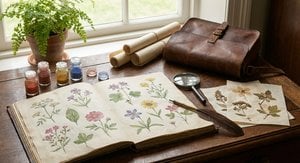
The Flourishing Canvas: A Historical Journey Through Botanical Illustration
Explore the captivating history of botanical illustration! Discover renowned artists like Robert Havell & Mary Walcott, learn about techniques, and find museum-quality art at ArtsDot.com.
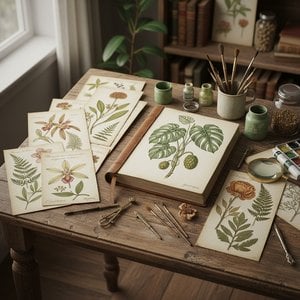
The Flourishing Canvas: A Historical & Artistic Exploration of Botanical Illustration
Explore the rich history of botanical illustration! Discover key artists like Havell & Barraband, learn about scientific accuracy & aesthetic beauty. Shop museum-quality reproductions at ArtsDot.

The Flourishing Canvas: A Historical Journey Through Botanical Illustration
Explore the captivating history of botanical illustration! Discover renowned artists like Robert Havell & Mary Walcott, learn about techniques, and find museum-quality art at ArtsDot.com.
