


 Pregledaj u prostoru
 Podeli
 Podeli
 Detalji
 Vodič
Vodič

 Preuzmi sliku
 Slični predmeti
 Rendgenski snimak
 Automatska prezentacija
 Statistika
Alchemy
 Acrylic On Canvas
- WallArt
- Abstract Expressionism
 1947
1947- Modern
 114.0 x 195.0 cm
 Pročitaj više
Giclee štampa / Umetnički otisak
Giclée štampa ili print na platnu muzejskog kvaliteta uz brzu izradu i raznovrsne opcije završne obrade. ( Naručite ručno oslikano reprodukciju Pređi na prodaju digitalnih slika)




P118B дин10

P118H дин10

P118W дин10

P438Z дин10

P508JH дин12

P508YH дин12

P805H дин10

P805Z дин10

P919BZ дин10

P919G дин10

P919XJ дин10

P959ZH дин10

P968JZ дин12

W106C дин8

W218G дин10

W218JH дин8

W218Y дин10

W307PJ дин10

W316G дин10

W316PJ дин8

W316Y дин10

W398PJ дин8

W4111J дин10

W500HY дин15

W500JH дин15

W692G дин12

W849H дин8

W940BG дин15

W953PJ дин8




Izaberite jednu od naših unapred definisanih veličina koje odgovaraju originalnim proporcijama umetničkog dela.

Unesite širinu i visinu koja vam je potrebna, kako bi se uklopili u vaš ram ili na vaš zid. Štampa se može samo iseći, nikada ne može biti veća od originalne slike, stoga format sa drugačijim proporcijama gubi deo slike. Poslaćemo vam digitalni prikaz radi potvrde pre nego što započnemo štampu. Slika prikazana na ovoj stranici ne pokazuje stvarni rez — to pokazuje samo digitalni prikaz.
Dostava širom sveta () za 2 nedelje umesto uobičajenih 4/5 nedelja. (21 октобар)

Besplatna ekspresna dostava širom sveta

Visokokvalitetno laneno platno

Sveobuhvatno osiguranje transporta

Garancija povraćaja carine i uvoznih dažbina

Garancija vernosti boja i autentičnosti pri reprodukciji

Politika povraćaja u roku od 100 dana (samo u slučaju nedostataka)

Garancija povrata 100% novca

Popust pri većoj količini
 Opcija sa staklom dostupna je samo za dimenzije manje od 110 cm

Alchemy
Giclee štampa / Umetnički otisak
Veličina reprodukcije
-


Ukupna cena
дин 6355
A Dance of Chaos and Transformation: Exploring Jackson Pollock’s Alchemy
- The Genesis of Spontaneity
- Decoding the Drip Technique
- Historical Resonance and Symbolic Weight
- A Legacy of Innovation
Decoding the Drip Technique
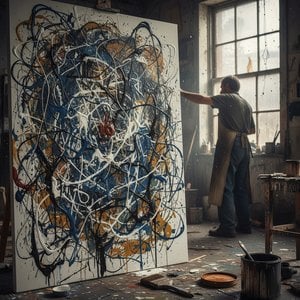
Pollock’s method was anything but conventional. He eschewed the easel and brush entirely, laying the canvas directly on the floor and moving around it with cans of paint, dripping and pouring the wet enamel onto the surface. This process, meticulously documented in photographs and videos, reveals a deeply physical engagement – Pollock wasn't simply applying color; he was wrestling with it, channeling his energy and emotions into every movement. The inclusion of unexpected materials—sand, pebbles, broken wood sticks, and fibers—further complicates the narrative, adding textural layers and hinting at a subconscious desire to incorporate elements from the natural world into his work. These additions aren't accidental; they contribute to the painting’s overall sense of dynamism and reinforce the idea that *Alchemy* is less about representing a specific subject and more about capturing a state of being – a moment of intense creative flux. The glossy finish of the enamel paint, reflecting light in myriad directions, amplifies this effect, creating an almost luminous quality within the composition.Historical Resonance and Symbolic Weight
The title itself, *Alchemy*, is laden with significance. Given to the painting by Pollock’s neighbors, Ralph Manheim and his wife, it speaks to the transformative nature of the work – a metaphor for the artist's process and perhaps even for life itself. Born in 1912 in Cody, Wyoming, Pollock’s early exposure to the vast landscapes and diverse cultures of the American West undoubtedly shaped his artistic sensibility. His formative years spent traveling with his father, a land surveyor, instilled in him a deep appreciation for natural forms and an understanding of spatial relationships – qualities that would later inform his groundbreaking approach to painting. The painting's creation coincided with a period of intense experimentation within the art world, as artists sought to break free from representational constraints and explore new ways of expressing themselves. *Alchemy* stands as a powerful example of this shift, embodying the core tenets of Abstract Expressionism: spontaneity, emotional intensity, and a focus on the act of painting itself. The nineteen-color palette, revealed after meticulous restoration at the Opificio delle Pietre Dure in Florence, adds another layer of complexity to the work, suggesting a deliberate exploration of color theory and its potential to evoke specific emotions and sensations.A Legacy of Innovation
Ultimately, *Alchemy* is more than just a beautiful painting; it’s a landmark achievement that continues to inspire artists and captivate audiences today. Pollock's influence on modern art is undeniable, and his work remains a cornerstone of American Abstract Expressionism. The piece’s open-endedness invites endless interpretation – there is no single “correct” reading, encouraging viewers to engage with the artwork on a deeply personal level. Its scale—114 x 195 cm—further enhances this immersive experience, demanding attention and inviting contemplation. A reproduction of *Alchemy* offers a unique opportunity to bring this iconic work into your space, allowing you to appreciate Pollock’s genius and contribute to the ongoing dialogue surrounding one of the most important paintings of the 20th century.Pitanja i odgovori
Za šta se predlaže upotreba dela „Alchemy”, Džekson Polok?
Preporučena upotreba printa dela "Alchemy" je Statement.
Šta prikazuje „Alchemy”, Džekson Polok?
Motivi dela "Alchemy" su abstract expressionism, drip painting, pollock, alchemy, color field, texture, spontaneity.
Da li je delo "Alchemy" autora Džekson Polok u javnom vlasništvu i zašto?
"Alchemy" autora Džekson Polok je u javnom vlasništvu – autorska prava su istekla. Autorska prava se računaju od godine smrti umetnika, a Džekson Polok je preminuo/la 1956.


Biografija umetnika
Rano mladost i seme inovacije
Pol Pok (Paul Jackson Pollock), rođen u Kodiju, Vajoming, 1912. godine, od samog početka bio je nemirna duša. Njegovo rano detinjstvo obeležilo je često preseljenje, dok je njegov otac radio kao geodetski inženjer širom prostranstava američkog Zapada. Ovakvo nomadsko postojanje u mladom Poloku je usadilo duboku povezanost sa prirodnim svetom i izložilo ga različitim kulturama, naročito kroz susrete sa umetnošću starosedelaca Amerikance tokom tih istraživačkih putovanja – utisci koji će suptilno prožeti njegovu umetničku viziju kasnije u životu. Iako nikada nije eksplicitno imitirao autohtone stilove, sirova energija i duhovni rezonancija tih ranih iskustava nesumnjivo su ostavile svoj trag.
Polokovo formalno umetničko obrazovanje počelo je u srednjoj školi Manual Arts u Los Anđelesu, nakon čega su usledila studije na Art Students League u Njujorku pod mentorstvom Tomasa Harta Bentona. Benton, istaknuta figura regionalističkog pokreta, naglašavao je ritmičnu kompoziciju i narativne teme ukorenjene u američkom životu. Iako je Polok u početku upijao ove lekcije, njegova urođena sklonost naginjala se ka apstraktnijim istraživanjima. Takođe je bio duboko pod uticajem meksičkih muralista poput Hosea Clemente Orozcoa, čiji su moćni prikazi društvene borbe snažno odjekivali u njemu. Ovi rani uticaji postavili su temelj, ali je upravo bujni svet nadrealizma zaista otključao Polokov umetnički potencijal.
Rođenje akcionog slikarstva i revolucionarna tehnika
Tridesete godine su videle Poloka kako eksperimentiše sa različitim tehnikom, tražeći alternative tradicionalnom radu četkicom. Počeo je da sipa boju, istražujući njenu fluidnost i nepredvidivu prirodu. Međutim, oko 1947. godine njegov umetnički put doživeo je radikalnu transformaciju. Potpuno napustivši slikarski štafel, Polok je platna postavio direktno na pod, pokrećući ono što će postati poznato kao njegova „tehnika kapanja“. Zatim je nastavio da kapa, prska i baca boju na platno odozgo, orkestrirajući dinamičan ples između umetnika, medija i površine.
Ovo nije bilo samo nanošenje boje; radilo se o otelotvorenju samog čina stvaranja. Polokova platna postala su arene za fizičku ekspresiju, beležeći neposrednost njegovih gestova i emocija. Rezultujuće slike karakteriše „all-over“ kompozicija – nedostatak centralnog fokusa koji poziva posmatrača da istraži celu površinu kao jedinstveno polje energije. Zamršene mreže linija i boja prepliću se, stvarajući vizuelnu složenost koja je istovremeno očaravajuća i izazovna. Koristio je nekonvencionalne alate – štapove, noževe, čak i špriceve – kako bi manipulisao bojom na nepredvidiv način, dodatno naglašavajući spontanu prirodu svog procesa.
Ovaj inovativni pristup pozicionirao je Poloka kao centralnu figuru u uslegujućem pokretu apstraktnog ekspresionizma, koji se pojavio u Njujorku nakon Drugog svetskog rata. Apstraktni ekspresionizam je davao prioritet spontanom gestu, velikoj razmeri i nereprezentativnoj slici, odražavajući širi kulturni pomak od tradicionalnih umetničkog konvencija. Njegov brak sa koleginicom umetnicom Li Krasner (Lee Krasner) takođe je bio presudan; ona mu je pružala nepokolebljivu emocionalnu podršku i aktivno podsticala njegov umetnički razvoj, prepoznajući revolucionarnu prirodu njegovog rada.
Ikonična dela i trajno nasleđe
Polokova najslavnija dela – kao što su Number 1, 1950 (Lavender Mist), One: Number 31, 1950, Blue Poles: Number 11, 1952 i Convergence – svedočanstva su njegove revolucionarne tehnike. Ove slike nisu samo slike; one su zapisi performansa, prožeti fizičkim prisustvom i emocionalnim intenzitetom umetnika. Dinamična energija koja izbija iz ovih platna je opipljiva, uvodeći posmatrače u svet čiste apstrakcije.
Njegov stil prevazilazi samu estetiku; to je istraživanje procesa iznad proizvoda. Polok je nastojao da na platno uhvati neposrednost svojih postupaka i emocija, odbacujući tradicionalne pojmove kompozicije i reprezentacije. Ronio je u Jungovu psihologiju, istražujući arhetipove i nesvesno u svojoj umetnosti, tražeći način da dotakne univerzalne simbole i primarne energije.
Polokov uticaj na istoriju umetnosti je neizmerljiv. Temeljno je izmenio način na koji umetnici pristupaju slikarstvu, oslobađajući se metoda zasnovanih na šetalu i prihvatajući performativniji pristup. Njegov rad pomogao je da se učvrsti pozicija Njujorka kao globalnog centra moderne umetnosti, pomerajući fokus sa evropske dominacije. Njegov uticaj se može videti u radu bezbrojnih umetnika koji su usledili, uključujući one povezane sa slikarstvom polja boja (Color Field painting) i kasnijim oblicima apstraktnog ekspresionizma.
Iako je u početku dočekan mešovitim kritikama – neki kritičari su njegov rad odbacivali kao haotičan ili nedostatak veštine – Polokova reputacija je steadily rasla nakon njegove prerane smrti 1956. godine u 44. godini života. Danas je univerzalno priznat kao jedan od najvažnijih i najuticajnijih umetnika 20. veka, vizionar koji se usudio da izazove konvencije i redefiniše granice umetničkog izražavanja. Njegove inovativne tehnike i ekspresivni stil nastavljaju da inspirišu i provociraju, osiguravajući njegovo trajno nasleđe za generacije koje dolaze.

Džekson Polok
1912 - 1956 , Sjedinjene Američke Države
Brzi pregled
- Artistic Movement Or Style: Apstraktni ekspresionizam
- Artists Or Movements Influenced By This Artist:
- Kolor fild slikarstvo
- Apstraktni ekspresionizam
- Artists Who Influenced This Artist:
- Žoze Klemente Orozko
- Andre Mason
- Maks Ernst
- Tomas Hart Benton
- Date Of Birth: 28. januar 1912.
- Date Of Death: 11. avgust 1956.
- Full Name: Pol Džekson Polok
- Nationality: Amerikanac
- Notable Artworks:
- Broj 1, 1950 (Lavanda magla)
- Jedan: Broj 31, 1950.
- Plave polove: Broj 11, 1952.
- Konvergencija
- Place Of Birth: Kodi, SAD
Srodni članci
Paul Jackson Pollock: A Radical Departure – Exploring Abstract Expressionism's Pioneering Figure and His Enduring Legacy
Explore the revolutionary art of Jackson Pollock & Abstract Expressionism. Discover his iconic drip paintings, lasting impact, and considerations for collecting this pivotal American artist. Expert insights at ArtsDot.

Beyond Representation: Emotional Depth & Formal Innovation in Abstract Expressionism
Explore the profound emotional depth & formal innovation of Abstract Expressionism. Discover key artists, collecting insights, and investment potential with expert guidance. Learn more now.

Beyond Representation: Exploring the Emotional Landscape of Abstract Expressionism
Explore the profound emotional world of Abstract Expressionism with ArtsDot. Discover key artists like Pollock & Rothko, learn about collecting, and find museum-quality reproductions to inspire your space.

Abstraktni Ekspresionizam: 10 Remek Dela Koja Su Definisala Pokret
Otkrijte 10 remek dela koja su definisala apstraktni ekspresionizam! Istražite dela Pola Krausa, Džejson Poloka i drugih. Saznajte priče iza umetnosti i inspirisanje za dekoraciju doma. Eksplorirajte kolekciju na ArtsDot.com!

John Jackson: A Comprehensive Exploration of Technique, Context, and the Evolution of a Modern Visionary
Explore the life & work of John Jackson, a pivotal figure in Abstract Expressionism. Discover his innovative techniques, historical context, and lasting influence on modern art. A guide for discerning collectors.
