

 Pregledaj u prostoru
 Pošalji
 Podeli
 Detalji o delu
 Vodič
Vodič

 Preuzmi
 Slični predmeti
 Rendgenski snimak
 Automatska prezentacija
 Q&A
Q&A Statistika
Drying the Clothes


 Pročitaj više
Giclee štampa / Umetnički otisak
Giclée štampa ili print na platnu muzejskog kvaliteta uz brzu izradu i raznovrsne opcije završne obrade. ( Kupite ručno oslikano delo Pređi na digitalnu sliku)




P118B дин10

P118H дин10

P118W дин10

P438Z дин10

P508JH дин12

P508YH дин12

P805H дин10

P805Z дин10

P919BZ дин10

P919G дин10

P919XJ дин10

P959ZH дин10

P968JZ дин12

W106C дин8

W218G дин10

W218JH дин8

W218Y дин10

W307PJ дин10

W316G дин10

W316PJ дин8

W316Y дин10

W398PJ дин8

W4111J дин10

W500HY дин15

W500JH дин15

W692G дин12

W849H дин8

W940BG дин15

W953PJ дин8




Izaberite jednu od naših unapred definisanih veličina koje odgovaraju originalnim proporcijama umetničkog dela.

Unesite željenu širinu i visinu kako bi se štampa uklopila u vaš ram ili zid. Štampu je moguće samo iseći, ali nikada povećati iznad dimenzija originalne slike, stoga format sa drugačijim proporcijama uzrokuje gubitak dela slike. Pre početka štampe, poslaćemo vam digitalni prikaz radi potvrde. Slika prikazana na ovoj stranici ne predstavlja stvarni isrez — to pokazuje samo digitalni prikaz.
Dostava širom sveta () za 2 nedelje umesto uobičajenih 4/5 nedelja. (31 октобар)

Besplatna ekspresna dostava širom sveta

Visokokvalitetno laneno platno

Potpuno osiguranje transporta

Garancija povraćaja carine i uvoznih dažbina

Garancija vernosti boja

Politika povraćaja u roku od 100 dana (samo u slučaju nedostataka)

Garancija povrata 100% novca

Popust na više proizvoda
 Opcija sa staklom dostupna je samo za dimenzije manje od 110 cm

Drying the Clothes
Giclee štampa / Umetnički otisak
Dimenzije reprodukcije
-


Ukupna cena
дин 6461
Srodna umetnička dela


Biografija umetnika
A Life Illuminated: Pál Szinyei Merse and the Pursuit of Light
Pál Szinyei Merse, a name perhaps less familiar than some of his contemporaries, stands as a pivotal figure in Hungarian art history, a painter who wrestled with self-doubt yet ultimately forged a unique path toward capturing the ephemeral beauty of light and color. Born on July 4, 1845, in Szinyeújfalu, Hungary, into an aristocratic family deeply involved in the nation’s turbulent political landscape—supporting the Hungarian Revolution—his early life was marked by both privilege and instability. This formative period, punctuated by private schooling due to unrest, instilled within him a sensitivity that would later permeate his artistic vision. His formal training began at the Academy of Fine Arts in Munich, where he studied under Alexander von Wagner and subsequently Karl von Piloty. While technically proficient, Szinyei Merse felt constrained by the academic rigidity of the institution. A pivotal encounter with Wilhelm Leibl proved transformative; Leibl introduced him to the revolutionary practice of plein-air painting—capturing landscapes directly from nature—a technique that would fundamentally shape his artistic identity and set him apart from many of his peers.From Genoa to Nagybánya: Finding His Voice Amidst Struggle
The year 1870 saw Szinyei Merse relocate to Genoa, a vibrant port city brimming with Mediterranean light and color. Though initially inclined to remain there, the pull of family obligations ultimately led him back to Hungary in 1872. Establishing a studio near that of his friend Arnold Böcklin, he embarked on a period of intense creativity, yet financial anxieties and personal struggles soon began to overshadow his artistic pursuits. This era was characterized by a relentless self-criticism and periods of profound discouragement, leading him to abandon painting altogether for over a decade beginning in 1882. A painful divorce in 1887 further compounded these difficulties. His dedication to raising his son, Félix, during this time demonstrated a deep sense of responsibility, but it was the encouragement of friends and colleagues that eventually spurred him toward a remarkable artistic resurgence.A Late Flowering: Recognition and Reform
The year 1894 marked a turning point in Szinyei Merse’s career. A retrospective exhibition, orchestrated by his devoted circle of friends, provided long-overdue recognition for his talent. The purchase of one of his works by Emperor Franz Joseph signaled the beginning of renewed acclaim and artistic productivity. He painted with an almost feverish intensity during this later period, despite remaining perpetually critical of his own efforts. Beyond his personal artistic journey, Szinyei Merse became a vocal advocate for reform within Hungarian art education. Elected to the Diet of Hungary in 1896, he championed significant changes aimed at modernizing and revitalizing the nation’s artistic institutions. His presidency of the Hungarian University of Fine Arts from 1905 further solidified his commitment to nurturing future generations of artists, actively supporting the influential Nagybánya artist colony—a hub for innovative experimentation and a vital force in shaping modern Hungarian art.The Language of Light: Style and Legacy
Szinyei Merse’s artistic style is characterized by its luminous quality and masterful handling of color. Influenced by plein-air painting, he sought to capture the fleeting effects of light on landscapes and figures, imbuing his canvases with a sense of atmosphere and immediacy. His works often depict idyllic scenes—sun-drenched meadows, tranquil waterscapes, intimate portraits—rendered in a palette that ranges from vibrant hues to subtle, muted tones. While initially influenced by Romanticism, Szinyei Merse’s later work demonstrates an increasing sensitivity to Impressionistic principles, evident in his broken brushstrokes and emphasis on optical effects. His ability to convey emotion through color and light is particularly striking; a sense of melancholy or quiet contemplation often pervades his paintings, inviting viewers into a world of introspective beauty. Though he faced periods of obscurity and self-doubt, Pál Szinyei Merse’s legacy endures as that of a pioneering artist who championed the power of observation and the pursuit of light—a true innovator in Hungarian art.
Pal Merse Szinyei
1845 - 1920
Osnovne informacije
- Full Name: Pál Szinyei Merse
- Nationality: Hungarian
- Date Of Birth: 1845
- Date Of Death: 1920
- Place Of Birth: Szinyeújfalu, Hungary
- Notable Artworks:
- The Balloon
- Loading Hay
- Mallows
- Portrait of the Artist's Wife
- Guelder rose
- Artistic Movement Or Style: Romanticism, Impressionism
- Artists Who Influenced This Artist:
- Alexander von Wagner
- Karl von Piloty
- Wilhelm Leibl
- Arnold Böcklin
Povezani članci

Károly Ferenczy: Pioneering Hungarian Modernism & the Soul of a Nation
Explore the life & art of Károly Ferenczy, a pivotal figure in Hungarian Modernism. Discover his landscapes, portraits, and role in founding the Nagybánya colony. Expert insights for collectors & enthusiasts.

Tivadar Csontváry Kosztka: A Hungarian Visionary Between Symbolism and Existential Isolation
Explore the captivating art of Tivadar Csontváry Kosztka, a Hungarian visionary bridging Symbolism & Expressionism. Discover his unique 'sunway' style and profound themes – available as museum-quality reproductions at ArtsDot.

19th Century Masterpieces: 10 Paintings That Defined an Era | ArtsDot
Journey through 19th century art with ArtsDot! Explore 10 iconic paintings – from Monet & Renoir to Courbet – and discover the stories behind Romanticism, Realism & Impressionism. Find museum-quality reproductions for your home decor. Explore the full collection online!

József Rippl-Rónai: A Hungarian Master of Intimacy & Modernism
Explore the captivating world of József Rippl-Rónai, a pioneering Hungarian painter. Discover his intimate portraits, unique style blending Impressionism & Symbolism, and lasting legacy in modern art history.
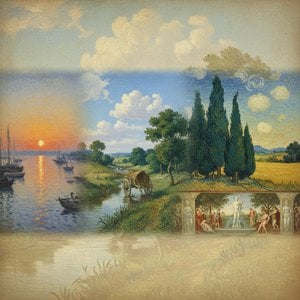
Evocations of Open Air: A Comprehensive Exploration of Outdoor Scenes in Art History
Explore the rich history of outdoor painting! Discover Impressionism, en plein air techniques & renowned landscape artists. Learn about light, color & enduring artistic legacies with ArtsDot.