


The picture follows your choices: , .
Opis predmeta
This mesmerizing piece by Odilon Redon depicts three women engaged in a profound dialogue amidst a serene landscape punctuated by a solitary pillar and potted plant. Executed in 1896, the artwork showcases Redon's masterful use of etching and lithography techniques to convey an otherworldly atmosphere.
 Pročitaj više
Biografija umetnika
Odilon Redon je francuski umetnik poznat po svojim doprinosima simbolističkom pokretu krajem 19. veka i početkom 20. veka. Rođen Bertrand-Jean u Bordeuži, Francuska, vodio je život izolovanih umetničkih potrage koje su ga vodile prirodom i literaturom. Čitav svoj umetnički opus karakterišu slike koje evociraju emocije, često inspirisane piscima kao što su Edgar Allan Poe i Čarls Baudelaire. Najpoz
Ručno rađena uljana reprodukcija
Ručno oslikano uljanim bojama na platnu u dimenzijama i okviru po vašem izboru, izrađeno po porudžbini od strane naših umetnika. ( Pređi na štampu Pređi na digitalnu sliku)
More about this painting
 Pregledaj u prostoru
 Pošalji
 Podeli
 Detalji o delu
 Vodič
Vodič

 Preuzmi
 Slični predmeti
 Rendgenski snimak
 Automatska prezentacija
 Q&A
Q&A Statistika
Order your painting in four simple steps
Take your time. You can change any answer; the price in your order card follows each choice.
1 Step one of four
Which size would you like?
These sizes keep the proportions of the original painting. The drawing shows your choice on a wall, above a two-metre sofa.
Or give your own measurements
Izaberite jednu od naših unapred definisanih veličina koje odgovaraju originalnim proporcijama umetničkog dela.

Unesite potrebnu širinu i visinu kako bi se slika uklopila u vaš ram ili zid. Pošto je ovo ručno oslikano delo, umetnik može za dimenzije drugačijeg oblika naslikati malo više prostora oko slike ili malo skratiti ivice — izbor je na vama. Pre početka rada, poslaćemo vam digitalni prikaz radi potvrde. Slika prikazana na ovoj stranici ne predstavlja konačan rezultat — samo digitalni prikaz pokazuje stvarnu sliku.
2 Step two of four
How should it be prepared: rolled, stretched or framed?
The prices below are for the size you chose in step one.
Choose the edges of the stretched canvas
Choose your frame

White дин1

Blurside дин1

Extended дин1

P118B дин10

P118H дин10

P118W дин10

P438Z дин10

P508JH дин12

P508YH дин12

P805H дин10

P805Z дин10

P919BZ дин10

P919G дин10

P919XJ дин10

P959ZH дин10

P968JZ дин12

W106C дин8

W218G дин10

W218JH дин8

W218Y дин10

W307PJ дин10

W316G дин10

W316PJ дин8

W316Y дин10

W398PJ дин8

W4111J дин10

W500HY дин15

W500JH дин15

W692G дин12

W849H дин8

W940BG дин15

W953PJ дин8

H24-GOLD дин30

H24-SILVER дин30

H36-GOLD дин45

H36-SILVER дин45
Uokvireno
Moulding: . Overall size with the frame: .
3 Step three of four
Would you like anything changed in the painting?
Most people answer no. Because each painting is made by hand, our artist can also adapt it for you.
After order, ArtsDot.com team will email client for instructions and provide a mockup preview
4 Step four of four
A few finishing options
All of them are optional. The answers already selected cost nothing extra.
Who paints it?
Svetska isporuka () za 3/4 nedelje umesto uobičajenih 5 nedelja. (2 новембар). Bez kompromisa po pitanju kvaliteta.
A nameplate, as in a museum?
Detalji gravirane bronze ploče
This elegant plaque features the artist's name and the title of the artwork, finely engraved for a timeless presentation.
It is made from bronze with a refined, elegant finish. The text is precisely laser-engraved for a sharp and permanent result. Measuring 9x2 cm, the plaque is compact yet easy to read. It's built to be durable and scratch-resistant, offering a professional, museum-quality look. Mounting is simple thanks to the included adhesive backing.
Detalji prozirne akrilne pločice
The plaque includes essential engraved details such as the artist's name, the title of the artwork, the date it was created, the type of media used-like oil on canvas or watercolor-a brief description of the piece, and a QR code that links to the complete artwork information.
It is crafted from clear acrylic, offering a sleek, modern appearance. The text is UV-engraved in black to ensure strong visual contrast. With a size of 10x15 cm, it ensures optimal readability. It comes equipped with two metal hooks for secure wall mounting. The plaque is designed to be weather-resistant, making it suitable for various environments, and it includes interactive features that work seamlessly with smartphone scanning.
Detalji crne akrilne pločice
This elegant plaque includes engraved information such as the artist's name, the title of the artwork, the date it was created, the type of media used (like oil on canvas or watercolor), a short description of the artwork, and a QR code for quick access to more information.
The plaque itself is made from refined black acrylic with a premium finish. The text is laser-engraved in white for high contrast and readability. Its size is 10x15 cm, designed to be easy to read. It comes with two metal hooks for professional mounting. The design is sleek and fits any interior style. It is also weather-resistant and durable, with built-in digital integration for mobile compatibility.
A protective varnish?
When do you need it?
✓ Check and order
Your painting, as you ordered it

Mystical Conversation
Tehnika reprodukcije
Dimenzije reprodukcije
-

Vrhunski maestri umetnosti
Više detalja, prefinjenosti i dodatnog vremena za izradu
-

Okvir za reprodukciju
-
-
Za umetnička dela ili reprodukcije čija je bilo koja strana veća od 105 cm (približno 41 inč), okvir će biti isporučen u obliku rastavljenog seta za sklapanje. Ovaj metod osigurava bezbednu dostavu i sprečava oštećenja tokom transporta.
Potrebna je profesionalna montaža – ovo nije proizvod namenjen samostalnoj izradi.
Set mora sastaviti i platno zategnuti iskusni profesionalni ramitelj, koristeći drveni lepak (nije uključen u set), hvataljku za zatezanje platna i stege kako bi se održao prav ugao okvira dok se lepak suši. Nepravilno sklapanje ili neravnomerno zategnuto platno mogu trajno oštetiti umetničko delo, što nije pokriveno našom garancijom.
 Za umetnička dela ili reprodukcije čija je bilo koja strana veća od 105 cm (približno 41 inč), okvir će biti isporučen u obliku rastavljenog seta za sklapanje. Ovaj metod osigurava bezbednu dostavu i sprečava oštećenja tokom transporta.
Sve šipke od masivnog drveta su uključene, precizno isečene po veličini.
Montira se pomoću priloženih šrafova, uz dodatno korišćenje lepka za drvo za spojeve u uglovima, koji nije uključen u set i koji vaš čuvar okvira mora obezbediti.
Potreban je profesionalni alat koji nije uključen u set: klešta za zatezanje platna (zatezač) i stege za održavanje pravih uglova letvica tokom sušenja lepka.
Važno:
Za spojeve u uglovima neophodan je lepak za drvo, šipke se moraju pričvrstiti stezgama dok lepak potpuno ne osuši, a za zatezanje platna na sklopljenom ramu potrebne su hvataljke za zatezanje platna. Nijedan od ovih alata nije uključen u komplet. Pre naručivanja ove veličine, molimo Vas da unapred obezbedite iskusnog profesionalca za ramačenje.

Kratki opis natpisa
-
-

Zaštitni lak
Sjajni lak (pojačava intenzitet boja, štiti od svetlosti i vlage)
-

Personalizujte svoje umetničko delo
Primeri mogućnosti izmene: Zamena lica fotografijom kupca; Dodavanje ljubimca (npr. zamena mačke psom); Uključivanje skrivene poruke u pozadini; Promena pejzaža ili elemenata pozadine.
-

Hitna dostava
Svetska isporuka () za 3/4 nedelje umesto uobičajenih 5 nedelja. (2 новембар). Bez kompromisa po pitanju kvaliteta.
-
Brza dostava
Dostava širom sveta () u roku od 5 nedelja. (9 новембар).
Uključeno u cenu
Ukupna cena
дин 27504
Opcija sa staklom dostupna je samo za dimenzije manje od 110 cm
Included with every order
- Besplatna ekspresna dostava širom sveta
- Visokokvalitetno laneno platno
- Potpuno osiguranje transporta
- Garancija povraćaja carine i uvoznih dažbina
- Garancija vernosti boja
- Politika povraćaja u roku od 100 dana (samo u slučaju nedostataka)
- Garancija povrata 100% novca
- Popust na više proizvoda


A Journey Into Shadowed Realms: Exploring Odilon Redon’s Mystical Conversation
Odilon Redon's "Mystical Conversation," completed in 1892, stands as a testament to the artist’s unwavering fascination with the subconscious and his masterful manipulation of visual language. More than just a depiction of two figures—a woman and a man—within an ambiguous space, it embodies a profound meditation on spirituality, isolation, and the elusive nature of human experience. The painting resides within The Art Institute of Chicago's collection, offering visitors a glimpse into Redon’s distinctive artistic vision.Style and Technique: Impasto Texture and Dreamlike Atmosphere
Redon eschewed the conventions of academic realism, opting instead for an expressive style characterized by thick impasto—a technique where paint is applied in heavy layers—creating palpable textural surfaces that seem to pulsate with inner energy. This deliberate disregard for conventional representation prioritizes mood and emotion over precise detail. The artist’s use of muted colors – predominantly ochre, umber, and shades of grey – contributes to the painting's ethereal atmosphere, transporting viewers into a realm beyond the visible world. Light plays an integral role, casting dramatic shadows that heighten the sense of mystery and reinforce the psychological depth of the scene.Historical Context: Symbolism in Late Impressionism
“Mystical Conversation” emerged during the waning years of Impressionism, marking a pivotal moment in artistic evolution. While Impressionists sought to capture fleeting moments of sensory experience, Redon delved into the realm of symbolism—drawing inspiration from mythology, folklore, and esoteric traditions. The figures themselves are deliberately indistinct, representing archetypal representations rather than identifiable individuals. Their posture suggests contemplation and dialogue, hinting at a quest for understanding or perhaps confronting unspoken anxieties. The presence of a solitary plant – positioned prominently on the right side of the canvas – symbolizes resilience and growth amidst darkness, mirroring the overarching theme of spiritual transformation.Symbolism Unveiled: Figures, Space, and the Essence of Contemplation
The painting’s symbolism extends beyond its immediate visual elements. The ambiguous space—characterized by curving lines and undefined boundaries—represents the labyrinthine pathways of consciousness, reflecting the artist's preoccupation with exploring inner landscapes. The woman’s arms encircling the man convey a sense of protection and intimacy, yet also underscore their separation from each other and from the outside world. These figures are not merely present; they embody concepts – contemplation, vulnerability, and perhaps even fear—that resonate deeply within the viewer's psyche. Redon skillfully utilizes visual cues to communicate these intangible ideas, inviting interpretation and fostering a connection between the artwork and its audience.Emotional Impact: A Resonance of Quiet Mystery
Ultimately, “Mystical Conversation” succeeds in evoking a powerful emotional response. Its subdued palette and textured surface create an immersive experience that encourages introspection. The painting’s haunting beauty lies not in grand spectacle but in its ability to capture the subtle nuances of human emotion—the quiet yearning for connection, the apprehension of the unknown, and the enduring fascination with the mysteries of existence. It remains a captivating example of Redon's artistic prowess and his profound engagement with the spiritual dimension of art.Pitanja i odgovori
U kojoj fazi karijere Одилон Редон se nalazi delo "Mystical Conversation", s obzirom na datum njegovog nastanka?
Datum 1896 smešta "Mystical Conversation" u Mature Period razvoja umetnika Одилон Редон.
Koliko je godina imao/la Одилон Редон kada je stvorio/la "Mystical Conversation"?
Одилон Редон je imao/la 56 godina kada je kreirao/la "Mystical Conversation" u 1896. Godina je izračunata na osnovu godine rođenja umetnika, 1840.
Da li "Mystical Conversation" prikazuje snažne kontraste svetla i tame?
Nivo kontrasta dela „Mystical Conversation”, autor Одилон Редон je Gentle.
Srodna umetnička dela


Одилон Редон
1840 - 1916, Франција
Biografija umetnika
Odilon Redon (1840-1916): Between Shadow and Light
Odilon Redon, born Bertrand Jean Redon in Bordeaux, France, on April 20, 1840, was an artist whose profound engagement with the unseen realms of imagination solidified his place as a pivotal figure in Symbolism—a movement that anticipated the Surrealist explorations of the subconscious decades later. His artistic journey began not with grand ambition but with quiet observation; at just ten years old he won a drawing prize—a foreshadowing of the visual sensitivity that would permeate his entire life’s work. Though familial expectations initially steered him toward architecture, Redon's true vocation blossomed amidst instruction from Jean-Léon Gérôme and Rodolphe Bresdin, who instilled in him the meticulous techniques of etching and lithography – skills that became foundational to his early explorations and allowed him to translate the intangible into tangible form. The disruption of the Franco-Prussian War briefly compelled him into military service, yet it was upon his return to Paris that Redon’s artistic vision truly coalesced, shaping a distinctive oeuvre characterized by haunting beauty and unsettling mystery.Early Life & Artistic Training
Redon's childhood was marked by a peculiar blend of solitude and fascination with the natural world. Raised in Bordeaux near his uncle—a botanist who nurtured his intellectual curiosity—he developed an acute sensitivity to color and form, qualities that would become central to his artistic style. At fifteen, he commenced formal study in drawing but, responding to his father’s insistence, reluctantly abandoned architectural pursuits for a more creative path. Despite failing the École des Beaux-Arts entrance examinations, Redon persevered, enrolling under Gérôme—a celebrated academic painter—who honed his skills in realistic representation. However, it was Bresdin's tutelage in etching and lithography that proved transformative, unlocking Redon’s ability to capture elusive moods and textures through printmaking – a medium he would champion throughout his career. This early training instilled in him a disciplined approach to observation and experimentation, shaping the aesthetic bedrock of his future masterpieces.The Birth of Symbolism & Monochrome Explorations
Redon deliberately distanced himself from prevailing artistic trends of his time—rejecting the pursuit of photographic realism in favor of conveying emotional resonance and spiritual contemplation. This decision led directly to his groundbreaking series of “noirs”—monochromatic compositions executed primarily in charcoal and lithography—which became instantly recognizable as emblems of Symbolism. These weren’t merely studies in darkness; they were profound investigations into the subconscious, populated by grotesque creatures, disembodied eyes, and spectral figures emerging from swirling mists – imagery heavily influenced by writers like Edgar Allan Poe and Charles Baudelaire who shared a fascination with the macabre and the suggestive power of art. Critics initially dismissed Redon’s “noirs” as morbid and unsettling, yet they nevertheless captured the essence of Symbolist aesthetics—a preoccupation with mythic themes and an embrace of dreamlike visions. The series demonstrated Redon's mastery of tonal gradation and his ability to evoke psychological depth through minimal visual elements.Lithography & Literary Influences
Redon’s artistic technique was inextricably linked to his intellectual interests, particularly his engagement with literature and philosophy. He meticulously studied the works of Baudelaire, Poe, Dante Gabriel Rossetti, and Henrik Ibsen—authors who explored themes of decay, beauty, and psychological torment—drawing inspiration from their stylistic innovations and conceptual frameworks. Lithography became Redon’s favored medium for translating these literary ideas into visual form; he skillfully manipulated stone to achieve remarkable tonal effects and textural nuances. His prints often served as reinterpretations of literary texts—such as Poe's *The Raven*—demonstrating his conviction that art could illuminate the hidden currents of human experience. The influence of Japanese printmaking, or *Japonism*, is palpable in many of his compositions—particularly those created during his Parisian years—where flattened perspectives and decorative patterns contribute to an otherworldly atmosphere.Later Works & Legacy
Throughout the 1890s, Redon experimented with pastel and oil paints, expanding his palette beyond monochrome and embracing richer hues—though he retained a preference for muted tones that conveyed melancholy and introspection. He exhibited prominently with the Nabis group in 1899—a collective of artists who championed decorative art and sought to liberate painting from academic constraints—solidifying his reputation as a visionary innovator. The Armory Show in New York City in 1913 brought Redon’s work to international attention, establishing him as one of the foremost figures in modern art. His enduring legacy resides not merely in his stylistic achievements but also in his profound contribution to the artistic dialogue of the early twentieth century—a dialogue that continues to inspire artists today. Redon's unwavering commitment to exploring the subconscious and conveying emotional truth cemented his place as a pioneer of Symbolism and Surrealism, ensuring that his haunting visions would resonate across generations.
Povezani članci
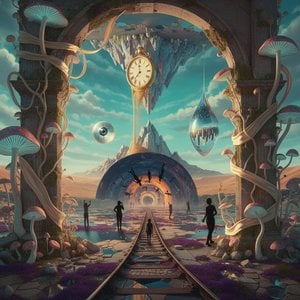
Dreamscapes & Disrupted Realities: Exploring Surrealism's Enduring Influence
Explore the fascinating world of Surrealism! Discover its origins, key artists like Dalí & Magritte, and enduring influence on art & culture. Expert insights & high-quality reproductions at ArtsDot.

The Enduring Legacy of Oil on Canvas: Technique, History & Aesthetic Impact
Explore the rich history & techniques of oil painting – from Renaissance masters to Impressionism. Discover pigments, layering methods, and why this timeless medium endures. Expert insights for artists & art enthusiasts.

Oil on Canvas: A Historical & Technical Exploration of a Timeless Artistic Medium
Explore the rich history & enduring techniques of oil painting on canvas. Discover the science behind its longevity, conservation practices, and contemporary relevance. Expert insights for art enthusiasts.