


 Pregledaj u prostoru
 Podeli
 Podeli
 Detalji
 Vodič
Vodič

 Preuzmi sliku
 Slični predmeti
 Rendgenski snimak
 Automatska prezentacija
 Statistika
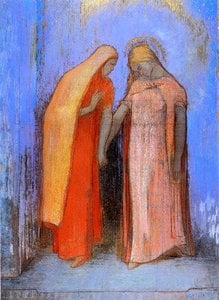
Calvary
 Pastel
- Symbolism
 1897
1897- 19th Century
 69.0 x 53.0 cm
 Pročitaj više
Kupite digitalnu sliku visoke rezolucije i poboljšanog kvaliteta, koja je znatno superiornija od onoga što vidite u online prikazu.
Svaka datoteka je pedantno pripremljena od strane naših stručnjaka koristeći napredne alate i profesionalnu ručnu retušu. Osiguravamo da svaka slika ima izuzetnu oštrinu, preciznu reprodukciju boja i fine detalje.
Konačna datoteka se dostavlja putem e-pošte u roku od 72 sata, optimizovana za neposrednu upotrebu u profesionalnim, izdavačkim i štamparskim okruženjima. To je isti kvalitet kojem veruju vrhunski studiji dizajna, izdavači i galerije.
Digitalna slika
Preuzmite datoteku visoke rezolucije za ličnu upotrebu, štampanje i kreativne projekte. ( Pređi na prodaju štampanih primeraka Naručite ručno oslikano reprodukciju)
Uključeno uz svaku porudžbinu digitalne slike
Ekspertska digitalna isporuka, zagarantovana
Kada odaberete ArtsDot.com, ne dobijate samo sliku – vi primate profesionalno unapređeno digitalno umetničko delo, izrađeno sa najvećom preciznošću i uz garanciju zadovoljstva. Evo svega što automatski dolazi uz vašu porudžbinu:

Brza dostava putem e-pošte
Vaša digitalna slika visoke rezolucije biće vam poslata putem e-pošte u roku od 72 sata od poručivanja – spremna za trenutnu upotrebu.

Digitalna datoteka unapređena veštačkom inteligencijom
Vaše umetničko delo je profesionalno optimizovano primenom naprednih AI alata i ručne obrade, čime se osiguravaju maksimalni detalji, oštrina i preciznost boja.

Besplatna doživotna ponovna isporuka
Slučajno ste obrisali ili izgubili svoju datoteku? Ne brinite – poslaćemo vam je ponovo u bilo kom trenutku, potpuno besplatno.

Bez troškova uvoza – zauvek
Uživajte u svojim umetničkim delima trenutno, bez carine, akciza ili troškova dostave – digitalni download je uvek bez poreza.

Garancija preciznosti boja
Uz pomoć profesionalnih alata i upravljanja bojama, osiguravamo da vaša digitalna slika što vernije odražava originalne boje.

Garancija zadovoljstva u roku od 100 dana
Ako niste zadovoljni svojom digitalnom slikom, izvršićemo reviziju ili ćemo vam vratiti 100% novca u roku od 100 dana – bez ikakvih pitanja.

100% garancija povrata novca
Niste zadovoljni? Dobijte puni povraćaj novca u roku od 100 dana od prijema digitalne datoteke – bez suvišnih pitanja.

Popusti na velike porudžbine
Kupite 3 slike, uštedite 10% - Kupite 5 slika, uštedite 15% - Kupite 10+ slika, uštedite 20%. Odlično za kreativne projekte, galerije i agencije.
Composition and Symbolism
The scene depicts a man on a cross with his arms outstretched, conveying immense pain and suffering. Two other figures are present, one to the left and another to the right, adding to the somber atmosphere. The background features a mountainous landscape, which adds depth and perspective to the scene. This composition is reminiscent of other famous artworks, such as Peter Paul Rubens' Christ on the Cross between the Two Thieves, which can be found on ArtsDot.com.Artistic Style and Influences
Odilon Redon's style is characterized by the use of pastel, which gives his artworks a soft, ethereal quality. This medium was often used by artists to create delicate, dreamlike scenes. For more information on the art media used by famous artists, visit The Art Media Poplar on ArtsDot.com. Other notable artworks by Odilon Redon include Orpheus, which can be viewed on ArtsDot.com.- Symbolism was a key element in Odilon Redon's work, as seen in Calvary.
- The use of pastel added a soft, delicate quality to the artwork.
- Odilon Redon's style was influenced by his interest in mythology and religion.
The Calvary painting is a significant work in the history of art, and its symbolism continues to be studied by art historians and enthusiasts today.
Pitanja i odgovori
U kom periodu karijere Одилон Редон pripada delo "Calvary"?
"Calvary" predstavlja Mature Period umetnika Одилон Редон.
Koliki je nivo kontrasta kod dela „Calvary”, Одилон Редон?
Svetlo-tamni kontrast dela "Calvary" zabeležen je kao Balanced. Kontrast opisuje koliko se snažno razlikuju svetle i tamne površine.
Kolikih je dimenzija originalno delo "Calvary"?
Zabeležene dimenzije dela „Calvary”, Одилон Редон su 69 x 53 cm. Reprodukcije se mogu naručiti u drugim dimenzijama uz zadržavanje istih proporcija.
Srodna umetnička dela




Biografija umetnika
Odilon Redon (1840-1916): Between Shadow and Light
Odilon Redon, born Bertrand Jean Redon in Bordeaux, France, on April 20, 1840, was an artist whose profound engagement with the unseen realms of imagination solidified his place as a pivotal figure in Symbolism—a movement that anticipated the Surrealist explorations of the subconscious decades later. His artistic journey began not with grand ambition but with quiet observation; at just ten years old he won a drawing prize—a foreshadowing of the visual sensitivity that would permeate his entire life’s work. Though familial expectations initially steered him toward architecture, Redon's true vocation blossomed amidst instruction from Jean-Léon Gérôme and Rodolphe Bresdin, who instilled in him the meticulous techniques of etching and lithography – skills that became foundational to his early explorations and allowed him to translate the intangible into tangible form. The disruption of the Franco-Prussian War briefly compelled him into military service, yet it was upon his return to Paris that Redon’s artistic vision truly coalesced, shaping a distinctive oeuvre characterized by haunting beauty and unsettling mystery.Early Life & Artistic Training
Redon's childhood was marked by a peculiar blend of solitude and fascination with the natural world. Raised in Bordeaux near his uncle—a botanist who nurtured his intellectual curiosity—he developed an acute sensitivity to color and form, qualities that would become central to his artistic style. At fifteen, he commenced formal study in drawing but, responding to his father’s insistence, reluctantly abandoned architectural pursuits for a more creative path. Despite failing the École des Beaux-Arts entrance examinations, Redon persevered, enrolling under Gérôme—a celebrated academic painter—who honed his skills in realistic representation. However, it was Bresdin's tutelage in etching and lithography that proved transformative, unlocking Redon’s ability to capture elusive moods and textures through printmaking – a medium he would champion throughout his career. This early training instilled in him a disciplined approach to observation and experimentation, shaping the aesthetic bedrock of his future masterpieces.The Birth of Symbolism & Monochrome Explorations
Redon deliberately distanced himself from prevailing artistic trends of his time—rejecting the pursuit of photographic realism in favor of conveying emotional resonance and spiritual contemplation. This decision led directly to his groundbreaking series of “noirs”—monochromatic compositions executed primarily in charcoal and lithography—which became instantly recognizable as emblems of Symbolism. These weren’t merely studies in darkness; they were profound investigations into the subconscious, populated by grotesque creatures, disembodied eyes, and spectral figures emerging from swirling mists – imagery heavily influenced by writers like Edgar Allan Poe and Charles Baudelaire who shared a fascination with the macabre and the suggestive power of art. Critics initially dismissed Redon’s “noirs” as morbid and unsettling, yet they nevertheless captured the essence of Symbolist aesthetics—a preoccupation with mythic themes and an embrace of dreamlike visions. The series demonstrated Redon's mastery of tonal gradation and his ability to evoke psychological depth through minimal visual elements.Lithography & Literary Influences
Redon’s artistic technique was inextricably linked to his intellectual interests, particularly his engagement with literature and philosophy. He meticulously studied the works of Baudelaire, Poe, Dante Gabriel Rossetti, and Henrik Ibsen—authors who explored themes of decay, beauty, and psychological torment—drawing inspiration from their stylistic innovations and conceptual frameworks. Lithography became Redon’s favored medium for translating these literary ideas into visual form; he skillfully manipulated stone to achieve remarkable tonal effects and textural nuances. His prints often served as reinterpretations of literary texts—such as Poe's *The Raven*—demonstrating his conviction that art could illuminate the hidden currents of human experience. The influence of Japanese printmaking, or *Japonism*, is palpable in many of his compositions—particularly those created during his Parisian years—where flattened perspectives and decorative patterns contribute to an otherworldly atmosphere.Later Works & Legacy
Throughout the 1890s, Redon experimented with pastel and oil paints, expanding his palette beyond monochrome and embracing richer hues—though he retained a preference for muted tones that conveyed melancholy and introspection. He exhibited prominently with the Nabis group in 1899—a collective of artists who championed decorative art and sought to liberate painting from academic constraints—solidifying his reputation as a visionary innovator. The Armory Show in New York City in 1913 brought Redon’s work to international attention, establishing him as one of the foremost figures in modern art. His enduring legacy resides not merely in his stylistic achievements but also in his profound contribution to the artistic dialogue of the early twentieth century—a dialogue that continues to inspire artists today. Redon's unwavering commitment to exploring the subconscious and conveying emotional truth cemented his place as a pioneer of Symbolism and Surrealism, ensuring that his haunting visions would resonate across generations.
Одилон Редон
1840 - 1916 , Франција
Osnovne informacije
- Artistic Movement Or Style: Симболизам
- Artists Or Movements Influenced By This Artist: ['Суререализам']
- Artists Who Influenced This Artist:
- Жан Леон Гером
- Родоф Бресдин
- Date Of Birth: Април 20, 1840
- Date Of Death: Јул 6, 1916
- Full Name: Odilon Redon
- Nationality: Француски
- Notable Artworks:
- Центаури
- Онес
- Портрет на Жан Редон
- Place Of Birth: Бордо, Француска