


 Pregledaj u prostoru
 Podeli
 Podeli
 Detalji
 Vodič
Vodič

 Preuzmi sliku
 Slični predmeti
 Rendgenski snimak
 Automatska prezentacija
 Statistika
Aurora


 Pročitaj više
Ručno rađena uljana reprodukcija
Ručno oslikano uljanim bojama na platnu u dimenzijama i okviru po vašem izboru, izrađeno po porudžbini od strane naših umetnika. ( Pređi na prodaju štampanih primeraka Pređi na prodaju digitalnih slika)




P118B дин10

P118H дин10

P118W дин10

P438Z дин10

P508JH дин12

P508YH дин12

P805H дин10

P805Z дин10

P919BZ дин10

P919G дин10

P919XJ дин10

P959ZH дин10

P968JZ дин12

W106C дин8

W218G дин10

W218JH дин8

W218Y дин10

W307PJ дин10

W316G дин10

W316PJ дин8

W316Y дин10

W398PJ дин8

W4111J дин10

W500HY дин15

W500JH дин15

W692G дин12

W849H дин8

W940BG дин15

W953PJ дин8




Izaberite jednu od naših unapred definisanih veličina koje odgovaraju originalnim proporcijama umetničkog dela.

Unesite širinu i visinu koja vam je potrebna, kako bi se uklopili u vaš ram ili zid. Pošto je ovo ručno oslikano delo, umetnik može naslikati malo više prostora oko slike ili malo skratiti ivice za dimenzije drugačijeg oblika — izbor je na vama. Pre početka rada, poslaćemo vam digitalni prikaz radi potvrde. Slika prikazana na ovoj stranici ne predstavlja konačan rezultat — samo digitalni prikaz pokazuje stvarnu sliku.
Nakon narudžbine, tim ArtsDot.com će klijentu putem e-pošte poslati uputstva i dostaviti prikaz predloženog rešenja
Svetska isporuka () za 3/4 nedelje umesto uobičajenih 5 nedelja. (18 октобар). Bez kompromisa po pitanju kvaliteta.

Besplatna ekspresna dostava širom sveta

Visokokvalitetno laneno platno

Sveobuhvatno osiguranje transporta

Garancija povraćaja carine i uvoznih dažbina

Garancija vernosti boja i autentičnosti pri reprodukciji

Politika povraćaja u roku od 100 dana (samo u slučaju nedostataka)

Garancija povrata 100% novca

Popust pri većoj količini
 Opcija sa staklom dostupna je samo za dimenzije manje od 110 cm

Aurora
Tehnika izrade reprodukcije
Veličina reprodukcije
-


Ukupna cena
дин 26924
A Dreamscape of Dawn: The Ethereal Vision of Odilon Redon
In the quiet intersection where the waking world meets the realm of dreams, Odilon Redon’s Aurora resides. Created in 1910, this mesmerizing oil on canvas serves as a profound testament to the Symbolist movement, offering a window into a psyche that sought to transcend the mere observation of nature. Unlike the Impressionists, who were captivated by the fleeting dance of light upon water, Redon turned his gaze inward, painting not what the eye sees, but what the soul feels. In Aurora, we encounter a scene of profound stillness and mystical transition, where the boundaries between reality and myth dissolve into a soft, luminous haze.
The composition centers on a woman resting in the gentle embrace of sleep, her form nestled within a bed that seems to exist outside of time. Above her, a bird takes flight, its movement a delicate punctuation mark in the silent atmosphere, while horses—symbols of primal energy and the inevitable passage of time—frame the scene. This arrangement is far from accidental; it is a carefully orchestrated mythological allegory. The woman represents Aurora herself, the personification of the dawn, whose arrival signals the triumph of light over the shadows of night. The presence of the horses suggests the rhythmic, unstoppable movement of the sun across the heavens, bridging the gap between the nocturnal subconscious and the clarity of day.
Technique and the Alchemy of Color
Redon’s technical evolution is beautifully captured in this late masterpiece. Having spent much of his earlier career immersed in the "noirs"—his famous charcoal drawings and lithographs characterized by deep, somber shadows—Redon underwent a radical transformation around 1900. In Aurora, we witness the full flowering of his mastery over color. The artist employs a vibrant, almost hallucinogenic palette that breathes warmth and vitality into the canvas. His use of oil paint allows for a rich, layered texture that creates a sense of depth and luminosity, making the light appear as though it is emanating from within the painting itself rather than reflecting off its surface.
The interplay of colors serves to heighten the emotional resonance of the piece. Soft, glowing tones mingle with more saturated hues, creating a sense of atmospheric pressure that feels both heavy with mystery and light with hope. For the discerning collector or interior designer, this painting offers a unique decorative power; it possesses the ability to transform a room into a sanctuary of contemplation. The warmth of the palette can anchor a space, providing a focal point that invites long periods of gazing, while the dreamlike subject matter provides an intellectual depth that transcends simple ornamentation.
A Legacy of Symbolism and Emotional Resonance
To possess or display a reproduction of Aurora is to invite the enigmatic spirit of the Belle Époque into one's surroundings. Redon’s work remains eternally relevant because it speaks to the universal human experience of dreaming, longing, and the search for meaning beneath the surface of the visible world. The painting does not demand attention through shock or aggression; instead, it seduces the viewer through its quiet intensity and its ability to evoke a sense of wonder.
For those seeking to curate an environment filled with art that inspires thought and provides emotional solace, Redon’s Aurora stands as an incomparable choice. It is more than a depiction of a mythological moment; it is an invitation to explore the mysteries of the human psyche. Whether placed in a private study, a sophisticated living area, or a curated gallery space, this work continues to act as a bridge between the tangible and the transcendent, reminding us that even in the deepest sleep, there is a dawn waiting to break.
Pitanja i odgovori
Da li je "Aurora" tipično za ono što je Одилон Редон obično stvarao?
"Aurora" prikazuje woman, horse, bird, bed, vase, pillow, dok su dokumentovane teme umetnika Одилон Редон su symbolist dreamlike visions, mythological dawn themes, subconscious and mystical realms, transition from night to day, evolution from his noirs. Poređenje ova dva elementa pokazuje kako se ovo delo povezuje sa uobičajenim motivima ovog umetnika.
Gde mogu da preuzmem „Aurora”, Одилон Редон?
Preuzimanje je dostupno za "Aurora": stranica Preuzimanje ovog umetničkog dela nudi preuzimanje digitalne slike visoke rezolucije.
Kakve boje koristi "Aurora"?
Boje dela "Aurora" čine Earthy paletu. Ova klasifikacija opisuje dominantne grupe boja.
Srodna umetnička dela


Biografija umetnika
Odilon Redon (1840-1916): Between Shadow and Light
Odilon Redon, born Bertrand Jean Redon in Bordeaux, France, on April 20, 1840, was an artist whose profound engagement with the unseen realms of imagination solidified his place as a pivotal figure in Symbolism—a movement that anticipated the Surrealist explorations of the subconscious decades later. His artistic journey began not with grand ambition but with quiet observation; at just ten years old he won a drawing prize—a foreshadowing of the visual sensitivity that would permeate his entire life’s work. Though familial expectations initially steered him toward architecture, Redon's true vocation blossomed amidst instruction from Jean-Léon Gérôme and Rodolphe Bresdin, who instilled in him the meticulous techniques of etching and lithography – skills that became foundational to his early explorations and allowed him to translate the intangible into tangible form. The disruption of the Franco-Prussian War briefly compelled him into military service, yet it was upon his return to Paris that Redon’s artistic vision truly coalesced, shaping a distinctive oeuvre characterized by haunting beauty and unsettling mystery.Early Life & Artistic Training
Redon's childhood was marked by a peculiar blend of solitude and fascination with the natural world. Raised in Bordeaux near his uncle—a botanist who nurtured his intellectual curiosity—he developed an acute sensitivity to color and form, qualities that would become central to his artistic style. At fifteen, he commenced formal study in drawing but, responding to his father’s insistence, reluctantly abandoned architectural pursuits for a more creative path. Despite failing the École des Beaux-Arts entrance examinations, Redon persevered, enrolling under Gérôme—a celebrated academic painter—who honed his skills in realistic representation. However, it was Bresdin's tutelage in etching and lithography that proved transformative, unlocking Redon’s ability to capture elusive moods and textures through printmaking – a medium he would champion throughout his career. This early training instilled in him a disciplined approach to observation and experimentation, shaping the aesthetic bedrock of his future masterpieces.The Birth of Symbolism & Monochrome Explorations
Redon deliberately distanced himself from prevailing artistic trends of his time—rejecting the pursuit of photographic realism in favor of conveying emotional resonance and spiritual contemplation. This decision led directly to his groundbreaking series of “noirs”—monochromatic compositions executed primarily in charcoal and lithography—which became instantly recognizable as emblems of Symbolism. These weren’t merely studies in darkness; they were profound investigations into the subconscious, populated by grotesque creatures, disembodied eyes, and spectral figures emerging from swirling mists – imagery heavily influenced by writers like Edgar Allan Poe and Charles Baudelaire who shared a fascination with the macabre and the suggestive power of art. Critics initially dismissed Redon’s “noirs” as morbid and unsettling, yet they nevertheless captured the essence of Symbolist aesthetics—a preoccupation with mythic themes and an embrace of dreamlike visions. The series demonstrated Redon's mastery of tonal gradation and his ability to evoke psychological depth through minimal visual elements.Lithography & Literary Influences
Redon’s artistic technique was inextricably linked to his intellectual interests, particularly his engagement with literature and philosophy. He meticulously studied the works of Baudelaire, Poe, Dante Gabriel Rossetti, and Henrik Ibsen—authors who explored themes of decay, beauty, and psychological torment—drawing inspiration from their stylistic innovations and conceptual frameworks. Lithography became Redon’s favored medium for translating these literary ideas into visual form; he skillfully manipulated stone to achieve remarkable tonal effects and textural nuances. His prints often served as reinterpretations of literary texts—such as Poe's *The Raven*—demonstrating his conviction that art could illuminate the hidden currents of human experience. The influence of Japanese printmaking, or *Japonism*, is palpable in many of his compositions—particularly those created during his Parisian years—where flattened perspectives and decorative patterns contribute to an otherworldly atmosphere.Later Works & Legacy
Throughout the 1890s, Redon experimented with pastel and oil paints, expanding his palette beyond monochrome and embracing richer hues—though he retained a preference for muted tones that conveyed melancholy and introspection. He exhibited prominently with the Nabis group in 1899—a collective of artists who championed decorative art and sought to liberate painting from academic constraints—solidifying his reputation as a visionary innovator. The Armory Show in New York City in 1913 brought Redon’s work to international attention, establishing him as one of the foremost figures in modern art. His enduring legacy resides not merely in his stylistic achievements but also in his profound contribution to the artistic dialogue of the early twentieth century—a dialogue that continues to inspire artists today. Redon's unwavering commitment to exploring the subconscious and conveying emotional truth cemented his place as a pioneer of Symbolism and Surrealism, ensuring that his haunting visions would resonate across generations.
Одилон Редон
1840 - 1916 , Франција
Brzi pregled
- Artistic Movement Or Style: Симболизам
- Artists Or Movements Influenced By This Artist: ['Суререализам']
- Artists Who Influenced This Artist:
- Жан Леон Гером
- Родоф Бресдин
- Date Of Birth: Април 20, 1840
- Date Of Death: Јул 6, 1916
- Full Name: Odilon Redon
- Nationality: Француски
- Notable Artworks:
- Центаури
- Онес
- Портрет на Жан Редон
- Place Of Birth: Бордо, Француска
Srodni članci

Echoes of Olympus: Mythological Narratives in Western Art Through the Ages
Explore the captivating history of mythological narratives in Western art! From ancient Greece to modern masterpieces, discover iconic artworks & symbolism. Expert analysis and high-quality reproductions at ArtsDot.
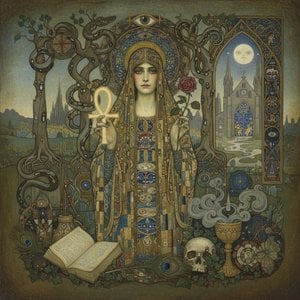
The Evocative Realm of Symbolism: Exploring Meaning & Mysticism in Late 19th-Century Art
Explore the captivating world of Symbolism art! Discover key artists, defining themes & its lasting influence on modern movements. A deep dive into late 19th-century masterpieces.

Simbolizam u umetnosti: 10 remek dela koja su definisala pokret
Otkrijte 10 remek dela simbolizma koja su obeležila umetnost! Gustav Moreau, Odilon Redon i drugi majstori kroz tamne boje i duboke simbole. Inspiracija za vaš enterijer? Istražite kolekciju na ArtsDot.com!

The Ethereal Realm on Canvas: Exploring Themes of Fantasy & Imagination in Art History
Explore the captivating world of fantasy & surreal art history with ArtsDot. Discover iconic artists like De Chirico & Moreau, and expert guidance for collecting timeless masterpieces. Find your dream artwork today!

Tkajući Lične Mitosove u Simboličke Forme: Naručivanje Uljanih Slika kao Izraz Individualne Mitologije
Naručite unikatnu uljanu sliku koja odražava vaš lični mitos! Ekskluzivni umetnici, vrhunski kvalitet i personalizovani pristup. Investirajte u umetničko delo koje će trajati generacijama.
