


The picture follows your choices: , .
Opis predmeta
A vibrant still life of nature's bounty featuring colorful fruits and flowers by Japanese modernist pioneer Narashige Koide, offering a timeless glimpse into 1927 avant-garde beauty for your collection.
 Pročitaj više
Biografija umetnika
Discover Narashige Koide (1887-1931), a pioneer of Hanshinkan Modernism in Japanese yōga painting. Explore evocative portraits, striking nudes & his innovative approach bridging Nihonga tradition and Western styles.
Ručno rađena uljana reprodukcija
Ručno oslikano uljanim bojama na platnu u dimenzijama i okviru po vašem izboru, izrađeno po porudžbini od strane naših umetnika. ( Pređi na štampu Pređi na digitalnu sliku)
More about this painting
 Pregledaj u prostoru
 Pošalji
 Podeli
 Detalji o delu
 Vodič
Vodič

 Preuzmi
 Slični predmeti
 Rendgenski snimak
 Automatska prezentacija
 Q&A
Q&A Statistika
Order your painting in four simple steps
Take your time. You can change any answer; the price in your order card follows each choice.
1 Step one of four
Which size would you like?
These sizes keep the proportions of the original painting. The drawing shows your choice on a wall, above a two-metre sofa.
Or give your own measurements
Izaberite jednu od naših unapred definisanih veličina koje odgovaraju originalnim proporcijama umetničkog dela.

Unesite potrebnu širinu i visinu kako bi se slika uklopila u vaš ram ili zid. Pošto je ovo ručno oslikano delo, umetnik može za dimenzije drugačijeg oblika naslikati malo više prostora oko slike ili malo skratiti ivice — izbor je na vama. Pre početka rada, poslaćemo vam digitalni prikaz radi potvrde. Slika prikazana na ovoj stranici ne predstavlja konačan rezultat — samo digitalni prikaz pokazuje stvarnu sliku.
2 Step two of four
How should it be prepared: rolled, stretched or framed?
The prices below are for the size you chose in step one.
Choose the edges of the stretched canvas
Choose your frame

White дин1

Blurside дин1

Extended дин1

P118B дин10

P118H дин10

P118W дин10

P438Z дин10

P508JH дин12

P508YH дин12

P805H дин10

P805Z дин10

P919BZ дин10

P919G дин10

P919XJ дин10

P959ZH дин10

P968JZ дин12

W106C дин8

W218G дин10

W218JH дин8

W218Y дин10

W307PJ дин10

W316G дин10

W316PJ дин8

W316Y дин10

W398PJ дин8

W4111J дин10

W500HY дин15

W500JH дин15

W692G дин12

W849H дин8

W940BG дин15

W953PJ дин8

H24-GOLD дин30

H24-SILVER дин30

H36-GOLD дин45

H36-SILVER дин45
Uokvireno
Moulding: . Overall size with the frame: .
3 Step three of four
Would you like anything changed in the painting?
Most people answer no. Because each painting is made by hand, our artist can also adapt it for you.
After order, ArtsDot.com team will email client for instructions and provide a mockup preview
4 Step four of four
A few finishing options
All of them are optional. The answers already selected cost nothing extra.
Who paints it?
Svetska isporuka () za 3/4 nedelje umesto uobičajenih 5 nedelja. (2 новембар). Bez kompromisa po pitanju kvaliteta.
A nameplate, as in a museum?
Detalji gravirane bronze ploče
This elegant plaque features the artist's name and the title of the artwork, finely engraved for a timeless presentation.
It is made from bronze with a refined, elegant finish. The text is precisely laser-engraved for a sharp and permanent result. Measuring 9x2 cm, the plaque is compact yet easy to read. It's built to be durable and scratch-resistant, offering a professional, museum-quality look. Mounting is simple thanks to the included adhesive backing.
Detalji prozirne akrilne pločice
The plaque includes essential engraved details such as the artist's name, the title of the artwork, the date it was created, the type of media used-like oil on canvas or watercolor-a brief description of the piece, and a QR code that links to the complete artwork information.
It is crafted from clear acrylic, offering a sleek, modern appearance. The text is UV-engraved in black to ensure strong visual contrast. With a size of 10x15 cm, it ensures optimal readability. It comes equipped with two metal hooks for secure wall mounting. The plaque is designed to be weather-resistant, making it suitable for various environments, and it includes interactive features that work seamlessly with smartphone scanning.
Detalji crne akrilne pločice
This elegant plaque includes engraved information such as the artist's name, the title of the artwork, the date it was created, the type of media used (like oil on canvas or watercolor), a short description of the artwork, and a QR code for quick access to more information.
The plaque itself is made from refined black acrylic with a premium finish. The text is laser-engraved in white for high contrast and readability. Its size is 10x15 cm, designed to be easy to read. It comes with two metal hooks for professional mounting. The design is sleek and fits any interior style. It is also weather-resistant and durable, with built-in digital integration for mobile compatibility.
A protective varnish?
When do you need it?
✓ Check and order
Your painting, as you ordered it

Vegetables on the Table
Tehnika reprodukcije
Dimenzije reprodukcije
-

Vrhunski maestri umetnosti
Više detalja, prefinjenosti i dodatnog vremena za izradu
-

Okvir za reprodukciju
-
-
Za umetnička dela ili reprodukcije čija je bilo koja strana veća od 105 cm (približno 41 inč), okvir će biti isporučen u obliku rastavljenog seta za sklapanje. Ovaj metod osigurava bezbednu dostavu i sprečava oštećenja tokom transporta.
Potrebna je profesionalna montaža – ovo nije proizvod namenjen samostalnoj izradi.
Set mora sastaviti i platno zategnuti iskusni profesionalni ramitelj, koristeći drveni lepak (nije uključen u set), hvataljku za zatezanje platna i stege kako bi se održao prav ugao okvira dok se lepak suši. Nepravilno sklapanje ili neravnomerno zategnuto platno mogu trajno oštetiti umetničko delo, što nije pokriveno našom garancijom.
 Za umetnička dela ili reprodukcije čija je bilo koja strana veća od 105 cm (približno 41 inč), okvir će biti isporučen u obliku rastavljenog seta za sklapanje. Ovaj metod osigurava bezbednu dostavu i sprečava oštećenja tokom transporta.
Sve šipke od masivnog drveta su uključene, precizno isečene po veličini.
Montira se pomoću priloženih šrafova, uz dodatno korišćenje lepka za drvo za spojeve u uglovima, koji nije uključen u set i koji vaš čuvar okvira mora obezbediti.
Potreban je profesionalni alat koji nije uključen u set: klešta za zatezanje platna (zatezač) i stege za održavanje pravih uglova letvica tokom sušenja lepka.
Važno:
Za spojeve u uglovima neophodan je lepak za drvo, šipke se moraju pričvrstiti stezgama dok lepak potpuno ne osuši, a za zatezanje platna na sklopljenom ramu potrebne su hvataljke za zatezanje platna. Nijedan od ovih alata nije uključen u komplet. Pre naručivanja ove veličine, molimo Vas da unapred obezbedite iskusnog profesionalca za ramačenje.

Kratki opis natpisa
-
-

Zaštitni lak
Sjajni lak (pojačava intenzitet boja, štiti od svetlosti i vlage)
-

Personalizujte svoje umetničko delo
Primeri mogućnosti izmene: Zamena lica fotografijom kupca; Dodavanje ljubimca (npr. zamena mačke psom); Uključivanje skrivene poruke u pozadini; Promena pejzaža ili elemenata pozadine.
-

Hitna dostava
Svetska isporuka () za 3/4 nedelje umesto uobičajenih 5 nedelja. (2 новембар). Bez kompromisa po pitanju kvaliteta.
-
Brza dostava
Dostava širom sveta () u roku od 5 nedelja. (9 новембар).
Uključeno u cenu
Ukupna cena
дин 27397
Opcija sa staklom dostupna je samo za dimenzije manje od 110 cm
Included with every order
- Besplatna ekspresna dostava širom sveta
- Visokokvalitetno laneno platno
- Potpuno osiguranje transporta
- Garancija povraćaja carine i uvoznih dažbina
- Garancija vernosti boja
- Politika povraćaja u roku od 100 dana (samo u slučaju nedostataka)
- Garancija povrata 100% novca
- Popust na više proizvoda


A Symphony of Stillness: The Bounty of Narashige Koide
In the quiet corners of early 20th-century modernism, few works capture the humble elegance of daily life as poignantly as Narashige Koide’s 1927 masterpiece, Vegetables on the Table. This evocative still life serves as a profound meditation on texture, color, and the simple abundance of nature. At first glance, the viewer is greeted by a vibrant arrangement of life: the sun-kissed curves of oranges and apples, the elongated grace of bananas, and a central vase of flowers that acts as the composition's beating heart. Set against a deep, atmospheric blue background, the subjects do not merely sit upon the table; they emerge from the shadows with a sculptural presence that commands the room.
The brilliance of this piece lies in Koide’s ability to bridge the gap between the delicate sensibilities of Nihonga—the traditional Japanese style he studied in his youth—and the bold, structural experimentation of Western Yōga painting. There is a rhythmic balance at play here, where the placement of two humble bowls and a solitary cup creates a sense of domestic harmony. For the discerning collector or interior designer, this painting offers more than just visual interest; it provides a focal point of stability and warmth. The interplay between the cool, receding blue backdrop and the warm, tactile fruits creates a chromatic tension that breathes life into any sophisticated space.
Beyond its aesthetic charm, Vegetables on the Table carries a deeper symbolic weight, reflecting the era's fascination with finding beauty in the mundane. During a period of intense cultural transition in Japan, Koide utilized the still life genre to explore form and light, stripping away the unnecessary to focus on the essential. The arrangement feels both spontaneous and meticulously curated, suggesting that even in the most ordinary objects, there exists an eternal, artistic truth. Each brushstroke contributes to a sense of weight and volume, inviting the viewer to reach out and touch the velvety skin of a peach or the smooth surface of a ceramic bowl.
For those seeking to infuse their homes with a sense of historical depth and quiet luxury, a high-quality reproduction of this work offers an unparalleled opportunity. It is a piece that transcends mere decoration, acting as a window into the soul of Japanese modernism. Whether placed in a sunlit dining room to echo its themes of nourishment or in a contemporary study to provide a classical counterpoint to modern furniture, Koide’s vision remains timeless. To possess this image is to hold a fragment of 1927—a moment of stillness captured forever in a dance of color and light.
Pitanja i odgovori
Koliko ljudi posmatra "Vegetables on the Table"?
Postoji Statistika stranica za „Vegetables on the Table“. Ona prikazuje mesečne posete ovom umetničkom delu i drugim delima ovog umetnika, uz detaljnu analizu po državama i jezicima.
Koliko su boje dela "Vegetables on the Table" međusobno u harmoniji?
Boje dela „Vegetables on the Table”, autor Narashige Koide odražavaju Strong Color Unity harmoniju. Harmonija opisuje međusobni odnos boja.
Kada i od kojih materijala je napravljeno "Vegetables on the Table"?
Delo "Vegetables on the Table" nastalo je 1927. godine korišćenjem tehnike Oil. Materijal i datum opisuju način i vreme kada je original izrađen.
Srodna umetnička dela


Narashige Koide
1887 - 1931, Japan
Biografija umetnika
A Pioneer of Modern Japanese Painting: The Life and Art of Narashige Koide
Narashige Koide, born in Osaka in 1887, emerged as a pivotal figure in the evolution of early 20th-century Japanese art. His brief but intensely productive career bridged the traditions of Nihonga – traditional Japanese painting – with the burgeoning influence of Western artistic styles, particularly in portraiture and the daring exploration of the nude form. Koide’s story is one of a restless innovator, constantly seeking to define a uniquely Japanese modernism, grappling with both aesthetic heritage and the allure of European avant-garde movements.
From his youth, an inclination towards art was evident, leading him to study Nihonga during his elementary and middle school years. However, Koide harbored a deep fascination with Western painting techniques, a desire that initially led to rejection from the Western Arts department of the Tokyo School of Fine Art in 1907. Accepted into the Nihonga program instead, he continued to pursue oil painting independently, recognizing its potential for expressing modern sensibilities. This duality – a grounding in Japanese artistic principles coupled with an ambition to master Western methods – would become a defining characteristic of his oeuvre.
The Rise of Hanshinkan Modernism and Early Success
After graduating from the Tokyo School of Fine Art in 1914, Koide returned to Osaka, immersing himself in the artistic ferment of the Kansai region. This period saw the emergence of what would become known as Hanshinkan Modernism – a movement characterized by its embrace of Western styles while retaining a distinctly Japanese aesthetic sensibility. Koide quickly became a leading voice within this burgeoning scene. His breakthrough came with “N’s Family” (1919), a yōga-style portrait that garnered significant attention and ultimately won the prestigious Chōgyū Prize at the Sixth Nikakai Exhibition. This work, now recognized as an Important Cultural Property of Japan, showcased Koide's ability to synthesize Western compositional techniques with Japanese themes and emotional depth.
The success of “N’s Family” propelled Koide into the spotlight, securing commissions and allowing him further artistic exploration. His subsequent works, such as "Boy with a Lamp" (1923), displayed a growing mastery of light and shadow, influenced by Impressionism and Post-Impressionism, yet imbued with a uniquely Japanese sensitivity to form and atmosphere. He wasn’t merely imitating Western styles; he was adapting them, filtering them through his own cultural lens.
Experimentation and the Pursuit of Form
Koide's artistic curiosity extended beyond traditional painting mediums. He experimented with various techniques, including painting on glass, demonstrating a willingness to push boundaries and challenge conventional norms. A trip to France from 1921-1922 further broadened his horizons, exposing him to the latest developments in European art. Upon his return, he established an atelier in Osaka in 1924, fostering a creative environment that attracted other artists and contributed to the vibrant artistic community of the region.
However, it was in his later years, particularly after moving to Ashiya in 1926, that Koide truly distinguished himself. He became renowned for his depictions of the female nude – a subject considered daringly modern for its time in Japan. Paintings like “Nude with White Cloth” (1929) and “Nude on a Bed” (1930) were not simply exercises in anatomical study; they were explorations of form, light, and emotion, imbued with a subtle sensuality that set them apart from their Western counterparts. He earned the nickname "Rafu no Narashige" – Narashige of the Nudes – reflecting his prominence in this genre.
Legacy and Lasting Influence
Tragically, Narashige Koide’s life was cut short by illness in 1931 at the age of just 43. Despite his relatively brief career, he left an indelible mark on Japanese art history. He played a crucial role in establishing Hanshinkan Modernism as a significant force and paved the way for future generations of artists to explore Western styles while remaining rooted in their own cultural heritage.
Koide’s work continues to resonate today, captivating viewers with its blend of technical skill, emotional depth, and innovative spirit. His paintings are held in prestigious collections such as the National Museum of Modern Art, Tokyo, and the Ohara Museum of Art, ensuring that his legacy will endure for years to come. He remains a testament to the power of artistic vision and the enduring quest to forge a uniquely modern Japanese aesthetic.
Notable Works
- N’s Family (1919), Ohara Art Museum, National Important Cultural Property
- Boy with a Lamp (1923), National Museum of Modern Art, Tokyo, Japan
- Nude with White Cloth (1929), National Museum of Modern Art, Tokyo, Japan
- Nude on a Bed (1930), Ohara Museum of Art, Tokyo, Japan
Povezani članci

Slate Blue Masterpieces: 10 Iconic Paintings & Timeless Home Decor Ideas
Immerse yourself in the captivating world of slate blue! Explore 10 iconic paintings by Monet, Van Gogh & Renoir. Discover their stories, techniques & find museum-quality art reproductions for your home at .

Paul Cézanne: 25 Remek-dela Revolucionarnog Umjetnika | ArtsDot
Istražite 25 remek-dela Paula Cézanna, revolucionarnog slikara impresionizma i postimpresionizma. Otkrijte priče iza ikoničnih pejzaža, portreta i mrtve prirode. Kupite luksuzne reprodukcije slika na ArtsDot.com!
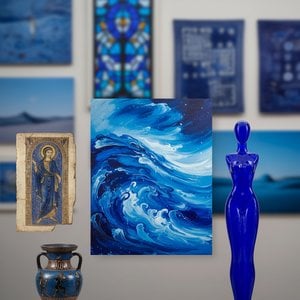
The Allure of Azure: Exploring the Symbolic & Aesthetic Depths of Blue in Art History
Explore the rich history of blue in art! Discover its symbolism, from ancient pigments to modern masterpieces by Kandinsky & Seurat. Uncover the psychological impact and cultural meanings behind this captivating hue.