

The picture follows your choices: , .
Biografija umetnika
A pioneer of American portraiture and landscape painting, Matthew Harris Jouett captured historical figures like Thomas Jefferson with a unique Romantic sensibility that invites you to discover his evocative legacy.
 Pročitaj više
Ručno rađena uljana reprodukcija
Ručno oslikano uljanim bojama na platnu u dimenzijama i okviru po vašem izboru, izrađeno po porudžbini od strane naših umetnika. ( Pređi na štampu Pređi na digitalnu sliku)
More about this painting
 Pregledaj u prostoru
 Pošalji
 Podeli
 Detalji o delu
 Vodič
Vodič

 Preuzmi
 Slični predmeti
 Rendgenski snimak
 Automatska prezentacija
 Q&A
Q&A Statistika
Order your painting in four simple steps
Take your time. You can change any answer; the price in your order card follows each choice.
1 Step one of four
Which size would you like?
These sizes keep the proportions of the original painting. The drawing shows your choice on a wall, above a two-metre sofa.
Or give your own measurements
Izaberite jednu od naših unapred definisanih veličina koje odgovaraju originalnim proporcijama umetničkog dela.

Unesite potrebnu širinu i visinu kako bi se slika uklopila u vaš ram ili zid. Pošto je ovo ručno oslikano delo, umetnik može za dimenzije drugačijeg oblika naslikati malo više prostora oko slike ili malo skratiti ivice — izbor je na vama. Pre početka rada, poslaćemo vam digitalni prikaz radi potvrde. Slika prikazana na ovoj stranici ne predstavlja konačan rezultat — samo digitalni prikaz pokazuje stvarnu sliku.
2 Step two of four
How should it be prepared: rolled, stretched or framed?
The prices below are for the size you chose in step one.
Choose the edges of the stretched canvas
Choose your frame

White дин1

Blurside дин1

Extended дин1

P118B дин10

P118H дин10

P118W дин10

P438Z дин10

P508JH дин12

P508YH дин12

P805H дин10

P805Z дин10

P919BZ дин10

P919G дин10

P919XJ дин10

P959ZH дин10

P968JZ дин12

W106C дин8

W218G дин10

W218JH дин8

W218Y дин10

W307PJ дин10

W316G дин10

W316PJ дин8

W316Y дин10

W398PJ дин8

W4111J дин10

W500HY дин15

W500JH дин15

W692G дин12

W849H дин8

W940BG дин15

W953PJ дин8

H24-GOLD дин30

H24-SILVER дин30

H36-GOLD дин45

H36-SILVER дин45
Uokvireno
Moulding: . Overall size with the frame: .
3 Step three of four
Would you like anything changed in the painting?
Most people answer no. Because each painting is made by hand, our artist can also adapt it for you.
After order, ArtsDot.com team will email client for instructions and provide a mockup preview
4 Step four of four
A few finishing options
All of them are optional. The answers already selected cost nothing extra.
Who paints it?
Svetska isporuka () za 3/4 nedelje umesto uobičajenih 5 nedelja. (2 новембар). Bez kompromisa po pitanju kvaliteta.
A nameplate, as in a museum?
Detalji gravirane bronze ploče
This elegant plaque features the artist's name and the title of the artwork, finely engraved for a timeless presentation.
It is made from bronze with a refined, elegant finish. The text is precisely laser-engraved for a sharp and permanent result. Measuring 9x2 cm, the plaque is compact yet easy to read. It's built to be durable and scratch-resistant, offering a professional, museum-quality look. Mounting is simple thanks to the included adhesive backing.
Detalji prozirne akrilne pločice
The plaque includes essential engraved details such as the artist's name, the title of the artwork, the date it was created, the type of media used-like oil on canvas or watercolor-a brief description of the piece, and a QR code that links to the complete artwork information.
It is crafted from clear acrylic, offering a sleek, modern appearance. The text is UV-engraved in black to ensure strong visual contrast. With a size of 10x15 cm, it ensures optimal readability. It comes equipped with two metal hooks for secure wall mounting. The plaque is designed to be weather-resistant, making it suitable for various environments, and it includes interactive features that work seamlessly with smartphone scanning.
Detalji crne akrilne pločice
This elegant plaque includes engraved information such as the artist's name, the title of the artwork, the date it was created, the type of media used (like oil on canvas or watercolor), a short description of the artwork, and a QR code for quick access to more information.
The plaque itself is made from refined black acrylic with a premium finish. The text is laser-engraved in white for high contrast and readability. Its size is 10x15 cm, designed to be easy to read. It comes with two metal hooks for professional mounting. The design is sleek and fits any interior style. It is also weather-resistant and durable, with built-in digital integration for mobile compatibility.
A protective varnish?
When do you need it?
✓ Check and order
Your painting, as you ordered it

Thomas Smith
Tehnika reprodukcije
Dimenzije reprodukcije
-

Vrhunski maestri umetnosti
Više detalja, prefinjenosti i dodatnog vremena za izradu
-

Okvir za reprodukciju
-
-
Za umetnička dela ili reprodukcije čija je bilo koja strana veća od 105 cm (približno 41 inč), okvir će biti isporučen u obliku rastavljenog seta za sklapanje. Ovaj metod osigurava bezbednu dostavu i sprečava oštećenja tokom transporta.
Potrebna je profesionalna montaža – ovo nije proizvod namenjen samostalnoj izradi.
Set mora sastaviti i platno zategnuti iskusni profesionalni ramitelj, koristeći drveni lepak (nije uključen u set), hvataljku za zatezanje platna i stege kako bi se održao prav ugao okvira dok se lepak suši. Nepravilno sklapanje ili neravnomerno zategnuto platno mogu trajno oštetiti umetničko delo, što nije pokriveno našom garancijom.
 Za umetnička dela ili reprodukcije čija je bilo koja strana veća od 105 cm (približno 41 inč), okvir će biti isporučen u obliku rastavljenog seta za sklapanje. Ovaj metod osigurava bezbednu dostavu i sprečava oštećenja tokom transporta.
Sve šipke od masivnog drveta su uključene, precizno isečene po veličini.
Montira se pomoću priloženih šrafova, uz dodatno korišćenje lepka za drvo za spojeve u uglovima, koji nije uključen u set i koji vaš čuvar okvira mora obezbediti.
Potreban je profesionalni alat koji nije uključen u set: klešta za zatezanje platna (zatezač) i stege za održavanje pravih uglova letvica tokom sušenja lepka.
Važno:
Za spojeve u uglovima neophodan je lepak za drvo, šipke se moraju pričvrstiti stezgama dok lepak potpuno ne osuši, a za zatezanje platna na sklopljenom ramu potrebne su hvataljke za zatezanje platna. Nijedan od ovih alata nije uključen u komplet. Pre naručivanja ove veličine, molimo Vas da unapred obezbedite iskusnog profesionalca za ramačenje.

Kratki opis natpisa
-
-

Zaštitni lak
Sjajni lak (pojačava intenzitet boja, štiti od svetlosti i vlage)
-

Personalizujte svoje umetničko delo
Primeri mogućnosti izmene: Zamena lica fotografijom kupca; Dodavanje ljubimca (npr. zamena mačke psom); Uključivanje skrivene poruke u pozadini; Promena pejzaža ili elemenata pozadine.
-

Hitna dostava
Svetska isporuka () za 3/4 nedelje umesto uobičajenih 5 nedelja. (2 новембар). Bez kompromisa po pitanju kvaliteta.
-
Brza dostava
Dostava širom sveta () u roku od 5 nedelja. (9 новембар).
Uključeno u cenu
Ukupna cena
дин 27397
Opcija sa staklom dostupna je samo za dimenzije manje od 110 cm
Included with every order
- Besplatna ekspresna dostava širom sveta
- Visokokvalitetno laneno platno
- Potpuno osiguranje transporta
- Garancija povraćaja carine i uvoznih dažbina
- Garancija vernosti boja
- Politika povraćaja u roku od 100 dana (samo u slučaju nedostataka)
- Garancija povrata 100% novca
- Popust na više proizvoda


Srodna umetnička dela


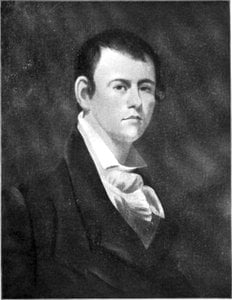
Matthew Harris Jouett
1788 - 1827, United States of America
Biografija umetnika
A Legacy Captured in Light and Shadow
Matthew Harris Jouett remains an enigmatic and profound figure within the early annals of American art, a painter whose brush captured the very essence of a burgeoning nation. Born in Mercer County, Kentucky, Jouett’s life was marked by both the ruggedness of the American frontier and the refined pursuit of classical beauty. While history often remembers him through the lens of his notable subjects, his true contribution lies in his ability to translate the psychological depth of his sitters and the sublime atmosphere of the wilderness onto canvas. Though his career was tragically cut short, he left behind a body of work that serves as a vital window into the Romantic sensibility of the early nineteenth century.
His journey as an artist was one of both duty and devotion. A graduate of Transylvania University who briefly studied law, Jouett’s path took a decidedly more creative turn, much to the chagrin of his father, a hero of the American Revolution. Beyond the studio, he served with distinction as a volunteer officer in the 2 .8th Kentucky Infantry during the War of 1812. It was during these turbulent years that his artistry met necessity; he famously used his own earnings to restore missing militia funds and captured the likenesses of his fellow soldiers from memory, imbuing these portraits with a raw, human energy born of shared experience.
Mastery of Portraiture and Landscape
Jouett’s artistic development was shaped by a pursuit of excellence that led him far beyond the borders of Kentucky. Seeking to refine his craft, he traveled to Boston to study under the legendary Gilbert Stuart, an encounter that undoubtedly deepened his understanding of portraiture. This training allowed him to execute works of immense historical significance, earning commissions to paint luminaries such as Thomas Jefferson, George Rogers Clark, and the Marquis de Lafayette. His portraits are characterized by a masterful use of chiaroscuro, where dramatic contrasts of light and dark sculpt the features of his subjects, creating a sense of presence that transcends time.
While he is celebrated for his portraits, Jouett also emerged as a pioneer in the realm of American landscape painting. He possessed an unwavering dedication to capturing the Appalachian wilderness, focusing on the intimate and evocative beauty of the Kentucky and Tennessee landscapes. His approach to the land was not one of monumental scale, but rather an exploration of subtle tonal variations and atmospheric effects. In his landscapes, one finds a unique blend of Romantic idealism and meticulous observation, often utilizing watercolor to achieve luminous color palettes and delicate textures that resonate with the soul of the American frontier.
Artistic Style and Historical Significance
The stylistic hallmarks of Jouett’s work represent a fascinating intersection of classical tradition and emerging modern sensibilities. His technique can be described as a form of Romantic Impressionism, where he adopted the idealized forms and dramatic lighting reminiscent of masters like Claude Lorrain and Nicolas Poussin, yet infused them with a looser, more fluid brushwork. This ability to balance Neoclassical structure with a restless, human energy allowed him to create works that were both dignified and deeply emotive.
Though his fame was not fully realized until the 1893 Chicago World Fair, Jouett’s impact on the American artistic landscape is undeniable. His work stands as a testament to a period of transition in the United States—a time when artists were beginning to find their own visual language, separate from European traditions, by looking closely at the faces and the forests of their own soil. Today, his paintings are cherished not merely as historical artifacts, but as profound explorations of character and nature.