

 Pregledaj u prostoru
 Podeli
 Podeli
 Detalji
 Vodič
Vodič

 Preuzmi sliku
 Slični predmeti
 Rendgenski snimak
 Automatska prezentacija
 Statistika
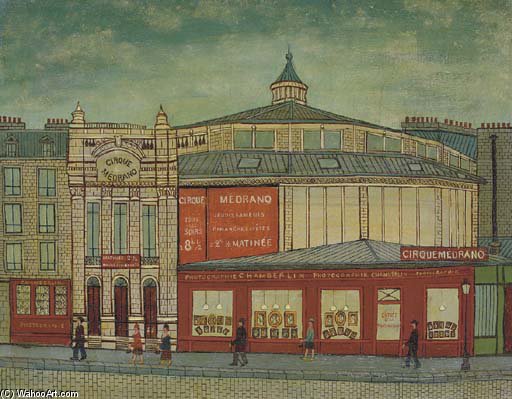
Paris, Montmartre
 Pročitaj više
Ručno rađena uljana reprodukcija
Ručno oslikano uljanim bojama na platnu u dimenzijama i okviru po vašem izboru, izrađeno po porudžbini od strane naših umetnika. ( Pređi na prodaju štampanih primeraka Pređi na prodaju digitalnih slika)




































Izaberite jednu od naših unapred definisanih veličina koje odgovaraju originalnim proporcijama umetničkog dela.

Možete uneti sopstvene dimenzije kako biste prilagodili umetničko delo određenom okviru ili prostoru. Ako odabrana veličina ne odgovara proporcijama originala, slika će biti isečena ili proširena dodatnim elementima koji se ručno oslikavaju. Digitalni prikaz će vam biti poslat na odobrenje pre početka proizvodnje.
Imajte na umu da pregled na ekranu ne odražava stvarno prisecanje ili proširenje. Samo mockup će precizno prikazati konačnu kompoziciju.
Iako su dostupne prilagođene veličine, preporučujemo da izaberete dimenziju iz unapred definisane liste kako biste sačuvali originalne proporcije.
Nakon narudžbine, tim ArtsDot.com će klijentu putem e-pošte poslati uputstva i dostaviti prikaz predloženog rešenja
Svetska isporuka () za 3/4 nedelje umesto uobičajenih 5 nedelja. (23 септембар). Bez kompromisa po pitanju kvaliteta.

Besplatna ekspresna dostava širom sveta

Visokokvalitetno laneno platno

Sveobuhvatno osiguranje transporta

Garancija povraćaja carine i uvoznih dažbina

Garancija vernosti boja i autentičnosti pri reprodukciji

Politika povraćaja u roku od 100 dana (samo u slučaju nedostataka)

Garancija povrata 100% novca

Popust pri većoj količini
 Opcija sa staklom dostupna je samo za dimenzije manje od 110 cm

Paris, Montmartre
Tehnika izrade reprodukcije
Veličina reprodukcije
-


Ukupna cena
$ 263
Srodna umetnička dela


Biografija umetnika
Frederic Remington: A Chronicler of the American West
Frederic Sackrider Remington, born on October 4, 1861, in Canton, New York – a town steeped in family history connected to the early days of America – emerged as one of the most iconic figures in late 19th-century American art. His legacy isn’t simply that of a painter; he was a chronicler, an illustrator, a sculptor, and a writer who indelibly captured the spirit and drama of the Old West for generations to come. Remington's life was inextricably linked to the westward expansion of the United States, and his artistic output served as both a reflection of this transformation and a romanticized interpretation of its frontier experience. His story began amidst the echoes of the Civil War, with tales of cavalry heroism passed down through his family – a lineage tracing back to England’s early colonial days. This familial connection instilled in him a deep respect for military tradition and a fascination with the rugged landscapes of the American West.Early Life and Artistic Beginnings
Remington's formal artistic training was surprisingly limited. He didn’t attend an elite art school, instead receiving instruction primarily through observation and self-study. His father, Seth Remington, a newspaper editor and postmaster, fostered his son’s interest in storytelling and visual representation. Early sketches of soldiers on horseback, honed during his brief stint at Highland Military Academy in Massachusetts, demonstrated a nascent talent for capturing movement and detail. Following his father's death in 1880, the family moved to Kansas City, Missouri, where Frederic began working as a clerk for state agencies – a pragmatic step that provided a necessary income while he pursued his artistic ambitions. Crucially, Remington’s exposure to the burgeoning world of illustration through publications like *Harper’s Weekly* proved pivotal, shaping his style and establishing him as a sought-after artist for depicting frontier life. His early work was characterized by tight brushwork and dramatic lighting, heavily influenced by French academic painters such as Ernest Meissonier and Édouard Detaille, who specialized in historical battle scenes.The Rise of a Western Icon
Remington’s career truly took flight when he began illustrating for *Harper’s Weekly* in 1885, following travels throughout the Southwest. These evocative black-and-white drawings—depicting cowboys, Native Americans, and cavalrymen—quickly gained widespread popularity, establishing Remington as a leading voice in portraying Western life. He wasn't merely documenting; he was constructing a narrative, often imbued with romanticism and a sense of heroic adventure. His illustrations for books by authors like Henry Wadsworth Longfellow, Owen Wister, and Theodore Roosevelt further cemented his reputation and broadened his audience. Remington’s work resonated deeply with the American public at a time when westward expansion was reshaping the nation's identity. He captured a fleeting moment in history—the decline of the frontier—and transformed it into enduring images of courage, resilience, and the untamed spirit of the West.Sculpture and Beyond
While painting remained his primary medium, Remington’s artistic interests extended to sculpture. He began experimenting with sculpting in the late 1890s, initially utilizing the traditional sand-casting method. However, he soon embraced the lost wax process, allowing for greater detail and complexity in his works. His sculptures, often depicting Native American figures or scenes from frontier life, demonstrated a remarkable ability to capture both anatomical accuracy and emotional depth. Beyond his visual art, Remington also ventured into writing, producing short stories, anthologies of magazine articles, and even two novels. His experiences as a war correspondent during the Spanish-American War further informed his artistic vision, exposing him to the realities of conflict and shaping his perspective on human nature.Legacy and Influence
Frederic Remington died unexpectedly in 1909 at the age of forty-eight, leaving behind a vast body of work that continues to captivate audiences today. His paintings, sculptures, and illustrations offer a unique window into a pivotal era in American history—a time of rapid change, expansion, and cultural collision. Remington’s romanticized portrayal of the West has been both praised and criticized for its potential to perpetuate stereotypes. However, his enduring popularity speaks to the power of his imagery and his ability to capture the spirit of an age. His influence can be seen in countless works of art, literature, and popular culture—most famously, John Ford’s film *She Wore a Yellow Ribbon*, which directly drew inspiration from Remington's illustrations, and the iconic “Marlboro Man” advertisement, a testament to his lasting impact on American iconography. Remington remains not just an artist, but a cultural touchstone, embodying the enduring fascination with the American West and its complex legacy.
louis vivin
1861 - 1936 , France
Brzi pregled
- Artistic Movement Or Style: Western American Art
- Artists Or Movements Influenced By This Artist:
- George Catlin
- Impressionism
- Artists Who Influenced This Artist:
- Ernest Meissonier
- Édouard Detaille
- Date Of Birth: October 4, 1861
- Date Of Death: December 26, 1909
- Full Name: Frederic Sackrider Remington
- Nationality: American
- Notable Artworks:
- A Dash for the Timber
- The Bronco Buster
- Plainsmen
- Comanche Hunter
- Place Of Birth: Canton, New York, USA