
 Acrylic On Canvas
- WallArt
- Barbizon School
 1910
1910 115.0 x 101.0 cm
 Parlament Poljske

The picture follows your choices: , .
Opis predmeta
Admire 'Mushroom Picking' by Józef Rapacki (1910). A serene watercolor landscape featuring peasant women & a birch tree in autumn hues. Inspired by Barbizon School, this piece evokes tranquility and Polish rural life.
 Pročitaj više
Biografija umetnika
Discover Józef Rapacki (1871-1929), a Polish painter celebrated for nostalgic landscapes & Mazovian scenes. Explore his realistic style, influenced by the Munich School, and wartime propaganda art. Find works in museums worldwide.
Ručno rađena uljana reprodukcija
Ručno oslikano uljanim bojama na platnu u dimenzijama i okviru po vašem izboru, izrađeno po porudžbini od strane naših umetnika. ( Pređi na štampu Pređi na digitalnu sliku)
More about this painting
 Pregledaj u prostoru
 Pošalji
 Podeli
 Detalji o delu
 Vodič
Vodič

 Preuzmi
 Slični predmeti
 Rendgenski snimak
 Automatska prezentacija
 Q&A
Q&A Statistika
Order your painting in four simple steps
Take your time. You can change any answer; the price in your order card follows each choice.
1 Step one of four
Which size would you like?
These sizes keep the proportions of the original painting. The drawing shows your choice on a wall, above a two-metre sofa.
Or give your own measurements
Izaberite jednu od naših unapred definisanih veličina koje odgovaraju originalnim proporcijama umetničkog dela.

Unesite potrebnu širinu i visinu kako bi se slika uklopila u vaš ram ili zid. Pošto je ovo ručno oslikano delo, umetnik može za dimenzije drugačijeg oblika naslikati malo više prostora oko slike ili malo skratiti ivice — izbor je na vama. Pre početka rada, poslaćemo vam digitalni prikaz radi potvrde. Slika prikazana na ovoj stranici ne predstavlja konačan rezultat — samo digitalni prikaz pokazuje stvarnu sliku.
2 Step two of four
How should it be prepared: rolled, stretched or framed?
The prices below are for the size you chose in step one.
Choose the edges of the stretched canvas
Choose your frame

White дин1

Blurside дин1

Extended дин1

P118B дин10

P118H дин10

P118W дин10

P438Z дин10

P508JH дин12

P508YH дин12

P805H дин10

P805Z дин10

P919BZ дин10

P919G дин10

P919XJ дин10

P959ZH дин10

P968JZ дин12

W106C дин8

W218G дин10

W218JH дин8

W218Y дин10

W307PJ дин10

W316G дин10

W316PJ дин8

W316Y дин10

W398PJ дин8

W4111J дин10

W500HY дин15

W500JH дин15

W692G дин12

W849H дин8

W940BG дин15

W953PJ дин8

H24-GOLD дин30

H24-SILVER дин30

H36-GOLD дин45

H36-SILVER дин45
Uokvireno
Moulding: . Overall size with the frame: .
3 Step three of four
Would you like anything changed in the painting?
Most people answer no. Because each painting is made by hand, our artist can also adapt it for you.
After order, ArtsDot.com team will email client for instructions and provide a mockup preview
4 Step four of four
A few finishing options
All of them are optional. The answers already selected cost nothing extra.
Who paints it?
Svetska isporuka () za 3/4 nedelje umesto uobičajenih 5 nedelja. (29 октобар). Bez kompromisa po pitanju kvaliteta.
A nameplate, as in a museum?
Detalji gravirane bronze ploče
This elegant plaque features the artist's name and the title of the artwork, finely engraved for a timeless presentation.
It is made from bronze with a refined, elegant finish. The text is precisely laser-engraved for a sharp and permanent result. Measuring 9x2 cm, the plaque is compact yet easy to read. It's built to be durable and scratch-resistant, offering a professional, museum-quality look. Mounting is simple thanks to the included adhesive backing.
Detalji prozirne akrilne pločice
The plaque includes essential engraved details such as the artist's name, the title of the artwork, the date it was created, the type of media used-like oil on canvas or watercolor-a brief description of the piece, and a QR code that links to the complete artwork information.
It is crafted from clear acrylic, offering a sleek, modern appearance. The text is UV-engraved in black to ensure strong visual contrast. With a size of 10x15 cm, it ensures optimal readability. It comes equipped with two metal hooks for secure wall mounting. The plaque is designed to be weather-resistant, making it suitable for various environments, and it includes interactive features that work seamlessly with smartphone scanning.
Detalji crne akrilne pločice
This elegant plaque includes engraved information such as the artist's name, the title of the artwork, the date it was created, the type of media used (like oil on canvas or watercolor), a short description of the artwork, and a QR code for quick access to more information.
The plaque itself is made from refined black acrylic with a premium finish. The text is laser-engraved in white for high contrast and readability. Its size is 10x15 cm, designed to be easy to read. It comes with two metal hooks for professional mounting. The design is sleek and fits any interior style. It is also weather-resistant and durable, with built-in digital integration for mobile compatibility.
A protective varnish?
When do you need it?
✓ Check and order
Your painting, as you ordered it

Mushroom Picking
Tehnika reprodukcije
Dimenzije reprodukcije
-

Vrhunski maestri umetnosti
Više detalja, prefinjenosti i dodatnog vremena za izradu
-

Okvir za reprodukciju
-
-
Za umetnička dela ili reprodukcije čija je bilo koja strana veća od 105 cm (približno 41 inč), okvir će biti isporučen u obliku rastavljenog seta za sklapanje. Ovaj metod osigurava bezbednu dostavu i sprečava oštećenja tokom transporta.
Potrebna je profesionalna montaža – ovo nije proizvod namenjen samostalnoj izradi.
Set mora sastaviti i platno zategnuti iskusni profesionalni ramitelj, koristeći drveni lepak (nije uključen u set), hvataljku za zatezanje platna i stege kako bi se održao prav ugao okvira dok se lepak suši. Nepravilno sklapanje ili neravnomerno zategnuto platno mogu trajno oštetiti umetničko delo, što nije pokriveno našom garancijom.
 Za umetnička dela ili reprodukcije čija je bilo koja strana veća od 105 cm (približno 41 inč), okvir će biti isporučen u obliku rastavljenog seta za sklapanje. Ovaj metod osigurava bezbednu dostavu i sprečava oštećenja tokom transporta.
Sve šipke od masivnog drveta su uključene, precizno isečene po veličini.
Montira se pomoću priloženih šrafova, uz dodatno korišćenje lepka za drvo za spojeve u uglovima, koji nije uključen u set i koji vaš čuvar okvira mora obezbediti.
Potreban je profesionalni alat koji nije uključen u set: klešta za zatezanje platna (zatezač) i stege za održavanje pravih uglova letvica tokom sušenja lepka.
Važno:
Za spojeve u uglovima neophodan je lepak za drvo, šipke se moraju pričvrstiti stezgama dok lepak potpuno ne osuši, a za zatezanje platna na sklopljenom ramu potrebne su hvataljke za zatezanje platna. Nijedan od ovih alata nije uključen u komplet. Pre naručivanja ove veličine, molimo Vas da unapred obezbedite iskusnog profesionalca za ramačenje.

Kratki opis natpisa
-
-

Zaštitni lak
Sjajni lak (pojačava intenzitet boja, štiti od svetlosti i vlage)
-

Personalizujte svoje umetničko delo
Primeri mogućnosti izmene: Zamena lica fotografijom kupca; Dodavanje ljubimca (npr. zamena mačke psom); Uključivanje skrivene poruke u pozadini; Promena pejzaža ili elemenata pozadine.
-

Hitna dostava
Svetska isporuka () za 3/4 nedelje umesto uobičajenih 5 nedelja. (29 октобар). Bez kompromisa po pitanju kvaliteta.
-
Brza dostava
Dostava širom sveta () u roku od 5 nedelja. (5 новембар).
Uključeno u cenu
Ukupna cena
дин 29817
Opcija sa staklom dostupna je samo za dimenzije manje od 110 cm
Included with every order
- Besplatna ekspresna dostava širom sveta
- Visokokvalitetno laneno platno
- Potpuno osiguranje transporta
- Garancija povraćaja carine i uvoznih dažbina
- Garancija vernosti boja
- Politika povraćaja u roku od 100 dana (samo u slučaju nedostataka)
- Garancija povrata 100% novca
- Popust na više proizvoda


A Woodland Reverie: Józef Rapacki’s “Mushroom Picking”
“Mushroom Picking,” painted in 1910 by the Polish landscape artist Józef Rapacki, isn't merely a depiction of a rural scene; it’s a carefully constructed evocation of a specific time and place – the heartland of Poland, steeped in nostalgia and a profound connection to the natural world. The painting captures a fleeting moment within a late autumn forest, a tableau of peasant women diligently gathering mushrooms amidst a landscape that breathes with both quiet beauty and subtle melancholy. Rapacki’s work stands as a testament to the Barbizon School's influence, blending elements of French realism with a distinctly Polish sensibility, creating an atmosphere that is both familiar and profoundly evocative.
The Scene Unfolds: Composition and Detail
At the painting’s core resides a venerable birch tree, its branches reaching skyward like supplicating arms. Positioned in the foreground, it anchors the composition while simultaneously drawing the viewer into the scene. Flanking this central figure are two women, their forms rendered with a veristic approach – a deliberate choice that emphasizes their humanity and connection to the land. They aren’t idealized figures; instead, they possess a grounded presence, actively engaged in their task, their clothing suggesting a life lived close to the rhythms of nature. Behind them, a wall of young forest—a grove of pines—provides depth and a sense of enclosure, while rolling hills fade into a hazy, clouded sky, hinting at an approaching winter. The careful placement of each element – the scattered mushrooms, the worn path, the distant trees – contributes to a meticulously crafted landscape that feels both intimate and expansive.
Brushstrokes and Palette: Technique and Style
Rapacki’s technique is characterized by a masterful use of watercolor—a medium perfectly suited to capturing the diffused light and atmospheric qualities of the Polish countryside. The brushwork is loose and expressive, prioritizing mood over precise detail. Layers of translucent washes build up color gradually, creating a sense of depth and luminosity. The dominant palette consists of rusty browns – ochres, umbers, and siennas – that imbue the scene with a warm, autumnal glow. These earthy tones are skillfully contrasted with the greens of the foliage and the muted blues of the sky, further enhancing the painting’s visual richness. The artist's attention to texture is remarkable; one can almost feel the dampness of the meadow grass beneath their feet and the rough bark of the birch tree.
Symbolism and Context: A Polish Pastoral
“Mushroom Picking” transcends a simple landscape depiction, carrying layers of symbolic meaning. The act of mushroom gathering itself represents a connection to tradition, sustenance, and the cyclical rhythms of nature. The presence of the peasant women speaks to the enduring role of rural communities in Polish society. Furthermore, the painting’s stylistic choices—the Barbizon School influence, the veristic approach—reflect a broader movement within Polish art that sought to celebrate the nation's cultural heritage and landscape. Rapacki’s work can be viewed as a nostalgic yearning for a simpler time, a romanticized vision of rural Poland rooted in folklore and tradition. The painting was created during a period of significant social and political change in Poland, and it offers a poignant glimpse into a world on the cusp of modernity.
Emotional Resonance: A Quiet Moment of Reflection
Ultimately, “Mushroom Picking” is a profoundly moving work that invites contemplation. It’s not a dramatic or overtly emotional scene; rather, it possesses a quiet dignity and a sense of serene beauty. The painting evokes feelings of tranquility, solitude, and a deep appreciation for the natural world. It's a reminder to slow down, observe, and find solace in the simple pleasures of life—a timeless message rendered with exquisite skill and sensitivity by Józef Rapacki.
Pitanja i odgovori
Koji umetnički pravac obuhvata „Mushroom Picking”, autor Józef Rapacki?
Umetnički pravac koji se povezuje sa delom „Mushroom Picking”, autor Józef Rapacki je Barbizon School. Ova klasifikacija smešta rad među srodne umetnike i umetnička dela.
Koja osnovna nijansa prožima „Mushroom Picking”, autor Józef Rapacki?
Ochre to Sepia nijansa prožima delo „Mushroom Picking”, autor Józef Rapacki.
Kakva su prava na reprodukciju dela "Mushroom Picking" u muzeju Parlament Poljske?
Delo „Mushroom Picking”, autor Józef Rapacki, koje se čuva u muzeju Parlament Poljske, nalazi se u u javnom vlasništvu – autorska prava su istekla statusu. Ovaj status određuje da li je dozvoljeno izrada reprodukcija slike.
Srodna umetnička dela


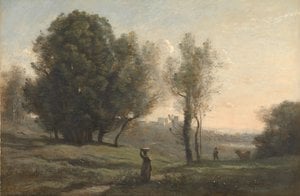


Józef Rapacki
1871 - 1929, Poland
Biografija umetnika
A Nostalgic Vision of Poland: The Life and Art of Józef Rapacki
Józef Rapacki, born in Warsaw in 1871, was a painter deeply attuned to the soul of the Polish countryside. His life unfolded against a backdrop of shifting political landscapes and burgeoning artistic movements, yet his work remained steadfastly rooted in a nostalgic portrayal of Mazovia – the historical region that became both his muse and his enduring legacy. Coming from a theatrical family—his father an actor, writer, and translator, with siblings following similar paths—Rapacki initially seemed destined for the stage. However, at the age of fourteen, he discovered his true calling within the lines and washes of drawing, enrolling in classes taught by Wojciech Gerson, a prominent figure in Polish Realism. This early mentorship instilled in him not only technical skill but also a deep appreciation for observing and interpreting the natural world. His subsequent studies at the Kraków Academy of Fine Arts under Izydor Jabłoński, Florian Cynk, and Feliks Szynalewski further refined his abilities, preparing him for a journey that would ultimately define his artistic identity.From Munich to Mazovia: Artistic Development and Influences
Rapacki’s artistic development was significantly shaped by his time in Munich, where he studied with Conrad Fehr beginning in 1889. Exposure to the “Munich School” broadened his perspective, influencing his approach to composition and color. However, it was a study trip to Italy around 1898 that truly ignited his passion for landscape painting. He returned to Poland imbued with a desire to capture the unique beauty of his homeland. Initially working in landscapes, cityscapes, and genre scenes, Rapacki gradually focused on the Mazovian countryside, drawn to its vast plains, scattered woodlands, and humble rural life. His work began appearing in prominent Warsaw periodicals like *Tygodnik Ilustrowany*, and he illustrated works by Ignacy Krasicki, demonstrating his versatility as an artist. He exhibited at the Exposition Universelle in 1900, gaining international recognition for his talent. This period saw him absorbing influences from various sources, yet always filtering them through a distinctly Polish sensibility. The Barbizon School’s emphasis on direct observation and natural light would later become particularly evident in his work.Landscapes of the Heart: Style and Subject Matter
Józef Rapacki's paintings are characterized by their quiet realism, luminous atmosphere, and a profound sense of tranquility. He masterfully captured the subtle nuances of light and shadow, imbuing his landscapes with an almost ethereal quality. His palette favored muted tones—soft greens, browns, grays, and ochres—reflecting the natural colors of the Mazovian countryside. While he occasionally depicted figures within his scenes – peasant women gathering mushrooms or working in fields – they were rarely the focal point; instead, they served to enhance the sense of place and evoke a feeling of harmony between humanity and nature. He became known as “the painter of birches and lilac heathers,” subjects that recurred frequently throughout his oeuvre. His compositions often feature expansive vistas, drawing the viewer into the depth of the landscape and creating a sense of spaciousness. Buttercups, painted in 1927, exemplifies this style—a vibrant marsh scene rendered with delicate brushwork and bathed in golden light. Similarly, Mushroom Picking (1910) showcases his ability to capture the serenity of rural life, inspired by the Barbizon School’s approach to depicting everyday scenes.Wartime Reflections and Lasting Legacy
Rapacki's life was marked by personal hardship; a severe lung ailment forced him to relocate from Warsaw to Kraków and eventually to Olszanka, where he found solace in the landscapes that would become his signature subject matter. The outbreak of World War I brought new challenges and responsibilities. He contributed numerous drawings to the Warsaw press, including the powerful series *Prusak w Polsce* (“Prussian in Poland”), which served as propaganda during the Silesian Uprisings. This work demonstrates Rapacki’s willingness to use his art for a political purpose, reflecting his deep patriotism and concern for the fate of Poland. He passed away in Olszanka in 1929, leaving behind a rich artistic legacy that continues to resonate with audiences today. His paintings can be found in prominent museums such as the Muzeum w Warszawie and the Museum Pomorskie (Danzig), ensuring his place within the canon of Polish art history. Józef Rapacki’s work offers more than just picturesque scenes; it provides a poignant glimpse into a vanishing way of life, a nostalgic tribute to the beauty and spirit of Mazovia, and a testament to the enduring power of landscape painting.
Povezani članci

Ephemeral Echoes: Exploring the Aesthetic & Historical Significance of Vintage Watercolor Painting
Explore the captivating world of vintage watercolor painting! Discover its rich history, techniques, influential artists & collecting tips. Expert insights for enthusiasts and collectors at ArtsDot.
Ephemeral Visions: Exploring the Artistic Legacy & Nuances of Watercolor Painting
Explore the captivating world of watercolor painting! Discover its rich history, essential techniques, influential artists & collecting tips from art experts. A comprehensive guide for enthusiasts.

Ephemeral Visions: Exploring the Artistic Legacy & Contemporary Practice of Watercolor Painting
Explore the captivating world of watercolor painting! Discover its rich history, essential techniques, influential artists & collecting tips. A comprehensive guide for art enthusiasts from ArtsDot.