


 Pregledaj u prostoru
 Pošalji
 Podeli
 Detalji o delu
 Vodič
Vodič

 Preuzmi
 Slični predmeti
 Rendgenski snimak
 Automatska prezentacija
 Statistika
Still-Life
 Oil On Canvas
- WallArt
- Flemish Baroque
 1650
1650 118.0 x 140.0 cm
 Hermitage Museum
 Pročitaj više
Ručno rađena uljana reprodukcija
Ručno oslikano uljanim bojama na platnu u dimenzijama i okviru po vašem izboru, izrađeno po porudžbini od strane naših umetnika. ( Pređi na štampu Pređi na digitalnu sliku)




P118B дин10

P118H дин10

P118W дин10

P438Z дин10

P508JH дин12

P508YH дин12

P805H дин10

P805Z дин10

P919BZ дин10

P919G дин10

P919XJ дин10

P959ZH дин10

P968JZ дин12

W106C дин8

W218G дин10

W218JH дин8

W218Y дин10

W307PJ дин10

W316G дин10

W316PJ дин8

W316Y дин10

W398PJ дин8

W4111J дин10

W500HY дин15

W500JH дин15

W692G дин12

W849H дин8

W940BG дин15

W953PJ дин8




Izaberite jednu od naših unapred definisanih veličina koje odgovaraju originalnim proporcijama umetničkog dela.

Unesite potrebnu širinu i visinu kako bi se slika uklopila u vaš ram ili zid. Pošto je ovo ručno oslikano delo, umetnik može za dimenzije drugačijeg oblika naslikati malo više prostora oko slike ili malo skratiti ivice — izbor je na vama. Pre početka rada, poslaćemo vam digitalni prikaz radi potvrde. Slika prikazana na ovoj stranici ne predstavlja konačan rezultat — samo digitalni prikaz pokazuje stvarnu sliku.
Nakon narudžbine, tim ArtsDot.com će klijentu putem e-pošte poslati uputstva i dostaviti prikaz predloženog rešenja
Svetska isporuka () za 3/4 nedelje umesto uobičajenih 5 nedelja. (28 октобар). Bez kompromisa po pitanju kvaliteta.

Besplatna ekspresna dostava širom sveta

Visokokvalitetno laneno platno

Potpuno osiguranje transporta

Garancija povraćaja carine i uvoznih dažbina

Garancija vernosti boja

Politika povraćaja u roku od 100 dana (samo u slučaju nedostataka)

Garancija povrata 100% novca

Popust na više proizvoda
 Opcija sa staklom dostupna je samo za dimenzije manje od 110 cm

Still-Life
Tehnika reprodukcije
Dimenzije reprodukcije
-


Ukupna cena
дин 27243
The Still Life’s Silent Symphony: Joris Van Son's 1650 Masterpiece
Joris Van Son’s “Still-Life,” painted in 1650, isn’t merely a depiction of fruit and objects; it’s a carefully orchestrated tableau brimming with the quiet elegance and meticulous observation characteristic of Flemish Baroque art. Housed within the venerable halls of The Hermitage Museum in St. Petersburg, this oil on canvas offers a captivating glimpse into a world where beauty was painstakingly rendered, and symbolism whispered beneath the surface of everyday abundance. Measuring 118 x 140 cm, the painting invites prolonged contemplation, revealing layers of artistic skill and historical context with each studied glance.
- A Table Laden with Treasures: The composition centers around a richly draped table, its surface a stage for an array of carefully chosen items. A prominent orange, bursting with vibrant color, immediately draws the eye – a symbol of wealth, vitality, and even mortality in 17th-century still life traditions. Adjacent to it lie two apples, one ruby red and the other a crisp green, representing temptation, knowledge, and the duality of nature’s gifts.
- The Lobster's Bold Presence: Dominating the center is a magnificent lobster, its claws dramatically open as if caught mid-movement. This creature, often associated with luxury and indulgence, speaks to the opulence of the era and hints at the fleeting pleasures of life. The inclusion of such an exotic item underscores Van Son’s access to – or awareness of – goods from distant lands.
- A Symphony of Textures and Light: Notice the masterful rendering of textures—the velvety smoothness of the peaches, the glistening sheen of the grapes, the rough surface of the pewter plate. Van Son expertly manipulated light and shadow, creating a sense of depth and volume that brings the objects to life. The subtle gradations of color contribute to this effect, enhancing the realism and tactile quality of the scene.
The Hand of the Master: Technique and Style
Van Son’s style is deeply rooted in the traditions of Flemish painting, yet he possesses a distinctive voice. He clearly learned from Jan Davidsz de Heem, evident in his penchant for lavish arrangements and vibrant color palettes. However, Van Son departs from his mentor with a greater emphasis on atmospheric perspective and a more restrained use of impasto—the visible application of paint—allowing the details to shine through with remarkable clarity. The painting’s surface is remarkably smooth, achieved through meticulous layering and blending techniques. The artist's attention to detail is breathtaking; one can almost feel the weight of the fruit and the coolness of the pewter.
Technically, Van Son employed a thin, white chalk ground before applying his paint, creating a luminous base that enhanced the colors’ brilliance. He utilized translucent glazes—thin layers of diluted color—to build up depth and create subtle variations in tone, particularly noticeable in the shadows and highlights. The use of pentimenti – small changes made during the painting process – further reveals the artist's creative journey and his willingness to refine his work.A Window into 17th-Century Symbolism
Beyond its aesthetic beauty, “Still-Life” is rich in symbolic meaning. The abundance of fruit represents prosperity and fertility, but also serves as a poignant reminder of the transience of earthly pleasures – a concept central to Vanitas paintings, which often included skulls or decaying objects alongside beautiful items. The lobster, with its association with luxury and indulgence, can be interpreted as a symbol of mortality, reminding viewers of the fleeting nature of life’s joys. The inclusion of elements like the pewter plate and the draped cloth speaks to the material world and the importance of earthly possessions.
Bringing Van Son's Vision Home: Reproductions Available
A reproduction of “Still-Life” by Joris Van Son offers a remarkable opportunity to bring this masterpiece into your home or office. Handmade oil painting reproductions, meticulously crafted by skilled artisans, capture the essence of the original while providing an affordable and accessible way to appreciate its beauty. These reproductions are available in various sizes and framing options, allowing you to select a piece that perfectly complements your décor. Explore the collection at https://ArtsDot.com and discover the timeless allure of Joris Van Son’s “Still-Life.”
Pitanja i odgovori
Mogu li da pregledam „Still-Life”, autor Joris Van Son pre naručivanja?
Da biste pregledali reprodukciju dela „Still-Life”, autor Joris Van Son, otvorite stranicu Pregled u prostoru za to umetničko delo.
Koliko svetlosti se čini da boje dela "Still-Life" reflektuju?
„Still-Life”, autor Joris Van Son ima luminancu od Dark. Luminanca opisuje koliko se čini da boje reflektuju svetlosti.
Koji raspoloženje izražava „Still-Life”, autor Joris Van Son unutar Flemish Baroque?
„Still-Life“ odiše Reflective emocijom u okviru pokreta Flemish Baroque.
Srodna umetnička dela


Biografija umetnika
Joris Hoefnagel: A Pioneer of Naturalism and Manuscript Illumination
Joris Hoefnagel, born in Antwerp around 1542 and tragically dying in Vienna in 1601, stands as a pivotal figure bridging the late Renaissance and the burgeoning Baroque periods. More than simply a painter or illustrator, he was a meticulous observer of nature, a skilled miniaturist, and a crucial contributor to the development of topographical drawing – a field that would profoundly influence generations of artists. His legacy lies not just in his individual works but also in the techniques and approaches he pioneered, shaping the visual language of his time.
Hoefnagel’s early life was steeped in mercantile activity. The son of Jacob Hoefnagel, a diamond dealer and tapestry merchant, he received an unusually comprehensive education, encompassing humanist studies alongside artistic training. While speculation persists regarding his apprenticeship under Hans Bol – a prominent Antwerp painter – the precise details remain elusive. Regardless, this formative period undoubtedly instilled within him a rigorous approach to observation and representation, qualities that would become hallmarks of his later work. His travels through France and Spain exposed him to diverse artistic influences, particularly in the realm of decorative arts and manuscript illumination, experiences which significantly broadened his creative horizons.
The World Within Manuscript Pages
Hoefnagel’s most celebrated contributions reside within the intricate world of illuminated manuscripts. He served as a highly sought-after illuminator for wealthy patrons across Europe, producing breathtakingly detailed illustrations for religious texts and scholarly works. His style was characterized by an almost scientific precision – he meticulously documented flora, fauna, and architectural details with remarkable accuracy. This wasn’t merely decorative; it reflected a genuine fascination with the natural world, anticipating the rise of botanical illustration and proto-scientific inquiry.
His work for the *Speculum Humanae Salvationis*, an enormous theological manuscript commissioned by Emperor Charles V, is particularly noteworthy. Within its pages, Hoefnagel rendered hundreds of illustrations – from exotic animals and plants to intricate architectural designs and detailed depictions of courtly life. These images weren’t simply embellishments; they were integral components of the text, providing visual commentary and enriching the reader's understanding. He developed innovative techniques for rendering textures, light, and shadow, pushing the boundaries of manuscript illumination and establishing a new standard for detail and realism.
A Master of Detail: Drawing and Topographical Observation
Beyond his work in illuminated manuscripts, Hoefnagel was a remarkably skilled draftsman. His drawings are characterized by an astonishing level of precision and observation – he captured the nuances of light, texture, and form with unparalleled accuracy. He moved beyond traditional portraiture, developing a unique approach to topographical drawing, meticulously documenting landscapes and architectural structures. This focus on detailed representation foreshadowed the rise of landscape painting as a distinct genre in the Netherlands.
His drawings of Antwerp, for example, are considered groundbreaking. They weren’t merely scenic views; they were carefully constructed representations that captured the city's layout, buildings, and atmosphere with remarkable detail. Hoefnagel’s meticulous approach to observation influenced a generation of artists, including his nephew, Jacob Hoefnagel, who continued to develop and refine these techniques.
Influence and Legacy
Joris Hoefnagel's impact on the course of art history is profound. He bridged the gap between late Gothic artistic traditions and the emerging Renaissance style, incorporating Italian influences while retaining a distinctly Northern European sensibility. His meticulous attention to detail, his pioneering work in topographical drawing, and his contributions to manuscript illumination established new standards for realism, accuracy, and visual storytelling.
Furthermore, Hoefnagel’s detailed botanical illustrations played a crucial role in the development of natural history as a scientific discipline. His images served as models for later generations of artists and scientists, contributing to the burgeoning field of botany and influencing the way nature was depicted and understood. Though his life was tragically cut short, Joris Hoefnagel’s legacy endures as a testament to the power of observation, meticulous craftsmanship, and artistic innovation.

Joris Van Son
1542 - 1601 , Belgium
Osnovne informacije
- Artistic Movement Or Style: Miniaturist, Topographical drawing
- Artists Or Movements Influenced By This Artist: ['Netherlandish painters']
- Artists Who Influenced This Artist: ['Hans Holbein the Younger']
- Date Of Birth: 1542
- Date Of Death: 1601
- Full Name: Joris Hoefnagel
- Nationality: Flemish
- Notable Artworks:
- The Ambassadors
- Floral Still Lifes
- Place Of Birth: Antwerp, Belgium
Povezani članci

Abraham Hendricksz van Beyeren: Pioneering Dutch Still Life & the Banquet Tradition
Explore the captivating world of Dutch Golden Age still life with Abraham van Beyeren. Discover his innovative techniques, symbolic banquet scenes & lasting influence on art history. Learn about collecting these masterpieces.

Early Netherlandish Masters: 10 Paintings That Revolutionized Art & Decor
Journey into the world of Early Netherlandish painting! Explore 10 masterpieces by Jan van Eyck, Rogier van der Weyden & more. Discover stunning detail, symbolism & Renaissance art for your home decor. Find museum-quality reproductions on ArtsDot.com
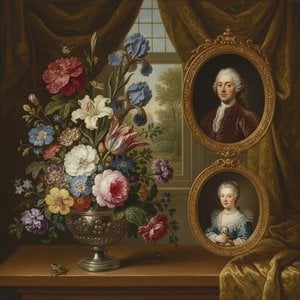
Jan van Kessel the Elder: A Baroque Master of Floral Still Life & Miniature Portraiture
Discover the exquisite detail of Jan van Kessel the Elder's Baroque floral still lifes & captivating miniatures. Explore his artistic legacy, scientific precision, and lasting influence on 17th-century Flemish painting.

Rembrandt van Rijn: 25 Majstorstava Svetla i Senke za Vaš Dom | ArtsDot
Uronite u svet Rembrandta van Rijna! Otkrijte 25 najlepših dela holandskog majstora – portrete, istorijske scene i biblijska platna. Kvalitetne reprodukcije slika za dekoraciju enterijera dostupne na ArtsDot.com.

Masterpieces of the 17th Century: Art, History & Decor Inspiration | ArtsDot
Journey through 17th century art with masterpieces by Rembrandt, Vermeer & Caravaggio. Explore Baroque paintings, Dutch Golden Age techniques & timeless beauty. Find museum-quality reproductions and elevate your home decor on ArtsDot.com.