

The picture follows your choices: , .
Opis predmeta
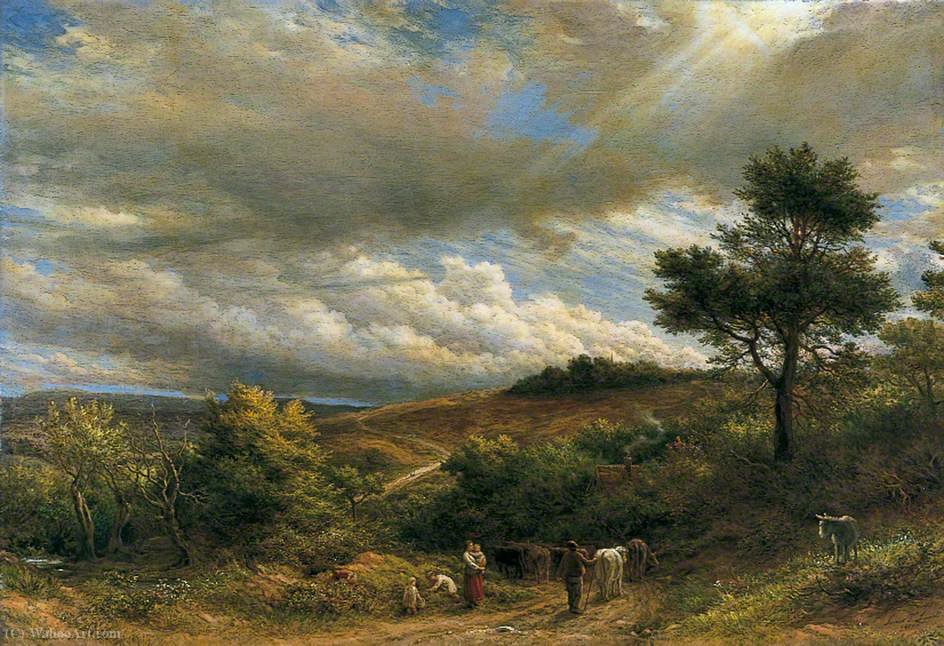
James Thomas Linnell’s "Passing Gleams" captures a romantic Welsh landscape. Oil on canvas showcases atmospheric perspective & rural life. Explore this idyllic pastoral scene.
Biografija umetnika
James Thomas Linnell (1820-1905) was a British artist renowned for his idyllic landscapes of Wales & England. Explore pastoral scenes, sheepfolds, & evocative light in his paintings.
 Pročitaj više
Ručno rađena uljana reprodukcija
Ručno oslikano uljanim bojama na platnu u dimenzijama i okviru po vašem izboru, izrađeno po porudžbini od strane naših umetnika. ( Pređi na štampu Pređi na digitalnu sliku)
More about this painting
 Pregledaj u prostoru
 Pošalji
 Podeli
 Detalji o delu
 Vodič
Vodič

 Preuzmi
 Slični predmeti
 Rendgenski snimak
 Automatska prezentacija
 Q&A
Q&A Statistika
Order your painting in four simple steps
Take your time. You can change any answer; the price in your order card follows each choice.
1 Step one of four
Which size would you like?
These sizes keep the proportions of the original painting. The drawing shows your choice on a wall, above a two-metre sofa.
Or give your own measurements
Izaberite jednu od naših unapred definisanih veličina koje odgovaraju originalnim proporcijama umetničkog dela.

Unesite potrebnu širinu i visinu kako bi se slika uklopila u vaš ram ili zid. Pošto je ovo ručno oslikano delo, umetnik može za dimenzije drugačijeg oblika naslikati malo više prostora oko slike ili malo skratiti ivice — izbor je na vama. Pre početka rada, poslaćemo vam digitalni prikaz radi potvrde. Slika prikazana na ovoj stranici ne predstavlja konačan rezultat — samo digitalni prikaz pokazuje stvarnu sliku.
2 Step two of four
How should it be prepared: rolled, stretched or framed?
The prices below are for the size you chose in step one.
Choose the edges of the stretched canvas
Choose your frame

White дин1

Blurside дин1

Extended дин1

P118B дин10

P118H дин10

P118W дин10

P438Z дин10

P508JH дин12

P508YH дин12

P805H дин10

P805Z дин10

P919BZ дин10

P919G дин10

P919XJ дин10

P959ZH дин10

P968JZ дин12

W106C дин8

W218G дин10

W218JH дин8

W218Y дин10

W307PJ дин10

W316G дин10

W316PJ дин8

W316Y дин10

W398PJ дин8

W4111J дин10

W500HY дин15

W500JH дин15

W692G дин12

W849H дин8

W940BG дин15

W953PJ дин8

H24-GOLD дин30

H24-SILVER дин30

H36-GOLD дин45

H36-SILVER дин45
Uokvireno
Moulding: . Overall size with the frame: .
3 Step three of four
Would you like anything changed in the painting?
Most people answer no. Because each painting is made by hand, our artist can also adapt it for you.
After order, ArtsDot.com team will email client for instructions and provide a mockup preview
4 Step four of four
A few finishing options
All of them are optional. The answers already selected cost nothing extra.
Who paints it?
Svetska isporuka () za 3/4 nedelje umesto uobičajenih 5 nedelja. (1 новембар). Bez kompromisa po pitanju kvaliteta.
A nameplate, as in a museum?
Detalji gravirane bronze ploče
This elegant plaque features the artist's name and the title of the artwork, finely engraved for a timeless presentation.
It is made from bronze with a refined, elegant finish. The text is precisely laser-engraved for a sharp and permanent result. Measuring 9x2 cm, the plaque is compact yet easy to read. It's built to be durable and scratch-resistant, offering a professional, museum-quality look. Mounting is simple thanks to the included adhesive backing.
Detalji prozirne akrilne pločice
The plaque includes essential engraved details such as the artist's name, the title of the artwork, the date it was created, the type of media used-like oil on canvas or watercolor-a brief description of the piece, and a QR code that links to the complete artwork information.
It is crafted from clear acrylic, offering a sleek, modern appearance. The text is UV-engraved in black to ensure strong visual contrast. With a size of 10x15 cm, it ensures optimal readability. It comes equipped with two metal hooks for secure wall mounting. The plaque is designed to be weather-resistant, making it suitable for various environments, and it includes interactive features that work seamlessly with smartphone scanning.
Detalji crne akrilne pločice
This elegant plaque includes engraved information such as the artist's name, the title of the artwork, the date it was created, the type of media used (like oil on canvas or watercolor), a short description of the artwork, and a QR code for quick access to more information.
The plaque itself is made from refined black acrylic with a premium finish. The text is laser-engraved in white for high contrast and readability. Its size is 10x15 cm, designed to be easy to read. It comes with two metal hooks for professional mounting. The design is sleek and fits any interior style. It is also weather-resistant and durable, with built-in digital integration for mobile compatibility.
A protective varnish?
When do you need it?
✓ Check and order
Your painting, as you ordered it

Passing gleams
Tehnika reprodukcije
Dimenzije reprodukcije
-

Vrhunski maestri umetnosti
Više detalja, prefinjenosti i dodatnog vremena za izradu
-

Okvir za reprodukciju
-
-
Za umetnička dela ili reprodukcije čija je bilo koja strana veća od 105 cm (približno 41 inč), okvir će biti isporučen u obliku rastavljenog seta za sklapanje. Ovaj metod osigurava bezbednu dostavu i sprečava oštećenja tokom transporta.
Potrebna je profesionalna montaža – ovo nije proizvod namenjen samostalnoj izradi.
Set mora sastaviti i platno zategnuti iskusni profesionalni ramitelj, koristeći drveni lepak (nije uključen u set), hvataljku za zatezanje platna i stege kako bi se održao prav ugao okvira dok se lepak suši. Nepravilno sklapanje ili neravnomerno zategnuto platno mogu trajno oštetiti umetničko delo, što nije pokriveno našom garancijom.
 Za umetnička dela ili reprodukcije čija je bilo koja strana veća od 105 cm (približno 41 inč), okvir će biti isporučen u obliku rastavljenog seta za sklapanje. Ovaj metod osigurava bezbednu dostavu i sprečava oštećenja tokom transporta.
Sve šipke od masivnog drveta su uključene, precizno isečene po veličini.
Montira se pomoću priloženih šrafova, uz dodatno korišćenje lepka za drvo za spojeve u uglovima, koji nije uključen u set i koji vaš čuvar okvira mora obezbediti.
Potreban je profesionalni alat koji nije uključen u set: klešta za zatezanje platna (zatezač) i stege za održavanje pravih uglova letvica tokom sušenja lepka.
Važno:
Za spojeve u uglovima neophodan je lepak za drvo, šipke se moraju pričvrstiti stezgama dok lepak potpuno ne osuši, a za zatezanje platna na sklopljenom ramu potrebne su hvataljke za zatezanje platna. Nijedan od ovih alata nije uključen u komplet. Pre naručivanja ove veličine, molimo Vas da unapred obezbedite iskusnog profesionalca za ramačenje.

Kratki opis natpisa
-
-

Zaštitni lak
Sjajni lak (pojačava intenzitet boja, štiti od svetlosti i vlage)
-

Personalizujte svoje umetničko delo
Primeri mogućnosti izmene: Zamena lica fotografijom kupca; Dodavanje ljubimca (npr. zamena mačke psom); Uključivanje skrivene poruke u pozadini; Promena pejzaža ili elemenata pozadine.
-

Hitna dostava
Svetska isporuka () za 3/4 nedelje umesto uobičajenih 5 nedelja. (1 новембар). Bez kompromisa po pitanju kvaliteta.
-
Brza dostava
Dostava širom sveta () u roku od 5 nedelja. (8 новембар).
Uključeno u cenu
Ukupna cena
дин 32618
Opcija sa staklom dostupna je samo za dimenzije manje od 110 cm
Included with every order
- Besplatna ekspresna dostava širom sveta
- Visokokvalitetno laneno platno
- Potpuno osiguranje transporta
- Garancija povraćaja carine i uvoznih dažbina
- Garancija vernosti boja
- Politika povraćaja u roku od 100 dana (samo u slučaju nedostataka)
- Garancija povrata 100% novca
- Popust na više proizvoda


Srodna umetnička dela


James Thomas Linnell
1820 - 1905, United Kingdom
Biografija umetnika
James Thomas Linnell: A Victorian Painter of Rural Life and Luminous Landscapes
James Thomas Linnell (1820–1905) stands as a quietly significant figure within the vibrant tapestry of 19th-century British art. Often overshadowed by his more flamboyant contemporaries, he carved out a distinctive niche for himself through his evocative depictions of English rural life – scenes brimming with gentle observation, luminous light, and an underlying sense of poetic tranquility. His work, deeply rooted in the legacy of his father, John Linnell, yet possessing a unique sensibility, offers a poignant glimpse into the Victorian appreciation for both naturalism and sentimentality.
Born in London amidst a family already steeped in artistic tradition, James Thomas’s early life was profoundly shaped by his father's career. John Linnell, a versatile artist known for his portraits, religious subjects, and increasingly, his powerful landscapes, provided an unparalleled environment for the young James. The Linnell household at Redstone Wood, near Redhill, Surrey, was a hub of creative activity, fostering a deep immersion in art from the earliest years. His father’s influence was paramount; John Linnell's meticulous attention to detail, his skill in rendering atmospheric effects, and his engagement with the English landscape served as an enduring model. However, James Thomas wasn’t merely a mimic. He absorbed these foundational elements while simultaneously cultivating a style uniquely his own – one characterized by brighter palettes, softer light, and a gentle, almost ethereal quality.
The formative years were further enriched by exposure to the work of William Blake, John Linnell's patron and a figure whose visionary spirit profoundly impacted the artistic landscape. Furthermore, James Thomas’s association with Samuel Palmer, his father-in-law, proved particularly influential. Palmer’s Shoreham period paintings – intensely spiritual and poetic visions of the Kent countryside – instilled in James Thomas a sensitivity to light, color, and atmosphere that would become hallmarks of his own work. The influence of these artistic giants, combined with the rigorous training received at the Royal Academy Schools, laid the groundwork for Linnell's distinctive approach.
Linnell’s subject matter frequently focused on idyllic rural scenes – children playing in sun-dappled woodlands, harvesters resting at noon, and tranquil pastoral vistas. He eschewed the dramatic intensity often associated with his father’s work, instead finding his expressive power in the quiet poetry of everyday life. His paintings are not overtly narrative; rather, they capture fleeting moments of beauty and serenity, inviting the viewer to contemplate the simple pleasures of rural existence. His compositions are carefully constructed, utilizing a restrained palette and subtle tonal shifts to create a sense of depth and atmosphere. The use of light is particularly noteworthy – Linnell masterfully employs diffused sunlight and soft shadows to evoke a feeling of warmth and tranquility.
Despite his relative obscurity during his lifetime, James Thomas Linnell’s work has gained increasing recognition in recent decades. His paintings offer a valuable insight into the Victorian sensibility—a desire for beauty, a reverence for nature, and a longing for simpler times. His legacy rests not on grand pronouncements or revolutionary techniques, but rather on the quiet elegance of his landscapes – luminous depictions of rural England that continue to resonate with viewers today. The Forbes Magazine Collection at Princeton University Art Museum holds a significant body of his work, providing a crucial resource for scholars and art enthusiasts alike.
The Linnell Family Legacy and Artistic Environment
James Thomas Linnell’s artistic journey was inextricably linked to the broader context of the Linnell family—a lineage deeply rooted in both artistic talent and religious conviction. John Linnell (1792–1882), his father, was not only a successful painter but also a significant patron, most famously supporting the visionary artist William Blake during Blake’s final years. This familial commitment to art extended beyond mere financial support; it fostered an environment of intellectual and creative exchange within the household.
The Linnell family resided at Redstone Wood, near Redhill, Surrey, a location that profoundly influenced their artistic sensibilities. The surrounding countryside—rolling hills, verdant pastures, and picturesque villages—provided a constant source of inspiration. Furthermore, the family’s religious background – John Linnell Senior was a non-conformist – instilled in them a deep appreciation for nature's beauty as a reflection of God's creation. This spiritual dimension is subtly woven into many of Linnell’s paintings, imbuing them with a sense of peace and reverence.
The household at Redstone Wood was a vibrant hub of artistic activity, populated by a cohort of talented siblings—John Linnell Jr., William Linnell, and Mary Elizabeth Linnell. Each sibling received art instruction from their father, absorbing his techniques and stylistic preferences. The family’s close-knit environment fostered a spirit of collaboration and mutual support, encouraging each member to pursue their artistic passions. The presence of other influential artists—such as Samuel Palmer, John Linnell's son-in-law—further enriched the artistic milieu, exposing the young Linnells to diverse perspectives and techniques.
The family’s relocation to Redhill in the 1850s marked a significant shift in their lives. They built two residences nearby – Redstone Wood South (later demolished) and Hillsbrow (also demolished) – providing them with dedicated spaces for artistic practice and studio work. This move allowed James Thomas to establish his own independent career, while remaining connected to the family’s established artistic network.
Technique and Artistic Style
James Thomas Linnell's distinctive style is characterized by a harmonious blend of observation, sensitivity, and technical skill. He inherited from his father a meticulous attention to detail and a mastery of rendering atmospheric effects—qualities that are evident in many of his landscapes.
However, Linnell’s work transcends mere imitation; he developed a unique palette and approach that set him apart from his father and other contemporary artists. His colors are notably brighter and more luminous than those typically employed by John Linnell, creating a sense of warmth and vitality. He skillfully utilizes light—often employing diffused sunlight and soft shadows—to evoke a feeling of tranquility and serenity.
Linnell’s compositions are carefully constructed, utilizing subtle tonal shifts and atmospheric perspective to create depth and realism. His brushwork is generally smooth and understated, allowing the colors and light to speak for themselves. He avoided dramatic contrasts or overtly expressive gestures, instead focusing on capturing fleeting moments of beauty and quiet contemplation.
A key element of Linnell’s style is his ability to imbue his landscapes with a sense of poetry—a suggestion of something beyond the purely visual. His paintings invite the viewer to engage in a dialogue with nature, prompting reflection on themes of beauty, simplicity, and the passage of time. His work demonstrates a remarkable sensitivity to the nuances of light and color, as well as an intuitive understanding of how to capture the essence of rural England.
Historical Significance and Legacy
James Thomas Linnell’s contribution to 19th-century British art is often understated, overshadowed by more prominent figures. However, his work holds significant historical value, offering a valuable insight into the artistic sensibilities of the Victorian era.
Linnell's paintings reflect the broader trends of the time—a growing interest in nature, a desire for beauty and tranquility, and a yearning for simpler times. His landscapes capture the essence of rural England—its rolling hills, verdant pastures, and picturesque villages—providing a nostalgic vision of a bygone era.
His association with influential artists such as William Blake and Samuel Palmer highlights his place within a vibrant artistic network. Linnell’s work demonstrates the influence of these figures on his own style and approach, while also showcasing his unique contribution to the Norwich School of painters.
Despite his relative obscurity during his lifetime, Linnell's paintings have gained increasing recognition in recent decades. The Forbes Magazine Collection at Princeton University Art Museum holds a significant body of his work, providing scholars and art enthusiasts with access to his oeuvre. His legacy rests not on grand pronouncements or revolutionary techniques, but rather on the quiet elegance of his landscapes—luminous depictions of rural England that continue to resonate with viewers today.
Povezani članci

Cultivating Visions: A Historical Journey Through Rural Landscapes in Art
Explore the rich history of rural landscape painting with ArtsDot. Discover Impressionist masterpieces, key artists & movements. Find your perfect serene artwork and bring nature's beauty home.

Glavna dela koja su definisala Romantični pejzaž: 10 remek-dela za vaš dom
Otkrijte 10 remek-dela romantičnog pejzažnog slikarstva! Uronite u svet Claude Lorraina, Caspara David Friedricha i Turnera. Ispričane priče umetnosti, inspiracija za dekoraciju doma. Kvalitetne reprodukcije na ArtsDot.com – istražite celu kolekciju online!

Masterpieces of the English Countryside: Top 25 Sir Alfred James Munnings Artworks
Explore 25 iconic Sir Alfred James Munnings masterpieces. Discover timeless equine art on ArtsDot.com.