


 Pregledaj u prostoru
 Pošalji
 Podeli
 Detalji o delu

 Преузми
 Slični predmeti
 Rendgenski snimak
 Slajdovi
Bourgal, Normandy


 Pročitaj više
Giclee štampa / Umetnički otisak
Giclée štampa ili print na platnu muzejskog kvaliteta uz brzu proizvodnju i fleksibilne opcije završne obrade. ( Kupi ručno naslikanu sliku Kupi digitalnu sliku)




P118B $10

P118H $10

P118W $10

P438Z $10

P508JH $12

P508YH $12

P805H $10

P805Z $10

P919BZ $10

P919G $10

P919XJ $10

P959ZH $10

P968JZ $12

W106C $8

W218G $10

W218JH $8

W218Y $10

W307PJ $10

W316G $10

W316PJ $8

W316Y $10

W398PJ $8

W4111J $10

W500HY $15

W500JH $15

W692G $12

W849H $8

W940BG $15

W953PJ $8




Izaberite jednu od naših unapred definisanih veličina koje odgovaraju originalnim proporcijama umetničkog dela.

Možete uneti sopstvene dimenzije kako biste umetničko delo prilagodili specifičnom okviru ili prostoru. Ako odabrani format ne odgovara proporcijama originalne slike, mi ćemo ili iscrtati deo dela ili proširiti sliku pomoću ogledane ivice ili jednobojnog popunjavanja. Digitalni prikaz će vam biti poslat na odobrenje pre početka proizvodnje.
Imajte na umu da pregled na ekranu ne odražava stvarno iscrtavanje ili proširivanje. Samo će prikaz (mockup) precizno pokazati finalnu kompoziciju.
Iako su prilagođene dimenzije dostupne, preporučujemo da odaberete dimenziju sa unapred definisane liste kako biste očuvali originalne proporcije.
Dostava širom sveta () za 2 nedelje umesto uobičajenih 4/5 nedelja. (4 септембар)

Besplatna ekspresna dostava širom sveta

Visokokvalitetno laneno platno

Kompletno osiguranje transporta

Garancija povraćaja carine i uvoznih dažbina

Garancija vernosti boja

Politika povrata u roku od 60 dana (samo u slučaju nedostataka)

Garancija povrata novca od 100%

Popust pri grupnoj kupovini
 Opcija sa staklom dostupna je samo za dimenzije manje od 110 cm

Bourgal, Normandy
Giclee štampa / Umetnički otisak
Dimenzije reprodukcije
-


Konačna cena
$ 62
James Ensor's Haunting Vision of Bourgal, Normandy
James Ensor’s “Bourgal, Normandy” is not merely a depiction of a rural French village; it’s an immersion into the artist’s profoundly unsettling psyche. Painted around 1930, this work reveals Ensor’s signature preoccupation with themes of isolation, decay, and the grotesque – anxieties that simmered beneath the surface of his lifelong artistic explorations. The scene itself is deceptively simple: a stone or brick house crowned with a steeple, accompanied by a smaller structure echoing its form in the distance. Yet, within this tranquil facade lies a palpable sense of unease, amplified by Ensor’s deliberate manipulation of light and shadow, and the subtly distorted forms that populate the composition.
- Subject Matter: The painting focuses on a typical European village scene – a common subject for Ensor, often used as a vehicle to explore deeper psychological themes.
- Style & Technique: Ensor’s style is characterized by its expressive brushwork and a rejection of academic realism. He employs thick impasto in areas to create texture and emphasize the solidity of the buildings, while conversely, he uses thinner washes to evoke a sense of atmospheric gloom. The use of pencil on paper adds to the work's intimate and slightly melancholic quality.
A Window into Ensor’s World: Symbolism and Context
Born in Ostend, Belgium, in 1860, James Ensor was profoundly shaped by his upbringing amidst a vibrant mix of cultures – his English father and Belgian mother instilled within him a unique perspective. This duality fueled his artistic explorations, particularly his fascination with masks and disguise, motifs that would become central to his oeuvre. The souvenir shop operated by his parents, filled with carnival masks and peculiar objects, undoubtedly served as a crucial source of inspiration, feeding his imagination and providing a visual vocabulary rooted in the theatrical and the macabre. “Bourgal, Normandy” can be interpreted as a reflection of this environment – a carefully constructed façade concealing hidden anxieties and perhaps even a sense of lost innocence.
The steeple itself is a potent symbol, often associated with religious authority and tradition. However, within Ensor’s work, it frequently takes on a sinister quality, representing not faith but rather the oppressive weight of societal expectations and the potential for corruption. The muted color palette – dominated by browns, grays, and ochres – further contributes to the painting's somber mood, reinforcing the sense of decay and stagnation.
Emotional Resonance and Lasting Impact
"Bourgal, Normandy" is a profoundly moving work that speaks to the darker aspects of human experience. Ensor’s masterful use of perspective and his unsettling depiction of everyday scenes create an atmosphere of profound unease. The painting's emotional impact stems from its ability to tap into universal anxieties about isolation, mortality, and the fragility of the human condition. It is a testament to Ensor’s artistic genius that he could transform a seemingly simple village scene into such a powerfully evocative and disturbing image.
This hand-painted reproduction captures not only the visual details of Ensor's original painting but also its inherent emotional power, offering collectors and interior designers alike an opportunity to bring this iconic work into their own spaces. Its haunting beauty will undoubtedly spark conversation and contemplation for years to come.
Srodna umetnička dela


Biografija umetnika
James Ensor: A Pioneer of Expressionism and Surrealism
James Sidney Edouard, Baron Ensor (Ostend, 13 April 1860 – 19 November 1949) was a Belgian painter and printmaker who stands as one of the most influential figures in the development of Expressionism and Surrealism. Born into an English father and Belgian mother amidst the vibrant atmosphere of Ostend’s seaside resort town, Ensor’s upbringing instilled within him a profound fascination with observation and detail—a foundation upon which he would construct his distinctive artistic vision.
Early Influences and Artistic Training
From a young age, Ensor demonstrated an exceptional talent for drawing and painting. Encouraged by his parents' operation of a souvenir shop brimming with curiosities and carnival masks – a veritable cabinet of wonders that ignited his imagination – he pursued formal artistic training at the Académie Royale des Beaux-Arts in Brussels. Despite encountering resistance from the rigid academic conventions of the time, Ensor quickly recognized the necessity of forging his own path, prioritizing experimentation and personal expression above all else.
The Emergence of Grotesque Vision
Around 1886–87, Ensor embarked on a transformative artistic journey, rejecting Impressionistic ideals in favor of a bold embrace of grotesque imagery. Influenced by Rembrandt’s masterful use of chiaroscuro, the unsettling visions of Francisco Goya, and the evocative symbolism of Japanese woodcuts, he developed a highly personal iconography characterized by jarring juxtapositions of color and form.
Major Works and Recurring Themes
Ensor's oeuvre is marked by an unparalleled exploration of psychological complexity and social critique. Paintings like *The Oyster-eater* (1882) exemplify his meticulous attention to detail and his ability to convey profound emotional resonance, while *Christ’s Entry into Brussels* (1888–89), arguably his magnum opus, remains a monumental satire of religious hypocrisy—a painting initially met with vehement disapproval but now universally recognized as a cornerstone of Expressionist art.
Legacy and Influence
James Ensor's uncompromising artistic vision profoundly impacted subsequent generations of artists. His rejection of academic formalism, coupled with his fearless confrontation of taboo subjects and his masterful manipulation of visual language—particularly the use of bold brushstrokes and vibrant hues—established him as a pivotal figure in the genesis of Expressionism and Surrealism. Today, Ensor’s work continues to inspire awe and provoke contemplation, serving as a timeless reminder that art possesses the capacity to unsettle conventions and illuminate the darkest recesses of human consciousness.

Јемас Енсор
1860 - 1949 , Бележија
Osnovne informacije
- Artistic Movement Or Style: Expressionism, Surrealism
- Artists Who Influenced This Artist:
- Bruegel the Elder
- Francisco Goya
- Whistler
- Date Of Birth: April 13, 1860
- Date Of Death: November 19, 1949
- Full Name: James Sidney Edouard Ensor
- Nationality: Belgian
- Notable Artworks:
- The Scandalized Masks
- Skeletons Fighting...
- Christ's Entry into Brussels
- Place Of Birth: Ostend, Belgium
Povezani članci

James Ensor's Grotesque Visions: Social Commentary & Artistic Innovation
Explore the unsettling yet captivating world of James Ensor, a pioneer of Expressionism. Discover his satirical masterpieces, symbolic imagery & lasting influence on modern art. High-quality reproductions available at ArtsDot.

Džems Abbot MekNil Whistler: 25 Remek-dela Majstora Tonalizma | ArtsDot
Istražite 25 remek-dela Džemsa Abota MekNila Whistler-a! Uronite u svet Tonalizma, portreta i prelepog pejzaža. Kupite vrhunske reprodukcije slika na ArtsDot.com i obogatite svoj enterijer luksuznom umetnošću.

Sir Alfred Munnings' Masterpieces: 25 Paintings That Define Equine Art | ArtsDot
Explore 25 iconic Sir Alfred Munnings paintings! Discover the beauty of British Impressionism, equine art & rural England. Find museum-quality reproductions and elevate your home decor with ArtsDot. Explore the full collection online.
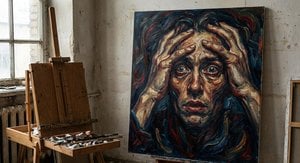
Figurative Expressionism: Emotional Intensity & Subjective Reality in 20th-Century Art
Explore the powerful world of Figurative Expressionism with ArtsDot. Discover key artists like Kirchner & Beckmann, understand its emotional depth, and learn how to collect this influential 20th-century art movement.

The Raw Emotion of Expressionism: A Deep Dive into its History, Characteristics & Enduring Influence
Explore the raw emotion of Expressionism with ArtsDot. Discover its history, key artists like Kirchner & Munch, and lasting influence on modern art. Expert insights for collectors & enthusiasts.



