

- 8.0 x 20.0 cm


Slika prati vaše izbore: , .
Opis predmeta
Discover Inigo Jones’ ‘Five Classical Heads,’ a striking 1639 pen & ink drawing showcasing Mannerist portraits of male heads. A study in form, detail, and classical beauty.
 Pročitaj više
Biografija umetnika
Discover Inigo Jones (1573-1652), the pioneering English architect who introduced classical architecture & Renaissance design to Britain. Explore his iconic works like Queen's House & Banqueting Hall, influenced by Palladio & Vitruvius.
Ručno rađena uljana reprodukcija
Ručno oslikano uljanim bojama na platnu u dimenzijama i okviru po vašem izboru, izrađeno po porudžbini od strane naših umetnika. ( Pređi na štampu Pređi na digitalnu sliku)
Saznajte više o ovoj slici
 Pregledaj u prostoru
 Pošalji
 Podeli
 Detalji o delu
 Vodič
Vodič

 Preuzmi
 Slični predmeti
 Rendgenski snimak
 Automatska prezentacija
 Pitanja i odgovori
 Statistika
Naručite svoju sliku u četiri jednostavna koraka
Ne žurite. Možete promeniti bilo koji odgovor; cena u vašoj korpi se ažurira nakon svakog izbora.
1 Prvi od četiri koraka
Koju veličinu želite?
Ovi formati zadržavaju proporcije originalnog slikarskog dela. Crtež prikazuje vaš izbor na zidu, iznad dvometarske garniture.
Ili unesite sopstvene dimenzije
Izaberite jednu od naših unapred definisanih veličina koje odgovaraju originalnim proporcijama umetničkog dela.

Unesite potrebnu širinu i visinu kako bi se slika uklopila u vaš ram ili zid. Pošto je ovo ručno oslikano delo, umetnik može za dimenzije drugačijeg oblika naslikati malo više prostora oko slike ili malo skratiti ivice — izbor je na vama. Pre početka rada, poslaćemo vam digitalni prikaz radi potvrde. Slika prikazana na ovoj stranici ne predstavlja konačan rezultat — samo digitalni prikaz pokazuje stvarnu sliku.
2 Drugi od četiri koraka
Na koji način želite da bude pripremljeno: u rolni, na platnu ili u ramu?
Cene u nastavku odnose se na dimenziju koju ste izabrali u prvom koraku.
Izaberite ivice platna
Izaberite svoj okvir

Beli rub дин1

zamrljene ivice дин1

Prošireno дин1

P118B дин10

P118H дин10

P118W дин10

P438Z дин10

P508JH дин12

P508YH дин12

P805H дин10

P805Z дин10

P919BZ дин10

P919G дин10

P919XJ дин10

P959ZH дин10

P968JZ дин12

W106C дин8

W218G дин10

W218JH дин8

W218Y дин10

W307PJ дин10

W316G дин10

W316PJ дин8

W316Y дин10

W398PJ дин8

W4111J дин10

W500HY дин15

W500JH дин15

W692G дин12

W849H дин8

W940BG дин15

W953PJ дин8

H24-GOLD дин30

H24-SILVER дин30

H36-GOLD дин45

H36-SILVER дин45
Uokvireno
Profil: . Ukupna veličina sa okvirom: .
3 Treći od četiri koraka
Da li biste želeli da nešto promenite na slici?
Većina ljudi odgovara sa ne. Pošto je svaka slika ručno rađena, naš umetnik je može i prilagoditi vašim željama.
Nakon porudžbine, tim ArtsDot.com će poslati imejl klijentu radi dobijanja uputstava i dostaviti prikaz makete
4 Četvrti korak od četiri
Nekoliko opcija za završnu obradu
Sve su opcione. Odgovori koji su već izabrani ne podrazumevaju dodatni trošak.
Ko je autor?
Svetska isporuka () za 3/4 nedelje umesto uobičajenih 5 nedelja. (9 новембар). Bez kompromisa po pitanju kvaliteta.
Plakica, kao u muzeju?
Detalji gravirane bronze ploče
This elegant plaque features the artist's name and the title of the artwork, finely engraved for a timeless presentation.
It is made from bronze with a refined, elegant finish. The text is precisely laser-engraved for a sharp and permanent result. Measuring 9x2 cm, the plaque is compact yet easy to read. It's built to be durable and scratch-resistant, offering a professional, museum-quality look. Mounting is simple thanks to the included adhesive backing.
Detalji prozirne akrilne pločice
The plaque includes essential engraved details such as the artist's name, the title of the artwork, the date it was created, the type of media used-like oil on canvas or watercolor-a brief description of the piece, and a QR code that links to the complete artwork information.
It is crafted from clear acrylic, offering a sleek, modern appearance. The text is UV-engraved in black to ensure strong visual contrast. With a size of 10x15 cm, it ensures optimal readability. It comes equipped with two metal hooks for secure wall mounting. The plaque is designed to be weather-resistant, making it suitable for various environments, and it includes interactive features that work seamlessly with smartphone scanning.
Detalji crne akrilne pločice
This elegant plaque includes engraved information such as the artist's name, the title of the artwork, the date it was created, the type of media used (like oil on canvas or watercolor), a short description of the artwork, and a QR code for quick access to more information.
The plaque itself is made from refined black acrylic with a premium finish. The text is laser-engraved in white for high contrast and readability. Its size is 10x15 cm, designed to be easy to read. It comes with two metal hooks for professional mounting. The design is sleek and fits any interior style. It is also weather-resistant and durable, with built-in digital integration for mobile compatibility.
Zaštitni lak?
Kada vam je potrebno?
✓ Proverite i naručite
Vaša slika, upravo onakva kakvu ste naručili

Five Classical Heads
Tehnika reprodukcije
Dimenzije reprodukcije
-

Vrhunski maestri umetnosti
Više detalja, prefinjenosti i dodatnog vremena za izradu
-

Okvir za reprodukciju
-
-
Za umetnička dela ili reprodukcije čija je bilo koja strana veća od 105 cm (približno 41 inč), okvir će biti isporučen u obliku rastavljenog seta za sklapanje. Ovaj metod osigurava bezbednu dostavu i sprečava oštećenja tokom transporta.
Potrebna je profesionalna montaža – ovo nije proizvod namenjen samostalnoj izradi.
Set mora sastaviti i platno zategnuti iskusni profesionalni ramitelj, koristeći drveni lepak (nije uključen u set), hvataljku za zatezanje platna i stege kako bi se održao prav ugao okvira dok se lepak suši. Nepravilno sklapanje ili neravnomerno zategnuto platno mogu trajno oštetiti umetničko delo, što nije pokriveno našom garancijom.
 Za umetnička dela ili reprodukcije čija je bilo koja strana veća od 105 cm (približno 41 inč), okvir će biti isporučen u obliku rastavljenog seta za sklapanje. Ovaj metod osigurava bezbednu dostavu i sprečava oštećenja tokom transporta.
Sve šipke od masivnog drveta su uključene, precizno isečene po veličini.
Montira se pomoću priloženih šrafova, uz dodatno korišćenje lepka za drvo za spojeve u uglovima, koji nije uključen u set i koji vaš čuvar okvira mora obezbediti.
Potreban je profesionalni alat koji nije uključen u set: klešta za zatezanje platna (zatezač) i stege za održavanje pravih uglova letvica tokom sušenja lepka.
Važno:
Za spojeve u uglovima neophodan je lepak za drvo, šipke se moraju pričvrstiti stezgama dok lepak potpuno ne osuši, a za zatezanje platna na sklopljenom ramu potrebne su hvataljke za zatezanje platna. Nijedan od ovih alata nije uključen u komplet. Pre naručivanja ove veličine, molimo Vas da unapred obezbedite iskusnog profesionalca za ramačenje.

Kratki opis natpisa
-
-

Zaštitni lak
Sjajni lak (pojačava intenzitet boja, štiti od svetlosti i vlage)
-

Personalizujte svoje umetničko delo
Primeri mogućnosti izmene: Zamena lica fotografijom kupca; Dodavanje ljubimca (npr. zamena mačke psom); Uključivanje skrivene poruke u pozadini; Promena pejzaža ili elemenata pozadine.
-

Hitna dostava
Svetska isporuka () za 3/4 nedelje umesto uobičajenih 5 nedelja. (9 новембар). Bez kompromisa po pitanju kvaliteta.
-
Brza dostava
Dostava širom sveta () u roku od 5 nedelja. (16 новембар).
Uključeno u cenu
Ukupna cena
дин 38026
Opcija sa staklom dostupna je samo za dimenzije manje od 110 cm
Uključeno uz svaku porudžbinu
- Besplatna ekspresna dostava širom sveta
- Visokokvalitetno laneno platno
- Potpuno osiguranje transporta
- Garancija povraćaja carine i uvoznih dažbina
- Garancija vernosti boja
- Politika povraćaja u roku od 100 dana (samo u slučaju nedostataka)
- Garancija povrata 100% novca
- Popust na više proizvoda


The Legacy of Palladio and the Birth of Classical Architecture in England
Before Inigo Jones arrived on British shores, architectural ambition was largely dictated by Gothic sensibilities—pointed arches dominating cathedrals and palaces alike. The prevailing aesthetic prioritized verticality and ornamentation, reflecting a spiritual worldview rooted in medieval tradition. However, the burgeoning Renaissance fervor sweeping across Europe, particularly Italy, offered an entirely different paradigm: Palladio’s villas championed harmony, proportion, and symmetry, embodying humanist ideals of beauty and rationality.
- Palladio's Influence: Andrea Palladio’s architectural treatises—most notably “Four Books on Architecture”—became Jones’s bible. Palladio’s meticulous attention to detail and his embrace of classical geometric forms profoundly shaped Jones’s vision for English buildings, establishing Vitruvian rules as the cornerstone of design principles.
- Vitruvius: The Roman architect Vitruvius's writings further solidified Palladio’s influence by advocating for mathematical precision and structural integrity—concepts antithetical to the prevailing Gothic style. Jones meticulously studied Vitruvius’s texts, incorporating these precepts into his designs with unwavering conviction.
Five Classical Heads: A Study in Mannerist Portraiture
Andrea del Sarto's “Five Classical Heads,” completed around 1639, stands as a testament to the transformative power of Palladio and Vitruvius’s ideas. Executed with masterful pen and ink technique—a method favored by Mannerist artists—the drawing captures five male heads in strikingly varied poses and expressions.
- Technique: Jones employed hatching, cross-hatching, and stippling to achieve remarkable textural depth and volume, skillfully modeling the contours of each face. This meticulous layering of lines demonstrates a profound understanding of chiaroscuro—the interplay between light and shadow—a technique perfected by Renaissance masters like Leonardo da Vinci.
- Composition: The heads are arranged side-by-side within a tightly cropped rectangular frame, emphasizing their unity and conveying a sense of intellectual contemplation. The deliberate positioning underscores the artist’s commitment to classical ideals of balance and harmony.
A Pioneer Forged in Classical Ideals
Inigo Jones's journey to Italy marked an irreversible turning point in British architectural history. Witnessing firsthand the grandeur of Roman villas and palaces—designed according to Palladio’s principles—Jones returned with a renewed conviction that English buildings could achieve comparable beauty and sophistication.
- The Queen’s House: Jones immediately applied his newfound knowledge to the design of the Queen's House in Greenwich, marking the inaugural instance of pure classical architecture in England. This groundbreaking edifice embodies Palladio’s vision for harmonious proportions and symmetrical layouts—a radical departure from Gothic conventions.
- Banqueting Hall: Similarly, Jones conceived the Banqueting Hall at Whitehall as a monumental celebration of royal authority, incorporating Vitruvian rules to create an imposing space that commanded respect and awe. The hall stands as a lasting symbol of England’s embrace of classical culture.
Symbolism and Emotional Resonance
"Five Classical Heads" transcends mere technical virtuosity; it embodies profound symbolic significance—reflecting the humanist preoccupation with idealized beauty and human intellect. Each head conveys a distinct mood—ranging from serene contemplation to intense focus—capturing the essence of human experience within the framework of classical ideals.
The drawing’s subdued palette and meticulous detailing evoke a sense of quiet dignity and intellectual engagement, inviting viewers to contemplate the enduring legacy of Palladio and Vitruvius—architects who irrevocably transformed the artistic landscape of Europe and inspired generations of artists to pursue excellence in form and expression.Pitanja i odgovori
Kakvo je opšte raspoloženje dela „Five Classical Heads”, autor Inigo Jones?
„Five Classical Heads”, autor Inigo Jones se opisuje kao delo Calm raspoloženja. Ovakva klasifikacija može pomoći u uklapanju dela u određeni ambijent.
Gde mogu da preuzmem „Five Classical Heads”, autor Inigo Jones?
Preuzimanje je dostupno za "Five Classical Heads": na stranici Preuzimanje digitalnog prikaza ovog umetničkog dela možete preuzimanje digitalne slike visoke rezolucije.
Mogu li da naručim uljanu reprodukciju dela "Five Classical Heads"?
Ručno oslikanu reprodukciju dela „Five Classical Heads”, autor Inigo Jones možete naručiti direktno na njegovoj stranici Ručno oslikana reprodukcija ulja na platnu: ručno oslikana uljana reprodukcija na lanenom platnu, izrađenu po porudžbini.
Srodna umetnička dela


Inigo Jones
1573 - 1652, United Kingdom
Biografija umetnika
A Pioneer Forged in Classical Ideals
Inigo Jones, a name synonymous with the birth of classical architecture in England, stands as a monumental figure bridging the artistic sensibilities of the Renaissance and the burgeoning aesthetic landscape of the 17th century. Born in London in 1573, his origins remain somewhat shrouded in mystery—a Welsh lineage is suggested but never definitively confirmed by contemporary records. What *is* certain is that Jones’s path diverged from traditional architectural training; he wasn't apprenticed through a guild or established workshop. Early indications point to a background as a joiner, yet it was an innate artistic talent recognized by a discerning patron—perhaps the Earl of Pembroke or Rutland—that propelled him toward his destiny. Around 1603, this benefactor facilitated a transformative journey to Italy, a pilgrimage that would irrevocably shape Jones’s vision and establish the foundation for his groundbreaking work. This initial foray into Italian art and architecture was followed by a period serving King Christian IV in Denmark, contributing designs to Rosenborg and Frederiksborg Palaces—experiences crucial in honing his skills before returning to England with a burgeoning architectural philosophy.From Stagecraft to Stone: The Evolution of an Artistic Vision
Jones initially gained prominence not through buildings, but through the ephemeral world of theatrical design. He revolutionized English stagecraft as a designer of masques—lavish, elaborate spectacles combining poetry, music, dance, and visual artistry—commissioned primarily by Queen Anne of Denmark. His innovations were radical: movable scenery, the introduction of the proscenium arch, and an overall commitment to spectacle that elevated these performances beyond mere entertainment. This period fostered a collaborative yet often contentious relationship with playwright Ben Jonson. While they worked together on numerous productions, their partnership was marked by a fundamental disagreement regarding the primacy of design versus literature in theatrical experience—Jonson favoring the power of words, Jones championing the impact of visual grandeur. Over 450 surviving drawings attest to Jones’s artistic development during this time, revealing an evolution from initial hesitancy in Renaissance draughtsmanship to a sophisticated “Italianate manner,” influenced by masters like Alfonso and Giulio Parigi. A second journey to Italy around 1606, guided by the ambassador Henry Wotton, proved pivotal, deepening his understanding of classical principles and solidifying his commitment to Palladian architecture—particularly Andrea Palladio’s *I quattro libri dell'architettura*, a volume Jones owned and meticulously annotated with references to Wotton. He also drew inspiration from the ancient Roman writer Vitruvius, prioritizing the authority of antiquity over contemporary Italian trends.Architectural Manifestations: Defining a New Aesthetic
The culmination of Jones’s studies and evolving vision manifested in his architectural achievements, forever altering the landscape of English design. The Queen's House, Greenwich—begun for James I and completed under Charles I for Henrietta Maria—is widely considered his earliest surviving masterpiece and a landmark achievement. It stands as the first truly classical building in England, embodying Palladian principles of symmetry, proportion, and harmony. The elegant simplicity of its design, with its emphasis on geometric forms and refined detailing, was a stark departure from prevailing English styles. Equally significant is the Banqueting House, Whitehall—a magnificent example of Baroque architecture distinguished by its imposing scale and, most notably, the breathtaking ceiling painted by Peter Paul Rubens. Jones’s influence extended beyond individual structures to urban planning; he designed the layout for Covent Garden Square, which served as a model for subsequent developments in London's West End, establishing a new standard for elegant and organized public spaces. His appointment as Surveyor of the King’s Works in 1613, followed by Surveyor-General in 1615, cemented his position and allowed him to realize numerous ambitious projects under the patronage of both James I and Charles I.A Lasting Legacy: The Father of English Classical Architecture
Inigo Jones’s historical significance lies not merely in the buildings he created but in the paradigm shift he instigated. He broke decisively with traditional English building styles, establishing a new aesthetic grounded in Roman antiquity and Renaissance ideals. His designs weren't simply imitations; they were thoughtful interpretations of classical principles adapted to an English context. He introduced a level of sophistication and refinement previously unseen in British architecture, influencing generations of architects who followed in his footsteps. His work represents the conscious adoption of a new visual language—one that emphasized order, reason, and harmony. While his architectural output wasn’t vast, its impact was profound. He laid the groundwork for a distinctly English classical tradition, shaping not only the physical landscape but also the cultural sensibilities of an era. Jones is rightfully regarded as the father of English classical architecture—a visionary who transformed the built environment and left an enduring legacy that continues to inspire awe and admiration today.Povezani članci
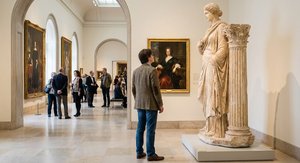
The Enduring Legacy of Classical Style: Form, Narrative & Influence in Art
Explore the enduring legacy of classical art – from ancient Greece & Rome to Neoclassicism. Discover key artists, philosophical roots & build a timeless collection with ArtsDot's expert guidance.

The Nuances of Graphite: Exploring Emotional Depth & Technical Mastery in Pencil Drawing
Explore the captivating world of graphite drawing! Discover its rich history, master essential techniques like chiaroscuro, and learn how artists evoke emotion through this timeless medium. Expert insights for art enthusiasts.
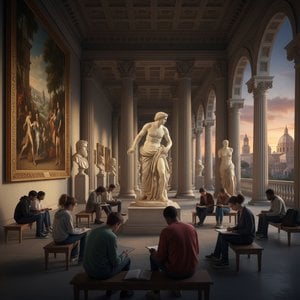
The Enduring Legacy of Classicism: Principles, Evolution & Influence in Western Art
Explore the enduring legacy of Classicism in Western art! Discover its historical context, key principles, iconic masterpieces & lasting influence. Learn about Renaissance and Neoclassical movements with ArtsDot.