


Slika prati vaše izbore: , .
Opis predmeta
Experience serenity with Frederick Childe Hassam's 'The Sonata.' This 1893 Impressionist masterpiece at the Nelson-Atkins Museum captures a moment of quiet contemplation and musical beauty.
 Pročitaj više
Biografija umetnika
Истражите светли делови и лепоту Америке у слику Фредерика Хассама – водећег импресионистичког сликара који је био веома инспирисано Клодом Монетом и Едгардом Дегасом. Одишите енергијом града и мора и откријте трачак историје!
Ručno rađena uljana reprodukcija
Ručno oslikano uljanim bojama na platnu u dimenzijama i okviru po vašem izboru, izrađeno po porudžbini od strane naših umetnika. ( Pređi na štampu Pređi na digitalnu sliku)
Saznajte više o ovoj slici
 Pregledaj u prostoru
 Pošalji
 Podeli
 Detalji o delu
 Vodič
Vodič

 Preuzmi
 Slični predmeti
 Rendgenski snimak
 Automatska prezentacija
 Pitanja i odgovori
 Statistika
Naručite svoju sliku u četiri jednostavna koraka
Ne žurite. Možete promeniti bilo koji odgovor; cena u vašoj korpi se ažurira nakon svakog izbora.
1 Prvi od četiri koraka
Koju veličinu želite?
Ovi formati zadržavaju proporcije originalnog slikarskog dela. Crtež prikazuje vaš izbor na zidu, iznad dvometarske garniture.
Ili unesite sopstvene dimenzije
Izaberite jednu od naših unapred definisanih veličina koje odgovaraju originalnim proporcijama umetničkog dela.

Unesite potrebnu širinu i visinu kako bi se slika uklopila u vaš ram ili zid. Pošto je ovo ručno oslikano delo, umetnik može za dimenzije drugačijeg oblika naslikati malo više prostora oko slike ili malo skratiti ivice — izbor je na vama. Pre početka rada, poslaćemo vam digitalni prikaz radi potvrde. Slika prikazana na ovoj stranici ne predstavlja konačan rezultat — samo digitalni prikaz pokazuje stvarnu sliku.
2 Drugi od četiri koraka
Na koji način želite da bude pripremljeno: u rolni, na platnu ili u ramu?
Cene u nastavku odnose se na dimenziju koju ste izabrali u prvom koraku.
Izaberite ivice platna
Izaberite svoj okvir

Beli rub дин1

zamrljene ivice дин1

Prošireno дин1

P118B дин10

P118H дин10

P118W дин10

P438Z дин10

P508JH дин12

P508YH дин12

P805H дин10

P805Z дин10

P919BZ дин10

P919G дин10

P919XJ дин10

P959ZH дин10

P968JZ дин12

W106C дин8

W218G дин10

W218JH дин8

W218Y дин10

W307PJ дин10

W316G дин10

W316PJ дин8

W316Y дин10

W398PJ дин8

W4111J дин10

W500HY дин15

W500JH дин15

W692G дин12

W849H дин8

W940BG дин15

W953PJ дин8

H24-GOLD дин30

H24-SILVER дин30

H36-GOLD дин45

H36-SILVER дин45
Uokvireno
Profil: . Ukupna veličina sa okvirom: .
3 Treći od četiri koraka
Da li biste želeli da nešto promenite na slici?
Većina ljudi odgovara sa ne. Pošto je svaka slika ručno rađena, naš umetnik je može i prilagoditi vašim željama.
Nakon porudžbine, tim ArtsDot.com će poslati imejl klijentu radi dobijanja uputstava i dostaviti prikaz makete
4 Četvrti korak od četiri
Nekoliko opcija za završnu obradu
Sve su opcione. Odgovori koji su već izabrani ne podrazumevaju dodatni trošak.
Ko je autor?
Svetska isporuka () za 3/4 nedelje umesto uobičajenih 5 nedelja. (6 новембар). Bez kompromisa po pitanju kvaliteta.
Plakica, kao u muzeju?
Detalji gravirane bronze ploče
This elegant plaque features the artist's name and the title of the artwork, finely engraved for a timeless presentation.
It is made from bronze with a refined, elegant finish. The text is precisely laser-engraved for a sharp and permanent result. Measuring 9x2 cm, the plaque is compact yet easy to read. It's built to be durable and scratch-resistant, offering a professional, museum-quality look. Mounting is simple thanks to the included adhesive backing.
Detalji prozirne akrilne pločice
The plaque includes essential engraved details such as the artist's name, the title of the artwork, the date it was created, the type of media used-like oil on canvas or watercolor-a brief description of the piece, and a QR code that links to the complete artwork information.
It is crafted from clear acrylic, offering a sleek, modern appearance. The text is UV-engraved in black to ensure strong visual contrast. With a size of 10x15 cm, it ensures optimal readability. It comes equipped with two metal hooks for secure wall mounting. The plaque is designed to be weather-resistant, making it suitable for various environments, and it includes interactive features that work seamlessly with smartphone scanning.
Detalji crne akrilne pločice
This elegant plaque includes engraved information such as the artist's name, the title of the artwork, the date it was created, the type of media used (like oil on canvas or watercolor), a short description of the artwork, and a QR code for quick access to more information.
The plaque itself is made from refined black acrylic with a premium finish. The text is laser-engraved in white for high contrast and readability. Its size is 10x15 cm, designed to be easy to read. It comes with two metal hooks for professional mounting. The design is sleek and fits any interior style. It is also weather-resistant and durable, with built-in digital integration for mobile compatibility.
Zaštitni lak?
Kada vam je potrebno?
✓ Proverite i naručite
Vaša slika, upravo onakva kakvu ste naručili

The Sonata
Tehnika reprodukcije
Dimenzije reprodukcije
-

Vrhunski maestri umetnosti
Više detalja, prefinjenosti i dodatnog vremena za izradu
-

Okvir za reprodukciju
-
-
Za umetnička dela ili reprodukcije čija je bilo koja strana veća od 105 cm (približno 41 inč), okvir će biti isporučen u obliku rastavljenog seta za sklapanje. Ovaj metod osigurava bezbednu dostavu i sprečava oštećenja tokom transporta.
Potrebna je profesionalna montaža – ovo nije proizvod namenjen samostalnoj izradi.
Set mora sastaviti i platno zategnuti iskusni profesionalni ramitelj, koristeći drveni lepak (nije uključen u set), hvataljku za zatezanje platna i stege kako bi se održao prav ugao okvira dok se lepak suši. Nepravilno sklapanje ili neravnomerno zategnuto platno mogu trajno oštetiti umetničko delo, što nije pokriveno našom garancijom.
 Za umetnička dela ili reprodukcije čija je bilo koja strana veća od 105 cm (približno 41 inč), okvir će biti isporučen u obliku rastavljenog seta za sklapanje. Ovaj metod osigurava bezbednu dostavu i sprečava oštećenja tokom transporta.
Sve šipke od masivnog drveta su uključene, precizno isečene po veličini.
Montira se pomoću priloženih šrafova, uz dodatno korišćenje lepka za drvo za spojeve u uglovima, koji nije uključen u set i koji vaš čuvar okvira mora obezbediti.
Potreban je profesionalni alat koji nije uključen u set: klešta za zatezanje platna (zatezač) i stege za održavanje pravih uglova letvica tokom sušenja lepka.
Važno:
Za spojeve u uglovima neophodan je lepak za drvo, šipke se moraju pričvrstiti stezgama dok lepak potpuno ne osuši, a za zatezanje platna na sklopljenom ramu potrebne su hvataljke za zatezanje platna. Nijedan od ovih alata nije uključen u komplet. Pre naručivanja ove veličine, molimo Vas da unapred obezbedite iskusnog profesionalca za ramačenje.

Kratki opis natpisa
-
-

Zaštitni lak
Sjajni lak (pojačava intenzitet boja, štiti od svetlosti i vlage)
-

Personalizujte svoje umetničko delo
Primeri mogućnosti izmene: Zamena lica fotografijom kupca; Dodavanje ljubimca (npr. zamena mačke psom); Uključivanje skrivene poruke u pozadini; Promena pejzaža ili elemenata pozadine.
-

Hitna dostava
Svetska isporuka () za 3/4 nedelje umesto uobičajenih 5 nedelja. (6 новембар). Bez kompromisa po pitanju kvaliteta.
-
Brza dostava
Dostava širom sveta () u roku od 5 nedelja. (13 новембар).
Uključeno u cenu
Ukupna cena
дин 27576
Opcija sa staklom dostupna je samo za dimenzije manje od 110 cm
Uključeno uz svaku porudžbinu
- Besplatna ekspresna dostava širom sveta
- Visokokvalitetno laneno platno
- Potpuno osiguranje transporta
- Garancija povraćaja carine i uvoznih dažbina
- Garancija vernosti boja
- Politika povraćaja u roku od 100 dana (samo u slučaju nedostataka)
- Garancija povrata 100% novca
- Popust na više proizvoda


The Sonata: A Moment of Contemplation by Frederick Childe Hassam
Frederick Childe Hassam's The Sonata, painted in 1893 and currently residing at the Nelson-Atkins Museum of Art, is a captivating oil on canvas that embodies the serenity and elegance characteristic of American Impressionism. This piece offers a glimpse into late 19th-century domestic life, skillfully blending realism with the soft light and atmospheric qualities of the Impressionist movement.
Composition and Symbolism
The painting depicts a young woman seated at a grand piano, her posture suggesting a moment of quiet introspection. Her fingers rest poised above the keys, while her gaze is directed downward, lost in thought as she prepares to play. The piano itself serves as a central focal point, symbolizing creativity and artistic expression. Two books are placed on its surface – one closer to the left side and another nearer to the right – potentially representing the intellectual pursuits of the subject. A vase positioned subtly in the background adds an element of refinement to the scene. The overall composition directs attention to the woman and her contemplative state, inviting viewers to share in her moment of reflection.
Artistic Style and Technique
Hassam’s signature Impressionist style is readily apparent in The Sonata. He masterfully employs soft, muted colors – primarily warm yellows, creams, and browns – creating a sense of calmness and intimacy. Gentle brushstrokes capture the play of light on the woman's dress and the polished surface of the piano. While the subject’s face is rendered with precision, the background remains subtly blurred, drawing further attention to the central figure. This technique, common in Impressionism, prioritizes capturing a fleeting moment and subjective impression over strict realism. The use of layered paint creates texture and luminosity, enhancing the overall visual appeal.
Historical Context and Cultural Significance
The Sonata emerged during a period of significant artistic evolution, coinciding with the rise of Impressionism in both Europe and America. Hassam was instrumental in introducing and popularizing this movement within the United States. The painting reflects the cultural trends of its time, portraying an idealized vision of domestic life and highlighting the importance of music and intellectual pursuits among the upper classes. It captures a moment of leisure and artistic appreciation, offering insight into the values and aesthetics prevalent during the late 19th century.
Emotional Impact and Enduring Relevance
Beyond its aesthetic beauty and historical significance, The Sonata resonates with viewers through its timeless themes of creativity, contemplation, and the pursuit of beauty. The woman’s introspective pose evokes a sense of quiet melancholy and invites reflection on the power of music to inspire and soothe. Its enduring appeal lies in its ability to transport us to a bygone era while simultaneously tapping into universal human emotions. For those interested in exploring more works by Frederick Childe Hassam, Marlborough Street, Boston is another notable piece showcasing his talent for capturing urban scenes.
Pitanja i odgovori
Kakvu bi atmosferu reprodukcija dela „The Sonata”, autor Фредерик Хассам unela u prostoriju?
„The Sonata”, autor Фредерик Хассам odiše Serene atmosferom i preporučuje se za Living Room. Raspoloženje je ono što umetničko delo unosi u prostor oko sebe.
Kolika je luminansa dela „The Sonata”, autor Фредерик Хассам?
„The Sonata”, autor Фредерик Хассам ima luminancu od Gentle Luminance. Luminanca opisuje koliko se čini da boje reflektuju svetlosti.
O čemu se radi u delu "The Sonata" i kakvu atmosferu odiše?
„The Sonata“ prikazuje piano, music, woman, introspection, domestic, elegance, impressionism, a njegovo dočarano raspoloženje je Serene.
Srodna umetnička dela


Фредерик Хассам
1859 - 1935, САД
Biografija umetnika
A Pioneer of American Impressionism: The Life and Art of Frederick Childe Hassam
Frederick Childe Hassam was an American Impressionist painter, noted for his urban and coastal scenes. Along with Mary Cassatt and John Henry Twachtman, he championed artistic independence and helped to establish Impressionism as a legitimate movement within the United States. His unwavering commitment to capturing light and color—traits that would define his entire oeuvre—secured his place among the most influential figures in American art history. Born in Boston on October 17, 1859, Hassam’s early life was marked by an innate fascination with drawing and painting. Unlike many aspiring artists of his time who pursued formal training abroad, Hassam honed his skills primarily through self-study and practical experience, initially honing his craft as an illustrator for publications like *Harper's Weekly* and *Scribner’s Monthly*. This formative period instilled in him a keen observational eye—a characteristic that would become central to his distinctive artistic style. He possessed a remarkable ability to distill complex visual information into simplified forms, prioritizing clarity of composition and tonal harmony above elaborate ornamentation.Early Career and Influences: From Illustration to Landscape Painting
Hassam’s initial professional endeavors focused on illustration work for periodicals, providing him with invaluable experience in capturing fleeting moments and conveying narrative through visual imagery. This early exposure to printmaking techniques—particularly etching—influenced his later artistic explorations and contributed to the development of his signature tonalist style. He drew inspiration from European Impressionists like Claude Monet and Edgar Degas, absorbing their innovative approaches to color and brushwork while simultaneously forging a path toward artistic expression that was uniquely American. Monet’s exploration of atmospheric effects—particularly the interplay of light and shadow—served as a guiding principle for Hassam's landscapes, encouraging him to prioritize tonal gradations over precise delineation. Similarly, Degas’s depictions of dancers—characterized by dynamic poses and subtle gestures—inspired Hassam’s interest in capturing movement and conveying emotion through visual form.The Urban Landscape: Capturing the Spirit of Modern New York
Hassam's artistic vision centered on portraying the vibrant energy of urban life, particularly New York City. He recognized that Impressionism could transcend mere topographical representation, transforming ordinary scenes into evocative expressions of mood and atmosphere. His paintings—such as *The Soaring Staircase* (1895) and *Fifth Avenue at Dusk* (1897)—capture the bustling activity of city streets with remarkable precision and sensitivity. Hassam skillfully employed color palettes that mirrored the changing light conditions, creating luminous compositions that conveyed a palpable sense of immediacy. He wasn’t merely documenting architectural structures; he was conveying the psychological impact of urban environments—the exhilaration of movement, the quiet contemplation of domestic interiors, and the social interactions that shaped daily life.Notable Achievements: Artistic Independence and Recognition
Hassam's unwavering dedication to artistic independence culminated in his involvement with “The Ten American Painters,” a collective founded in 1897 as a defiant assertion against the conservative biases of the Society of American Artists. This group—which included luminaries like John Henry Twachtman, Willard Leroy Metcalf, and Edmund Tarbell—challenged prevailing academic conventions and championed a more progressive aesthetic sensibility. Hassam served as the inaugural president of The Ten, solidifying his leadership role within the burgeoning American art scene. His commitment to portraying American subjects—particularly landscapes and urban vistas—earned him widespread acclaim and cemented his reputation as one of the foremost Impressionist painters of his era.Legacy: An Enduring Influence on Subsequent Artists
Frederick Childe Hassam passed away in East Hampton, New York, on August 27, 1935, leaving behind a prodigious artistic legacy that continues to inspire artists today. His pioneering exploration of tonalism—characterized by subtle gradations of color and meticulous attention to detail—established a distinctive stylistic tradition within American Impressionism. Hassam’s unwavering belief in capturing the essence of his time—the dynamism of urban life and the beauty of the natural world—remains profoundly relevant, reminding us that art can serve as both a reflection of history and a catalyst for creative innovation. His paintings—particularly those depicting American flags—stand as enduring symbols of patriotism and civic pride, securing his place among the most revered figures in American artistic heritage.


Povezani članci
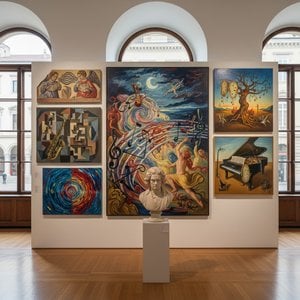
Harmonies on Canvas: Exploring the Visual Representation of Music in Art History
Explore the fascinating history of music's visual representation in art! From ancient symbolism to modern abstraction, discover how artists have captured sound and emotion on canvas. Expert insights & stunning examples.

Iza svetlosti i boje: Impresionizam protiv postimpresionizma za diskriminatornog kolekcionara
Istražite suptilne razlike između Impresionizma i Postimpresionizma sa ArtsDot-om. Saveti za kolekcionare, investicije u umetnost i vrhunske reprodukcije slika. Pronađite savršeno delo za vašu kolekciju!

Impressionism's Masterpieces: 10 Paintings That Defined a Movement | ArtsDot
Journey through Impressionism's heart with 10 iconic paintings by Monet, Renoir & Degas. Explore light, color & the stories behind these masterpieces. Find museum-quality art reproductions and elevate your home decor on ArtsDot.com.