


 Pregledaj u prostoru
 Podeli
 Podeli
 Detalji
 Vodič
Vodič

 Preuzmi sliku
 Slični predmeti
 Rendgenski snimak
 Automatska prezentacija
 Statistika
Grieving Process
 Painting
- Symbolism
 2015
2015- 19th Century
 100.0 x 100.0 cm
 Student Artworks Foundation
 Pročitaj više
Ručno rađena uljana reprodukcija
Ručno oslikano uljanim bojama na platnu u dimenzijama i okviru po vašem izboru, izrađeno po porudžbini od strane naših umetnika. ( Pređi na prodaju štampanih primeraka Pređi na prodaju digitalnih slika)




P118B дин10

P118H дин10

P118W дин10

P438Z дин10

P508JH дин12

P508YH дин12

P805H дин10

P805Z дин10

P919BZ дин10

P919G дин10

P919XJ дин10

P959ZH дин10

P968JZ дин12

W106C дин8

W218G дин10

W218JH дин8

W218Y дин10

W307PJ дин10

W316G дин10

W316PJ дин8

W316Y дин10

W398PJ дин8

W4111J дин10

W500HY дин15

W500JH дин15

W692G дин12

W849H дин8

W940BG дин15

W953PJ дин8




Izaberite jednu od naših unapred definisanih veličina koje odgovaraju originalnim proporcijama umetničkog dela.

Unesite širinu i visinu koja vam je potrebna, kako bi se uklopili u vaš ram ili zid. Pošto je ovo ručno oslikano delo, umetnik može naslikati malo više prostora oko slike ili malo skratiti ivice za dimenzije drugačijeg oblika — izbor je na vama. Pre početka rada, poslaćemo vam digitalni prikaz radi potvrde. Slika prikazana na ovoj stranici ne predstavlja konačan rezultat — samo digitalni prikaz pokazuje stvarnu sliku.
Nakon narudžbine, tim ArtsDot.com će klijentu putem e-pošte poslati uputstva i dostaviti prikaz predloženog rešenja
Svetska isporuka () za 3/4 nedelje umesto uobičajenih 5 nedelja. (20 октобар). Bez kompromisa po pitanju kvaliteta.

Besplatna ekspresna dostava širom sveta

Visokokvalitetno laneno platno

Sveobuhvatno osiguranje transporta

Garancija povraćaja carine i uvoznih dažbina

Garancija vernosti boja i autentičnosti pri reprodukciji

Politika povraćaja u roku od 100 dana (samo u slučaju nedostataka)

Garancija povrata 100% novca

Popust pri većoj količini
 Opcija sa staklom dostupna je samo za dimenzije manje od 110 cm

Grieving Process
Tehnika izrade reprodukcije
Veličina reprodukcije
-


Ukupna cena
дин 26895
An Intimate Encounter with Sorrow: The Soul of Grieving Process
In the profound stillness of Egbert Rubertus Derk Schaap’s Grieving Process, the viewer is immediately drawn into a sanctuary of quiet melancholy. This large-scale masterpiece, measuring an imposing 100 x 100 cm, serves as a window into the deepest recesses of the human psyche. At its heart lies a woman, reclined in a posture of profound vulnerability, her form draped in a delicate dress that seems to anchor her to the canvas. Her expression, etched with a palpable sadness, transcends mere depiction; it becomes an invitation for the observer to sit with their own shadows. The composition is not merely a portrait of sorrow but a complex tapestry of existence, where the central figure is surrounded by a dreamlike arrangement of shapes and colors that swirl around her like the fragmented memories of a life interrupted.
The technical mastery of Schaap is evident in the way he balances meticulous realism with a burgeoning symbolic language. While his training at the Koninklijke Academie voor Kunstnijverheid provided him with a formidable command over form and light, this particular work showcases his ability to manipulate space to evoke emotion. The background is far from static; it is an atmospheric landscape of abstract elements that create a sense of psychological depth. Scattered throughout the periphery are other figures—a presence near the top left and another toward the bottom right—that suggest a world continuing its rotation even as the central subject remains suspended in her grief. A solitary chair positioned on the far right adds a touch of domestic reality, grounding the ethereal, symbolic elements in a tangible, lived-in environment.
A Legacy of Symbolism and Emotional Resonance
To understand Grieving Process, one must look to the broader context of Schaap’s illustrious career. As a Dutch painter who navigated the transition between traditional realism and the evocative power of Symbolism, Schaap possessed a unique ability to convey complex emotional narratives. His participation in the prestigious Olympic Art Competitions of 1924 and 1936 underscores his standing as an artist capable of capturing the universal human condition. In this work, he utilizes the language of symbolism to explore themes of loss, transition, and the cyclical nature of life. The interplay between the recognizable figures and the abstract, colorful shapes suggests that grief is not a linear path but a swirling, often disorienting experience that reshapes one's perception of reality.
For the discerning collector or interior designer, this painting offers more than just visual beauty; it provides a profound emotional anchor for any space. The balanced composition and the sophisticated palette make it an ideal centerpiece for a room designed for contemplation, such as a library, a study, or a quiet sitting area. A high-quality reproduction of this work allows the nuanced textures and the somber, yet captivating, atmosphere to breathe within a modern home. It is a piece that demands attention not through loudness, but through its ability to whisper truths about the resilience of the spirit amidst the inevitable tides of sorrow. Owning such a piece is an act of embracing the full spectrum of human emotion, bringing a sense of historical depth and intellectual gravity to one's personal collection.
Pitanja i odgovori
U koji pokret i u koje doba je smešteno delo „Grieving Process”, Egbert Rubertus Derk Schaap?
„Grieving Process”, Egbert Rubertus Derk Schaap pripada Symbolism pravcu, unutar 19th Century ere svog tvorca.
Kakvu orijentaciju ima „Grieving Process”, Egbert Rubertus Derk Schaap?
„Grieving Process”, Egbert Rubertus Derk Schaap je u Square formatu. Format opisuje proporcije kompozicije.
Na koji način se preporučuje štampa za "Grieving Process" – koja veličina i koja orijentacija?
Preporučeno je štampanje dela „Grieving Process”, Egbert Rubertus Derk Schaap u veličini Large i Square orijentaciji.
Srodna umetnička dela


Biografija umetnika
The Visionary Soul of Dutch Symbolism: Egbert Rubertus Derk Schaap
In the quiet, evocative landscapes of the late nineteenth and early twentieth centuries, few artists captured the delicate tension between reality and the metaphysical as profoundly as Egbert Rubertus Derk Schaap. Born in The Hague in 1862, Schaap emerged from the rich Dutch artistic tradition not merely as a chronicler of nature, but as a poet of the unseen. His life and work were defined by a pursuit of depth, where every brushstroke served to bridge the gap between the tangible world and the profound emotional landscapes of the human psyche. Alongside his wife and fellow artist, Hendrika van der Pek, Schaap cultivated a creative existence that was deeply rooted in the meticulous observation of his surroundings, yet always reaching toward the symbolic.
The foundation of Schaap’s mastery was laid during his formative years at the Koninklijke Academie voor Kunstnijverheid in Antwerp. It was here that he honed a technical precision that would become his hallmark, learning to command the nuances of light and form with an almost scientific accuracy. However, as his style matured, this realism began to serve a higher purpose. He did not merely paint trees or figures; he imbued them with a sense of anima. His technique, characterized by the careful layering of oil paints, allowed him to create textures that felt alive, capturing the subtle shifts in atmosphere that suggest a world teeming with hidden meaning and spiritual weight.
A Mastery of Symbolism and Technique
To encounter a work by Schaap is to enter a space of quiet contemplation. His artistic language was one of profound symbolism, where the natural world acted as a mirror for human experience. In his landscapes, the interplay of shadow and light often evokes themes of solitude and the eternal struggle between humanity and the vastness of nature. This ability to distill complex psychological states into visual narratives is perhaps most strikingly evident in his celebrated works:
- Grieving Process: A poignant exploration of loss, where abstract shapes and somber tones coalesce to represent the heavy, transformative weight of mourning.
- Florence Nightingale: A hauntingly expressive piece that utilizes large, emotive eyes to create a sense of mystery and an almost supernatural presence.
- Resolutum: A testament to his ability to capture strength and determination through the lens of symbolic realism.
His draughtsmanship was equally remarkable, possessing an unparalleled level of detail that allowed him to explore the minute intricacies of form. Whether working in the fluid medium of oil or the precise discipline of drawing, Schaap maintained a dedication to capturing the subtle nuances of light that could transform a simple scene into a profound meditation on existence.
Legacy and International Recognition
The historical significance of Egbert Rubertus Derk Schaap extends far beyond the borders of the Netherlands. His talent earned him a place on the global stage, most notably through his participation in the prestigious Olympic Art Competitions. By showcasing his work during the 1924 and 1936 Summer Olympics, he demonstrated that his vision of symbolism and humanism possessed a universal resonance that transcended national boundaries. These exhibitions solidified his reputation as an artist capable of conveying complex emotional narratives to a worldwide audience.
Though he passed away in Ankeveen in 1939, the legacy of Schaap remains a vital part of the Dutch art canon. His work continues to invite viewers into a dialogue with the sublime, reminding us that beneath the surface of the visible world lies a realm of infinite mystery and emotional depth. Through his meticulous realism and symbolic vision, Schaap ensured that the quiet whispers of the soul would be captured in pigment and ink for generations to come.

Egbert Rubertus Derk Schaap
1862 - 1939 , Netherlands
Brzi pregled
- Artistic Movement Or Style: Dutch Symbolism
- Full Name: Egbert Rubertus Derk Schaap
- Nationality: Dutch
- Notable Artworks:
- Florence Nightingale
- Grieving Process
- The desire to live
- Place Of Birth: The Hague, Netherlands
- Date Of Birth: 1862
- Date Of Death: 1939
Srodni članci

Dutch Baroque Masters: 10 Paintings That Shaped an Era | ArtsDot
Journey through the Golden Age with our guide to the Top 10 Dutch Baroque masterpieces! Explore iconic paintings by Rembrandt, Vermeer & Frans Hals. Find museum-quality art reproductions and elevate your home decor at ArtsDot.com.

Kandinsky's Masterpieces: 25 Paintings That Define Abstract Art | ArtsDot
Journey through Wassily Kandinsky's 25 most iconic abstract paintings. Explore his revolutionary use of color, form & spiritual expressionism. Find museum-quality Kandinsky reproductions and elevate your home decor with ArtsDot.com. Discover all masterpieces on ArtsDot.com!

Abstraktni Ekspresionizam: 10 Remek Dela Koja Su Definisala Pokret
Otkrijte 10 remek dela koja su definisala apstraktni ekspresionizam! Istražite dela Pola Krausa, Džejson Poloka i drugih. Saznajte priče iza umetnosti i inspirisanje za dekoraciju doma. Eksplorirajte kolekciju na ArtsDot.com!
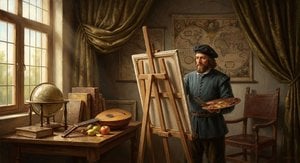
Illuminating Realism: Exploring the Dutch Golden Age of Painting (1600-1700)
Explore the Dutch Golden Age of painting (1600-1700) with ArtsDot. Discover Rembrandt, Vermeer & other masters. Learn about techniques, history & find museum-quality reproductions.

Top 10 dela geometrijske apstrakcije koje morate videti | ArtsDot.com
Istražite 10 remek-dela geometrijske apstrakcije – Mondrian, Malevič i Kandinski. Otkrijte priče iza ovih ikoničnih slika i pronađite inspiraciju za dekoraciju enterijera sa ArtsDot.com! Reprodukcije vrhunskog kvaliteta.