
- Početna strana

- Reprodukcija uljane slike
- Едвард Хопер
- City Roofs

 Kupi štampu Kupi digitalnu sliku
 Pošalji
 Podeli
 Details
 Dodaj u omiljene

 Преузми
 Slični predmeti
 X-Ray
X-Ray
 Slajdovi
City Roofs


Ručno rađena uljana reprodukcija
Ručno oslikano uljanim bojama na platnu u dimenzijama i okviru po vašem izboru, izrađeno po porudžbini od strane naših umetnika.




P118B $10

P118H $10

P118W $10

P438Z $10

P508JH $12

P508YH $12

P805H $10

P805Z $10

P919BZ $10

P919G $10

P919XJ $10

P959ZH $10

P968JZ $12

W106C $8

W218G $10

W218JH $8

W218Y $10

W307PJ $10

W316G $10

W316PJ $8

W316Y $10

W398PJ $8

W4111J $10

W500HY $15

W500JH $15

W692G $12

W849H $8

W940BG $15

W953PJ $8




 Pročitajte više
Izaberite jednu od naših unapred definisanih veličina koje odgovaraju originalnim proporcijama umetničkog dela.

Можете унети сопствене димензије како бисте прилагодили дело одређеном оквиру или простору. Ако одабрана величина не одговара пропорцијама оригинала, слика ће бити исечена или проширена додатним елементима који се ручно насликавају. Дигитални prikaz ће вам бити послат на одобрење пре почетка производње.
Имајте на уму да преглед на екрану не одражава стварно исецање или проширење. Само приказ (mockup) ће тачно приказати коначну композицију.
Иако су доступне прилагођене величине, препоручујемо да одаберете димензију из дефинисане листе како бисте сачували оригиналне пропорције.
Nakon narudžbine, tim ArtsDot.com će klijentu putem e-pošte poslati uputstva i dostaviti prikaz predloženog rešenja
Isporuka širom sveta () za 3/4 nedelje umesto uobičajenih 5 nedelja. (1 јул). Bez kompromisa po pitanju kvaliteta.

Besplatna ekspresna dostava širom sveta

Visokokvalitetno laneno platno

Kompletno osiguranje transporta

Garancija povraćaja carine i uvoznih dažbina

Garancija vernosti boja

Politika povrata u roku od 60 dana (samo u slučaju nedostataka)

Garancija povrata novca od 100%

Popust pri grupnoj kupovini
 Opcija sa staklom dostupna je samo za dimenzije manje od 110 cm

City Roofs
Tehnika reprodukcije
Dimenzije reprodukcije
-


Konačna cena
-
Opis umetničkog dela
A Quiet Moment of Urban Existence
Edward Hopper’s “City Roofs” (1932) is more than just a depiction of a cityscape; it's a poignant meditation on modern life, isolation, and the subtle beauty found within the everyday. Painted during the height of the Great Depression, this oil on canvas encapsulates the anxieties and quiet desperation felt by many Americans navigating an increasingly urbanized world.Composition & Visual Language
The painting presents a tightly cropped view of several buildings under a hazy, golden light – likely dawn or dusk. Hopper masterfully employs strong vertical lines to emphasize the imposing scale of the architecture, while simultaneously flattening the perspective to create a sense of compressed space. The composition isn’t about grand vistas; it's an intimate glimpse into a private corner of the city. Two benches punctuate the scene, hinting at human presence and offering potential narratives – moments of respite, contemplation, or perhaps quiet loneliness. The fire escape and clock serve as subtle reminders of time passing and the functional realities of urban living.Style & Influences: American Realism
“City Roofs” is a quintessential example of Hopper’s signature style – often categorized within American Realism. However, it transcends simple representation. While rooted in observable reality, the painting possesses a distinct emotional resonance that elevates it beyond mere documentation. The influence of photography, with its ability to capture fleeting moments and isolate subjects, is evident in Hopper's framing and composition. There’s also a subtle geometric abstraction at play, foreshadowing elements of later modernist movements.Historical & Social Context
Created during the Depression era, “City Roofs” reflects the socio-economic anxieties of the time. The starkness of the scene, coupled with the sense of isolation, speaks to a broader feeling of displacement and uncertainty prevalent in American society. While not overtly political, the painting subtly critiques the alienating effects of modern urban life – a theme that resonated deeply with audiences then and continues to do so today. Hopper wasn’t interested in portraying idyllic scenes; he sought to capture the *truth* of his time, even if it was uncomfortable.Symbolism & Emotional Impact
The painting is rich in subtle symbolism. The rooftops themselves can be interpreted as representing a detachment from the bustling world below – a desire for privacy and solitude. The empty benches invite viewers to project their own emotions onto the scene, fostering a sense of empathy and connection. The overall mood is one of quiet melancholy, prompting reflection on themes of loneliness, anonymity, and the search for meaning in a rapidly changing world. Hopper’s masterful use of light and shadow further amplifies this emotional impact, creating a dramatic contrast between hope and despair.A Timeless Appeal for Collectors & Designers
“City Roofs” remains incredibly relevant today, continuing to captivate audiences with its timeless themes and evocative imagery. Its muted color palette and strong geometric forms make it a versatile piece for interior design – complementing both modern and traditional spaces. For collectors, owning a reproduction of this iconic work is an opportunity to acquire a piece of American art history that speaks to the enduring human condition.- Subject: Urban landscape, rooftops, city life
- Style: American Realism, Modernism (elements)
- Technique: Oil on canvas
- Themes: Isolation, modernity, urban life, loneliness, contemplation
- Emotional Impact: Melancholy, reflective, evocative
Srodna umetnička dela


Biografija umetnika
A Solitude Observed: The Life and Art of Edward Hopper
Edward Hopper, a name inextricably linked to the quietude and subtle melancholy that permeated 20th-century American life, wasn’t simply a painter of scenes; he was a poet of light and shadow, a chronicler of modern isolation. Born in Nyack, New York, in 1882, to middle-class parents of Dutch ancestry, Hopper's early years provided a stable upbringing that nurtured his artistic inclinations. From childhood sketches meticulously dated and signed, it became evident that keen observation and an innate talent for drawing were central to his being. Though initially encouraged towards commercial illustration – a pragmatic suggestion from his parents – Hopper’s ambitions leaned toward fine art, leading him to the New York School of Art where he studied under William Merritt Chase and Robert Henri. These formative years instilled not only technical skill but also an appreciation for realism and a commitment to depicting the world as he saw it—unvarnished and honest. The writings of Ralph Waldo Emerson resonated deeply with Hopper, reinforcing his sense of individualism and acute observation – qualities that would become hallmarks of his artistic vision. Early travels to Paris exposed him to Impressionism, yet Hopper quickly diverged from its fleeting brushstrokes, forging a path uniquely his own. Early Life and Artistic Beginnings Hopper’s formative years were marked by a quiet determination to pursue his passions despite familial expectations. He demonstrated exceptional drawing skills from a young age—a talent nurtured by his father, who encouraged him to experiment with various mediums. Despite initial inclinations toward commercial illustration, Hopper steadfastly adhered to his artistic aspirations, enrolling in the New York School of Art where he honed his technique under influential instructors like William Merritt Chase and Robert Henri. These mentors championed realism and instilled a profound respect for capturing the world truthfully—a conviction that would permeate his entire oeuvre. The influence of Emerson’s philosophy – emphasizing self-reliance and perceiving beauty in everyday life – profoundly shaped Hopper's worldview, informing his artistic vision and fueling his desire to portray human experience with uncompromising honesty. Finding His Voice: Realism and the American Scene Hopper’s artistic journey wasn’t immediate or effortless. He wrestled with discovering his distinctive voice, experimenting with diverse styles before settling into the realism that would define his career. This wasn't mere replication of reality; it was a distillation of its essence, stripping away superfluous detail to reveal underlying emotional truths. His paintings began to focus on commonplace settings—houses, diners, offices, hotel rooms—infused with an atmosphere of stillness and often, loneliness. He possessed an extraordinary ability to convey psychological states—hinting at narratives without explicitly stating them—capturing the unspoken anxieties and desires that characterize human existence. The precise rendering of light and shadow became paramount, serving not merely as descriptive elements but as emotional cues, creating environments that were simultaneously captivating and unsettling. House by the Railroad (1925) exemplifies this approach—a deceptively simple composition radiating a palpable sense of isolation and mystery. Hopper’s printmaking complemented his painting practice, sharing similar thematic concerns and stylistic characteristics, demonstrating his mastery across multiple mediums. He rejected grand historical narratives or allegorical symbolism; instead, he prioritized capturing the nuances of human experience through meticulous observation and emotional resonance. Iconic Visions: Nighthawks and Beyond While Hopper’s career unfolded gradually, certain works catapulted him to widespread acclaim. Nighthawks (1942)—arguably his most celebrated painting—became an instant emblem of American culture. The late-night diner scene, bathed in stark fluorescent illumination, encapsulates the alienation and anonymity prevalent in urban life during World War II. The figures within are lost in contemplation, disconnected from one another despite their proximity—a poignant commentary on human relationships and existential concerns. Hopper’s exploration of landscapes – particularly rural vistas – mirrored his fascination with American identity and conveyed a sense of melancholy beauty. Other notable paintings like *Automat*, *Office in a Small City*, and *Summertime* each offer unique perspectives into the complexities of modern society, reflecting Hopper's unwavering commitment to portraying human experience with psychological depth. Legacy and Influence Edward Hopper’s enduring legacy rests not solely on the aesthetic beauty of his paintings but also on their profound ability to provoke contemplation and evoke emotion—a testament to his artistic genius. His distinctive style has inspired countless artists across generations, influencing filmmakers like Alfred Hitchcock and writers alike. Hopper's work continues to resonate with audiences because it confronts universal themes of solitude, isolation, and the quest for meaning in a rapidly evolving world. He solidified his place as one of America’s foremost visual artists—a figure whose paintings remain exhibited globally and continue to captivate viewers with their understated elegance and haunting psychological insight. Hopper's unwavering dedication to realism—coupled with his masterful manipulation of light and shadow—ensures that his artistic vision will endure for decades to come, inspiring future generations of creatives to explore the complexities of human experience with honesty and sensitivity.
Едвард Хопер
1931 - 1967 , САД
Osnovne informacije
- Artistic Movement Or Style: Реализам
- Artists Who Influenced This Artist:
- Вилијам Мерерит Чис
- Роберт Хенри
- Date Of Birth: 22. јули 1882.
- Date Of Death: 15. мај 1967.
- Full Name: Edward Hopper
- Nationality: Американац
- Notable Artworks:
- Ноћица
- Кућа код пута
- Гас
- Автомат
- Place Of Birth: Њак, САД
Povezani članci

Realizam u slikama: Top 10 remek dela za vaš dom i dušu
Otkrijte 10 remek dela koja su definisala realizam! Gustave Courbet, Millet i Daumier – istaknuti umetnici i njihove slike. Inspiracija za vaš dom i dušu. Kupite reprodukcije vrhunskog kvaliteta na ArtsDot.com!

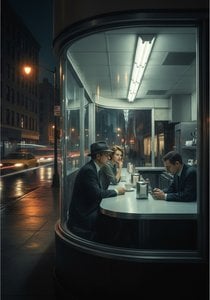
Edward Hopper: American Realism, Urban Isolation & the Poetics of Modern Loneliness
Explore the profound world of Edward Hopper's American realism. Discover the symbolism, themes & enduring legacy of this iconic artist – from 'Nighthawks' to his lesser-known masterpieces. Expert analysis and insights.

The Ashcan School: Realism, Urban Life & the Democratization of American Art
Explore the revolutionary Ashcan School! Discover how artists like Henri & Sloan challenged tradition with gritty realism, capturing urban life in early 20th-century America. Learn about their impact on American art history.

Concrete Visions: Exploring the Urban Landscape in Painting – From Realism to Contemporary Art
Explore the evolution of cityscape painting from Realism to contemporary art with ArtsDot. Discover key artists & invest in timeless urban visions. Expert guidance, museum-quality reproductions.

Robert Henri & the Spirit of American Realism: A Legacy of Urban Life and Artistic Independence
Explore the life & legacy of Robert Henri, a pivotal figure in American Realism. Discover his captivating portraits, influence on the Ashcan School, and enduring impact on art history. Learn more at ArtsDot.



