


 Pregledaj u prostoru
 Podeli
 Podeli
 Detalji
 Vodič
Vodič

 Preuzmi sliku
 Slični predmeti
 Rendgenski snimak
 Automatska prezentacija
 Statistika
The mother died


 Pročitaj više
Ručno rađena uljana reprodukcija
Ručno oslikano uljanim bojama na platnu u dimenzijama i okviru po vašem izboru, izrađeno po porudžbini od strane naših umetnika. ( Pređi na prodaju štampanih primeraka Pređi na prodaju digitalnih slika)




P118B дин10

P118H дин10

P118W дин10

P438Z дин10

P508JH дин12

P508YH дин12

P805H дин10

P805Z дин10

P919BZ дин10

P919G дин10

P919XJ дин10

P959ZH дин10

P968JZ дин12

W106C дин8

W218G дин10

W218JH дин8

W218Y дин10

W307PJ дин10

W316G дин10

W316PJ дин8

W316Y дин10

W398PJ дин8

W4111J дин10

W500HY дин15

W500JH дин15

W692G дин12

W849H дин8

W940BG дин15

W953PJ дин8




Izaberite jednu od naših unapred definisanih veličina koje odgovaraju originalnim proporcijama umetničkog dela.

Unesite širinu i visinu koja vam je potrebna, kako bi se uklopili u vaš ram ili zid. Pošto je ovo ručno oslikano delo, umetnik može naslikati malo više prostora oko slike ili malo skratiti ivice za dimenzije drugačijeg oblika — izbor je na vama. Pre početka rada, poslaćemo vam digitalni prikaz radi potvrde. Slika prikazana na ovoj stranici ne predstavlja konačan rezultat — samo digitalni prikaz pokazuje stvarnu sliku.
Nakon narudžbine, tim ArtsDot.com će klijentu putem e-pošte poslati uputstva i dostaviti prikaz predloženog rešenja
Svetska isporuka () za 3/4 nedelje umesto uobičajenih 5 nedelja. (26 октобар). Bez kompromisa po pitanju kvaliteta.

Besplatna ekspresna dostava širom sveta

Visokokvalitetno laneno platno

Sveobuhvatno osiguranje transporta

Garancija povraćaja carine i uvoznih dažbina

Garancija vernosti boja i autentičnosti pri reprodukciji

Politika povraćaja u roku od 100 dana (samo u slučaju nedostataka)

Garancija povrata 100% novca

Popust pri većoj količini
 Opcija sa staklom dostupna je samo za dimenzije manje od 110 cm

The mother died
Tehnika izrade reprodukcije
Veličina reprodukcije
-


Ukupna cena
дин 29698
A Visceral Encounter with Grief
In the hauntingly quiet realm of Edvard Munch’s 1901 work, “The Mother Died,” the boundaries between the physical world and the psychological landscape dissolve into a singular, piercing moment of mourning. This stark black and white drawing serves as more than a mere depiction of death; it is an intimate window into the soul of Expressionism. Through the masterful use of graphite on paper, Munch captures the heavy, suffocating atmosphere of loss, inviting the viewer to stand witness to a scene that feels both deeply personal and universally tragic. The artwork does not seek to provide comfort through beauty, but rather to confront the viewer with the raw, unvarnished truth of human vulnerability.
The composition is anchored by a profound stillness. A woman lies supine in bed, her form rendered with a sense of finality that suggests the transition from life to oblivion. Beside her, a second figure stands in a state of visible agitation, their face shielded by trembling hands—a gesture that perfectly encapsulates the desire to look away from an unbearable reality, even as the heart remains tethered to it. This tension between the motionless deceased and the distressed survivor creates a dynamic emotional pull, drawing the eye through the shadows and into the very center of the tragedy.
The Language of Line and Shadow
Munch’s technique in this piece is nothing short of revolutionary for its emotional immediacy. Eschewing the polished precision of academic realism, he employs bold, expressive lines that seem to pulsate with a life of their own. The use of cross-hatching is particularly striking; it is not merely used to create depth or shadow, but to sculpt a sense of texture that hints at decay and the relentless passage of time. Around the face of the reclining woman, these lines become more dense and frantic, mirroring the internal turmoil of those left behind.
The monochromatic palette—a somber arrangement of blacks, whites, and varying greys—strips the scene of any distracting color, forcing a singular focus on form and feeling. The lighting is diffused and ghostly, lacking harsh highlights, which contributes to an overall sense of quietude and resignation. For collectors and designers, this piece offers a profound aesthetic gravity. Its lack of traditional spatial cues and flattened perspective creates an immersive experience, making it an ideal focal point for spaces designed for contemplation, where the strength of the artwork lies in its ability to command silence and respect.
A Legacy of Emotional Truth
To understand “The Mother Died,” one must look into the shadows of Munch’s own biography. The artist’s life was profoundly shaped by the early loss of his mother and sister to tuberculosis, traumas that became the wellspring of his "soul painting." This artwork is a direct echo of those formative wounds. Every stroke of graphite serves as a testament to his ability to transform personal agony into a universal language of existential dread and spiritual crisis. The closed eyes of the subject symbolize not just death, but an acceptance of fate, while the surrounding shadows represent the inescapable shadow of mortality that haunts the human condition.
For those seeking to bring a piece of art history into their private collections or curated interiors, this reproduction offers much more than visual decoration. It provides a profound emotional resonance. Owning a work that embodies such intense Expressionist mastery allows for a continuous dialogue with the themes of resilience and memory. It is a piece that does not merely hang on a wall; it breathes within a room, offering a somber yet beautiful reminder of the depth of the human spirit in the face of life's most difficult transitions.
Pitanja i odgovori
Gde i u koje svrhe se preporučuje "The mother died"?
„The mother died”, Едвард Мунх se preporučuje za Mood, idealno u Living Room. Upotreba i prostor zajedno ukazuju na to gde reprodukcija najbolje pristaje.
Kako "The mother died" balansira svetlo i tamno?
Za delo „The mother died”, Едвард Мунх zabeležena je osvetljenost od bright, uz luminancu od Bright Balance.
Gde se "The mother died" nalazi u okviru opusa umetnika Едвард Мунх?
„The mother died“ deli sa ostalim delima umetnika Едвард Мунх svoj Expressionism stil i prepoznatljive teme: munch’s expressionist style, psychological trauma, existential dread, grief symbolism, munch legacy.
Srodna umetnička dela


Biografija umetnika
Život obavijen senkom: Svet Edvarda Munkа
Edvard Munk, rođen 1863. godine usred surove severnokaljske prirode, bio je umetnik čije delo postalo sinonim za anksioznost i emotivni nemir modernog doba. Njegov život, duboko obeležen gubicima i sveprisutnim melanholijama, predstavljao je izvor njegovog izuzetno ekspresivnog stvaralaštva. Od detinjstva koje je bilo u senci ranih smrti majke i sestre – obe žrtve tuberkuloze – Munk je razvio opsednutost smrtnošću, bolešću i krhkosti ljudskog postojanja. Ta iskustva nisu bila samo biografske činjenice; ona su postala srž njegovog umetničkog videnja, podstičući neprestano istraživanje unutrašnjeg pejzaža straha, tuge i čežnje. Očeve stroge verske ubeđene i sopstvene borbe sa mentalnim bolestima dodatno su doprineli osećaju užasa koji je prožimao Munkov svet, oblikujući ne samo njegov lični život, već i simbolički jezik njegovih slika. On nije jednostavno prikazivao scene; on je eksternalizovao unutrašnje stanje, prevodeći psihološku patnju u vizuelni oblik.Početak ekspresije: Uticaji i umetnički razvoj
Munkova umetnička priča započela je formalnim obrazovanjem na Kraljskoj školi za primenjene umetnosti u Kristianiji (Oslo), ali je njegov susret sa boemskim krugovima i nihilisitičkom filozofijom Hansа Jægera zaista razbuktao njegovu kreativnu vatru. Jæger ga je ohrabrio da napusti konvencionalne akademske stilove i umesto toga uroni u dubine sopstvenog subjektivnog iskustva, koncept koji je on nazvao „slikanje duše”. Ovaj ključni prelazak označio je početak Munkovog karakterističnog stila – jednog obeleženog sirove emocije, izobličenih oblika i odbacivanja naturalističke reprezentacije. Njegova putovanja u Pariz 1890-ih izložila su ga procvetavajućem pokretu Postimpresionizma, gde je upio uticaje umetnika kao što su Pol Gaugen, Vincent van Gog i Enri de Tuluz-Lotrek. Upotreba jarkih boja, ekspresivnih poteza kistom i psihološke intenzivnosti ovih majstora duboko je rezonirala sa Munkovim sopstvenim umetničkim sklonostima. On nije samo imitirao njihove tehnike; on ih je sintetizovao u nešto jedinstveno njegovo – vizuelni jezik sposoban da prenese najdublje i najuzbudljivije ljudske emocije. Njegovo vreme u Berlinu takođe se pokazalo ključnim, dovodeći ga u kontakt sa dramatikom Augustа Strindberga, čija istraživanja psiholoških tema dodatno su podstakla Munkove umetničke istrage.Ikonične vizije: Glavna dela i simbolička težina
Munkovo delo je ispunjeno slikama koje su postale duboko ukorenjene u kolektivnoj svesti. The Scream, možda njegovo najpoznatije delo, prevazilazi status slike da bi postao univerzalni simbol egzistencijalne anksioznosti. Spirala, vatrenog pejzaža i figura izobličena lica utelovljuju prvobitni vapis protiv ravnodušnosti univerzuma. Madonna, kontroverzno i duboko lično delo, istražuje teme seksualnosti, materinstva i smrtnosti sa uznemiravajućom iskrenošću. Ponovljeni motivi kao što je The Sick Child – inspirisan gubitkom njegove sestre Sofije – služe kao tužne opomene na Munkovu traumu iz detinjstva i večnu senku smrti. Melancholy I & II, moćni prikazovi duboke tuge i izolacije, otkrivaju ranjivost koja je istovremeno duboko lična i univerzalno relatable. Ova dela nisu samo reprezentacije spoljašnje stvarnosti; oni su prozori u dušu umetnika, nudeći gledaocima neustrašiv pogled u najmračnije kutke ljudske pshe. Munk nije težio da stvori lepe slike; on je želeo da prenese istinu – čak i ako je ta istina bila bolna i uznemiravajuća.Trajna zaostavština: Istorijski značaj i trajni uticaj
Munkov doprinos modernoj umetnosti je neprocenjiv. On stoji kao ključna figura u razvoju ekspresionizma, otvarajući put umetnicima koji su prioritet dali subjektivne emocije nad objektivnom reprezentacijom. Njegovo neustrašivo istraživanje univerzalnih ljudskih iskustava – ljubavi, gubitka, anksioznosti i smrti – nastavlja da rezonuje sa publikom i danas, čvrsto učvršćujući njegovo mesto kao jedne od najuticajnijih i trajnijih figura u istoriji umetnosti. Njegov rad je duboko uticao na sledeće generacije umetnika, utičući na pokrete poput nemačkog ekspresionizma i dalje. On se usudio da se suoči sa mračnijim aspektima ljudskog stanja, izazivajući konvencionalne ideje o lepoti i umetničkoj reprezentaciji. Čak i nakon što je postigao slavu i priznanje – kulminirajući osnivanjem Munkovog muzeja u Oslovu – njegov lični život je ostao turbulentan, obeležen periodima mentalne nestabilnosti i izolacije. Ipak, kroz sve to, nastavio je da stvara, ostavljajući iza sebe delo koje i dalje podstiče, izaziva i inspiriše. Munkova zaostavština nije samo o samim slikama; ona je o hrabrosti da se suočimo sa složenostima ljudskog postojanja i da ta iskustva pretočimo u umetnost koja govori najdubljim delovima našeg bića.
Едвард Мунх
1863 - 1944 , Шведска
Brzi pregled
- Datum Rođenja: 12. decembar 1863.
- Datum Smrti: 23. januar 1944.
- Mesto Rođenja: Adelsbruk, Švedska
- Na Njega Su Uticali: ['Nemački ekspresionizam']
- Nacionalnost: Norvežanin
- Puno Ime: Edvard Munch
- Umetnički Pokret: Ekspresionizam
- Uticali Na Njega:
- Pol Gaugen
- Van Gog
- Tuluz-Lotrek
- Značajna Dela:
- Vrisak
- Madona
- Bolesno dete
Srodni članci

Edvard Munch: Anxiety, Modernity & the Dawn of Expressionism
Explore the profound world of Edvard Munch, pioneer of Expressionism. Discover the origins of 'The Scream' & his haunting depictions of anxiety, mortality, and love. Expert analysis & high-quality reproductions at ArtsDot.
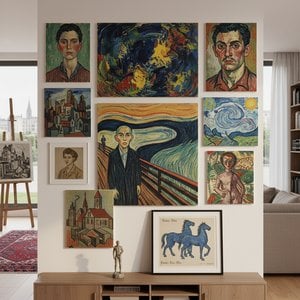
Glavna dela ekspresionizma: 10 remek-dela koja su definisala umetnički pokret
Otkrijte 10 remek-dela ekspresionizma! Uronite u svet Edvarda Muncha, Ernsta Ludwiga Kirchnera i drugih. Istaknute umetničke slike, intenzivne boje i emocionalni izraz. Pronađite inspiraciju za svoj enterijer na ArtsDot.com – vrhunski izbor reprodukcija slika!

Echoes of Absence: Loss & Grief in Visual Art Through the Ages
Explore the profound history of grief in art, from Renaissance masterpieces to contemporary expressions. Discover how artists have captured loss, mourning, and mortality through powerful imagery & symbolism. ArtsDot offers expert insights.

Dark Masterpieces: 10 Iconic Paintings Dominated by Black Tones |
Explore 10 iconic paintings dominated by black tones, from Rembrandt’s chiaroscuro to Goya's dark expressions. Discover the stories behind these masterpieces & find museum-quality art reproductions for your home at .

Edvard Munch: 25 Remek-dela Koje Otkrivaju Dubinu Čovekove Duše | ArtsDot
Istražite 25 remek-dela Edvarda Muncha i otkrijte dubinu ekspresionizma, tugu i anksioznost u njegovim ikončnim slikama. Kvalitetne reprodukcije za dekoraciju enterijera dostupne na ArtsDot.com. Pronađite inspiraciju i kupite umetnička dela online!


