
- Početna strana

- Reprodukcija uljane slike
- Едуар Мане
- The Escape of Rochefort
 Kupi štampu Kupi digitalnu sliku
 Pošalji
 Podeli
 Details
 Dodaj u omiljene

 Преузми
 Slični predmeti
 X-Ray
X-Ray
 Slajdovi
The Escape of Rochefort


Ručno rađena uljana reprodukcija
Ručno oslikano uljanim bojama na platnu u dimenzijama i okviru po vašem izboru, izrađeno po porudžbini od strane naših umetnika.




P118B $10

P118H $10

P118W $10

P438Z $10

P508JH $12

P508YH $12

P805H $10

P805Z $10

P919BZ $10

P919G $10

P919XJ $10

P959ZH $10

P968JZ $12

W106C $8

W218G $10

W218JH $8

W218Y $10

W307PJ $10

W316G $10

W316PJ $8

W316Y $10

W398PJ $8

W4111J $10

W500HY $15

W500JH $15

W692G $12

W849H $8

W940BG $15

W953PJ $8




 Pročitajte više
Izaberite jednu od naših unapred definisanih veličina koje odgovaraju originalnim proporcijama umetničkog dela.

Можете унети сопствене димензије како бисте прилагодили дело одређеном оквиру или простору. Ако одабрана величина не одговара пропорцијама оригинала, слика ће бити исечена или проширена додатним елементима који се ручно насликавају. Дигитални prikaz ће вам бити послат на одобрење пре почетка производње.
Имајте на уму да преглед на екрану не одражава стварно исецање или проширење. Само приказ (mockup) ће тачно приказати коначну композицију.
Иако су доступне прилагођене величине, препоручујемо да одаберете димензију из дефинисане листе како бисте сачували оригиналне пропорције.
Nakon narudžbine, tim ArtsDot.com će klijentu putem e-pošte poslati uputstva i dostaviti prikaz predloženog rešenja
Isporuka širom sveta () za 3/4 nedelje umesto uobičajenih 5 nedelja. (1 јул). Bez kompromisa po pitanju kvaliteta.

Besplatna ekspresna dostava širom sveta

Visokokvalitetno laneno platno

Kompletno osiguranje transporta

Garancija povraćaja carine i uvoznih dažbina

Garancija vernosti boja

Politika povrata u roku od 60 dana (samo u slučaju nedostataka)

Garancija povrata novca od 100%

Popust pri grupnoj kupovini
 Opcija sa staklom dostupna je samo za dimenzije manje od 110 cm

The Escape of Rochefort
Tehnika reprodukcije
Dimenzije reprodukcije
-


Konačna cena
-
Opis umetničkog dela
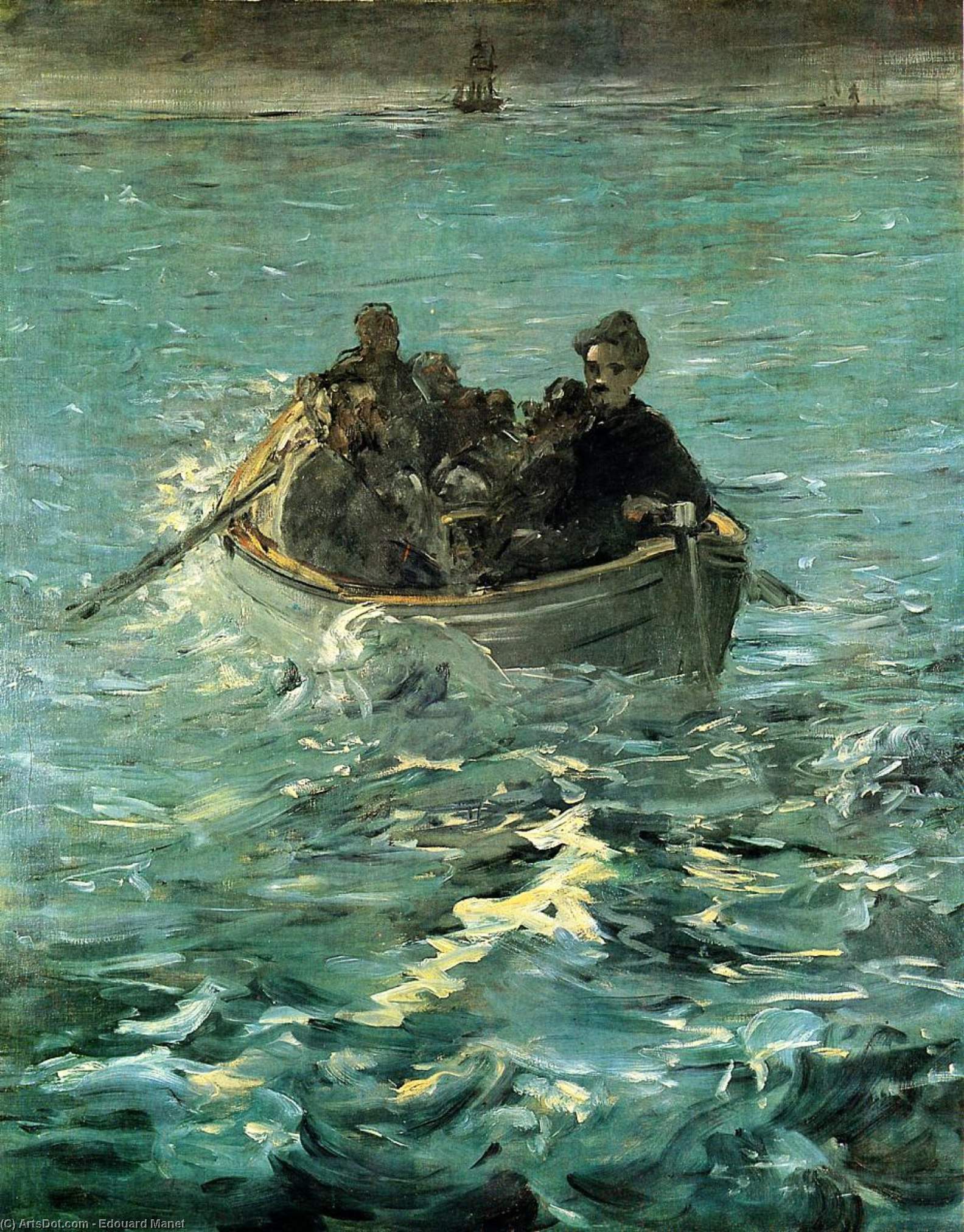
The Dramatic Escape: Manet’s “The Escape of Rochefort”
Édouard Manet's "The Escape of Rochefort," painted in 1880 and now residing within the esteemed Kunsthaus Zürich, is far more than a mere historical depiction; it’s a potent distillation of political commentary, a daring exploration of genre conventions, and a testament to Manet’s unique artistic vision. The painting captures a pivotal moment – the audacious flight of Victor Henri Rochefort, a prominent French politician exiled to New Caledonia following his involvement in the tumultuous Paris Commune. Yet, it's not simply a chronicle of events; Manet transforms this historical narrative into a dynamic and emotionally charged scene brimming with adventure, camaraderie, and an underlying sense of precariousness. The composition immediately draws the eye to a small, rather humble rowboat battling against a vast, turbulent sea – a visual metaphor for the challenges faced by those challenging established authority. The painting’s power lies not just in its subject matter but also in Manet's masterful manipulation of artistic techniques. He eschews the polished realism favored by the Académie des Beaux-Arts, opting instead for a looser, more expressive brushstroke that imbues the scene with movement and immediacy. The colors are deliberately muted – predominantly blues and greens dominate – creating an atmosphere of brooding intensity. Notice how Manet employs broken color to suggest the choppy waves and the swirling mist, conveying both the physical danger and the psychological tension of the escape. The figures themselves are rendered with a remarkable lack of detail; they’re not idealized heroes but recognizable individuals caught in a desperate situation. This deliberate simplification allows the viewer to project their own emotions onto the scene – empathy for the fugitives, perhaps, or even a sense of vicarious thrill at their daring endeavor.A Historical Context: Beyond the Commute
To fully appreciate “The Escape of Rochefort,” it’s crucial to understand its historical context. The painting was created during a period of intense political upheaval in France following the failed uprising of 1871 and the subsequent establishment of the Paris Commune. Rochefort, a vocal supporter of the Communards, became a symbol of resistance against the newly installed Third Republic. Manet’s decision to depict this escape wasn't simply an artistic choice; it was a deliberate act of political engagement. He consciously chose to represent a figure who had been exiled and condemned, aligning himself with those challenging the status quo. Furthermore, the painting directly engages with the conventions of history painting – a genre traditionally reserved for grand narratives of kings and battles. By applying these techniques to a relatively minor political event, Manet subverts expectations and forces viewers to reconsider the purpose and scope of historical representation. Interestingly, Manet’s approach contrasts sharply with that of his contemporary, Edgar Degas, who, as seen in “At the Races,” focused on capturing the immediacy and spectacle of sporting events. While Degas sought to document a specific moment in time, Manet uses the history painting format to explore broader themes of rebellion, exile, and the human spirit’s capacity for resilience. The juxtaposition highlights the different ways artists can engage with historical subjects – one through meticulous observation, the other through expressive interpretation.Symbolism and Emotional Resonance
Beyond its political significance, “The Escape of Rochefort” is rich in symbolic detail. The small rowboat itself represents vulnerability and precariousness, highlighting the desperate circumstances faced by the fugitives. The dog accompanying them adds a layer of warmth and companionship to the scene – a symbol of loyalty and solidarity amidst adversity. Even the vast expanse of the sea can be interpreted symbolically: it represents both the challenges that lie ahead and the unknown possibilities that await those who dare to break free from confinement. The painting’s emotional impact is undeniably powerful, evoking feelings of suspense, hope, and perhaps even a touch of melancholy for those left behind. The deliberate ambiguity surrounding Rochefort's face – he’s largely obscured by shadow – further enhances this sense of mystery and intrigue. It invites the viewer to contemplate his motivations and his fate, transforming the painting into more than just a depiction of an escape; it becomes a meditation on freedom, exile, and the complexities of human experience.Manet's Legacy and Beyond
“The Escape of Rochefort” stands as a pivotal work in Manet’s oeuvre and a landmark achievement in French art history. It demonstrated his willingness to challenge artistic conventions, engage with contemporary political issues, and explore new ways of representing the world around him. His innovative use of color, brushstroke, and composition paved the way for future generations of artists, including Impressionists like Monet and Renoir, who built upon Manet’s legacy by further pushing the boundaries of artistic expression. For those seeking to delve deeper into Manet's work or explore the broader context of 19th-century French art, a visit to the Kunsthaus Zürich is highly recommended, as is exploring the museum’s comprehensive collection dedicated to Manet and his contemporaries. Furthermore, examining works by artists like Paul Cézanne – known for his contributions to Post-Impressionism – offers valuable insights into the artistic currents that shaped Manet's revolutionary approach.Srodna umetnička dela


Biografija umetnika
Париски бунтовник: Живот и дело Едуарда Манеа
Едуард Мане, рођен 1832. године у Паризу из удобне буржоаске породице, готово да није био предодређен за живот револуционарног уметника. Његов отац, угледни судија, замислио је сигурну будућност за свог сина у праву или можда морнарици – поштована занимања која одговарају њиховом друштвеном статусу. Ипак, чак и као млади дечак, Манеово срце је припадало уметности. С једанаест година започео је формалну наставу цртања, а иако је кратко време био заједнички са академским сликаром Томасом Кутуром, брзо је открио да су Кутурове ригидне методе задушавајуће. Ова рана отпорност предзнаменовала је живот проведен у изазовима уметничких конвенција. Мане није био заинтересован за једноставно реплицирање прошлости; тражио је да ухвати ваибрираност – а понекад и непријатне стварности – модерног париског живота. Често је посећивао Лувр, не само да би копирао Старе мајсторе, већ и да би анализирао њихове технике, учећи од уметника као што су Каравађо и Веласкез како светлост и сенка могу обликовати форму и будити емоције. Међутим, права прекретница у Манеовом стварачком путу била је промена у уметничким струјањима, посебно успон реализма који је заговарао Гюстав Курбе. Курбеов нагласак на приказивању сваког дана без идеализације дубоко је резоновао са Манеом, ослобађајући га од ограничења историјских или митолошких тема.Преламање с традицијом: Скандал и иновација
Педесетих година деветнаестог века био је период интензивне уметничке бурности у Паризу, а Мане се нашао у самом центру тога свега. Долазак јапанских штампа – *укијо-е* – продубио је његову естетску осетљивост. Завладали су га њихови спљоштени перспективе, смеле композиције и запањујуће употребе боја, елементи који ће постати обележја његовог стила. Овај утицај, у комбинацији са његовим растућим одбацивањем академског сјаја, довео је до дела која су шокирала и скандалисала париски свет уметности. Le Déjeuner sur l'herbe (Ручак на трави), изложен на Salon des Refusés 1863. године – изложба за радове одбијене званичног салона – постао је праштање контроверзи. Слика, која приказује голу жену лежерно пикничи са два потпуно обучена мушкарца, није била само о голутији; било реч о томе *како* је та голутија представљена. Манеове фигуре нису имале идеализоване облике и митолошки контекст традиционалних голића. Они су били несумњиво модерни, суочавајући гледаоца са непријатним директношћу. Скандал око Ручка на трави само се продубио његовим мајсторским делом из 1865. године, Олимпијом. Ова слика, делимична реинвенција Тицијанове *Венерине Урбина*, представила је савремену проститутку која смело гледа у гледаоца. Непосредни реализам и провокативна тема наишла су на општу осуду. Критичари су оптужили Манеа за вулгарност и уметничку неспособност, али испод беса легала је претвaра да је он фундаментално мењао језик сликарења.Прелазак на импресионизам: Светлост, кретање четкицом и савремени живот
Иако никада није у потпуности прихватио ознаку „импресиониста“, његов утицај на покрет био је несумњив. Делио је њихов одбацивање академских конвенција и њихову посвећеност снимању мимотретних ефеката светлости и атмосфере. Излагао је заједно са Монеом, Реноаром, Дегасом и другима на независним изложбама импресиониста, што је учврстило његову позицију кључне фигуре у авангарди. Манеова техника се развијала према слободнијим потезима четкицом, који су приоритет дали утиску форме уместо прецизних детаља. Експериментисао је са бојом, често користећи оштре контрасте како би створио драматичне ефекте. Поред скандалозних голића, Мане је истраживао широк распон тема: портрете – укључујући запањујуће приказе његове жене Сузан и уметника Емила Зола; сцене париског ноћног живота, као што је A Bar at the Folies-Bergère, који мајсторски снима елиминацију и спектакл модерног урбаног живота; и интимне кућне сцене. Он није само документовао ове предмете; он их је испитивао, постављајући питања друштвеним нормама и изазивајући конвенционална схватања лепоте.Наслеђе и трајни утицај
Превремени Манеов одлазак 1883. године због сифилиса прекинуо је каријеру која је већ непромењиво променила ток историје уметности. Иако се његов углед знатно повећао након смрти, његов утицај је одмах осетила млађа генерација уметника који су га препознали као ослободилаца. Разбио је баријере, изазивајући традиционална схватања тема, техника и уметничких циљева.- Његов нагласак на снимању савременог живота отворио је пут импресионизму и поствумпресионизму.
- Његова иновативна употреба кретања четкицом и боје утицала је на генерације сликара.
- Његова спремност да се суочи са непријатним истинама о друштву приморала је гледаоце да преиспитају сопствена претпоставке.

Едуар Мане
1832 - 1883 , Француска
Osnovne informacije
- Datum Rođenja: 23. januar 1832.
- Datum Smrti: 1883.
- Mesto Rođenja: Pariz, Francuska
- Nacionalnost: Francuski
- Pokreti/Umetnici Uticajem:
- Klod Monet
- Pjer Ogust Renoir
- Edgar Degas
- Puno Ime: Édouard Manet
- Umetnički Pokret: Realizam, Impresionizam
- Uticali Umetnici:
- Karavagio
- Diego Velázquez
- Gustave Courbet
- Značajna Dela:
- Le Déjeuner sur l'herbe
- Olympia
- A Bar at the Folies-Bergère
Povezani članci

The Enduring Legacy of Oil Paint: Technique, History & Emotional Resonance in Western Art
Explore the rich history & techniques of oil painting! Discover Renaissance masters, scientific principles behind color, and emotional resonance in art. Learn about glazing, layering, and atmospheric perspective – a guide for enthusiasts & collectors.


Édouard Manet: 25 Remek-dela Revolucionarnog Francuskog Majstora | ArtsDot
Istražite 25 remek-dela Édouarda Maneta, revolucionarnog francuskog slikara impresionizma. Otkrijte priče iza 'Le Déjeuner sur l'herbe', 'Olympie' i drugih ikoničnih dela. Kvalitetne reprodukcije slika za luksuzni enterijer – ArtsDot.

Oil on Canvas Masters: 10 Paintings That Redefined Art History |
Journey through art history with our guide to 10 legendary oil on canvas masterpieces! Explore iconic works by Van Gogh, Monet & Rembrandt. Find museum-quality reproductions and elevate your home decor at . Discover all masterpieces online.

The Enduring Power of Paint: A Journey Through Art History & Technique
Explore the rich history of painting! Discover master techniques from Renaissance to Modern art. Find museum-quality reproductions & expert advice at ArtsDot.

Trajna Moć Majstorskih Dela: Analiza Popularnosti Omiljenih Slika kroz Vreme
Istražite najpoznatija remek dela kroz vreme! ArtsDot nudi visokokvalitetne reprodukcije uljanih slika, prilagođene vaše želje. Ekspertni saveti i pouzdana kupovina umetnosti online za vaš dom.



