

 Pregledaj u prostoru
 Pošalji
 Podeli
 Detalji o delu
 Vodič
Vodič

 Preuzmi
 Slični predmeti
 Rendgenski snimak
 Automatska prezentacija
 Pitanja i odgovori
 Statistika
Contrathemis , Frame 590

- 22.0 x 28.0 cm


 Pročitaj više
Umetničko delo prikazano na ovoj stranici zaštićeno je autorskim pravima, što znači da zakonski nismo u mogućnosti da kreiramo niti prodajemo identičnu reprodukciju. Ova zaštita se sprovodi u skladu sa međunarodnim sporazumima kao što su Bernska konvencija i nacionalnim zakonima, uključujući i one koji su definisani u Američki zakon o autorskom pravu – Naslov 17.
Ovaj metod je u potpunosti usklađen sa regulativama o autorskim pravima jer ne podrazumeva kopiranje ili dupliranje zaštićenih umetničkih dela. Umesto toga, reč je o kreativnoj reinterpretaciji – novom slikarskom delu koje je inspirisano originalom, ali nije identično njemu.
Giclee štampa / Umetnički otisak
Giclée štampa ili print na platnu muzejskog kvaliteta uz brzu izradu i raznovrsne opcije završne obrade. ( Kupite ručno oslikano delo Pređi na digitalnu sliku)




































Izaberite jednu od naših unapred definisanih veličina koje odgovaraju originalnim proporcijama umetničkog dela.

Unesite željenu širinu i visinu kako bi se štampa uklopila u vaš ram ili zid. Štampu je moguće samo iseći, ali nikada povećati iznad dimenzija originalne slike, stoga format sa drugačijim proporcijama uzrokuje gubitak dela slike. Pre početka štampe, poslaćemo vam digitalni prikaz radi potvrde. Slika prikazana na ovoj stranici ne predstavlja stvarni isrez — to pokazuje samo digitalni prikaz.
Dostava širom sveta () za 2 nedelje umesto uobičajenih 4/5 nedelja. (8 новембар)

Besplatna ekspresna dostava širom sveta

Visokokvalitetno laneno platno

Potpuno osiguranje transporta

Garancija povraćaja carine i uvoznih dažbina

Garancija vernosti boja

Politika povraćaja u roku od 100 dana (samo u slučaju nedostataka)

Garancija povrata 100% novca

Popust na više proizvoda
 Opcija sa staklom dostupna je samo za dimenzije manje od 110 cm

Contrathemis , Frame 590
Giclee štampa / Umetnički otisak
Dimenzije reprodukcije
-


Ukupna cena
дин 6600
Artist Background
Dwinell Grant was an American visual artist known for his nonobjective and avant-garde style. Born in 1912 in Springfield, Ohio, Grant began studying landscape painting at a young age with his grandfather. He later enrolled at the Dayton Art Institute and the National Academy of Design, where he developed his unique artistic voice.Painting Description
The Contrathemis, Frame 590 is a mixed media artwork created using paper as the primary medium. Measuring 22 x 28 cm, this piece features a cross-like shape with a blue background and two red squares on either side of the frame. The overall composition is intricate and visually engaging, showcasing Grant's mastery of color and form.Artistic Significance
The Contrathemis, Frame 590 is part of the permanent collection at the Smithsonian American Art Museum. This artwork is a prime example of Grant's innovative approach to art, which emphasized the importance of rhythm and nature. As stated by Grant, "nonobjectivism is a part of the earth itself... we do not say something about something else, but rather we produce a rhythm which is a part of nature's rhythm."- View more artworks by Dwinell Grant on https://ArtsDot.com
- Learn more about the Smithsonian American Art Museum and its collection on https://ArtsDot.com
- Discover the world of handmade oil paintings reproductions on https://ArtsDot.com
The Contrathemis, Frame 590 is a true masterpiece that showcases the innovative spirit of Dwinell Grant. As a professional expert in Art, I highly recommend exploring this artwork and the world of handmade oil paintings reproductions on https://ArtsDot.com.
Pitanja i odgovori
Da li je delo „Contrathemis , Frame 590”, autor Dwinell Grant u javnom vlasništvu?
„Contrathemis , Frame 590”, autor Dwinell Grant pripada i dalje je zaštićeno autorskim pravima. Ovaj status određuje način na koji se slika dela može reprodukovati.
Gde mogu pronaći umetnička dela slična delu „Contrathemis , Frame 590”, autor Dwinell Grant?
Stranica Slična dela za delo „Contrathemis , Frame 590”, autor Dwinell Grant prikazuje srodna umetnička dela.
Iz koje zemlje potiče Abstract Expressionism rad "Contrathemis , Frame 590"?
"Contrathemis , Frame 590" povezuje pokret Abstract Expressionism sa United States of America kroz rodno mesto svog tvorca.
Srodna umetnička dela


Biografija umetnika
A Pioneer of Abstract Film: The Life and Work of Dwinell Grant
Dwinell Grant, born Clarence Dwinell Grant in Springfield, Ohio, in 1912, emerged as a quietly revolutionary figure in the landscape of 20th-century art. Though perhaps not a household name, his pioneering explorations into abstract art film laid crucial groundwork for generations of experimental filmmakers and expanded the very definition of artistic expression. Grant’s journey began with traditional foundations – an early education in landscape painting under the tutelage of his grandfather, Paul Emilio Henking, instilled within him a deep appreciation for visual language. This initial immersion in representational art would later serve as a springboard for a radical departure into non-objective forms. In 1931, he formally enrolled at the Dayton Art Institute, where the burgeoning currents of modernism and abstraction began to exert their influence, subtly reshaping his artistic sensibilities. A subsequent move to New York City in 1933 and enrollment at the National Academy of Design further refined his skills and broadened his exposure to the avant-garde movements sweeping across the art world.From Painting to Motion: The Genesis of ‘Contrathemis’
Grant's path wasn’t a direct trajectory from canvas to celluloid. A position as an instructor in art and dramatics at Wittenberg College in Ohio, beginning in 1935, proved unexpectedly pivotal. While the demands of teaching limited his time for painting, directing student productions ignited a creative spark, offering an outlet for innovative ideas that transcended traditional artistic boundaries. It was during this period that Grant began to envision art not as static image but as dynamic experience—a vision fueled by experimentation with stage sets and lighting effects. Despite facing some resistance to his avant-garde approaches at Wittenberg, encouragement from colleagues at the Dayton Art Institute led him to seek support from Hilla Rebay, the influential director of the Solomon R. Guggenheim Foundation. Rebay’s belief in Grant's potential was instrumental, providing crucial financial assistance that enabled him to pursue his ambitious filmmaking endeavors between 1938 and 1941. This period culminated in his most significant achievement: Contrathemis, an animated production of remarkable originality. The film, characterized by its short, silent format and abstract aesthetic, was a groundbreaking exploration of form, color, and motion—a visual poem constructed from thousands of meticulously crafted drawings.Influences and Artistic Development
The artistic lineage informing Grant’s work is rich and diverse. Modernism, with its rejection of representational conventions, provided the initial impetus for his exploration of abstraction. The dramatic arts, honed through his teaching experience, instilled a sense of theatricality and dynamism in his visual compositions. Perhaps most importantly, the encouragement of fellow artists and patrons like Hilla Rebay proved essential to nurturing his experimental spirit. Grant’s aesthetic sensibilities were also deeply rooted in an interest in Gestalt psychology and the origins of visual communication—a fascination that led him to develop concepts such as “graphic theme structure” and “thematic counterpoint,” which he applied both to his films and his paintings. He didn't simply aim to depict reality; he sought to create a new visual language, one based on fundamental principles of perception and organization. His work often incorporated collage elements and focused on geometric abstraction, resulting in visually striking and intellectually stimulating pieces that challenged conventional notions of artistic beauty.Later Years and Lasting Legacy
The outbreak of World War II marked a shift in Grant’s career trajectory. In 1942, he transitioned to working for a film company, contributing his talents to the war effort by producing Navy training films. He subsequently applied his artistic skills to scientific illustration and filmmaking within the medical profession—a pragmatic application of his visual expertise. While these professional commitments provided financial stability, they also meant fewer opportunities to exhibit his personal creative work. Nevertheless, Grant’s impact on the art world remained significant. His contributions laid important groundwork for experimental animation and abstract film, influencing countless artists who followed in his footsteps. Today, his work is held in the permanent collections of prestigious institutions including the Metropolitan Museum of Art, the Guggenheim, and the Smithsonian American Art Museum—a testament to his enduring legacy as a notable figure in 20th-century art history. Dwinell Grant’s story serves as a reminder that true artistic innovation often lies at the intersection of disciplines, and that even seemingly abstract explorations can have profound and lasting cultural significance.
Dwinell Grant
1912 - 1991 , United States of America
Osnovne informacije
- Full Name: Dwinell Grant
- Nationality: American
- Date Of Birth: 1912
- Date Of Death: 1991
- Place Of Birth: Springfield, United States of America
- Notable Artworks:
- Contrathemis
- scarf design G
- scarf design E
- Artistic Movement Or Style: Abstract art film
- Artists Who Influenced This Artist:
- Paul Emilio Henking
- Hilla Rebay
- Artists Or Movements Influenced By This Artist: ['Experimental filmmakers']
Povezani članci

Mastering Abstraction: The 25 Most Iconic Works by Wassily Kandinsky
Explore 25 iconic Kandinsky masterpieces and the birth of abstraction. Discover the full collection online at ArtsDot.com.

Beyond Form & Color: Geometric Abstraction's Enduring Legacy in Art History
Explore the captivating world of geometric abstraction! Discover its origins, key artists like Malevich & Mondrian, and why this movement remains highly valued by art collectors today. Expert insights at ArtsDot.

Top 10 dela geometrijske apstrakcije koje morate videti | ArtsDot.com
Istražite 10 remek-dela geometrijske apstrakcije – Mondrian, Malevič i Kandinski. Otkrijte priče iza ovih ikoničnih slika i pronađite inspiraciju za dekoraciju enterijera sa ArtsDot.com! Reprodukcije vrhunskog kvaliteta.

Beyond Form & Color: Geometric Abstraction's Evolution in 20th/21st Century Art
Explore the evolution of geometric abstraction from Cubism to contemporary art. Discover key artists like Malevich & Mondrian, investment insights, and expert collecting advice at ArtsDot.
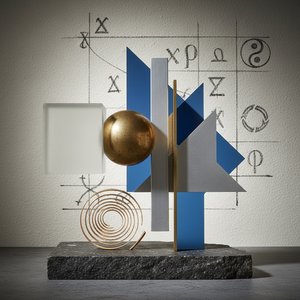
Beyond Form: Exploring the Philosophical Foundations of Geometric Abstraction
Explore the philosophical roots & artistic evolution of geometric abstraction with ArtsDot. Discover Mondrian, Malevich, De Stijl & more. Expert insights for collectors and art enthusiasts.