

 Pregledaj u prostoru
 Pošalji
 Podeli
 Detalji o delu
 Vodič
Vodič

 Preuzmi
 Slični predmeti
 Rendgenski snimak
 Automatska prezentacija
 Pitanja i odgovori
 Statistika
neubrandenburg

 Pročitaj više
Giclee štampa / Umetnički otisak
Giclée štampa ili print na platnu muzejskog kvaliteta uz brzu izradu i raznovrsne opcije završne obrade. ( Kupite ručno oslikano delo Pređi na digitalnu sliku)




P118B дин10

P118H дин10

P118W дин10

P438Z дин10

P508JH дин12

P508YH дин12

P805H дин10

P805Z дин10

P919BZ дин10

P919G дин10

P919XJ дин10

P959ZH дин10

P968JZ дин12

W106C дин8

W218G дин10

W218JH дин8

W218Y дин10

W307PJ дин10

W316G дин10

W316PJ дин8

W316Y дин10

W398PJ дин8

W4111J дин10

W500HY дин15

W500JH дин15

W692G дин12

W849H дин8

W940BG дин15

W953PJ дин8




Izaberite jednu od naših unapred definisanih veličina koje odgovaraju originalnim proporcijama umetničkog dela.

Unesite željenu širinu i visinu kako bi se štampa uklopila u vaš ram ili zid. Štampu je moguće samo iseći, ali nikada povećati iznad dimenzija originalne slike, stoga format sa drugačijim proporcijama uzrokuje gubitak dela slike. Pre početka štampe, poslaćemo vam digitalni prikaz radi potvrde. Slika prikazana na ovoj stranici ne predstavlja stvarni isrez — to pokazuje samo digitalni prikaz.
Dostava širom sveta () za 2 nedelje umesto uobičajenih 4/5 nedelja. (12 новембар)

Besplatna ekspresna dostava širom sveta

Visokokvalitetno laneno platno

Potpuno osiguranje transporta

Garancija povraćaja carine i uvoznih dažbina

Garancija vernosti boja

Politika povraćaja u roku od 100 dana (samo u slučaju nedostataka)

Garancija povrata 100% novca

Popust na više proizvoda
 Opcija sa staklom dostupna je samo za dimenzije manje od 110 cm

neubrandenburg
Giclee štampa / Umetnički otisak
Dimenzije reprodukcije
-


Ukupna cena
дин 6609
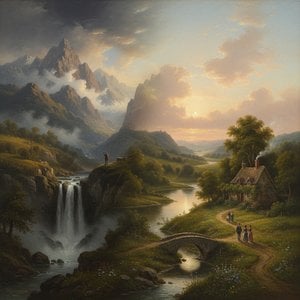
A Vista of Quietude: Exploring Caspar David Friedrich’s *neubrandenburg*
This evocative landscape by Caspar David Friedrich transports viewers to a serene yet subtly melancholic world. *neubrandenburg* is not merely a depiction of a town and its cathedral; it's an exploration of humanity’s place within the vastness of nature, a hallmark of the Romantic era. The painting presents a distant view of Neubrandenburg, dominated by the imposing spire of its cathedral, set against a dramatic skyscape.Style & Historical Context
Friedrich was a pivotal figure in the German Romantic movement (early 19th century), a period characterized by an emphasis on emotion, individualism, and the sublime power of nature. Rejecting the Enlightenment’s focus on reason, Romantics sought spiritual truth through experiencing the natural world. *neubrandenburg* exemplifies this ethos. The painting's style leans heavily into Romantic ideals – it isn’t a precise topographical rendering but rather an emotional response to the landscape. This was a time of significant societal shifts; the rise of industrialization and urbanization led many to yearn for a connection with the unspoiled beauty of nature, which Friedrich masterfully captures. His work often served as a counterpoint to the increasingly materialistic world.Composition & Technique
The composition is powerfully structured around horizontal lines – the horizon dividing the scene into foreground, middle ground and background. This reinforces the sense of expansive space. The small figures in the lower right corner are crucial; they provide a scale reference, emphasizing the immensity of the landscape and subtly suggesting human insignificance within it. Friedrich’s technique is characterized by loose brushstrokes and a muted color palette. He expertly employs atmospheric perspective – colors become paler and less saturated with distance – to create a convincing illusion of depth. The oil on canvas medium allows for rich texture and nuanced tonal variations, particularly in the swirling clouds that dominate the sky.Symbolism & Interpretation
The cathedral spire is arguably the focal point, rising above the town as a symbol of faith and spiritual aspiration. However, its distance and relative smallness within the vast landscape suggest a questioning of traditional religious authority. The dramatic sky, transitioning from dark greys to golden hues, can be interpreted as representing both hope and uncertainty – the transient nature of life itself. The figures in the foreground, seemingly lost in contemplation, invite viewers to share their quiet introspection. Friedrich frequently used landscapes not just as representations of places but as mirrors reflecting inner emotional states.Emotional Impact & Legacy
*neubrandenburg* evokes a sense of peaceful solitude and contemplative melancholy. It’s a painting that encourages viewers to pause, reflect, and connect with the natural world on a deeper level. The work's enduring appeal lies in its ability to tap into universal human emotions – awe, wonder, and a longing for something beyond the material realm. Friedrich’s influence can be seen in subsequent artistic movements, including Symbolism and Expressionism, and his landscapes continue to inspire artists and viewers alike today. A reproduction of this painting would bring a sense of tranquility and intellectual depth to any interior space.Pitanja i odgovori
Koja osnovna nijansa prožima „neubrandenburg”, autor Kaspar David Fridrih?
Dominantna nijansa dela „neubrandenburg”, autor Kaspar David Fridrih je Ochre to Sepia. Ova nijansa predstavlja osnovni ton palete.
Kolika je luminancija dela „neubrandenburg”, autor Kaspar David Fridrih?
Boje dela "neubrandenburg" pokazuju luminancu od Gentle Luminance.
Da li je „neubrandenburg”, autor Kaspar David Fridrih portret, pejzaž ili kvadratna kompozicija?
„neubrandenburg”, autor Kaspar David Fridrih je kompozicija u Portrait formatu. Vredno je proveriti proporcije pre odabira veličine printa.
Srodna umetnička dela


Biografija umetnika
Usamljena vizija
Rođen u baltičkom portu Grajfsvaldu 1774. godine, rani život Kaspara Davida Fridriha oblikirala je duboka osećaj gubitka. Smrt majke i braće i sestara bacila je dugu senku na njegovu mladost, podstaknuvši osetljivost prema prolaznosti koja će postati centralna tema u njegovom radu. Svoje prvo obrazovanje počeo je kod brata Kristijana, pre nego što je nastavio studije umetnosti i teologije na Univerzitetu Lajpcig. Iako nije završio nijedan od ta dva studija, upravo će taj dualni interes za vizuelno i duhovno definisati njegov umetnički put. Njegove tehničke veštine dodatno su izoštrene u Kopenhagenu, gde je bio izložen tradicijama pejzažnog slikarstva koje će na kraju transformisati u sredstvo za izražavanje unutrašnjih emocionalnih stanja.
Njegov pristup pejzažu odmaknuo se od pedantnog detaljizma koji su favorisali njegovi prethodnici. Umesto toga, nastojao je da prožme scenu simboličkim značenjem, koristeći elemente prirode kao reprezentaciju ljudske duše. Često je koristio Rückenfiguren—figure prikazane od leđa—kako bi pozvao gledaoca da podeli kontemplativno iskustvo. Njegova paleta, često sastavljena od prigušenih nijansi plave, sive i smeđe, naglašavala je atmosferu introspekcije i uzvišenosti koja prožima njegovo delo. On nije samo slikao ono što je video; on je slikao unutrašnje vreme ljudskog duha.
Jezik uzvišenog
Fridrihova dela naglašavaju ono što je uzvišeno, tražeći duhovnu povezanost kroz veličinu prirodnog sveta. Njegove kompozicije često postavljaju samotne figure nasuprot ogromnom, često nadmoćnom, pejzažu. U delu "Planinar iznad mora magle" (oko 1818), silueta koja se suočava sa vrtlogom magle otelovljuje napetost između ljudskog prisustva i beskonačnosti. "More od leda" (1824) predstavlja jezivu arktičku pustu, prikaz neizmerne moći prirode i njene ravnodušnosti prema ljudskoj sudbini. Ova dela odražavaju opsesiju krhkosti postojanja i potragu za smislom unutar samog pejzaža.
Njegove slike često koriste specifične elemente kako bi preneli ova unutrašnja stanja:
- "Manastir u hrastu" (1809-1810), gde razrušeno groblje i goli drvni sugerišu smrtnost i duhovno propadanje.
- "Krečnjače na Rügenu" (1818), koje koriste atmosfersku svetlost da definišu obalu.
Nasleđe i ponovno otkriće
Trajektorija Fridrihove karijere nije bila neprestan uspon. Iako je stekao priznanje tokom života, njegova popularnost je opadala kako su umetnički ukusi odlazili ka drugim pravcima. Umro je u Draksdenu 1840. godine, a neko vreme njegovo ime je bleđelo na čelu umetničkog sveta. Njegova reputacija je doživela značajno ponovno otkriće krajem 20. veka, kada je prepoznat kao centralna figura nemačkog romantizma. Njegov naglasak na subjektivnom iskustvu i emocionalnom izražavanju otvorio je put kasnijim pokretima, uključujući simbolizam i nadrealizam.
Njegov uticaj se protezao na umetnike koji su želeli da istraže unutrašnji svet putem vizuelnih sredstava. Odbijanjem prosvetiteljskog racionalizma u korist emocije i mašte, on je uhvatio duh jedne ere. Njegovi pejzaži služili su kao simboli nacionalnog identiteta tokom perioda političke fragmentacije u Nemačkoj. Danas njegova dela nastavljaju da odjekuju, podsećajući publiku na duboku povezanost između čovečanstva i prirodnog sveta.

Kaspar David Fridrih
1774 - 1840 , Немачка
Osnovne informacije
- Artistic Movement Or Style: Romantizam
- Artists Or Movements Influenced By This Artist:
- Simbolisti
- Surrealisti
- Artists Who Influenced This Artist:
- Holandski majstori
- J.C. Dahl
- Date Of Birth: 1774
- Date Of Death: 1840
- Full Name: Caspar David Fridrih
- Nationality: Nemačka
- Notable Artworks:
- Manastir u hrastu
- Planinar iznad mora magle...
- Krečnjače na Rügenu
- More leda
- Place Of Birth: Grajfsvald, Nemačka
Povezani članci

Evoking Nature's Sublime: A Comprehensive Exploration of 19th-Century Landscape Painting
Explore the captivating world of 19th-century landscape painting! Discover renowned artists like Friedrich & Monet, key movements, and find the perfect artwork to bring nature's serenity into your home. Expert insights at ArtsDot.

The Sublime and the Picturesque: Exploring Emotion & Nature in Romantic Landscape Painting
Explore the emotional power of Romantic landscape painting! Discover the sublime & picturesque traditions, key artists like Friedrich & Cole, and find your perfect artwork at ArtsDot.

Glavna dela koja su definisala Romantični pejzaž: 10 remek-dela za vaš dom
Otkrijte 10 remek-dela romantičnog pejzažnog slikarstva! Uronite u svet Claude Lorraina, Caspara David Friedricha i Turnera. Ispričane priče umetnosti, inspiracija za dekoraciju doma. Kvalitetne reprodukcije na ArtsDot.com – istražite celu kolekciju online!
The Sublime and the Picturesque: Exploring Emotion & Nature in Romantic Landscape Painting
Explore the emotional power of Romantic landscape painting! Discover the sublime & picturesque aesthetics, key artists like Friedrich & Cole, and lasting influence on art history. Find your perfect piece at ArtsDot.

Caspar David Friedrich: Romanticism's Master of Landscape & the Sublimity of Inner Experience
Explore the profound landscapes of Caspar David Friedrich, a master of German Romanticism. Discover the symbolism, themes & enduring influence of this iconic artist. A deep dive into his life and work.


