

 Pregledaj u prostoru
 Pošalji
 Podeli
 Detalji o delu
 Vodič
Vodič

 Preuzmi
 Slični predmeti
 Rendgenski snimak
 Automatska prezentacija
 Pitanja i odgovori
 Statistika
Dwight D. Eisenhower

- 61.0 x 45.0 cm


 Pročitaj više
Umetničko delo prikazano na ovoj stranici zaštićeno je autorskim pravima, što znači da zakonski nismo u mogućnosti da kreiramo niti prodajemo identičnu reprodukciju. Ova zaštita se sprovodi u skladu sa međunarodnim sporazumima kao što su Bernska konvencija i nacionalnim zakonima, uključujući i one koji su definisani u Američki zakon o autorskom pravu – Naslov 17.
Ovaj metod je u potpunosti usklađen sa regulativama o autorskim pravima jer ne podrazumeva kopiranje ili dupliranje zaštićenih umetničkih dela. Umesto toga, reč je o kreativnoj reinterpretaciji – novom slikarskom delu koje je inspirisano originalom, ali nije identično njemu.
Giclee štampa / Umetnički otisak
Giclée štampa ili print na platnu muzejskog kvaliteta uz brzu izradu i raznovrsne opcije završne obrade. ( Kupite ručno oslikano delo Pređi na digitalnu sliku)




P118B дин10

P118H дин10

P118W дин10

P438Z дин10

P508JH дин12

P508YH дин12

P805H дин10

P805Z дин10

P919BZ дин10

P919G дин10

P919XJ дин10

P959ZH дин10

P968JZ дин12

W106C дин8

W218G дин10

W218JH дин8

W218Y дин10

W307PJ дин10

W316G дин10

W316PJ дин8

W316Y дин10

W398PJ дин8

W4111J дин10

W500HY дин15

W500JH дин15

W692G дин12

W849H дин8

W940BG дин15

W953PJ дин8




Izaberite jednu od naših unapred definisanih veličina koje odgovaraju originalnim proporcijama umetničkog dela.

Unesite željenu širinu i visinu kako bi se štampa uklopila u vaš ram ili zid. Štampu je moguće samo iseći, ali nikada povećati iznad dimenzija originalne slike, stoga format sa drugačijim proporcijama uzrokuje gubitak dela slike. Pre početka štampe, poslaćemo vam digitalni prikaz radi potvrde. Slika prikazana na ovoj stranici ne predstavlja stvarni isrez — to pokazuje samo digitalni prikaz.
Dostava širom sveta () za 2 nedelje umesto uobičajenih 4/5 nedelja. (5 новембар)

Besplatna ekspresna dostava širom sveta

Visokokvalitetno laneno platno

Potpuno osiguranje transporta

Garancija povraćaja carine i uvoznih dažbina

Garancija vernosti boja

Politika povraćaja u roku od 100 dana (samo u slučaju nedostataka)

Garancija povrata 100% novca

Popust na više proizvoda
 Opcija sa staklom dostupna je samo za dimenzije manje od 110 cm

Dwight D. Eisenhower
Giclee štampa / Umetnički otisak
Dimenzije reprodukcije
-


Ukupna cena
дин 6606
Srodna umetnička dela


![[caricature Of Dwight David Eisenhower, Usa President] — Nair De Teffé Von Hoonholtz, Other](/media/artworks/images-thumb/97/a4/97a4561a3a70d55149fa0c8eba859812.jpg)


Biografija umetnika
Bernard Safran: A Life in Shadow and Light
Bernard Safran (1924-1995) wasn’t a name that frequently graced the headlines, yet his art possessed a quiet power—a profound ability to capture the essence of ordinary people amidst the grit and grandeur of urban life. He was a realist painter who eschewed grand narratives for intimate portraits, offering viewers glimpses into the lives of New Yorkers, Canadians, and those caught between the two worlds. His work, often overlooked in mainstream art circles, reveals a humanist sensibility deeply rooted in his experiences growing up in Brooklyn’s vibrant, sometimes turbulent, immigrant community.
Safran's early life profoundly shaped his artistic vision. Born into a family of Russian immigrants who had fled the horrors of Siberia, he absorbed a unique perspective on humanity – one tempered by resilience, hardship, and an appreciation for the dignity of everyday existence. His father’s escape from imprisonment instilled in him a respect for strength and survival, while his mother's journey to America as a young milliner fostered a keen awareness of the struggles faced by newcomers navigating unfamiliar landscapes. These formative experiences fueled his desire to depict the realities of life, not idealized versions, but the raw, unvarnished truth.
His artistic education began modestly, with informal drawing lessons and exposure to art through his grandmother. He honed his skills at the prestigious High School of Music & Art in New York City, where he studied under influential instructors and encountered fellow artists like Harvey Dinnerstein and James Bama – figures who would later become prominent illustrators. The school’s emphasis on observation and capturing the essence of subjects—particularly through drawing people from life—proved crucial to Safran's development. He spent his youth sketching in subway stations, absorbing the faces and stories of countless commuters, a practice that would inform his future work.
Time Magazine and the Portraiture of Character
Safran’s career truly took flight when he began contributing portraits to Time magazine in 1957. This marked a significant shift from his earlier work as a freelance illustrator, allowing him to focus entirely on painting. He quickly established himself as a sought-after portraitist, tasked with capturing the personalities of prominent figures – Elizabeth II, Pope John XXIII, Dwight D. Eisenhower, John F. Kennedy, Lyndon B. Johnson, and Richard Nixon, among others. These weren’t simply photographic likenesses; Safran imbued each subject with a sense of character, revealing their inner lives through subtle shifts in expression, posture, and gaze.
His approach to these iconic portraits was remarkably humanistic. He avoided the slickness and formality often associated with celebrity portraiture, instead opting for a more intimate and approachable style. He sought to capture not just the outward appearance of his subjects but also their spirit, their vulnerabilities, and their moments of quiet contemplation. This commitment to portraying genuine character resonated deeply with readers, contributing significantly to Time’s reputation for compelling visual storytelling.
Safran's work for Time wasn’t merely a professional endeavor; it was a reflection of his broader artistic philosophy. He believed in the importance of depicting ordinary people—the working class, the marginalized, and those often overlooked by mainstream art – with dignity and respect. His portraits weren’t about fame or power but about revealing the humanity within each individual.
The Canvas of Urban Life and Rural Canada
While his work for Time brought him considerable recognition, Safran remained deeply committed to painting scenes of everyday life in New York City and rural Canada. He spent years meticulously observing and documenting the lives of people he encountered—from street vendors and dockworkers to farmers and shopkeepers. These paintings weren’t romanticized depictions; they were honest portrayals of the realities of urban decay, economic hardship, and the quiet resilience of ordinary individuals.
Safran's interest in rural Canada began later in his career, after he moved to Sackville, New Brunswick. He found a different kind of beauty and challenge in capturing the lives of farmers and laborers in this region. His paintings of rural life were characterized by a similar commitment to realism and humanism—he depicted the strength and dignity of these individuals amidst the harsh realities of their environment.
His technique was rooted in observation and careful study. He often worked from direct observation, sketching and painting outdoors to capture the light, atmosphere, and details of his subjects. He employed a muted color palette—earth tones, grays, and browns—to create a sense of realism and authenticity. His brushwork was deliberate and controlled, conveying both texture and emotion.
Legacy and Influence
Bernard Safran’s legacy lies not in grand exhibitions or critical acclaim but in the quiet power of his art to connect with viewers on a deeply human level. His portraits—both for Time magazine and his independent works—offer poignant glimpses into the lives of ordinary people, revealing their strength, resilience, and dignity. He demonstrated that beauty could be found not only in idealized landscapes or heroic figures but also in the faces and stories of everyday life.
Though he remained largely outside the mainstream art world during his lifetime, Safran’s work has gained increasing recognition in recent years. His paintings are now exhibited in galleries and private collections around the world, and they continue to resonate with viewers who appreciate his honest portrayal of humanity. Bernard Safran's contribution to realist painting is a testament to the power of observation, empathy, and a deep commitment to capturing the essence of human experience.

Bernard Safran
1924 - 1995
Osnovne informacije
- Artistic Movement Or Style: Realist painter
- Artists Or Movements Influenced By This Artist: ['Ashcan School']
- Artists Who Influenced This Artist:
- Henri de Toulouse-Lautrec
- Harvey Dinnerstein
- Date Of Birth: 1924
- Date Of Death: 1995
- Full Name: Bernard Safran
- Nationality: American
- Notable Artworks:
- Barry Goldwater
- Buddha
- Place Of Birth: Brooklyn, NY
Povezani članci

Claude Monet: 25 Remek-dela Impresionizma za Vaš Dom | ArtsDot
Uronite u svet Claudea Moneta sa 25 remek-dela impresionizma! Otkrijte priče iza poznatih slika, tehnike i inspiraciju. Reprodukcije vrhunskog kvaliteta za luksuzni dekor doma na ArtsDot.com.

Echoes of Time: Exploring the Enduring Appeal of Vintage Artwork
Explore the captivating world of vintage art! Discover its history, enduring appeal, & how to build your own collection. Expert advice, custom reproductions & museum-quality prints at ArtsDot.

Echoes of Time: Nostalgia, Technique & Cultural Significance in Vintage Paintings
Explore the captivating world of vintage paintings! Discover key styles, cultural significance & collecting tips from art experts at ArtsDot. Find authentic reproductions and elevate your home décor.
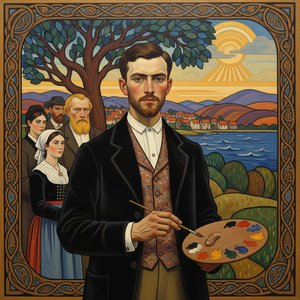
Émile Bernard: Pioneering Synthetism & the Post-Impressionist Quest for Essence
Explore the life & work of Émile Bernard, a pivotal Post-Impressionist pioneer of Synthetism. Discover his influence on Van Gogh & Gauguin and learn about collecting his art with ArtsDot.

Realizam u slikama: Top 10 remek dela za vaš dom i dušu
Otkrijte 10 remek dela koja su definisala realizam! Gustave Courbet, Millet i Daumier – istaknuti umetnici i njihove slike. Inspiracija za vaš dom i dušu. Kupite reprodukcije vrhunskog kvaliteta na ArtsDot.com!