

 Pregledaj u prostoru
 Pošalji
 Podeli
 Detalji o delu
 Vodič
Vodič

 Preuzmi
 Slični predmeti
 Rendgenski snimak
 Automatska prezentacija
 Pitanja i odgovori
 Statistika
Plaza, Twilight

- 19.0 x 18.0 cm

 Pročitaj više
Umetničko delo prikazano na ovoj stranici zaštićeno je autorskim pravima, što znači da zakonski nismo u mogućnosti da kreiramo niti prodajemo identičnu reprodukciju. Ova zaštita se sprovodi u skladu sa međunarodnim sporazumima kao što su Bernska konvencija i nacionalnim zakonima, uključujući i one koji su definisani u Američki zakon o autorskom pravu – Naslov 17.
Ovaj metod je u potpunosti usklađen sa regulativama o autorskim pravima jer ne podrazumeva kopiranje ili dupliranje zaštićenih umetničkih dela. Umesto toga, reč je o kreativnoj reinterpretaciji – novom slikarskom delu koje je inspirisano originalom, ali nije identično njemu.
Giclee štampa / Umetnički otisak
Giclée štampa ili print na platnu muzejskog kvaliteta uz brzu izradu i raznovrsne opcije završne obrade. ( Kupite ručno oslikano delo Pređi na digitalnu sliku)




P118B дин10

P118H дин10

P118W дин10

P438Z дин10

P508JH дин12

P508YH дин12

P805H дин10

P805Z дин10

P919BZ дин10

P919G дин10

P919XJ дин10

P959ZH дин10

P968JZ дин12

W106C дин8

W218G дин10

W218JH дин8

W218Y дин10

W307PJ дин10

W316G дин10

W316PJ дин8

W316Y дин10

W398PJ дин8

W4111J дин10

W500HY дин15

W500JH дин15

W692G дин12

W849H дин8

W940BG дин15

W953PJ дин8




Izaberite jednu od naših unapred definisanih veličina koje odgovaraju originalnim proporcijama umetničkog dela.

Unesite željenu širinu i visinu kako bi se štampa uklopila u vaš ram ili zid. Štampu je moguće samo iseći, ali nikada povećati iznad dimenzija originalne slike, stoga format sa drugačijim proporcijama uzrokuje gubitak dela slike. Pre početka štampe, poslaćemo vam digitalni prikaz radi potvrde. Slika prikazana na ovoj stranici ne predstavlja stvarni isrez — to pokazuje samo digitalni prikaz.
Dostava širom sveta () za 2 nedelje umesto uobičajenih 4/5 nedelja. (4 новембар)

Besplatna ekspresna dostava širom sveta

Visokokvalitetno laneno platno

Potpuno osiguranje transporta

Garancija povraćaja carine i uvoznih dažbina

Garancija vernosti boja

Politika povraćaja u roku od 100 dana (samo u slučaju nedostataka)

Garancija povrata 100% novca

Popust na više proizvoda
 Opcija sa staklom dostupna je samo za dimenzije manje od 110 cm

Plaza, Twilight
Giclee štampa / Umetnički otisak
Dimenzije reprodukcije
-


Ukupna cena
дин 6601
Srodna umetnička dela


Biografija umetnika
A Life Bridging Worlds: The Artistic Journey of Arthur Millier
Arthur Millier, born in the coastal town of Weston-super-Mare, Somerset, England in 1893, embarked on a remarkable artistic path that spanned continents and disciplines. His story is one of adaptation, resilience, and a deep commitment to capturing the beauty of the American landscape through both his art and his insightful writing. Immigrating with his family to Los Angeles in 1908, Millier initially pursued commercial art, a pragmatic choice for a young newcomer navigating a new world. However, this early foray into applied design would soon give way to a more profound exploration of artistic expression, fueled by experiences that shaped both his aesthetic vision and his critical voice. The shadow of the First World War loomed large over his formative years; sources differ on whether he served in the Canadian or American Army in France, but it’s clear this period profoundly impacted him, leading to a renewed focus on art upon his return to California in 1919 and enrollment at the prestigious California School of Fine Arts in San Francisco.From Etchings to Eloquent Criticism
Millier quickly distinguished himself as a gifted printmaker, particularly excelling in etching and drypoint. His early work focused on the bustling urban scenes of San Francisco, capturing the energy and dynamism of city life with a keen eye for detail. However, it was his growing fascination with the California landscape that would become the defining characteristic of his artistic output. He wasn’t merely documenting scenery; he sought to evoke its atmosphere, its light, and its inherent tranquility. This sensitivity earned him recognition from the California Society of Etchers in both 1922 and 1928, establishing him as a rising talent within the regional art community. But Millier possessed a unique gift that extended beyond his technical skill with a burin or brush – he was an exceptional writer. In 1926, he transitioned into a career as an art critic for the *Los Angeles Times*, a position he held for an impressive thirty-five years. This role allowed him to not only share his own artistic sensibilities but also to shape public discourse around art in Southern California and beyond. He became known as “the Dean of American Art Critics,” receiving the first Frank Jewett Mather Citation from the College Art Association for outstanding newspaper criticism, a testament to his insightful analyses and eloquent prose.Capturing Twilight and Rural Beauty
Millier’s paintings are characterized by their evocative depictions of twilight plazas, serene willows, and quiet rural scenes. He masterfully captured the subtle nuances of light and shadow, creating an atmosphere of timeless beauty and peaceful contemplation. His work often features a sense of solitude, inviting viewers to immerse themselves in the tranquility of the natural world. While he worked in watercolor primarily during his later years in San Luis Obispo, California, the influence of his earlier printmaking training is evident in the precision of his lines and the careful attention to detail. He wasn’t interested in grand, sweeping vistas; instead, he focused on intimate moments—a quiet street corner bathed in golden light, a lone tree silhouetted against a darkening sky. These scenes resonate with a sense of nostalgia and longing, evoking a simpler time and a deeper connection to the land.Legacy and Lasting Influence
Arthur Millier’s contributions extend beyond his own artistic creations. As an educator at institutions like Chouinard Art Institute, Otis Art Institute, the University of Southern California, and the Pasadena Art Institute from 1922 to 1926, he mentored a generation of artists, fostering their creativity and encouraging them to explore their own unique voices. His work is now held in the permanent collections of numerous museums across the United States, including the Dallas Museum of Art, the Los Angeles County Museum of Art, the Philadelphia Museum of Art, and the Art Institute of Chicago—a testament to his enduring legacy as a significant figure in American art history. He was an active member of several prestigious art societies, including the Chicago Society of Etchers, The California Society of Etchers, and the California Art Club, further solidifying his position within the artistic community. Millier’s life, which concluded in Hackensack, New Jersey, in 1975 at the age of 81, represents a fascinating intersection of artistic practice, critical analysis, and educational leadership—a bridge between worlds that continues to inspire artists and art lovers today.Themes and Techniques
- Landscape as Emotional Space: Millier’s landscapes are not simply representations of places; they are imbued with emotion, reflecting a sense of peace, solitude, and nostalgia.
- Mastery of Light and Shadow: His paintings demonstrate a remarkable sensitivity to the subtle nuances of light and shadow, creating an atmosphere of depth and tranquility.
- Printmaking Influence: The precision of his lines and attention to detail in his watercolors are directly influenced by his earlier training as an etcher and drypoint artist.
- The Power of Eloquent Criticism: Millier’s career as an art critic for the *Los Angeles Times* shaped public discourse around art and established him as a leading voice in American art commentary.
- Rural vs. Urban Dichotomy: His artistic journey reflects a shift from capturing the energy of city life to finding solace and beauty in the quietude of the California countryside.

Arthur Millier
1893 - 1975
Osnovne informacije
- Full Name: Arthur Henry Thomas Millier
- Nationality: British
- Date Of Birth: 1893
- Date Of Death: 1975
- Place Of Birth: Weston-super-Mare, England
- Notable Artworks:
- Plaza, Twilight
- North Main Street
- Tarquitz Wall
- Artistic Movement Or Style: American Landscape
- Artists Who Influenced This Artist:
- Hugo Friedhofer
- Edward Weston
- Millard Sheets
Povezani članci

The Eloquent Line: Exploring the Artistic Significance of Sketches Across Movements and Media
Explore the profound artistic significance of sketches throughout history. From Renaissance masters to modern innovators like Van Gogh & Guston, discover how these foundational works reveal technique, emotion, and vision. Learn more at ArtsDot.

Ivory Black Masters: 10 Paintings That Define Dramatic Art |
Delve into the power of 'Ivory Black' with 10 iconic paintings by masters like Rembrandt & Caravaggio. Explore dramatic chiaroscuro, gothic moods & timeless art history. Find museum-quality reproductions and elevate your home decor at

Dark Masterpieces: 10 Iconic Paintings Dominated by Black Tones |
Explore 10 iconic paintings dominated by black tones, from Rembrandt’s chiaroscuro to Goya's dark expressions. Discover the stories behind these masterpieces & find museum-quality art reproductions for your home at .
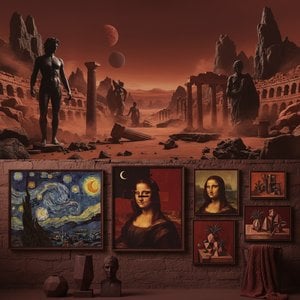
Mars Black Masterpieces: 10 Iconic Paintings & Timeless Art Decor Ideas
Delve into the power of 'Mars Black' with 10 iconic paintings by masters like Rembrandt & Caravaggio. Explore dramatic chiaroscuro, gothic art, and timeless beauty. Find museum-quality reproductions & elevate your home decor on .

Lamp Black & Masterpieces: 10 Paintings That Define Shadow & Light |
Delve into the captivating world of 'Lamp Black' tones with 10 iconic paintings by masters like Rembrandt & Caravaggio. Explore Baroque chiaroscuro, dramatic lighting & shadow in art history. Find museum-quality reproductions at