


 Pregledaj u prostoru
 Podeli
 Podeli
 Detalji
 Vodič
Vodič

 Preuzmi sliku
 Slični predmeti
 Rendgenski snimak
 Automatska prezentacija
 Statistika
Етажерја


 Pročitaj više
Ručno rađena uljana reprodukcija
Ručno oslikano uljanim bojama na platnu u dimenzijama i okviru po vašem izboru, izrađeno po porudžbini od strane naših umetnika. ( Pređi na prodaju štampanih primeraka Pređi na prodaju digitalnih slika)




P118B дин10

P118H дин10

P118W дин10

P438Z дин10

P508JH дин12

P508YH дин12

P805H дин10

P805Z дин10

P919BZ дин10

P919G дин10

P919XJ дин10

P959ZH дин10

P968JZ дин12

W106C дин8

W218G дин10

W218JH дин8

W218Y дин10

W307PJ дин10

W316G дин10

W316PJ дин8

W316Y дин10

W398PJ дин8

W4111J дин10

W500HY дин15

W500JH дин15

W692G дин12

W849H дин8

W940BG дин15

W953PJ дин8




Izaberite jednu od naših unapred definisanih veličina koje odgovaraju originalnim proporcijama umetničkog dela.

Unesite širinu i visinu koja vam je potrebna, kako bi se uklopili u vaš ram ili zid. Pošto je ovo ručno oslikano delo, umetnik može naslikati malo više prostora oko slike ili malo skratiti ivice za dimenzije drugačijeg oblika — izbor je na vama. Pre početka rada, poslaćemo vam digitalni prikaz radi potvrde. Slika prikazana na ovoj stranici ne predstavlja konačan rezultat — samo digitalni prikaz pokazuje stvarnu sliku.
Nakon narudžbine, tim ArtsDot.com će klijentu putem e-pošte poslati uputstva i dostaviti prikaz predloženog rešenja
Svetska isporuka () za 3/4 nedelje umesto uobičajenih 5 nedelja. (21 октобар). Bez kompromisa po pitanju kvaliteta.

Besplatna ekspresna dostava širom sveta

Visokokvalitetno laneno platno

Sveobuhvatno osiguranje transporta

Garancija povraćaja carine i uvoznih dažbina

Garancija vernosti boja i autentičnosti pri reprodukciji

Politika povraćaja u roku od 100 dana (samo u slučaju nedostataka)

Garancija povrata 100% novca

Popust pri većoj količini
 Opcija sa staklom dostupna je samo za dimenzije manje od 110 cm

Етажерја
Tehnika izrade reprodukcije
Veličina reprodukcije
-


Ukupna cena
дин 26957
Étagère: A Reflection of Rococo Elegance
The photograph presents a painting of an ornate antique étagère by Alexandre Roux. It’s displayed in what appears to be a museum setting, evidenced by the lighting and background. The piece is richly detailed with intricate carvings and a decorative mirror. This exquisite example embodies the spirit of the Rococo Revival style—a movement that sought to recapture the grandeur and ornamentation of eighteenth-century France, specifically the Régence period. Roux’s masterful craftsmanship elevates this simple console table into a symbol of refined taste and aristocratic aspiration.- Artist: Alexandre Roux
- Born Year: 1813
- Death Year: 1886
- Birth City: Paris
- Birth Country: France
Alexandre Roux’s artistic journey began in the bustling ateliers of Parisian cabinetmaking, where he honed his skills and developed a profound appreciation for traditional techniques. However, his ambition extended beyond national borders; in 1844, he embarked on an adventurous voyage to America, establishing himself as a prominent figure in the burgeoning landscape of American furniture design.
Roux’s legacy isn't defined by revolutionary innovations but rather by unwavering dedication to meticulous detail and a profound understanding of stylistic trends. He became synonymous with the Rococo Revival style—a movement that captivated wealthy households across the United States during the mid-nineteenth century. This revival harkened back to the opulent salons of Louis XV and Marie Antoinette, prioritizing lavish decoration and graceful curves.
The étagère itself exemplifies this aesthetic ideal. Its curved supports mimic the undulating lines characteristic of Rococo sculpture and architecture, creating a sense of movement and fluidity. The decorative mirror—a hallmark of aristocratic interiors—reflects light and amplifies the visual impact of the carvings, emphasizing their intricate beauty.
The meticulous craftsmanship involved in creating this piece is remarkable. Roux’s workshop employed skilled artisans who utilized techniques such as veneering—applying thin layers of exotic wood over a core of less expensive timber—to achieve unparalleled levels of surface finish and visual richness. The use of glazing—applying translucent layers of pigment to create depth and luminosity—further enhances the artwork's aesthetic qualities.
Furthermore, the étagère’s presence speaks volumes about its historical context. It represents a desire for beauty and sophistication amidst the Victorian era’s emphasis on practicality and moral virtue. Like many artworks from this period, it serves as a tangible reminder of a bygone age—a testament to artistic excellence and enduring stylistic influence.
Interestingly, Roux's work shares striking similarities with that of Albert Bierstadt, another celebrated American painter who captured the grandeur of the American West during the same era. Both artists prioritized capturing dramatic landscapes and conveying emotions of awe and wonder—reflecting a broader cultural fascination with exploration and sublime beauty.
The Musée du Beaux-Arts de Montréal houses an identical étagère by Alexandre Roux, confirming its significance as a masterpiece of Rococo Revival furniture design.
Pitanja i odgovori
Kako se opisuje paleta dela „Етажерја”, Alexandre Roux?
„Етажерја”, Alexandre Roux koristi Neutralne boje paletu boja. Ova paleta sažima opšti koloristički karakter dela.
Koji emocionalni ton prati stil Rococo Revival u delu "Етажерја"?
Unutar pokreta Rococo Revival, delo "Етажерја" je zabeleženo sa Mirno i spokojno tonom.
Kako je izgrađena koloristička kompozicija dela „Етажерја”, Alexandre Roux?
Analiza boja dela „Етажерја”, Alexandre Roux beleži Izjava kontrast i Neskladna paleta boja harmoniju.
Srodna umetnička dela


Biografija umetnika
Alexandre Roux: The Parisian Cabinetmaker Who Shaped American Style
Born in the heart of Paris in 1813, Alexandre Roux’s journey from a skilled craftsman to a celebrated furniture maker in New York City is a testament to ambition, talent, and an astute understanding of evolving aesthetic tastes. Initially trained within the traditional workshops of his native France, Roux’s career took a pivotal turn when he immigrated to America in 1844, establishing himself as a prominent figure in the burgeoning world of American furniture design. His legacy isn't defined by grand, revolutionary movements but rather by a consistent dedication to exquisite detail and a masterful command of the Rococo Revival style – a style that profoundly influenced the interiors of wealthy homes across the United States during the mid-19th century.
Roux’s early life instilled in him a deep appreciation for craftsmanship. While specific details about his family are scarce, it's clear he was raised within a lineage of artisans, absorbing techniques and an inherent understanding of materials. This foundation proved invaluable as he navigated the challenges of establishing a business in a new country. New York City, with its rapid growth and influx of European immigrants, presented both opportunities and competition. Roux quickly distinguished himself through his commitment to quality, utilizing premium materials like black walnut and incorporating intricate carvings that echoed the elegance of 18th-century France. His workshops became renowned for producing furniture that was not merely functional but also a statement of refined taste – a direct reflection of the Rococo Revival’s emphasis on ornamentation, curves, and luxurious finishes.
Notable Works and Artistic Style
Roux's work is characterized by an almost obsessive attention to detail. He wasn’t simply replicating historical styles; he was interpreting them with a distinctly American sensibility. His pieces often featured elaborate motifs – shells, scrolls, floral patterns – meticulously carved into the wood and finished with lustrous varnish. The “Parlor Cabinet,” perhaps his most celebrated creation, exemplifies this perfectly. This stunning piece showcases Roux's ability to seamlessly blend intricate designs with exquisite materials, creating a work that is both visually arresting and remarkably tactile. The inclusion of a bowl on one side and a mirror on the other adds an element of surprise and sophistication, demonstrating Roux’s understanding of how furniture could function as a sculptural object within a room.
Beyond the Parlor Cabinet, works like “Still Life Fish” offer further insight into Roux's artistic approach. While categorized as an oil painting, this piece reveals his keen eye for texture and light – qualities he undoubtedly translated to his furniture designs. The meticulous rendering of scales and reflections suggests a desire to capture not just the appearance but also the essence of the subject matter. This attention to realism, combined with a subtle impressionistic touch, sets Roux apart from purely academic painters.
Influence and Historical Context
Alexandre Roux’s rise coincided with a significant shift in American interior design. Following the War of 1812, there was a renewed interest in European styles, particularly those of the French monarchy. The Rococo Revival, characterized by its ornate detailing and emphasis on luxury, became immensely popular among wealthy Americans seeking to emulate the elegance of European aristocracy. Roux’s furniture played a crucial role in shaping this trend, providing a tangible link to the past while simultaneously reflecting the aspirations of the burgeoning American elite.
His work was showcased at the 1853 New York Crystal Palace Exhibition, a pivotal event that brought together innovations from across the globe. This exposure undoubtedly solidified Roux’s reputation and contributed to the growing demand for his furniture. The commission from the Astor family—a testament to his skill—further elevated his status within the American design community.
Legacy and Recognition
While Alexandre Roux may not be as widely recognized as some of his contemporaries, his contributions to American furniture design are undeniable. His pieces can be found in prestigious collections such as the Musée Baron Gérard in Bayeux, France, a testament to their enduring quality and artistic merit. The Metropolitan Museum of Art also holds an example of his work – a sideboard that provides valuable insight into his craftsmanship and stylistic choices. His influence extends beyond individual pieces; Roux helped establish a precedent for American furniture makers who sought to blend European tradition with local sensibilities, ultimately shaping the evolution of American design.
Alexandre Roux’s story is one of transatlantic ambition, artistic dedication, and a profound understanding of the power of beauty. His legacy lives on in the exquisite furniture he created – pieces that continue to inspire admiration for their craftsmanship, elegance, and enduring appeal.

Alexandre Roux
1813 - 1886 , France
Brzi pregled
- Full Name: Alexandre Roux
- Nationality: French
- Date Of Birth: 1813
- Date Of Death: 1886
- Place Of Birth: Paris, France
- Notable Artworks:
- Parlor Cabinet
- Still life fish
- Artistic Movement Or Style: Rococo Revival, Victorian Furniture
Srodni članci

The Allure of Elegance in Art: A Historical & Aesthetic Exploration of Refinement & Grace
Explore the exquisite world of Rococo art! Discover its history, masters (Watteau, Boucher & more), and defining elegance. Expert insights for collectors seeking museum-quality reproductions & custom portraits.

The Rococo Aesthetic: Opulence, Rebellion & the Pursuit of Pleasure in 18th-Century Art
Explore the opulent world of Rococo art! Discover its origins, key artists like Watteau & Boucher, and lasting influence on design. Expert insights for collectors & enthusiasts.
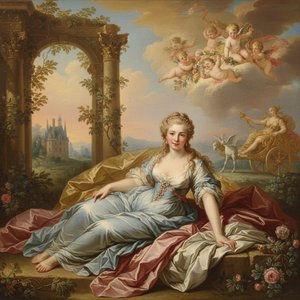
François Boucher: Rococo Master of Myth, Sensuality, and the French Court
Explore the captivating world of François Boucher, master of Rococo painting! Discover his iconic works, aristocratic patronage, and lasting influence on French art history. Learn more at ArtsDot.

Charles-André van Loo: A Study in Rococo Portraiture & the French Court's Artistic Dynamics
Explore the elegant world of Charles-André van Loo, a master of Rococo portraiture at the French court. Discover his life, techniques, and enduring influence on 18th-century art. Hand-painted reproductions available.

Rokoko: 10 Remek Dela Koja Su Definisala Eleganciju i Ukus
Otkrijte 10 remek dela koja su definisala rokoko umetnost! Uronite u svet Boucher-a, Watteau-a i Fragonarda. Istorija, stil i inspiracija za vaš dom. Kvalitetne reprodukcije i kuratorski odabiri na ArtsDot.com!
