A Life of Observation
Born in Budapest to a wealthy Jewish family, Felix Philipp Kanitz lived a life defined by the details he gathered from the earth and its people. His path began in earnest when he enrolled in art at the University of Vienna in 1846. While his training was rooted in the visual arts, his curiosity pulled him far beyond the studio walls. After 1850, he moved through Germany, France, Belgium, and Italy, but it was his arrival in the Balkans that would define his legacy.
In 1856, he settled in Vienna, a city that would serve as his base for much of his professional life. His travels took him into the heart of Dalmatia, Bosnia, Herzegovina, Montenegro, Serbia, Bulgaria, and Macedonia. He did not merely visit these places; he studied them with the precision of a scientist. As a naturalist, geographer, and ethnographer, he looked at the world through a lens of careful documentation.
The Art of Documentation
Kanitz was much more than a painter. He worked as an engraver, cartographer, and archaeologist, using his hands to record what his eyes saw. His work often took the form of black and white drawings and engravings that captured the daily existence of the South Slavs. These were not mere sketches; they were records of life. He produced maps so accurate that the Russian General Staff used them for military operations during the Liberation War of 1877–1878.
His artistic output included:
- Detailed engravings of Bulgarian folk dances, such as the Bulgarian horo.
- Sketches and paintings of national costumes from Bulgaria.
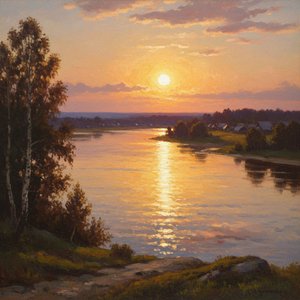
- Watercolors capturing landscapes and views of towns like Vidin, Lom, and Nikopol.
- Precise drawings of archaeological monuments and Roman finds in Serbia.
He often worked from original sketches that were later enlarged or colored by other artists in Vienna. This process helped bring his observations of distant landscapes to a wider European audience.
A Legacy of Knowledge
The weight of his research is found in the many books he authored. Through titles like Reise in Südserbien und Nordbulgarien and Donau-Bulgarien und der Balkan, he shared the ethnographic and historical realities of the regions he explored. His work helped define a distinct place for Bulgarian culture within the European consciousness. He was a man who felt the spirit of the lands he visited, even as a foreigner.
His contributions earned him respect across borders. He became a member of the Serbian Academy of Sciences and Arts and an honorary member of the Bulgarian Literary Society. In Vienna, he served as the first custodian of the Anthropologisch-Urgeschichtliches Museum between 1870 and 1874. When he passed away in Vienna on January 8, 1904, he left behind a massive collection of manuscripts, maps, and drawings that remain vital to the history of the Balkans today.
Vprašanja in odgovori
Ali obstaja kronološki pregled dela umetnika Felix Philipp Kanitz?
Zgodovina umetnosti umetnika Felix Philipp Kanitz je kronološka časovnica, ki s pomočjo drljanja prikazuje dela umetnika v kronološkem vrstnem redu, razdeljena v poglavja po obdobjih njegove kariere.
Ali lahko dela umetnika Felix Philipp Kanitz brskam po barvni paleti?
Za iskanje del umetnika Felix Philipp Kanitz v določeni paleti barv obiščite njegovo stran Po barvnih paletah.
Kako najdem dela umetnika Felix Philipp Kanitz na določeno temo?
Za iskanje del umetnika Felix Philipp Kanitz na določeno temo uporabite stran Po ključnih besedah, ki dela razvršča po ključnih besedah.