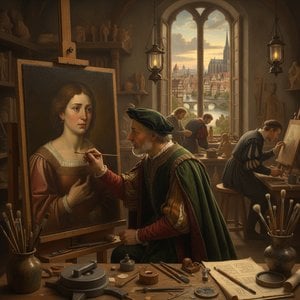
Anton Peffenhauser Starejši: Mojster avgustskega okruga
Rojen v Augsburgu v Nemčiji okoli leta 1525 in zapustil ta svet leta 1603, Anton Peffenhauser Starejši stoji kot monumentalna figura v zgodovini evropskih okrugov. Več kot le okrugar je bil v resnici kipar, zlatar in natančen mojster, ki je v pozni dobi 16. stoletja oblikoval podobo moči in prestiža za kralje in plemiče po vse Evropi. Njegova dediščina se ne skriva le znotraj zidov muzejev – ona živi v čudovitih detajlih, inovativnih zas Cajah in trajni kakovosti njegovih stvarov, ki še stoletja pozneje vzbujajo občutek spoštovanja.
Peffenacijaševo pot se je začela znotraj prestižne družine Helmschmied, linije, znane po svojem strokovnem znanju izdelave čelam in okrugov. Ta temeljita izobrazba mu ni podarila le tehničnega znanja, temveč tudi razumevanje zgodovinskega konteksta in razvijajoče se estetike vojaške opreme. Vendar pa se je Peffenhauser hitro izkazal z lastno umetniško vizijo in voljo do eksperimentiranja, s čimer je ustvaril edinstven slog, ki je združeval tradicionalne tehnike z izjemno pozornostjo do detajlov in ekspresivno okrasitev.
Sodelovanja in umetniški vplivi
Peffenhauserjeva delavnica je bila središče kreativne izmenjave, najbolj opazno skozi njegovo dolgotrajno partnerstvo z Jörgom Sorgom Mladim, prav tako izjemnim umetnikom za graviranje okrugov. Njuno sodelovanje je prineslo nekaj najbolj slavnih del te dobe, čemer preskecajo zapleteni basreliefni okruggi, ki so krasili okraje, nosili pa jih je denimo, kot je bil kralj Sebastijan Portugalski. Sorgovi gravirani zasnove so zagotavljali ključni vizualni element, ki je izboljšal trodimenzionalnost in pripovedovalno kakovost Peffenlaştove natančno izdelane opreme.
V oblikovanje Peffenhauserjevega sloga je pomembno vlogo igrala tudi vpliva drugih umetnikov. Pogosto je delal za pomembne osebe, kot so knežji electorji Saxoni, vojvode Bavarske in celo člani španskega dvora, pri čemer je vsaka zahteva zahtevala raven umetnosti in prefinjenosti, ki je odražala njihov status in bogastvo. Natančna dokumentacija, ki jo najdemo v rokopisu Stuttgarter Harnischmüsterbuch – celovitem inventarju zasnov okrugov iz tistega obdobja – nudi neprecenljiv vpogled v Peffenhauserjeve tehnike in prevladujoče trende njegove dobe.
Slog, ki ga definira detajl in okrasitev
Peffenhauserjevi okruggi niso bili le funkcionalni; bili so prava umetniška dela. Njegove skladbe odlikuje izjemna stopnja podrobnosti, pogosto vključujoč zapletene basreliefne skulpture, ki prikazujejo mitološke figure, heraldične embleme ali scene iz klasične zgodovine. Uporaba zlata in plemenitih kamno je še dodatno povečala vizualni učinek ter vsak okrog spremenila v bliščavo predvode bogastva in moči.
Za razliko od nekaterih njegovih sodobnikov, ki so raje izbrali preprosto zasnovo, je Peffenhauser okrasitev sprejel z zanosom. Njegovi okruggi so bili pogosto okraseni z dinamičnimi, tekočimi obliko – odstopanje od bolj togih in geometričnih slogov, ki so bili takrat prisotni. Ta ekspresivni pristop k oblikovanju je bistveno prispeval k splošnemu vplivu in vizualni privlačnosti njegovih stvarov.
Dedstvo in trajno priznanje
Anton Peffenhauserjeva delavnica je skozi njegovo življenje uživala v velikem znamenju, njegova dela pa se še danes slavijo v prestižnih institucijah po vsem svetu. Dela Peffenhausera lahko najdemo v muzejih, kot so Metropolitan Museum of Art, Kunsthistorisches Museum, vojašnica v Dresdenu in Royal Armouries, kar je dokaz njihove trajne kakovosti in umetniške vrednosti.
Kraljevska vojašnica v Madridu alberga eno njegovih najbolj izstopajočih stvaritev – relief na okrugu, za katerega se verjame, da je bil v lasti kralja Sebastiana Portugalskega – kar je osupljiv primer Peffenhauserjeve veščine in umetništva. Njegova dediščina presega posamezna dela; on je temeljito oblikoval razvoj zasnove okrugov v 16. stoletju in pustil neizbrisno sled v zgodovini evropske umetnosti in rokodelstva.
Za further raziskovanje življenja in dela Antona Peffenhausera ponudijo dragocen vpogled v njegovo življenje, kariero in umetniška dosežki viri, kot sta spletna stran ArtsDot (/en/artists/anton-peffenhauser-the-elder-en/) in Wikipedia (https://en.wikipedia.org/wiki/Anton_Peffenhauser).
Vprašanja in odgovori
Ali lahko dela umetnika Anton Peffenhauser Starejši raziskujem po ključnih besedah?
Za iskanje del umetnika Anton Peffenhauser Starejši na določeno temo uporabite stran Po ključnih besedah umetnika, ki dela razvršča po ključnih besedah.
Koliko umetnin umetnika Anton Peffenhauser Starejši je na voljo za ogled?
Na strani Vsi umetniški slogi si lahko ogledate 1 umetninica del umetnika Anton Peffenhauser Starejši.
Kako najdem dela umetnika Anton Peffenhauser Starejši v določeni barvni paleti?
Stran Po barvnih paletah grupirá dela umetnika Anton Peffenhauser Starejši po njihovih barvnih paletah.
V katerem mestu in državi se je rodil/a Anton Peffenhauser Starejši?
Anton Peffenhauser Starejši se je rodil/a v Augsburg v državi Nemčija.
Od kod prihaja Anton Peffenhauser Starejši?
Anton Peffenhauser Starejši se je rodil/a v državi Nemčija.
Ali lahko dela umetnika Anton Peffenhauser Starejši brskam glede na vzdušje?
Delo umetnika Anton Peffenhauser Starejši si lahko ogledate po razpoloženju na njegovi strani Soba razpoloženj, kjer so umetniška dela razvrščena glede na njihovo vzdušje.
Kje in leta je se rodil/a Anton Peffenhauser Starejši?
Anton Peffenhauser Starejši se je rodil/a v Augsburg leta 1525.