


 Preverite v realnem okolju
 Pošlji kot čestitko
 Deli
Deli
 Podrobnosti
 Priročnik

 Prenesi
 Podobni artefakti
 Rentgenski posnetek
 Predvajaj diaporama
 Statistika
Attack
 91.0 x 122.0 cm
 Preberi več
Umetniška dela, prikazana na tej strani, so zaščitena z avtorskimi pravicami, kar pomeni, da po zakonu ne moremo ustvarjati ali prodajati identičnih reprodukcij. Ta zaščita se izvaja v skladu z mednarodnimi sporazumi, kot so Bernska konvencija in po nacionalnih zakonih, vključno s tistimi, ki jih določa Zakon o avtorskih pravicah ZDA – naslov 17.
Kot spoštljiva in zakonita alternativa ponujamo prilagojena, ročno slikana umetniška dela, navzornena na original. Naši sposobni in profesionalni umetniki skrbno preučijo stil, vzdušje in umetniško bistvo originala, da ustvarijo novo, edinstveno delo, ki vzbudi enak občutek – pri čemer ostaja popolnoma nova, samostojna izvirna stvar.
Ta način v celoti upošteva zakonodajo o avtorskih pravicah, saj ne vključuje kopiranja ali podvajanja zaščitena umetniškega dela. Namesto tega gre za kreativno preinterpretacijo – novo sliko, ki je navdihnjen rezultat originala, vendar ni z njim identična.
Ročno izdelana oljna reprodukcija
Ročno slikano olje na platnu v vaši izbiri velikosti in okvirja, izdelano po naročilu naših umetnikov. ( Preklop na tiskanine Preklop na digitalno sliko)




































Izberite eno od naših vnaprej določenih velikosti, ki ustrezajo prvotnim proporcijam umetničkega dela.

Vnesite širino in višino, ki jih potrebujete, da se slika prilega vašemu okviru ali steni. Ker je delo ročno slikano, lahko umetnik pri različnih oblikih slik pri robovih doda malo več barve ali pa jih malo odreže — izberite sami. Pred začetkom slikanja vam pošljemo digitalni predogled za potrditev. Slika, prikazana na tej strani, ni končni rezultat — le predogled prikazuje dejansko podobo.
Po oddaji naročila bo ekipa ArtsDot.com stranki po e-pošti poslala navodila in predogled digitalnega predogleda.
Mednarodna dostava () v 3/4 tednih namesto običajnih 5 tednov. (21 oktober). Brez kompromisov pri kakovosti.

Brezplačna ekspresna dostava po vsem svetu

Visokokakovostno laneno platno

Popolno zavarovanje pošiljke

Garancija povračila carine in uvoznih davkov

Garancija popolnega barvnega ujemanja

Politika vračila v 100 dneh (le v primeru okvar)

Garancija 100% povračila denarja

Popust pri večjem naročilu
 Možnost stekla je na voljo le za velikosti pod 110 cm

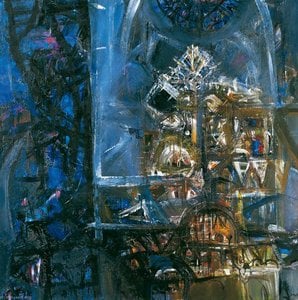
Attack
Tehnika reprodukcije
Velikost reprodukcije
-


Skupna cena
€ 229
Sorodna umetniška dela


Biografija umetnika
Sir Robin Philipson: A Visionary of Scottish Colour and Dramatic Intensity
Born Robert James Philipson in Broughton-in-Furness, Lancashire, in 1916, Sir Robin Philipson’s artistic journey led him from the industrial landscapes of his childhood to become one of Scotland's most distinctive and enduring figures in 20th-century art. His career, spanning over seven decades, was marked by a restless exploration of subject matter – from intimate domestic scenes and evocative portraits to monumental depictions of cockfights and the grandeur of cathedral interiors – all rendered with a bold palette, dynamic brushwork, and a distinctive impasto technique that imbued his canvases with palpable energy.
Philipson’s early artistic education began at Dumfries Academy before he enrolled at Edinburgh College of Art in 1936. This formative period exposed him to the influences of the Edinburgh School, a group of Scottish artists who sought to capture the spirit and character of their homeland through vibrant colour and expressive brushwork. Key figures within this movement included William Gillies and John Maxwell, whose work profoundly shaped Philipson’s approach to composition, colour theory, and the depiction of landscape.
The Rise of a Distinctive Style
Following World War II, during which he served with the King's Own Scottish Borderers in Burma, Philipson returned to Edinburgh and began to develop his own unique artistic voice. He initially focused on landscapes and still lifes, but it was his fascination with cockfights – a deeply ingrained part of Scottish culture – that truly propelled him to international recognition. Beginning in the early 1950s, he created a series of powerful paintings depicting these brutal yet captivating spectacles, capturing not just the physical action but also the raw emotion and underlying drama of the event. These works were characterized by their intense colours, dynamic compositions, and a willingness to confront uncomfortable truths about human behaviour.
Beyond cockfights, Philipson’s artistic interests expanded to encompass a wide range of subjects, including portraits, religious scenes (particularly crucifixions), and architectural interiors – notably the magnificent cathedral at Amiens in France. His depictions of these spaces were not merely observational; they sought to convey a sense of awe and spiritual intensity through the manipulation of light, colour, and perspective. The influence of Impressionist masters like Monet is evident in his treatment of light and atmosphere, particularly in his studies of cathedrals.
Technique and Innovation
Philipson’s artistic technique was as distinctive as his subject matter. He employed a liberal use of impasto – applying paint thickly to the canvas – creating a textured surface that seemed to vibrate with energy. His colour palette was bold and often unconventional, utilizing vibrant hues alongside darker tones to create dramatic contrasts and heighten emotional impact. He frequently worked in oil on canvas, but also experimented with other media, including watercolour and gouache. He was known for his willingness to break from traditional artistic conventions, embracing a more expressive and gestural approach to painting.
Recognition and Legacy
Throughout his career, Philipson received numerous accolades recognizing his contributions to Scottish art. He was elected to the Royal Scottish Academy in 1962, President of the Royal Scottish Academy from 1973 to 1983, and a Fellow of the Royal Society of Edinburgh in 1978. He also held positions on various committees and commissions, including the British Council’s Scottish Advisory Committee. His work has been exhibited extensively throughout Scotland and internationally, and is now housed in major public collections across the UK and beyond. Sir Robin Philipson died in Edinburgh in 1992, leaving behind a rich and influential body of work that continues to captivate viewers with its dramatic intensity, vibrant colours, and profound insights into the human condition.
Key Works
- Crowing Cock (1954) – A seminal example of his cockfight series, capturing the frenetic energy and primal drama of the event.
- Cathedral (1960) – An evocative depiction of Amiens Cathedral, showcasing Philipson’s masterful use of light and colour to convey a sense of grandeur and spiritual awe.
- A Family Dispute (1948) - A powerful expressionist painting capturing raw emotion and drama.
Sir Robin Philipson
1916 - 1992
Ključne informacije
- Full Name: Robin James Philipson
- Nationality: Scottish
- Date Of Birth: 1916
- Date Of Death: 1992
- Place Of Birth: Broughton-in-Furness, UK
- Notable Artworks:
- Cathedral
- Crowing Cock
- A Family Dispute
- Artistic Movement Or Style: Expressionism, Scottish School
- Artists Who Influenced This Artist:
- Oskar Kokoschka
- Gillies
- Maxwell
- Artists Or Movements Influenced By This Artist:
- Monet
- Kokoschka