


 Predogled v realnem okolju
 Pošlji
 Deli
Deli
 Podrobnosti o delu
 Priročnik

 Prenesi sliko
 Podobni izdelki
 Rentgenski posnetek
 Predvajaj diaporama
 Statistika
Les mendiants


 Preberi več
Ročno izdelana oljna reprodukcija
Ročno slikano olje na platnu v vaši izbiri velikosti in okvirja, izdelano po naročilu naših umetnikov. ( Preklop na tiskanine Preklop na digitalno sliko)




P118B €10

P118H €10

P118W €10

P438Z €10

P508JH €12

P508YH €12

P805H €10

P805Z €10

P919BZ €10

P919G €10

P919XJ €10

P959ZH €10

P968JZ €12

W106C €8

W218G €10

W218JH €8

W218Y €10

W307PJ €10

W316G €10

W316PJ €8

W316Y €10

W398PJ €8

W4111J €10

W500HY €15

W500JH €15

W692G €12

W849H €8

W940BG €15

W953PJ €8




Izberite eno od naših vnaprej določenih velikosti, ki ustrezajo prvotnim proporcijam umetničkega dela.

Vnesite širino in višino, ki jih potrebujete, da se slika prilega vašemu okviru ali steni. Ker je delo ročno slikano, lahko umetnik pri različnih oblikih slik pri robovih doda malo več barve ali pa jih malo odreže — izberite sami. Pred začetkom slikanja vam pošljemo digitalni predogled za potrditev. Slika, prikazana na tej strani, ni končni rezultat — le predogled prikazuje dejansko podobo.
Po oddaji naročila bo ekipa ArtsDot.com stranki po e-pošti poslala navodila in predogled digitalnega predogleda.
Mednarodna dostava () v 3/4 tednih namesto običajnih 5 tednov. (28 oktober). Brez kompromisov pri kakovosti.

Brezplačna ekspresna dostava po vsem svetu

Visokokakovostno laneno platno

Popolno zavarovanje pošiljke

Garancija povračila carine in uvoznih davkov

Garancija popolnega barvnega ujemanja

100-dnevna politika vračil (le v primeru okvar)

Garancija 100% povračila denarja

Popust pri večjem naročilu
 Možnost stekla je na voljo le za velikosti pod 110 cm

Les mendiants
Tehnik reprodukcije
Velikost reprodukcije
-


Skupna cena
€ 386
A Window into 17th-Century France: The Stark Realism of *Les Mendiants*
Sébastien Bourdon’s *Les Mendiants*, painted around 1645, isn't merely a depiction of beggars; it’s a meticulously crafted tableau that plunges the viewer directly into the heart of 17th-century France – a nation grappling with poverty, social injustice, and the lingering scars of war. This genre painting, housed within the hallowed halls of the Louvre Museum in Paris, transcends simple observation to become a poignant commentary on humanity’s vulnerability and the complexities of charity. Bourdon, deeply influenced by the artistic currents flowing from Rome – particularly the dramatic lighting and emotive storytelling championed by Caravaggio – masterfully utilizes composition, color, and line to evoke a powerful sense of empathy and social critique.
The scene unfolds within the ruins of an ancient structure, a deliberate choice that immediately establishes a mood of decay and transience. A group of mendicants—men, women, and children – are rendered with remarkable realism, their faces etched with hardship and desperation. They’re not idealized figures; Bourdon presents them as individuals, each bearing the marks of poverty and suffering. A subtle yet crucial element is introduced by a wheelbarrow positioned strategically in the foreground, hinting at labor, perhaps scavenging for scraps or transporting meager possessions – a visual representation of their struggle for survival. The composition itself is carefully balanced, drawing the eye towards the central archway that frames the crumbling backdrop, creating a sense of immediacy and inviting the viewer to contemplate the scene’s gravity.
The Language of Light and Shadow: Bourdon's Baroque Technique
Bourdon’s technical prowess is immediately apparent in his masterful manipulation of light and shadow. The painting is dominated by a diffused, natural light emanating from the left side, casting soft shadows that sculpt the figures and highlight certain areas of the ruins. This chiaroscuro effect – a hallmark of Baroque art – not only adds depth and volume but also intensifies the emotional impact of the scene. The muted earth tones—browns, grays, and creams—are skillfully blended to create a sense of atmospheric perspective, with distant elements appearing paler and less distinct. The brushstrokes are relatively smooth, contributing to a realistic representation of textures – from the rough fabrics of the beggars’ clothing to the weathered surfaces of the stone.
- Oil on Canvas: Bourdon's choice of medium—oil paint on canvas—allowed for rich color saturation and subtle gradations in tone, essential for achieving the painting’s nuanced realism.
- Linear Perspective: The use of linear perspective creates a convincing illusion of depth, drawing the viewer into the scene and emphasizing the vastness of the ruined landscape.
- Atmospheric Perspective: The subtle blurring of distant elements reinforces the sense of spatial recession and adds to the painting’s overall atmosphere.
Symbolism and Social Commentary
Beyond its technical brilliance, *Les Mendiants* is laden with symbolic meaning. The ruins themselves represent decay, loss, and the passage of time – a potent metaphor for the fragility of human existence. The mendicants, as figures soliciting alms, evoke feelings of pity, compassion, and social concern. Their presence serves as a stark reminder of the inequalities inherent in society and the responsibility of the wealthy to care for the less fortunate. The inclusion of the wheelbarrow subtly suggests the cycle of poverty and the constant struggle for survival. The painting’s overall mood is somber but not overtly tragic; it invites reflection rather than despair, prompting viewers to consider their own role in addressing social injustice.
A Legacy of Dramatic Realism
Bourdon's *Les Mendiants* stands as a pivotal work within the tradition of 17th-century Dutch genre painting and a significant precursor to later artistic movements. Its influence can be seen in works by Francisco Goya, who was known to have owned a copy of this painting. The scene’s stark realism, coupled with its powerful emotional resonance, cemented Bourdon's reputation as one of the most accomplished artists of his time – an artist capable of capturing not only the outward appearance of reality but also the underlying complexities of human experience.
Vprašanja in odgovori
Ali je "Les mendiants" v celotnosti bolj svetel ali bolj temen?
"Les mendiants" avtorja Sébastien Bourdon je zabeležen z jasnostjo balanced in luminanco Soft Shadow.
V kateri umetniški smer pripadajo "Les mendiants" avtorja Sébastien Bourdon?
"Les mendiants" avtorja Sébastien Bourdon pripada gibanju Baroque Genre Painting. To gibanje zagotavlja slogovni kontekst dela.
Kje in za kakšen namen se priporoča "Les mendiants"?
Za Statement se priporoča "Les mendiants", priporočena prostorina pa je Living Room.
Sorodna umetniška dela


Biografija umetnika
Mojster svetlobe in vsestranskosti: Življenje Sébastiena Bourdona
Sébastien Bourdon (1616–1671) ostaja ena najbolj očarljivih in večplastnih postav francoskega baroka sedemnajstega stoletja. Rod se je v Montpellieru v družino protestantskih umetnikov, njegovo zgodnje življenje pa so oblikovale živahne, a pogosto turbulentne umetniške tradicije južne Francije. Njegova pot od mladega učenca do temeljnega člana Académie Royale de Peinture et de Sculpture je spomenik globokemu, nemirnemu intelektu in nepreverljivim sposobnostim vpijavanja stilskih tokov Evrope. Po zgodnji izobraževanji v Parizu je Bourdonova pot vodila skozi Bordeaux in Toulouse, preden je dosegel duhovno in umetniško srce kontinenta: Rim. Prav v Italiji se je njegov talent dejansko razžaril, ko se je potopil v dela mojstrov, kot so Caravaggio, Nicolas Poussin in Claude Lorrain. To obdobje intenzivnega študija mu je omogočilo razvoj edinstvenega vizualnega jezika – tistega, ki se je lahko premikalo med suroim, dramatičnim realizmom Caravaggijevcev in svetlobno, klasično eleganco venetske šole.Razvoj sloga in tehnike
Tisto, kar Bourdonovo delo resnično loči od drugih, je njegova izjemna stilna tekočnost, lastnost, ki je pričasnikom včasih vzbudila både občudovanje in kritiko. Njegov razvoj so zaznala serije preobrazb through srečanj z različnimi evropskimi tradicijo. Po ključnem obisku v Veneciji je njegova paleta doživela globoko metamorfozo; ostre kontrasti njegove zgodnje izobraževanja so ustrupili mesto bogatejšemu, bolj atmosferičnemu uporabi barv, navdihnjenim z venetskimi mojstri. Ta evolucija mu je omogočila spretno navigiranje med različnimi žanri. V portretni sliki je pogosto sprejemal Rubensian pristop ali je raje izbiral intimne kompozicije do prsi, ki so zajemale psihološko globino in eleganco njegovih motivov, kot je švedska plemenita dama v portretu Grofina Ebba Sparre. Nasprotno pa so njegova religiozna dela uporabljala dramatičen chiaroscuro za vzbujanje duhovnega spoštovanja, kar je najbolj očitno v njegovem monumentalnem mojstretu, Krzyžovanje sv. Petra, ustvarjenem za katedralo Notre Dame.Dediščina in zgodovinski pomen
Poza njegove individualne platna je Bourdon igral ključno vlogo pri institucionalizaciji francijske umetnosti. Kot soegaoblikovalec Kraljeve akademije leta 1648 je pomagal vzpostaviti standarde odličnosti, ki bodo francijsko slikarstvo definiral generacije. Njegovo kariero je zaznala tudi izjemna širina delovanja; ugled vrhunskega portretista ga je vodil na dvor kraljice Christine Švedske, kjer je služil kot dvorski slikar in v Stockholmu prinesel sofisticirano estetiko Pariza in Rima. Ne glede na to, ali je prikazoval grozljivo napetost v delu Mojsije in bronasta kačnica ali seren grandioznost klasičnih pokrajin, Bourdonovo del uteleša dvojni duh baroka: intenzivno čustveno dramo človeške usode in uravnoteženo, intelektualno težnjo po klasični lepoti. Njegova sposobnost sinteze naturalističnih tradicij Francije z monumentalnimi slogi Italije mu zagotavlja trajno mesto v panteonu evropske umetnostne zgodovine.
Sébastien Bourdon
1616 - 1671 , Francija
Hitri podatki
- Artistic Movement Or Style: Barok
- Artists Or Movements Influenced By This Artist: ['Francoska barokna umetnost']
- Artists Who Influenced This Artist:
- Nicolas Poussin
- Claude Lorrain
- Caravaggio
- Date Of Birth: 2. februar 1616
- Date Of Death: 8. maj 1671
- Full Name: Sébastien Bourdon
- Nationality: Francoz
- Notable Artworks:
- Krzyžanje sv. Petra
- Spust z križa
- Place Of Birth: Montpellier, Francija
Sorodni članki
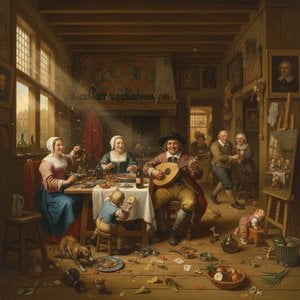
Jan Steen: A Master of Dutch Genre Painting & the Golden Age
Explore the life & art of Jan Steen, a leading Dutch Golden Age painter renowned for his humorous genre scenes & insightful social commentary. Discover his techniques, legacy, and collecting tips.

Genre Painting: A Window into Daily Life & Societal Values of the Dutch Golden Age
Explore the captivating world of Dutch Golden Age genre painting! Discover realistic depictions of daily life, masterful artists like Ostade & Metsu, and hidden symbolism. Learn about this influential art movement with ArtsDot.

Golden Age Reflections: Dutch Baroque Painting & Cultural Innovation
Explore the Dutch Golden Age of painting! Discover key artists like Vermeer & ter Borch, their innovative techniques, and the rich cultural context behind these Baroque masterpieces. Learn about collecting & appreciating this iconic art period.

Illuminating Innovation: Exploring the Dutch Golden Age of Painting
Explore the Dutch Golden Age of painting with ArtsDot. Discover Rembrandt, Vermeer & other Masters. Learn about key characteristics, iconic artworks, and lasting influence. Expert insights for collectors & enthusiasts.

Dutch Baroque Masters: 10 Paintings That Shaped an Era | ArtsDot
Journey through the Golden Age with our guide to the Top 10 Dutch Baroque masterpieces! Explore iconic paintings by Rembrandt, Vermeer & Frans Hals. Find museum-quality art reproductions and elevate your home decor at ArtsDot.com.