- Domov

- Reprodukcija oljne slike
- Roy Lichtenstein
- Torped los
 Kupi tiskanino Kupi digitalno sliko
 Pošlji
 Deli
Deli
 Details
 Dodaj v priljubljene

 Prenesi
 Podobni izdelki
 X-Ray
X-Ray
 Predvajaj diaporama
Torped los


Ročno izdelana oljna reprodukcija
Ročno slikano olje na platnu v vaši izbiri velikosti in okvirja, izdelano po naročilu naših umetnikov.




P118B $10

P118H $10

P118W $10

P438Z $10

P508JH $12

P508YH $12

P805H $10

P805Z $10

P919BZ $10

P919G $10

P919XJ $10

P959ZH $10

P968JZ $12

W106C $8

W218G $10

W218JH $8

W218Y $10

W307PJ $10

W316G $10

W316PJ $8

W316Y $10

W398PJ $8

W4111J $10

W500HY $15

W500JH $15

W692G $12

W849H $8

W940BG $15

W953PJ $8




 Preberi več
Izberite eno od naših vnaprej določenih velikosti, ki ustrezajo prvotnim proporcijam umetničkega dela.

Svoje dimenzije lahko vnesete tako, da se prilagodite določenemu okvirju ali prostoru. Če izbrana velikost ne ustreza razmerjem originalne slike, bomo umetniško delo obrezali ali sliko dopolnili z dodatnimi ročno naslikanimi elementi. Pred začetkom proizvodnje vam bo poslan digitalni osnutek v odobritev.
Upoštevajte, da predogled na zaslonu ne odraža dejanskega obrezovanja ali podaljšanja. Le osnutek bo natančno prikazal končno kompozicijo.
Čeprav so na voljo velikosti po meri, priporočamo izbiro dimenzije s preddefiniranega seznama, da ohranimo originalne razmere.
Po oddaji naročila bo ekipa ArtsDot.com stranki po e-pošti poslala navodila in predogled digitalnega predogleda.
Svetska dostava () za 3/4 nedelje umesto uobičajenih 5 nedelja. (1 julij). Bez kompromisa po pitanju kvaliteta.

Brezplačna ekspresna dostava po vsem svetu

Visokokakovostno laneno platno

Popolno zavarovanje pošiljke

Garancija povračila carine in uvoznih davkov

Garancija popolnega ujemanja barv

60-dnevna politika vračanja (le v primeru napak)

Garancija 100% povračila denarja

Popust pri večjem naročilu
 Možnost stekla je na voljo le za velikosti pod 110 cm

Torped los
Tehnika reprodukcije
Velikost reprodukcije
-


Skupna končna cena
-
Opis umetninine
Torpeda v Globini Popa: Roy Lichtenstein in Drama Pomorskega Konflikta
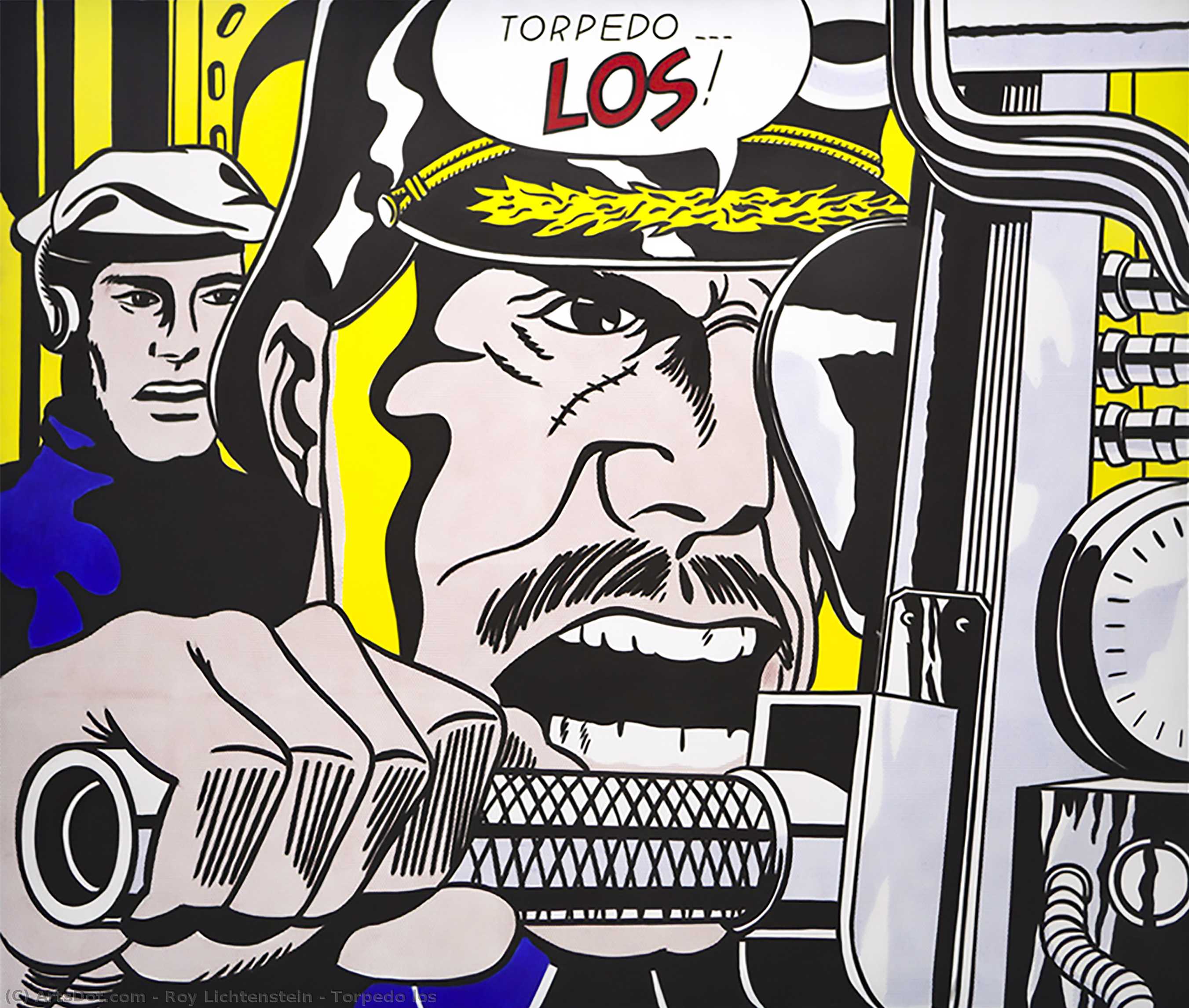
Roy Lichtensteinovo delo "Torpedo...Los!" iz leta 1963 ni le slika, temveč dinamičen vpogled v ameriško popovsko umetnost in kulturo šestdesetih let. Ta ikonična kompozicija, ki združuje elemente stripovske estetike z dramatično prizoritvijo pomorskega boja, nas potaplja v svet napetosti, heroizma in potrošništva. Lichtenstein je s tem delom ustvaril vizualno močan prikaz dogajanja, ki se odvija pod površjem morja, hkrati pa ga je obdelal z distanco in tehnično natančnostjo, značilnimi za njegov slog.
Stripovski Realizem: Tehnika in Estetika Lichtensteinovega Pristopa
Lichtensteinova tehnika je osrednja v razumevanju "Torpedo...Los!". Uporaba oljne barve na platnu, skupaj s specifičnimi elementi stripovske grafike – debelimi črnimi obrisi, intenzivnimi primarnimi barvami in značilnimi pikami Ben-Day – ustvarja edinstven vizualni učinek. Te pike, ki so bile prvotno namenjene simulaciji tiska v komercialnih publikacijah, Lichtensteinu omogočajo ustvarjanje teksture in globine na ploskavi slikarske površine. Njegov pristop ni le posnemanje stripovskega sloga; je kritična analiza in reinterpretacija tega vizualnega jezika v kontekstu fine umetnosti. Govorni balon z ukazom "Torpedo...Los!" ne samo dodaja dramatično napetost, ampak tudi poudarja element teatralnosti in preprostosti, ki sta značilni za stripovsko naracijo.
Svetla Epoha: Zgodovinski Kontekst in Kulturne Anksioznosti
Ustvarjeno v času hladne vojne, "Torpedo...Los!" odraža prevladujoče kulturne anksioznosti tistega časa. Strah pred jedrskim uničenjem in stalna grožnja vojaškega konflikta sta bila tesno povezana s popularno kulturo, zlasti s stripovskimi zgodbami o vojni in herojskih podvigih. Lichtenstein je izkoristil te teme, da bi raziskal kompleksnost človeške narave v časih krize. Delo ni le prikaz pomorskega boja; je tudi komentar na ameriško kulturo šestdesetih let, ki je bila zaznamovana s potrošništvom, komercializacijo in naraščajočim vplivom medijev.
Simbolika Napetosti: Pomen Likov in Elementov
Lichtensteinovo delo je bogato z simboliko. Podobje podmorničarskega kaplana, s poškodbo na licu in intenzivnim pogledom, uteleša klasičnega junaka iz vojaških stripov. Njegova drža izraža odločnost in pogum, hkrati pa tudi ranljivost v soočenju z nevidno grožnjo. Ukaz "Torpedo...Los!" je simbol neizogibne usode in napetosti, ki se nabira pred dramatičnim dogodkom. Celotna kompozicija izžareva energijo in dinamičnost, kar poudarja občutek nenehne grožnje in pripravljenosti na akcijo. Barve so intenzivne in kontrastne, kar še pospešuje doživljanje napetosti in dramatičnosti.
Čustveni Odmev: Vpliv "Torpedo...Los!"
"Torpedo...Los!" ne le prikazuje dogodka; ustvarja čustveno izkušnjo. Gledalec je soočen s pogledu podmorničarskega kaplana, ki izraža strah, odločnost in pogum hkrati. Delo nas spominja na kompleksnost človeške narave v časih vojne in krize, hkrati pa nas tudi izzove, da razmislimo o vplivu medijev in popularne kulture na naše dojemanje sveta. Lichtenstein je s tem delom ustvaril umetnino, ki še danes odmeva z močjo in relevantnostjo.
Sorodna umetniška dela


Biografija umetnika
The Genesis of a Pop Visionary
Roy Fox Lichtenstein, born in the vibrant metropolis of New York City on October 27, 1923, indelibly altered the landscape of twentieth-century art. Emerging as a pivotal figure within the Pop Art movement, Lichtenstein didn’t simply reflect his era; he actively interrogated it, transforming commonplace imagery into compelling artistic statements. His upbringing in an upper-middle-class Jewish family fostered both a cultural awareness and an early artistic inclination. Childhood exposure to museums and concerts, coupled with a deep appreciation for jazz music, laid the groundwork for a creative spirit that would challenge conventional notions of fine art. Though initially drawn to realistic drawing and painting during his formative years, Lichtenstein’s formal training commenced at the Art Students League in 1939 under Reginald Marsh, followed by studies at Ohio State University – interrupted briefly by wartime service in the Army. These experiences provided a robust technical foundation that would later be brilliantly re-contextualized through the lens of mass culture and commercial aesthetics. The seeds of his signature style weren’t sown within the hallowed halls of artistic tradition but rather in the often-overlooked world of everyday imagery, particularly comic books and advertising.Early Influences and Artistic Exploration
Lichtenstein's formative years witnessed a fascination with Abstract Expressionism, mirroring the dominant aesthetic currents of postwar America. Artists like Willem de Kooning and Jackson Pollock captivated him with their bold gestures and expressive brushwork—though Lichtenstein swiftly recognized that these approaches didn’t fully capture the essence of his artistic vision. He honed his drawing skills diligently at the Art Students League, absorbing techniques from Reginald Marsh who championed a more direct engagement with form and materiality. This grounding in traditional drawing proved invaluable as he transitioned towards exploring alternative stylistic avenues. His enrollment at Ohio State University offered further opportunities for experimentation, albeit briefly curtailed by military duty during World War II. These formative experiences instilled within him a disciplined artistic sensibility—a crucial element that would underpin his subsequent groundbreaking innovations.The Birth of Pop Art: Comic Books and Appropriation
A watershed moment arrived in 1961 with Lichtenstein’s seminal work, *Look Mickey*, marking the genesis of Pop Art as he understood it. Inspired by Disney comics—specifically *Mickey Mouse Clubhouse*—he embarked on a daring act of artistic appropriation: meticulously recreating comic strip scenes using techniques mirroring commercial printing processes. This wasn't mere imitation; it was a deliberate provocation against established artistic hierarchies, elevating commonplace imagery to the status of fine art. He didn’t simply copy panels from comics; he painstakingly recreated them with meticulous attention to detail—employing Ben-Day dots—a halftone printing technique prevalent in comic books and advertising. This appropriation wasn't driven by nostalgia or sentimentality but rather by a critical examination of consumer culture and its pervasive influence on American society. Lichtenstein’s stylistic breakthrough stemmed from recognizing the expressive potential inherent within mass media—a realm previously deemed antithetical to artistic seriousness.The Language of Ben-Day Dots and Bold Lines
Lichtenstein's artistic vocabulary is instantly recognizable: bold, primary colors, thick black outlines, and most notably, Ben-Day dots – a halftone printing technique borrowed directly from the mechanical reproduction of comic books. These dots weren’t merely decorative; they were integral to his conceptual framework—representing the very process of mass production and challenging the traditional emphasis on the artist's hand. His paintings often enlarged details from comic strips to monumental scale, forcing viewers to confront the aesthetic qualities of an art form typically dismissed as trivial. Works like *Whaam!* (1963), *Drowning Girl* (1963), and *Oh, Jeff…I Love You, Too…But…* (1964) became iconic representations of Pop Art—capturing the anxieties and desires of a rapidly changing consumer culture. These weren’t simply depictions of comic book scenes; they were commentaries on themes of war, romance, and societal expectations—filtered through the visual language of mass media. He aimed to strip away any pretense of artistic subjectivity—presenting his work as objective reflections of American society—a mirror held up to its own manufactured reality. The deliberate flatness and lack of painterly gesture further emphasized this detachment—mimicking the impersonal nature of commercial printing.Legacy and Enduring Influence
Lichtenstein’s influence extends far beyond the realm of painting—resonating across disciplines like graphic design and illustration. His innovative use of Ben-Day dots and appropriation fundamentally reshaped artistic practice—inspiring generations of artists to explore themes of consumerism, media saturation, and cultural identity. He challenged conventional notions of originality and authorship—forcing a reconsideration of what constitutes “art” itself—and solidified his position as one of the most commercially successful American artists of all time with the sale of *Masterpiece* in 2017 for $165 million. Yet, Lichtenstein’s enduring legacy transcends monetary valuation—remaining as relevant and provocative today as it was during the height of Pop Art—a testament to his visionary artistic approach. His art continues to inspire critical dialogue about the relationship between art, culture, and commerce—serving as a powerful reminder that beauty can be found in unexpected places—and that artistic innovation often arises from embracing unconventional methodologies.- Major Achievements: Pioneered Pop Art style; achieved international recognition with groundbreaking exhibitions.
- Notable Works: *Whaam!*, *Drowning Girl*, *Oh, Jeff…I Love You, Too…But…*, *Masterpiece*.
- Teaching Career: Influenced aspiring artists at SUNY Oswego and Rutgers University.

Roy Lichtenstein
1923 - 1997 , ZDA
Hitri podatki
- Artistic Movement Or Style: Pop Art
- Artists Who Influenced This Artist:
- Allan Kaprow
- Reginald Marsh
- Date Of Birth: 27. oktober 1923
- Date Of Death: 29. september 1997
- Full Name: Roy Fox Lichtenstein
- Nationality: Američan
- Notable Artworks:
- Whaam!
- Drowning Girl
- Oh, Jeff…I Love You, Too…But…
- Place Of Birth: New York City, ZDA
Sorodni članki

Povišanje Interierjev: Vodnik za Sofisticirano Kuriranje Pop Umetnosti in Izražanje Zrele Geekske Strasti
Odkrijte svet pop art umetnosti! Vodnik za sofisticirano kuriranje slik, personalizacijo in integracijo v luksuzni interier. Izrazite svojo strast z unikatnimi deli – od reprodukcij do portretov po naročilu.


Challenging Conventions: Pop Art's Origins, Evolution & Enduring Legacy
Explore the fascinating history of Pop Art, from its rebellious origins to its enduring influence on contemporary artists. Discover key figures like Warhol & Lichtenstein and learn about collecting this iconic movement.

From Fan Favorite to Fine Art: A Comprehensive Guide to Commissioning Custom Pop Culture Paintings
Transform your fandom into stunning art! Our guide covers commissioning custom pop culture paintings – from artist selection & copyright to care tips. Get expert advice and create a unique masterpiece today!
Od Platna do Celuloida: Raziskovanje Vpliva Filma in Stripov na Vizualno Umetnost
Raziskujte vpliv filma in stripov na vizualno umetnost! Odkrijte ikonografijo, sloge in mojstrska dela. ArtsDot.com ponuja reprodukcije slik po naročilu, posvetovalce in appraisal.

10 Pop Art Mojstrovin, ki so spremenile svet umetnosti | ArtsDot
Odkrijte 10 ikoničnih pop art mojstrovin! Preberite zgodbe Andyja Warhola, Roya Lichtensteina in drugih umetnikov. Reprodukcije slik za vaš dom na ArtsDot.com – navdih & kakovost.