

- 123.0 x 83.0 cm


The picture follows your choices: , .
Biografija umetnika
Robert Scott Lauder (1803-1869) was a Scottish historical painter & Royal Scottish Academy member known for scenes inspired by Sir Walter Scott's novels, portraits, and genre works. Discover his life & art!
 Preberi več
Ročno izdelana oljna reprodukcija
Ročno slikano olje na platnu v vaši izbiri velikosti in okvirja, izdelano po naročilu naših umetnikov. ( Preklop na tiskanine Preklop na digitalno sliko)
More about this painting
 Predogled v realnem okolju
 Pošlji
 Deli
Deli
 Podrobnosti o delu
 Priročnik

 Prenesi sliko
 Podobni izdelki
 Rentgenski posnetek
 Predvajaj diaporama
 Q&A
Q&A Statistika
Order your painting in four simple steps
Take your time. You can change any answer; the price in your order card follows each choice.
1 Step one of four
Which size would you like?
These sizes keep the proportions of the original painting. The drawing shows your choice on a wall, above a two-metre sofa.
Or give your own measurements
Izberite eno od naših vnaprej določenih velikosti, ki ustrezajo prvotnim proporcijam umetničkega dela.

Vnesite širino in višino, ki jih potrebujete, da se slika prilega vašemu okviru ali steni. Ker je delo ročno slikano, lahko umetnik pri različnih oblikih slik pri robovih doda malo več barve ali pa jih malo odreže — izberite sami. Pred začetkom slikanja vam pošljemo digitalni predogled za potrditev. Slika, prikazana na tej strani, ni končni rezultat — le predogled prikazuje dejansko podobo.
2 Step two of four
How should it be prepared: rolled, stretched or framed?
The prices below are for the size you chose in step one.
Choose the edges of the stretched canvas
Choose your frame

White €1

Blurside €1

Extended €1

P118B €10

P118H €10

P118W €10

P438Z €10

P508JH €12

P508YH €12

P805H €10

P805Z €10

P919BZ €10

P919G €10

P919XJ €10

P959ZH €10

P968JZ €12

W106C €8

W218G €10

W218JH €8

W218Y €10

W307PJ €10

W316G €10

W316PJ €8

W316Y €10

W398PJ €8

W4111J €10

W500HY €15

W500JH €15

W692G €12

W849H €8

W940BG €15

W953PJ €8

H24-GOLD €30

H24-SILVER €30

H36-GOLD €45

H36-SILVER €45
V okviru
Moulding: . Overall size with the frame: .
3 Step three of four
Would you like anything changed in the painting?
Most people answer no. Because each painting is made by hand, our artist can also adapt it for you.
After order, ArtsDot.com team will email client for instructions and provide a mockup preview
4 Step four of four
A few finishing options
All of them are optional. The answers already selected cost nothing extra.
Who paints it?
Mednarodna dostava () v 3/4 tednih namesto običajnih 5 tednov. (2 november). Brez kompromisov pri kakovosti.
A nameplate, as in a museum?
Podrobnosti o gravirani bronasti plošči
This elegant plaque features the artist's name and the title of the artwork, finely engraved for a timeless presentation.
It is made from bronze with a refined, elegant finish. The text is precisely laser-engraved for a sharp and permanent result. Measuring 9x2 cm, the plaque is compact yet easy to read. It's built to be durable and scratch-resistant, offering a professional, museum-quality look. Mounting is simple thanks to the included adhesive backing.
Podrobnosti o transparentni akrilni plošči
The plaque includes essential engraved details such as the artist's name, the title of the artwork, the date it was created, the type of media used-like oil on canvas or watercolor-a brief description of the piece, and a QR code that links to the complete artwork information.
It is crafted from clear acrylic, offering a sleek, modern appearance. The text is UV-engraved in black to ensure strong visual contrast. With a size of 10x15 cm, it ensures optimal readability. It comes equipped with two metal hooks for secure wall mounting. The plaque is designed to be weather-resistant, making it suitable for various environments, and it includes interactive features that work seamlessly with smartphone scanning.
Podrobnosti o črni akrilni plošči
This elegant plaque includes engraved information such as the artist's name, the title of the artwork, the date it was created, the type of media used (like oil on canvas or watercolor), a short description of the artwork, and a QR code for quick access to more information.
The plaque itself is made from refined black acrylic with a premium finish. The text is laser-engraved in white for high contrast and readability. Its size is 10x15 cm, designed to be easy to read. It comes with two metal hooks for professional mounting. The design is sleek and fits any interior style. It is also weather-resistant and durable, with built-in digital integration for mobile compatibility.
A protective varnish?
When do you need it?
✓ Check and order
Your painting, as you ordered it

The Crucifixion (study)
Tehnik reprodukcije
Velikost reprodukcije
-

Izbor vrhunskih umetnikov
Več podrobnosti, dovršenosti in dodatnega časa za izdelavo
-

Okvir za reprodukcijo
-
-
Za umetniška dela ali reprodukcije, ki so po katerikoli strani širše od 105 cm (približno 41 palč), bo okvir poslan v razstavljeni obliki kot komplet. Ta metoda zagotavlja varno dostavo in preprečuje poškodbe med transportom.
Potrebna je profesionalna montaža – to ni izdelek za DIY izdelavo.
Komplet mora sestaviti in platno napeti izkušen profesionalni okvirjest, pri čemer bo uporabil lepil za les (ni vključeno), klešče za napetje platna in spone, da bi ohranil pravokotnost letev med sušenjem lepila. Nepravilna montaža ali neenakomerna napetost platna lahko trajno poškoduje umetniško del in
 Za umetniška dela ali reprodukcije, ki so po katerikoli strani širše od 105 cm (približno 41 palč), bo okvir poslan v razstavljeni obliki kot komplet. Ta metoda zagotavlja varno dostavo in preprečuje poškodbe med transportom.
Vključene so vse letve iz masivnega lesa, natančno izrezane po meri.
Montaža poteka s priloženimi vijaki, vendar je za kotiče potrebna lepil za les, ki ga ni v kompletu in ga mora zagotoviti vaš okvirnik.
Za uporabo so potrebna profesionalna orodja, ki niso vključena: klešče za napinjanje platna (napetnik) in sponke za ohranjanje pravokotnosti letev med sušenjem lepila.
Pomembno:
Za stike v kotih potrebujete lepil za les, nosilce je treba z

Značka z imenom
-
-

Zaščitni lak
Sijajni lak (poudarja barve ter zagotavlja zaščito pred svetlobo in vlago)
-

Prilagodi svoje umetniško delo
Primeri možnih prilagoditev: zamenjava obraza s fotografijo kupca; dodajanje hišnega ljubljenčka (npr. zamenjava mačke s psom); vključitev skritega sporočila v ozadje; sprememba krajšave ali elementov ozadja.
-

Hitra dostava
Mednarodna dostava () v 3/4 tednih namesto običajnih 5 tednov. (2 november). Brez kompromisov pri kakovosti.
-
Hitra dostava
Globalna dostava () v 5 tednih. (9 november).
Vključeno v ceno
Skupna cena
€ 234
Možnost stekla je na voljo le za velikosti pod 110 cm
Included with every order
- Brezplačna ekspresna dostava po vsem svetu
- Visokokakovostno laneno platno
- Popolno zavarovanje pošiljke
- Garancija povračila carine in uvoznih davkov
- Garancija popolnega barvnega ujemanja
- 100-dnevna politika vračil (le v primeru okvar)
- Garancija 100% povračila denarja
- Popust pri večjem naročilu


Sorodna umetniška dela


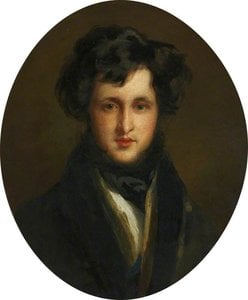
Robert Scott Lauder
1803 - 1869
Biografija umetnika
The Romantic Vision of Robert Scott Lauder
In the heart of nineteenth-century Edinburgh, a period defined by a profound reverence for heritage and the sweeping emotions of the Romantic movement, Robert Scott Lauder emerged as a vital voice in Scottish art. Born on June 25, 1803, at Silvermills, Lauder was the son of John Lauder, a respected proprietor of a local tannery. His upbringing in a prominent Edinburgh family provided him with a foundation of stability and cultural access that would eventually propel him toward the heights of academic recognition. While his early life was rooted in the industrious landscape of Scotland, his artistic soul was destined for the grander stages of Europe, seeking to translate the dramatic literary spirit of his era into enduring visual narratives.
Lauder’s intellectual formation began at the Royal High School, but it was his subsequent travels that truly refined his aesthetic sensibilities. Seeking to master the complexities of light and form, he immersed himself in the great artistic hubs of the continent, including Rome, Florence, Bologna, Venice, and Munich. These extended periods of study abroad allowed him to absorb the classical traditions of Italy and the rigorous academic techniques of Germany, blending them with a uniquely Scottish sensibility. This cosmopolitan education prepared him for his pivotal moment in 1830, when he was elected as one of the original members of the Royal Scottish Academy, a distinction that solidified his status among the intellectual and artistic elite of his nation.
Narratives of Legend and Literature
The true essence of Lauder’s work lies in its deep, symbiotic relationship with the literature of Sir Walter Scott. As the novelist’s tales of chivalry, tragedy, and national identity captured the Victorian imagination, Lauder sought to give these words a physical, painterly presence. He did not merely illustrate stories; he attempted to capture the very atmosphere of Scott's romanticized history. His canvases often serve as windows into a bygone era, where the boundaries between historical fact and poetic myth become beautifully blurred.
His oeuvre is marked by several monumental achievements that showcase his ability to handle grand-scale drama:
- The Poet: A poignant portrait of Sir Walter Scott himself, which transcends simple likeness to capture an aura of profound intellectual contemplation and the weight of a literary legacy.
- The Shepherd Boy: A tender and evocative scene drawn from the world of Ivanhoe, demonstrating his ability to find the sublime within intimate, genre-driven moments.
- The Battle of Flodden Field: One of his most ambitious works, this painting depicts the historic Scottish defeat with a mastery of dramatic lighting and expressive movement, embodying the tragic grandeur of Scotland's past.
Technique, Legacy, and the Romantic Spirit
To observe a Lauder painting is to witness the tactile power of the impasto technique. He favored a thick, vigorous application of paint, which allowed him to manipulate light and shadow in a way that heightened the emotional stakes of his subjects. This textured approach lent a sense of immediacy and life to his historical scenes, making the dust of battle or the soft glow of a pastoral afternoon feel palpable to the viewer. His brushwork was never merely decorative; it was an expressive tool used to convey the turbulent emotions central to the Romantic movement.
Beyond his technical prowess, Lauder’s significance resides in his role as a bridge between the classical traditions of the past and the burgeoning national identity of Scotland. Through his dedication to historical painting, he helped codify a visual language for Scottish heroism and romanticism. Though he passed away in 1869, leaving behind a legacy intertwined with the very fabric of the Royal Scottish Academy, his ability to breathe life into the legends of Sir Walter Scott ensures that his work remains a captivating testament to the power of the imagination.