
- Domov

- Tiskanje na platnu
- Pieter De Hooch
- A Mother Delousing her Child
 Naročite reprodukcijo Kupi digitalno sliko
 Pošlji
 Deli
Deli
 Podrobnosti
 Dodaj v priljubljene

 Prenesi
 Podobni izdelki
 Rentgenski posnetek
 Predvajaj diaporama
A Mother Delousing her Child
 Acrylic On Canvas
- WallArt
 1660
1660- Early Modern
 61.0 x 52.0 cm
 Rijksmuseum
 Razviljaj več
Giclée tisk / Umetniški tisk
Giclée ali platnati odtis muzejske kakovosti z hitro proizvodnjo in prilagodljivimi možnostmi končne obdelave.




P118B $10

P118H $10

P118W $10

P438Z $10

P508JH $12

P508YH $12

P805H $10

P805Z $10

P919BZ $10

P919G $10

P919XJ $10

P959ZH $10

P968JZ $12

W106C $8

W218G $10

W218JH $8

W218Y $10

W307PJ $10

W316G $10

W316PJ $8

W316Y $10

W398PJ $8

W4111J $10

W500HY $15

W500JH $15

W692G $12

W849H $8

W940BG $15

W953PJ $8




Izberite eno od naših vnaprej določenih velikosti, ki ustrezajo prvotnim proporcijam umetničkega dela.

Svoje dimenzije lahko vnesete sami, da bodo ustrezne za določen okvir ali prostor. Če izbrana velikost ne bo skladna z razmerji izvirne slike, bomo umetniško delo orezali ali podaljšali s pomočjo ogledalnega odraza ali barvno polnega roba. Pred začetkom proizvodnje vam bomo poslali digitalni predogled za potrditev.
Upoštevajte, da predogled na zaslonu ne prikazuje dejanskega orezovanja ali podaljševanja. Le digitalni predogled bo natančno prikazal končno kompozicijo.
Čeprav so na voljo prilagojene velikosti, priporočamo izbiro dimenzije s predhodno določenega seznama, da ohranite prvotna razmerja.
Globalna dostava () v 2 tednih namesto standardnih 4/5 tednov. (2 julij)

Brezplačna ekspresna dostava po vsem svetu

Visokokakovostno laneno platno

Popolno zavarovanje pošiljke

Garancija povračila carine in uvoznih davkov

Garancija popolnega ujemanja barv

60-dnevna politika vračanja (le v primeru napak)

Garancija 100% povračila denarja

Popust pri večjem naročilu
 Možnost stekla je na voljo le za velikosti pod 110 cm

A Mother Delousing her Child
Giclée tisk / Umetniški tisk
Velikost reprodukcije
-


Skupna končna cena
-
Opis zbirateljskega predmeta
A Moment of Domesticity: Pieter de Hooch’s “A Mother Delousing Her Child”
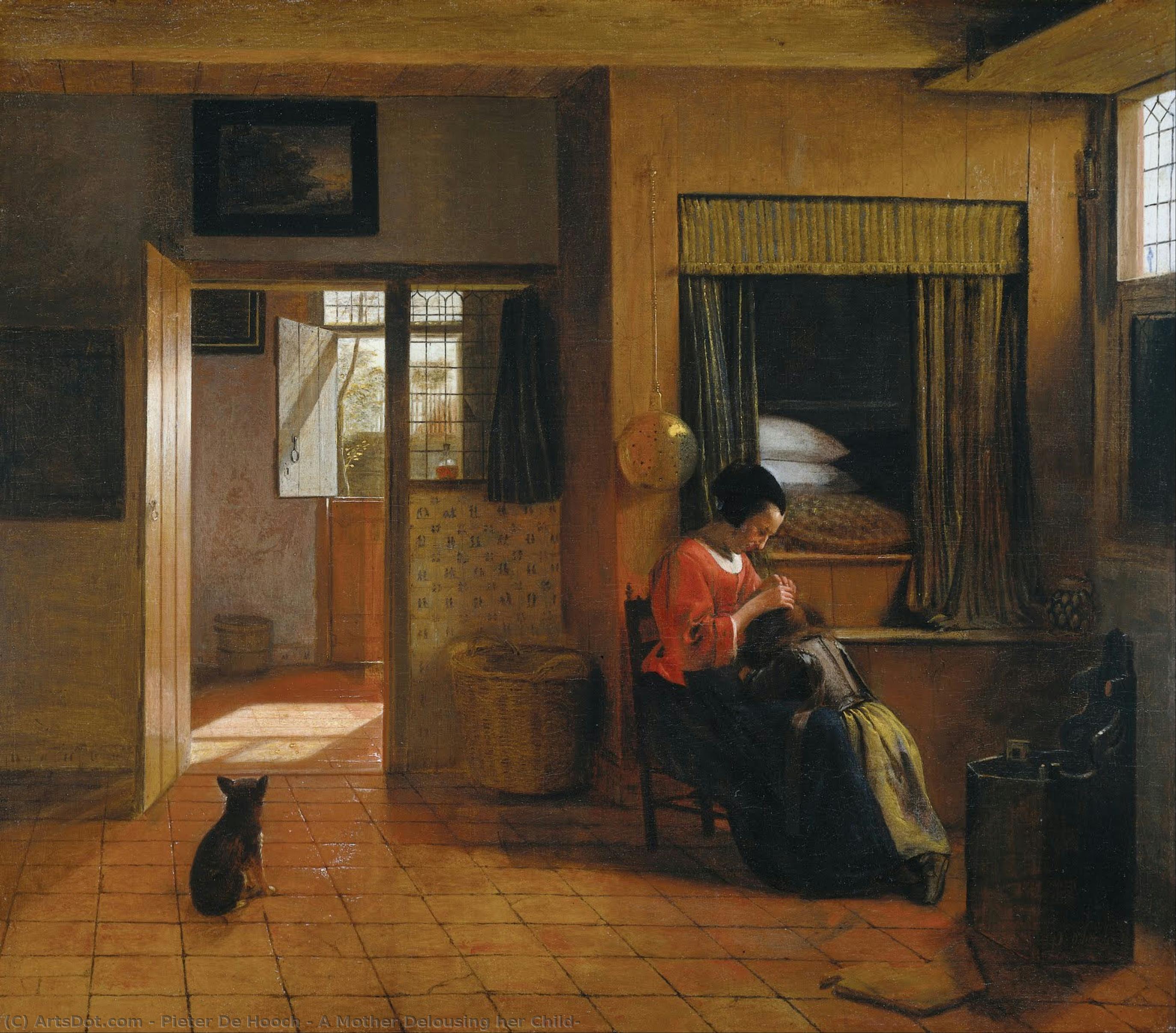
Pieter de Hooch's "A Mother Delousing Her Child," painted circa 1660, is more than just a depiction of a mundane household task; it’s a poignant window into the burgeoning middle-class life of 17th-century Holland. This intimate scene, now housed within the Rijksmuseum in Amsterdam, captures a fleeting moment of vulnerability and care amidst the bustling world of the Dutch Golden Age. The painting, measuring just 61 x 52 cm, belies its small scale with an astonishingly detailed portrayal of everyday life – a testament to de Hooch’s mastery of light, shadow, and the subtle nuances of human emotion. It's a work that speaks volumes about family, hygiene, and the quiet dignity of domesticity.The Scene Unfolds: Composition and Setting
The composition is remarkably restrained, drawing the viewer’s eye immediately to the central figures – a mother diligently examining her child’s head for lice. The setting is a modestly furnished interior, likely a bedroom or sitting room, rendered with meticulous attention to detail. Delft blue tiles adorn the floor, hinting at the wealth and status of the household, while a simple bed stands in the background, partially obscured by a curtain. A dining table holds a bowl, suggesting a recent meal, and a ‘kakstoel’ – a small potty chair – adds an element of realism to the scene, grounding it firmly within the realities of daily life. The inclusion of a cat, calmly observing from beneath the woman's feet, introduces a touch of domestic tranquility and perhaps even a subtle commentary on observation and vigilance. The doorway glimpsed in the background offers a tantalizing suggestion of another room, expanding the spatial awareness of the scene without disrupting its intimate focus.Technique and Style: De Hooch’s Signature Approach
De Hooch was a master of *doorway paintings*, a technique he perfected during his time in Haarlem under Nicolaes Berchem. This style is characterized by an ambiguous space, often featuring a partially visible doorway or window that invites the viewer to imagine what lies beyond. In “A Mother Delousing Her Child,” this technique serves not only as a compositional device but also as a metaphor for the hidden complexities of domestic life. De Hooch’s brushwork is remarkably delicate and precise, creating an illusion of depth through subtle variations in light and shadow. He employed a muted palette – predominantly browns, creams, and blues – to evoke a sense of quietness and understated elegance. The lighting, diffused and naturalistic, further enhances the painting's realism, casting soft shadows that accentuate the figures’ forms and textures. Notably, de Hooch was known for his ability to capture the fleeting expressions on his subjects’ faces, imbuing each scene with a sense of lived experience.Symbolism and Context: A Reflection of Dutch Society
The act of delousing itself carries significant symbolic weight within the context of 17th-century Holland. Lice were a persistent and widespread problem, particularly in densely populated urban areas, and meticulous hygiene was considered essential for maintaining health and social standing. The mother’s focused attention on her child underscores the importance placed on family care and the responsibility of parents to protect their offspring. Furthermore, the scene reflects the growing emphasis on domesticity within the emerging middle class – a shift away from the more overtly public life of merchants and artisans towards a greater focus on home and family. The painting’s realism—the inclusion of everyday objects like the ‘kakstoel’—demonstrates de Hooch's commitment to portraying the lives of ordinary people, capturing a slice of Dutch society that was increasingly valued for its quiet dignity and understated beauty.Emotional Resonance: A Quiet Moment of Connection
Despite its seemingly simple subject matter, “A Mother Delousing Her Child” possesses a remarkable emotional resonance. The mother’s expression is one of focused determination mingled with tenderness, conveying both the burden of responsibility and the deep affection she feels for her child. The scene evokes a sense of intimacy and vulnerability, reminding us of the fundamental human need for connection and care. It's a painting that invites contemplation on themes of family, health, and the quiet moments of everyday life—moments often overlooked but profoundly meaningful. ArtsDot’s hand-painted reproductions offer an unparalleled opportunity to experience the beauty and subtlety of this iconic work by Pieter de Hooch, bringing its timeless charm into your home or studio.Sorodna umetniška dela


Biografija umetnika
zgodnje življenje in izobraževanje
Pieter de Hooch, izstopajoča osebnost nizozemskega zlate dobe, se je rodil 20. decembra 1629 v Rotterdamu na Nizozemskem. Kot najstarejši iz petih otrok Hendricksa Hendricksza de Hoocha, zdrugarja, in Annetge Pieters, porodnice, je odmakon od zgodovinskih zapisov o svojem zgodnjem obdobju. Verjamemo le, da je svoje umetniško pot preživeti v mestih Rotterdam, Delft in Amsterdam. Njegovo umetniško izobraževanje se je odvijalo v Haarlemu pod mentorstvom pejzažnika Nicolaesa Berchema, ob ይቀobu Ochterveltu. To obdobje je postavilo temelje za njegov prihodnji uspeh kot mojstra tihih domačih scen, ki jih zaznamajo odprta vrata in globina prostora.umetnični slog in teme
De Hoochovo delo prepoznavamo po izjemni pozornosti do detajlov, naturalizmu in virtuozni uporabi svetlobe. Njegove slike pogosto prikazujejo vsakdanje življenje, ki odraža vrednote in aspiracije vzrastajočega srednjega razreda. Odlično pričedo temu slogu je "dvorišče hiše v Delftu" (1658), ki s svojo subtilnostjo prikaže njegovo sposobnost zajema preprostih trenutov vsakdana. Čeprav de Hoochovo delo deli podobne teme in kompozicije z umetnikom, kot je Emanuel de Witte, ga njegova osredotočenost na ljudi in njihove medsebojne odnose loči od drugih. Ta človečnost je jasno vidna v delih, kot sta "dojenje ženske" (1658) in "ženska z dojenčkom v utrinah" (1658), ki dokazujeta njegovo globoko zanimanje za intimo domačega življenja.pomembna dela in dediščina
Med najprepoznavnejša de Hoochova umetniška dosežka lahko štejemo:- "veseli pijalec" (okoli leta 1650)
- "igralci kart v osvetljeni sobi" (1658)
- "ženska, ki pripravlja kruh in maslo za boya" (1661)
muzeji in zbirke
De Hoochova dela so razpršena po številnih prestižnih muzejih, vključno s Koninklijk Museum voor Schone Kunsten v Antwerpenu v Belgiji, ki v svojo zbirko vključuje obsežno evropsko umetnost od 15. do 20. stoletja. Odkrijte več o Pieterju de Hoochu in njegovih delih na ArtsDot: [https://ArtsDot.com/@/pieter-de-hooch](https://ArtsDot.com/@/pieter-de-hooch) [https://ArtsDot.com/art.nsf/o/a@d3b4kt](https://ArtsDot.com/art.nsf/o/a@d3b4kt) (spoznajte vrhunska dela iz Koninklijk Museum voor Schone Kunsten, Belgija)
Pieter De Hooch
1629 - 1694 , Nizozemska
Hitri podatki
- Artistic Movement Or Style: Delftska šola, Nizozemsko zlato dobe
- Artists Or Movements Influenced By This Artist: ['Jan Vermeer']
- Artists Who Influenced This Artist: ['Nicolaes Berchem']
- Date Of Birth: 20. december 1629
- Full Name: Pieter Hendricksz de Hooch
- Nationality: Nizozemski
- Notable Artworks:
- Prazna steklenica
- Ženska, ki bere list
- Igralci kart v osvetljeni sobi
- Ženska, ki pripravlja kruh in maslo
- Place Of Birth: Rotterdam, Nizozemska
Sorodni članki

10 Mojstrovin Nizozemske Zlate dobe: Umjetnost, ki je definirala svojo dobo
Odkrijte 10 mojstrovin Nizozemske zlate dobe! Rembrandt, Vermeer & več – spoznajte zgodbe za temi ikoničnih umetnin. Inspirirajte se za notranji dizajn in poiščite reprodukcije na ArtsDot.com!

Golden Age Reflections: Dutch Baroque Painting & Cultural Innovation
Explore the Dutch Golden Age of painting! Discover key artists like Vermeer & ter Borch, their innovative techniques, and the rich cultural context behind these Baroque masterpieces. Learn about collecting & appreciating this iconic art period.
Illuminating Realism: Exploring the Dutch Golden Age of Painting (1600-1700)
Explore the Dutch Golden Age of painting (1600-1700) with ArtsDot. Discover Rembrandt, Vermeer & other masters. Learn about techniques, history & find museum-quality reproductions.

Willem van de Velde the Elder: Master of Maritime Painting & Chronicler of the Dutch Golden Age
Discover the captivating maritime paintings of Willem van de Velde the Elder, a master chronicler of the Dutch Golden Age. Explore his unparalleled realism and lasting influence on naval art history.

Jan Jansz Wijnants: A Study in Dutch Golden Age Still Life & Floral Transience
Explore the captivating world of Jan Wijnants and Dutch Golden Age still life painting. Discover symbolism, masterful techniques & lasting influence on floral art history. Learn more!


