
 Predogled v realnem okolju
 Pošlji
 Deli
Deli
 Podrobnosti o delu
 Priročnik

 Prenesi sliko
 Podobni izdelki
 Rentgenski posnetek
 Predvajaj diaporama
 Vprašanja in odgovori
 Statistika
Still Life with Three Skulls


 Preberi več
Giclée tisk / Umetniški tisk
Giclée ali platnati odtis muzejske kakovosti z hitro proizvodnjo in prilagodljivimi možnostmi končne obdelave. ( Kupite ročno slikano delo Preklop na digitalno sliko)




P118B €10

P118H €10

P118W €10

P438Z €10

P508JH €12

P508YH €12

P805H €10

P805Z €10

P919BZ €10

P919G €10

P919XJ €10

P959ZH €10

P968JZ €12

W106C €8

W218G €10

W218JH €8

W218Y €10

W307PJ €10

W316G €10

W316PJ €8

W316Y €10

W398PJ €8

W4111J €10

W500HY €15

W500JH €15

W692G €12

W849H €8

W940BG €15

W953PJ €8




Izberite eno od naših vnaprej določenih velikosti, ki ustrezajo prvotnim proporcijam umetničkega dela.

Vnesite širino in višino, ki jih potrebujete za svoj okvir ali steno. Tiskanje se lahko le odreže, vendar ga ni mogoče narediti večjega od slike, zato format z drugačno obliko pomeni izgubo dela slike. Pred tiskanjem vam pošljemo digitalni predogled za potrditev. Slika, prikazana na tej strani, ne prikazuje dejanskega izrezka — le predogled to omogoča.
Globalna dostava () v 2 tednih namesto standardnih 4/5 tednov. (5 november)

Brezplačna ekspresna dostava po vsem svetu

Visokokakovostno laneno platno

Popolno zavarovanje pošiljke

Garancija povračila carine in uvoznih davkov

Garancija popolnega barvnega ujemanja

100-dnevna politika vračil (le v primeru okvar)

Garancija 100% povračila denarja

Popust pri večjem naročilu
 Možnost stekla je na voljo le za velikosti pod 110 cm

Still Life with Three Skulls
Giclée tisk / Umetniški tisk
Velikost reprodukcije
-


Skupna cena
€ 56
A Memento Mori in Modernity
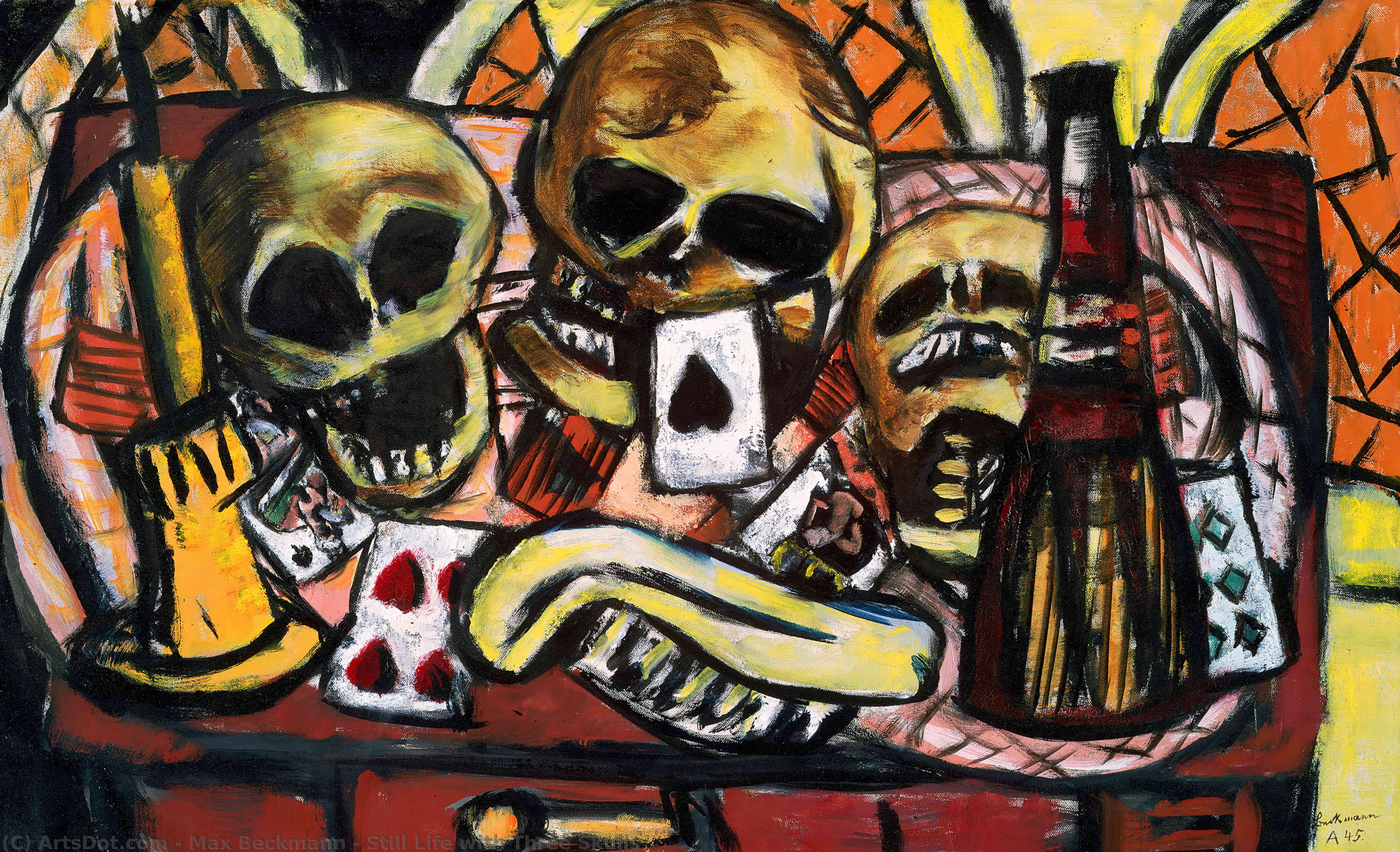
In the hauntingly evocative Still Life with Three Skulls, the viewer is invited into a somber, introspective space where the boundaries between life and death blur through the lens of German Expressionism. Max Beckmann, a master of capturing the psychological weight of the human condition, presents a composition that transcends mere tabletop arrangement. The painting features three skulls arranged across a dark, textured surface, their hollow sockets staring back with an unsettling permanence. Interspersed among these skeletal remains are various bottles and a solitary knife, objects that ground the macabre subject matter in a domestic, almost mundane reality. This juxtaposition creates a profound tension, as the everyday items of life sit alongside the undeniable symbols of mortality.
The technique employed by Beckmann is nothing short of visceral. Eschewing the delicate smoothness of classical still lifes, he utilizes a bold, distorted approach to space and form that reflects his experience as a medical orderly during World War I. The brushwork feels heavy and deliberate, imbuing each object with a sense of sculptural weight. There is a rhythmic quality to the placement of the bottles—one perched in the upper right, another near the center, and a third anchoring the lower left—which guides the eye through a labyrinth of light and shadow. This use of chiaroscuro, reminiscent of the Old Masters like Rembrandt, serves to heighten the drama, pulling the skulls out of the darkness and forcing a confrontation with their stark, bony architecture.
Symbolism and the Weight of Existence
To gaze upon this work is to engage with the ancient tradition of memento mori—the reminder that death is an ever-present companion. However, Beckmann breathes a modern, existential dread into this classical theme. The skulls are not merely decorative symbols; they represent the fragility of the human ego and the inevitable decay of all material things. The presence of the knife adds a layer of latent violence or perhaps the surgical precision of fate, while the bottles suggest the fleeting pleasures of the senses that cannot stave off the end. For the collector or interior designer, this piece offers more than just visual interest; it provides a profound intellectual anchor for a room, sparking conversation about the cyclical nature of life and the enduring legacy of human struggle.
For those seeking to integrate such a powerful work into a curated space, a high-quality reproduction of Still Life with Three Skulls serves as a centerpiece of immense character. It is an ideal selection for a study, a library, or a sophisticated gallery wall where art is intended to provoke thought and evoke emotion. The painting’s dark palette and commanding presence allow it to harmonize with rich textures like leather, dark wood, and velvet, creating an atmosphere of timelessness and intellectual depth. Owning this piece is an invitation to contemplate the beauty found within the shadows and to appreciate the raw, unfiltered truth of the human experience as captured by one of the twentieth century's most significant artistic voices.
Vprašanja in odgovori
Kaj predstavlja "Still Life with Three Skulls"?
Tematika v delu "Still Life with Three Skulls" avtorja Max Beckmann vključuje still life, skulls, memento mori, bottles, symbolism, german expressionism, ki skupaj predstavljajo vsebino umetninškega dela.
Kakšen je splošni čut dela "Still Life with Three Skulls" avtorja Max Beckmann?
"Still Life with Three Skulls" ima Dramatic vzdušje.
Katere barve prevladujejo v delu "Still Life with Three Skulls" avtorja Max Beckmann?
"Still Life with Three Skulls" avtorja Max Beckmann uporablja paleto Earthy, kjer prevladuje barva Putty (#d3c39f).
Sorodna umetniška dela




Biografija umetnika
Zgodnje življenje in umetniški razvoj
Max Beckmann, rojen 12. februarja 1884 v Leipzigu, Nemčija, je bil eden najpomembnejših nemških slikarjev 20. stoletja. Njegova umetnost ni bila nikoli le odraz sveta okoli njega, temveč globoko intimna izpoved človekovega stanja. Že v zgodnjih letih se je posvetil akademski risbi in slikanju, ustvarjal pa je dela, ki so kazala zanesljivo tehnično znanje in spoštovanje tradicionalnih form. Vendar pa je bila njegova umetnost korenito spremenjena po izkušnji prve svetovne vojne, kjer je služil kot medicinski oskrbovalec. Ta pretresljiva izkušnja ga je pustila z globoko skepso do človeške narave in razpadom iluzij o racionalnosti sveta. Njegova dela so se začela odlikovati s popačenimi figurami, fragmentiranimi prostori in intenzivno simboliko, ki je odražala njegovo spremenjeno dojemanje resničnosti.
Umetniški slog in vplivi
Beckmannov edinstven slog je bil močno zasnovan na vizualnem bogastvu srednjeveške sakralne umetnosti, zlasti vitražev. Vendar pa se ni omejil le na eno tradicijo; črpal je navdih iz širokega spektra umetnikov in stilov. Njegova dela odražajo vplive Paula Cézanna, Vincenta van Gogha, Williama Blakea, Rembrandta in Rubensa. Zanimivo je tudi njegovo zanimanje za severnoevropske mojstre poznega srednjega veka in zgodnje renesanse, kot so Hieronymus Bosch, Pieter Bruegel starejši in Matthias Grünewald. Ti umetniki so ga navdihnili s svojimi dramatičnimi kompozicijami, grotesknimi figurami in globoko psihološko ostrino.
Pomembna dela in razstave
Beckmann je ustvaril obsežno delo, ki vključuje slike, risbe, grafike in kiparstvo. Med njegova najbolj znana dela spadajo The Bark, ki ga hrani Nacionalna galerija v Berlinu, ter avtoportret Self-Portrait in Tuxedo, kupljen leta 1928. Njegova umetnost je bila prvič obsežno predstavljena na retrospektivnih razstavah v Städtische Kunsthalle Mannheim (1928) ter v Baslu in Zürichu (1930). Te razstave so potrdile njegov status kot vodilnega nemškega slikarja.
Poznejše življenje in izgnanstvo
S prihodom Adolfa Hitlerja na oblast se je Beckmannovo življenje drastično spremenilo. Leta 1933 so ga odpustili s šole za umetnost v Frankfurtu, več kot 500 njegovih del pa je bilo zaseženo in označeno kot “degenerirana umetnost”. Beckmann se je odločil za samovoljno izgnanstvo in naslednjih deset let preživel v Amsterdamu. Kljub intenzivnim prizadevanjem mu ni uspelo pridobiti vizuma za Združene države, kar ga je pustilo v negotovem položaju.
Zapuščina
Po koncu druge svetovne vojne se je Beckmann preselil v Združene države in poučeval na univerzah Washington University v St. Louisu in Brooklyn Museum. Leta 1948 je bila v City Art Museum v Saint Louisu organizirana njegova prva retrospektivna razstava v ZDA, ki je sprožila val zanimanja za njegovo umetnost. Danes so njegove slike razstavljene v številnih pomembnih muzejih po vsem svetu. Max-Slevogt Galerie v Nemčiji hrani obsežno zbirko njegovih del, kar omogoča nadaljnje raziskovanje in interpretacijo njegovega bogatega umetniškega opusa.

Max Beckmann
1884 - 1950 , Nemčija
Hitri podatki
- Datum Rojstva: 12. februar 1884
- Datum Smrti: 27. december 1950
- Državljanstvo: Nemec
- Kraj Rojstva: Leipzig, Nemčija
- Polno Ime: Max Carl Friedrich Beckmann
- Pomembna Dela:
- The Bark
- Self-Portrait in Tuxedo
- Umetniški Smer: Ekspresionizem
- Vplivi Umetnikov:
- Rembrandt
- Bosch
Sorodni članki

German Expressionism's 10 Defining Masterpieces | Art for Your Home
Explore 10 defining German Expressionism masterpieces – from Munch's 'The Scream' to Kandinsky’s abstracts. Discover the artists, stories & bold colors behind this powerful art movement. Find museum-quality reproductions at ArtsDot.com.

Silent Narratives: Exploring the Enduring Appeal of Still Life Painting Across Centuries
Explore the rich history of still life painting with ArtsDot. Discover Dutch Masters, decode vanitas symbolism & learn about collecting timeless art. Expert insights and museum-quality reproductions.

The Visceral Cry of a Nation: Exploring Emotion & Distortion in German Expressionism
Explore the powerful world of German Expressionism with ArtsDot. Discover Kirchner, Nolde & Die Brücke's emotive masterpieces. Learn about this pivotal art movement and its lasting impact on modern art.

Clyfford Still's Abstract Expressionism: A Study of Color, Form & the Existential Landscape
Explore the profound world of Clyfford Still's Abstract Expressionism with ArtsDot. Discover his unique style, existential themes & investment potential. Expert analysis for discerning collectors.
The Enduring Appeal of Still Life: A Historical & Contemporary Exploration
Explore the rich history & symbolism of still life painting with ArtsDot. Discover masterpieces from the Dutch Golden Age, learn about vanitas art, and find expert guidance for collecting timeless artworks.


