


 Preverite v realnem okolju
 Pošlji kot čestitko
 Deli
Deli
 Podrobnosti
 Priročnik

 Prenesi
 Podobni artefakti
 Rentgenski posnetek
 Predvajaj diaporama
 Statistika
Forest Landscape
 Etching
- Baroque
 1643
1643- Early Modern
 27.0 x 32.0 cm
 Szépművészeti Múzeum
 Preberi več
Ročno izdelana oljna reprodukcija
Ročno slikano olje na platnu v vaši izbiri velikosti in okvirja, izdelano po naročilu naših umetnikov. ( Preklop na tiskanine Preklop na digitalno sliko)




P118B €10

P118H €10

P118W €10

P438Z €10

P508JH €12

P508YH €12

P805H €10

P805Z €10

P919BZ €10

P919G €10

P919XJ €10

P959ZH €10

P968JZ €12

W106C €8

W218G €10

W218JH €8

W218Y €10

W307PJ €10

W316G €10

W316PJ €8

W316Y €10

W398PJ €8

W4111J €10

W500HY €15

W500JH €15

W692G €12

W849H €8

W940BG €15

W953PJ €8




Izberite eno od naših vnaprej določenih velikosti, ki ustrezajo prvotnim proporcijam umetničkega dela.

Vnesite širino in višino, ki jih potrebujete, da se slika prilega vašemu okviru ali steni. Ker je delo ročno slikano, lahko umetnik pri različnih oblikih slik pri robovih doda malo več barve ali pa jih malo odreže — izberite sami. Pred začetkom slikanja vam pošljemo digitalni predogled za potrditev. Slika, prikazana na tej strani, ni končni rezultat — le predogled prikazuje dejansko podobo.
Po oddaji naročila bo ekipa ArtsDot.com stranki po e-pošti poslala navodila in predogled digitalnega predogleda.
Mednarodna dostava () v 3/4 tednih namesto običajnih 5 tednov. (23 oktober). Brez kompromisov pri kakovosti.

Brezplačna ekspresna dostava po vsem svetu

Visokokakovostno laneno platno

Popolno zavarovanje pošiljke

Garancija povračila carine in uvoznih davkov

Garancija popolnega barvnega ujemanja

Politika vračila v 100 dneh (le v primeru okvar)

Garancija 100% povračila denarja

Popust pri večjem naročilu
 Možnost stekla je na voljo le za velikosti pod 110 cm

Forest Landscape
Tehnika reprodukcije
Velikost reprodukcije
-


Skupna cena
€ 253
A Journey into the Italianate Dream
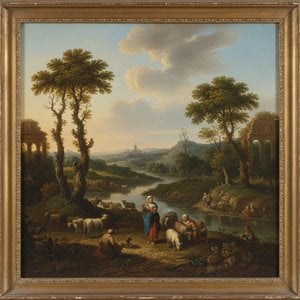
To gaze upon this depiction of a forest landscape is to step across the threshold of time, transported to the sun-dappled, yet subtly shadowed corners of Italia in the early seventeenth century. This piece captures the very essence of the Dutch fascination with the Mediterranean world—a yearning for the classical grandeur and luminous atmosphere that beckoned Northern European artists away from their familiar northern skies. It speaks volumes about the cultural currents of the time, when study trips to Italy were not merely leisure pursuits but vital academic pilgrimages for painters seeking mastery.
The Hand of Jan Both: Mastering Mediterranean Light
Created around 1643 by Jan Both, this work places us squarely within his mature period. Both was a key figure in the "Dutch Italianate" movement, an artistic current defined by its deep absorption of Roman and Venetian landscape ideals. While the subject matter is profoundly natural—a gently sloping hillside descending toward placid waters, framed by dense, brooding foliage—the execution reveals a meticulous technical prowess. The style leans heavily into the detailed realism characteristic of Dutch Golden Age drawing or etching. Notice how the lines themselves become carriers of light and shadow; they are not merely outlines but carefully modulated tonal passages built through expert hatching and cross-hatching.
Technique and Atmosphere: An Etcher's Precision
The physical evidence suggests a technique rooted in drypoint or fine etching upon copper plate. This medium allowed Both to achieve an astonishing level of linear precision, giving the forest its palpable texture. The light is not harsh; rather, it is diffused, suggesting the soft veil of an overcast day or the deep cool shade beneath a canopy. This masterful handling of shadow creates an incredible sense of depth—a visual recession where foreground details give way to atmospheric haze in the distance. The organic shapes of the trees and the water’s edge are rendered with such care that one can almost hear the quiet murmur of the stream.
Symbolism of Solitude and Nature's Embrace
Beyond its technical brilliance, the painting resonates with profound emotional undertones. The subtle inclusion of small figures wandering through the woods transforms the scene from a mere topographical study into a meditation on human experience. These travelers seem absorbed in their own contemplation, dwarfed by the immensity and tranquility of nature. This quietude speaks to an era grappling with both intense artistic patronage (as Both himself experienced) and a growing appreciation for the sublime power of the natural world—a refuge from the bustling life of the city.
Bringing the Italianate Spirit Home
For the collector or designer, this reproduction offers more than just decoration; it offers an atmosphere. It is a window into scholarly aspiration, a celebration of masterful draftsmanship, and an invitation to pause. The deep greens, muted earth tones, and the silvery quality of the water lend themselves beautifully to creating a space that feels both historically rich and serenely contemporary—a perfect anchor for any room seeking the quiet dignity of a classical landscape.
Vprašanja in odgovori
Katera je prevladujoča barva dela "Forest Landscape" avtorja Jan Both?
Prevladujoča barva dela "Forest Landscape" avtorja Jan Both je Black (#050504).
Katero temo in vzdušje združuje "Forest Landscape" avtorja Jan Both?
"Forest Landscape" avtorja Jan Both združuje forest landscape, dutch art, 17th century scene, serene nature, detailed drawing, italian influence, monochromatic tone z Serene vzdušjem.
V katerem obdobju je nastalo delo "Forest Landscape" avtorja Jan Both?
Zgodovinski obdobje dela "Forest Landscape" avtorja Jan Both je Early Modern. Ta klasifikacija delo umešča v zgodovino umetnosti.
Sorodna umetniška dela


Biografija umetnika
Jan Both (1610–1652): Gospod mediteranske svetlobe
Jan Dirksz Both je bil nizozemski slikar, oskivalec in dobrotelj etike, ki se je izstopil kot ena najpomembnejših postav v vzpenjajoči gibanju "italijaniziranega" pejzaža med obdobjem nizozemskega zlatiega age. Rod se je okoli leta 1615/1618 v Utrechtu, bil pa je mlajši brat Andriesa Botha. Njun oče, Dirck Both, ki je bil steklar in slikar stekla, je obema sinoma vstopil v zgodnje spoštovanje do umetniškega rokodelstva. Čeprav so biografski podatki o njem precej redki, strokovna raziskava nakazuje, da je Janovo izobraževanje vključevalo poučevanje pod Abrahamom Bloemaertom in Gerritom van Honthorstom, kar ga je uvrstilo med vplivne umetnike svojega časa.- Zgodnje življenje in usposabljanje: Bothove formative leta so potekala v Utrechtu, kjer je alongside brata Andriesa izpiljal svoje veščine in prevzel tehnike iz očetovega steklarske prakse – krojstva, ki je bilo globoko zakoreninjeno v flamovskih tradicije.
- Rimski vpliv: Okoli leta 1638 sta Jan in Andries začela preobrazbno potovanje v Rim preko Francije, kjer so se potopili v umetniško vročino papestega dvora in srečali svetavce, kot sta Bloemaert in Gerrit van Honthorst. Ta izkušnja je temeljito oblikovala njuni stilski občutek.
Romanizirani slog in sodelovanje z Lorrainom
Rim se je izkazal za krčev za Bothov umetniški razvoj. Medtem ko se je Andries osredotočal na žanrske scene v slogu Pietersa van Laerja, se je Jan posvetil predvsem slikanju pejzažev – slogu, ki je močno dolgovan Claudeu Lorrainu – in s nepremočljivo obvladavo svetlobe ter barve zajel eterično lepoto mediteranske regije. Posebej izstopajo njegovo tesno sodelovanje z Hermanom van Swaneveltom pri monumentalnem projektu za palačo Buen Retiro v Madridu, kar je dokazalo njegovo ambicioznost in umetniško zrelost v najvišjih Evropskih krogih pokroviteljstva. To partnerstvo je utrdilo Bothovo ugled vodilnega inovatorja pejzaža.Pomembne slike in umetniške značilnosti
Bothovo delo zaznamujejo prostrani, domišljijski pejzaži, navlaženi v svetlobni zlati oreh – značilnost Lorrainovega sloga in odraz širšjih umetniških tokov, ki so krožili po Evropi. Njegovo vrhunsko delo, „Pejzaž z banditi, ki vodijo ujetnike“ (Museum of Fine Arts, Boston), ponazarja to estetsko briljantnost. Diagonala cesta vodi oko v središče scene, kjer realistične figure postavlja v ozadje idiličnih razgledov, z denen dominira natančno prikazana vegetacija. Obdobje prepletajo tudi religiozni ali mitološki motivi – kot je videti v „Parisovem sodbi“ (London, National Gallery) – ki so jih pogosto izvajali tudi drugi umetniki iz Utrehta, kot je Cornelis van Poelenburch, kar poudarja Bothovo vpletenost v humanistične ideale in umetniške konvencije.Dediščina in vpliv
Bothov brat Andries je tragično umrl zaradi bolezni v Benetkah med povratnim potovanjem iz Rima. Kljub kratkosti svojega življenja se je Andries uveljavil kot spoštovan umetnik, specializiran za kmečke scene – žanr, ki odraža socialno realnost tistega časa. Janovo umetniško dediščino pa presega posamezne slike; deloval je kot učitelj za nadarjene تلاميذ, kot sta Barend Bispinck in Willem de Heusch, s čimer je zagotovil, da bodo njegove stilske inovacije še generacije navdihovale. Njegovo del ostaja proslavljeno zaradi svoje evokativne atmosfere, mojstrovske tehnike in prispevka k razvoju nizozemskega pejzažnega slikarstva – kot spomin na Bothov trajni vpliv na evropsko umetniško zgodovino.Zbirke
- Fitzwilliam Museum, Univerza v Cambridge
- Hermitage, Sankt Peterburg
- Kunsthistorisches Museum, Dunaj
- Louvre, Pariz
- Mauritshuis Royal Picture Gallery

Jan Both
1610 - 1652 , Nizozemska
Ključne informacije
- Artistic Movement Or Style: Italijanizirano slikanje pejzažev
- Artists Or Movements Influenced By This Artist: ['Claude Lorrain']
- Artists Who Influenced This Artist:
- Abraham Bloemaert
- Gerrit van Honthorst
- Date Of Birth: Utrecht, Nizozemska (1610)
- Date Of Death: 9. avgust 1652
- Full Name: Jan Dirksz Both
- Nationality: Nizozemski
- Notable Artworks:
- Sveta Ana z Devico in Otrokom
- Pejzaž z banditi, ki vodijo ujetnike
- Sodba Parisa
- Place Of Birth: Utrecht
Sorodni članki

10 Mojstrovin Nizozemske Zlate dobe: Umjetnost, ki je definirala svojo dobo
Odkrijte 10 mojstrovin Nizozemske zlate dobe! Rembrandt, Vermeer & več – spoznajte zgodbe za temi ikoničnih umetnin. Inspirirajte se za notranji dizajn in poiščite reprodukcije na ArtsDot.com!

Golden Light & Dutch Skies: Bringing the Magic of Dutch Golden Age Landscapes into Your Home
Transform your home with the breathtaking light of Dutch Golden Age landscapes. Discover how hand-painted oil reproductions of masterworks like Ruisdael and Vermeer bring timeless elegance, atmosphere, and soulful texture to modern interiors. Elevate your space with museum-quality art.

Charles Leickert: Capturing the Dutch Golden Age Light – A Comprehensive Study of Technique, Context, and Legacy
Explore the captivating winter landscapes of Charles Leickert, a master of Dutch Golden Age light & atmosphere. Discover his techniques, symbolism, and lasting legacy – a comprehensive study for art enthusiasts and collectors.
Nicolaes Berchem: Dutch Golden Age Pastoralism & the Evolution of Landscape Painting
Explore the captivating world of Nicolaes Berchem, a leading Dutch Golden Age painter. Discover his idyllic landscapes, masterful technique & lasting influence on art history. Learn more at ArtsDot.

Golden Age Reflections: Dutch Baroque Painting & Cultural Innovation
Explore the Dutch Golden Age of painting! Discover key artists like Vermeer & ter Borch, their innovative techniques, and the rich cultural context behind these Baroque masterpieces. Learn about collecting & appreciating this iconic art period.
