

 Predogled v realnem okolju
 Pošlji
 Deli
Deli
 Podrobnosti o delu
 Priročnik

 Prenesi sliko
 Podobni izdelki
 Rentgenski posnetek
 Predvajaj diaporama
 Vprašanja in odgovori
 Statistika
Broken Spaces 1

- 44.0 x 57.0 cm

 Preberi več
Pridobite datoteko, pripravljeno za tiskanje, ki presega kakovost spletnega predogleda. Vsaka digitalna slika v naši ponudbi izvira iz visoko ločljive izvirne datoteke v naši bazi — običajno široke od 5.000 do 15.000 pikselov — zato lahko z zaupanjem tiskate v večji format, tesno izrezujete ali reproducirate fine podrobnosti.
Nobena datoteka ne zapusti našega studia nedotiknjena. Digitalni strokovnjak preveri barve v primerjavi z izvirno sliko in jih po potrebi popravi, nato pa s profesionalnimi orodji za retuširanje izboljša jasnost in podrobnosti — pri čemer vedno ostaja zvest umetnikovim potezam in slogu. Rezultat je slika, ki izgleda kot samo slikarstvo, ne pa kot le filtriran sken.
Potrditev pred dokončanjem dela: naš strokovnjak vam v roku 72 ur pošlje sliko po e-pošti na pregled. Niste zadovoljni? Zahtevajte izboljšave ali popravke ali prosite za povračilo denarja, če kakovost ni v skladu z pričakovanimi standardi.
To je kakovost, po kateri temeljijo založniki, oblikovalni studii, galerije in tiskarne.
Digitalna slika
Prenesite datoteko visoke ločljivosti za osebno uporabo, tiskanje in kreativne projekte. ( Preklop na tiskanine Kupite ročno slikano delo)
Vključeno v vsako naročilo digitalne slike
Zagotovljena strokovna digitalna dostava
Z izbiro ArtsDot.com ne prejmete le slike – prejmete profesionalno urejeno digitalno umetniško delo, izdelano z največjo natančnostjo in zavestno podprto z garancijo za zadovoljstvo. Tukaj je vse, kar bo z vašim naročilom samodejno priloženo:

Hitra dostava prek e-pošte
Vaša digitalna slika visoke ločljivosti bo na vaš e-naslov poslana v roku 72 ur od zaklopa naročila – pripravljena za takojšnjo uporabo.

Digitalna datoteka z uporabo AI
Vaše umetniško delo je strokovno optimizirano z uporabo naprednih orodij umetne inteligence in ročne obdelave, kar zagotavlja največjo stopnjo podrobnosti, jasnosti in barvne natančnosti.

Brezplačna doletna ponovna dostava
Ste datoteko zaradi nespremietne napake izgubili ali izbrisali? Ni težav – vam jo bomo ponovno poslali kadar koli in brezplačno.

Brez uvoznih pristojbin – vedno
Svoje umetniško del uživajte takoj, brez carin, davkov ali stroškov dostave – digitalni prenosi so vedno brezdavčni.

Zagotovilo natančnosti barv
Z uporabo profesionalnih orodij in procesov upravljanja barv zagotavljamo, da vaša digitalna slika čim bolj natančno odraža prvotne barve.

100-dnevna garancija zadovoljstva
Če niste zadovoljni s svojo digitalno sliko, jo bomo uredili ali vam v 100 dneh povrnili 100% denarja – brez kakršnih koli vprašanj.

100% Garancija povračila denarja
Niste zadovoljni? Zagotavljamo vam popoln povračilo sredstev v 100 dneh po prejemu digitalne datoteke – brez dodatnih vprašanj.

Popusti pri večjih naročilih
Kupite 3 slike, prihranite 10% - Kupite 5 slik, prihranite 15% - Kupite 10+ slik, prihranite 20%. Odlično za kreativne projekte, galerije in agencije.
Sorodna umetniška dela


Biografija umetnika
Jack Whitten: A Revolutionary Voice in Abstract Art
Jack Whitten (1939-2018) stands as a towering figure in American abstract art, an artist whose relentless experimentation and profound engagement with history—particularly the legacy of slavery and the Civil Rights Movement—transformed conventional notions of painting and sculpture. More than simply creating visually arresting works, Whitten invented techniques that fundamentally altered the possibilities of artistic expression, earning him recognition as a true innovator and a vital voice in the latter half of the 20th century. His career spanned six decades, marked by constant evolution, a refusal to be categorized, and an unwavering commitment to exploring the complex relationship between art, culture, and social justice.
Born in Bessemer, Alabama—a city steeped in the realities of Jim Crow segregation—Whitten’s early life profoundly shaped his artistic vision. His father's death when he was eight instilled a sense of resilience and independence, while his mother’s private kindergarten provided an initial exposure to the creative process. Crucially, his inheritance from his uncle, a sign painter, furnished him with tools that would become central to his groundbreaking techniques. This early connection to visual communication—the act of creating signs, slogans, and images for public consumption—laid the groundwork for his later explorations of representation and its limitations.
Whitten’s artistic journey began at Tuskegee Institute, where he initially pursued a pre-medical degree, influenced by his brother's ambition to become an army doctor. However, witnessing the injustices of segregation firsthand ignited within him a deep commitment to social change. He joined the ROTC and used earnings from painting store tags to support himself through college, while simultaneously participating in Civil Rights demonstrations, including a pivotal march in Baton Rouge where he helped organize protest signs. This experience solidified his belief in nonviolent resistance and profoundly influenced the themes that would permeate much of his work.
Moving to New York City in 1960, Whitten enrolled at Cooper Union, immersing himself in the vibrant art scene of the burgeoning metropolis. There, he encountered a diverse range of influences—from the abstract expressionists like Willem de Kooning and Jackson Pollock to Black abstractionists such as Romare Bearden and Jacob Lawrence. These encounters sparked a period of intense experimentation, leading him to develop his signature techniques: layering acrylic paint with nylon mesh fabric to create soft, textured surfaces; utilizing a “developer”—a T-shaped tool—to drag the paint across the canvas in single, decisive strokes; and later, employing electrostatic printing methods to produce works that blurred the boundaries between painting and photography. His early work, particularly the "Heads" series (1964), demonstrated his fascination with exploring the interplay of form and perception, utilizing translucent white pigment against black to create ambiguous, almost ghostly figures.
The Black Monolith Series and a Legacy of Protest
Perhaps Whitten’s most enduring contribution to art history is the “Black Monolith” series (1970-1976), a body of work that stands as both a personal memorial and a powerful statement about the legacy of slavery in America. Inspired by the death of his brother, Whitten created a series of paintings—often monumental in scale—dedicated to those he held dear: friends, family members, and prominent figures who had shaped his life and worldview. These works are characterized by their dense layering of paint, often incorporating fragments of newspaper clippings, photographs, and other found materials, creating textured surfaces that evoke the weight of history and memory.
The “Black Monolith” series is not simply a collection of portraits; it’s an exploration of trauma, loss, and resilience. Whitten deliberately employed techniques—such as layering paint with a squeegee to create a sense of movement and disruption—to convey the emotional intensity of his subject matter. The use of black as a dominant color further amplified this effect, symbolizing both mourning and the enduring presence of the past. As he himself stated, “My paintings are designed as weapons,” aiming to “penetrate and destroy the Western aesthetic” and ultimately serve as tools for social and political change.
Technique and Innovation: A Perpetual Experiment
What distinguished Jack Whitten from many of his contemporaries was not a fixed style but an unwavering commitment to experimentation. Throughout his career, he constantly pushed the boundaries of painting technique, developing new methods and materials that defied conventional artistic practices. His early work with nylon mesh fabric created a unique textural effect, while his use of the “developer” tool—a simple T-shaped instrument—allowed him to manipulate paint in ways previously unimaginable.
Whitten’s studio became a laboratory, where he rigorously tested the properties of various materials and techniques. He famously experimented with freezing acrylic paint, heating it, smashing it with a hammer, and applying it directly to paper using electrostatic printing methods. This relentless pursuit of innovation resulted in a remarkably diverse body of work—ranging from delicate, feather-like textures to dense, layered compositions filled with fragments of text and imagery. His willingness to embrace chance and spontaneity further contributed to the unique character of his art.
Recognition and Historical Significance
Despite facing significant challenges as a Black artist in a predominantly white art world, Jack Whitten’s work gradually gained recognition throughout the 1970s and 80s. He received numerous accolades, including a solo exhibition at the Whitney Museum of American Art in 1974 and a National Medal of Arts in 2016—a testament to his profound impact on contemporary art. His work is now held by major museums around the world, including the Museum of Modern Art (MoMA) and the Metropolitan Museum of Art.
More than just an artist, Jack Whitten was a cultural commentator who used his art to address issues of race, identity, and social justice. His “Black Monolith” series remains a powerful symbol of remembrance and resilience, while his innovative techniques continue to inspire artists today. Whitten’s legacy lies not only in the beauty of his paintings but also in his unwavering commitment to challenging conventions and using art as a means of engaging with the complexities of American history.
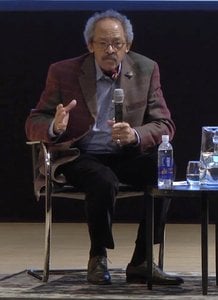
Jack Whitten
1939 -
Ključne informacije
- Full Name: Jack Whitten
- Nationality: American
- Date Of Birth: 1939
- Date Of Death: January 20, 2018
- Place Of Birth: Bessemer, Alabama
- Notable Artworks:
- Black Monolith Series
- Heads Series
- Birmingham 1964
- Artistic Movement Or Style: Abstract painting/sculpture
- Artists Who Influenced This Artist:
- Willem de Kooning
- Robert Blackburn
- Romare Bearden
- Artists Or Movements Influenced By This Artist:
- Jacob Lawrence
- Norman Lewis