- Domov

- Reprodukcija oljne slike
- Jheronimus Bosch
- Vrt zemeljskih užitkov

 Kupi tiskanino Kupi digitalno sliko
 Pošlji
 Deli
Deli
 Details
 Dodaj v priljubljene

 Prenesi
 Podobni izdelki
 X-Ray
X-Ray
 Predvajaj diaporama
Vrt zemeljskih užitkov


Ročno izdelana oljna reprodukcija
Ročno slikano olje na platnu v vaši izbiri velikosti in okvirja, izdelano po naročilu naših umetnikov.




































 Preberi več
Izberite eno od naših vnaprej določenih velikosti, ki ustrezajo prvotnim proporcijam umetničkega dela.

Svoje dimenzije lahko vnesete tako, da se prilagodite določenemu okvirju ali prostoru. Če izbrana velikost ne ustreza razmerjem originalne slike, bomo umetniško delo obrezali ali sliko dopolnili z dodatnimi ročno naslikanimi elementi. Pred začetkom proizvodnje vam bo poslan digitalni osnutek v odobritev.
Upoštevajte, da predogled na zaslonu ne odraža dejanskega obrezovanja ali podaljšanja. Le osnutek bo natančno prikazal končno kompozicijo.
Čeprav so na voljo velikosti po meri, priporočamo izbiro dimenzije s preddefiniranega seznama, da ohranimo originalne razmere.
Po oddaji naročila bo ekipa ArtsDot.com stranki po e-pošti poslala navodila in predogled digitalnega predogleda.
Svetska dostava () za 3/4 nedelje umesto uobičajenih 5 nedelja. (1 julij). Bez kompromisa po pitanju kvaliteta.

Brezplačna ekspresna dostava po vsem svetu

Visokokakovostno laneno platno

Popolno zavarovanje pošiljke

Garancija povračila carine in uvoznih davkov

Garancija popolnega ujemanja barv

60-dnevna politika vračanja (le v primeru napak)

Garancija 100% povračila denarja

Popust pri večjem naročilu
 Možnost stekla je na voljo le za velikosti pod 110 cm

Vrt zemeljskih užitkov
Tehnika reprodukcije
Velikost reprodukcije
-


Skupna končna cena
-
Opis umetninine
Vrt Zemeljskih Radosti: Boschova Enigmatična Vizija
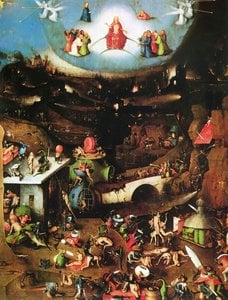
Hieronymus Boschev "Vrt Zemeljskih Radosti" je nedvomno ena najbolj prepoznavnih in skrivnostnih del v zgodovini umetnosti. Ustvarjen med letoma 1490 in 1510, ta monumentalni triptih razkriva vizualno pripoved o potovanju človeštva od nedolžnosti do iskanja užitkov in končnega sodbe. Več kot le slika je to globoka meditacija o moralnosti, željah in posledicah zemeljskih veselja – opozorilo, ki še danes odzvanja skozi stoletja. Bosch ni ustvaril preprosto lepote; on nas sooči z našimi najglobljimi strahovi in hrepenjenji.Simbolična Pokrajina: Razširjanje Tajemnic
Delo je zasnovano kot triptih – tri plošče, ki so namenjene ogledu kot celote. Leva ploča prikazuje Edeanski vrt, bujno oazo, polno fantastičnih bitij in božanskega darila Eve Adamu. Ta idilična scena se drastično nasprotuje srednji plošči, "Vrtu Zemeljskih Radosti", kjer gole figure uživajo v čutnih veselih dejavnostih med bizarnimi rastlinami in živalmi. To ni le praznovanje radosti; je prikaz človeštva, ki podleže iskanju užitkov. Desna ploša pa se potaplja v strašljivo vizijo pekla, kjer groteskni demoni mučijo grešnike – oster opomin na pot, ki jo izberemo. Vsak element, od čudnih živali do nenavadnih arhitekturnih struktur, je poln simbolike, kar povablja k neskončni interpretaciji in razpravljanju. Sadeži predstavljajo prepovedane želje, glasbila pa simbolizirajo strast, celotna pokrajina pa uteleša tako privlačnost kot tudi nevarnost.Tehnična Mojstrovina: Glazura in Globina
Boschova tehnična mojstrstvo je očitno v njegovi natančni podrobnosti in inovativni uporabi oljne barve. Uporabljal je glazuro – nanos tankih, prosojnih slojev barve – da ustvari svetleče učinke in zapletene teksture. Ta tehnika omogoča svetlobi, da prodre skozi več plasti, kar ustvarja bogato globino in živahnost, ki še danes očara gledalce. Njegova natančnost pri upodabljanju kože, tkanin, vode in drugih elementov je izjemna, prispeva pa k skoraj halucinogenemu učinku slike. Bosch ni le slikars; on je mojster svetlobe in sence, ki ustvarja iluzijo tridimenzionalnosti na ploski površini.Zgodinski in Kulturni Kontekst: Odmevi Srednjega Večera
"Vrt Zemeljskih Radosti" nastaja v obdobju prelomnih sprememb v Evropi – konec srednjega veka, ko se stara prepričanja soočajo z novimi idejami. Bosch je bil izjemno občutljiv za družbene in duhovne nemire svojega časa. Njegova slika ni le prikaz greha; je tudi kritika pretirane materialnosti in moralnega razpada v družbi. Vrt Zemeljskih Radosti odraža strah pred posodbo, ki je bil pogost motiv v srednjeveški umetnosti, vendar Bosch ga prikaže na izjemno inovativen način, združujoč realistične elemente z fantastičnimi in bizarnimi podrobnostmi. Njegovo delo je odraz kompleksnega sveta, kjer se vera in dvom, radost in žalost prepletajo v zapletenem tkanju človeške izkušnje.Sorodna umetniška dela


Biografija umetnika
Hieronymus Bosch - Jheronimus van Aken
Bosch was born around 1450 in the vibrant, bustling town of ’s-Hertogenbosch in the Netherlands—then part of Brabant—Hieronymus Bosch, originally Jheronimus van Aken, remains one of art history’s most compelling and mysterious figures. His world was steeped in late medieval religious fervor, folklore, and a growing sense of societal unease, all of which would profoundly shape his uniquely unsettling artistic vision. Coming from a family with a long tradition of painting—his grandfather, Jan van Aken, and father, Anthonius van Aken, were both artists—Bosch likely received his earliest training within the family workshop, absorbing the techniques and conventions of Netherlandish painting. However, even in his formative years, he began to diverge from established norms, hinting at the extraordinary imagination that would define his career. Biographical details are frustratingly scarce; records are fragmented, leaving much open to speculation and interpretation, adding to the aura of mystique surrounding both the man and his work. He married Aleyt Goyaerts van den Meerveen sometime before 1481, a union that provided him with some financial security through her family’s holdings, but little else is known about their personal life. Bosch's artistic style is instantly recognizable—a captivating blend of meticulous detail and wildly imaginative imagery. He primarily worked with oil on oak panels, demonstrating a masterful command of the medium, achieving luminous colors and intricate textures. While his early works show influences from traditional Netherlandish painting, particularly in their realism and attention to detail, he quickly moved beyond mere imitation, developing a profoundly original vision. His paintings are not simply representations of reality; they are allegorical landscapes populated by bizarre creatures, hybrid beings, and unsettling scenes that seem plucked from dreams—or nightmares. Religious themes form the core of much of his work, but these are rarely straightforward depictions of biblical stories. Instead, Bosch uses symbolism to explore complex moral and theological concepts, often focusing on the dangers of sin, the fragility of earthly pleasures, and the inevitability of divine judgment. His creatures—grotesque demons, fantastical animals, and strangely human figures—are not merely decorative elements; they are embodiments of vice, temptation, and spiritual corruption. The blending of the sacred and the profane, the beautiful and the grotesque, creates a uniquely unsettling effect that continues to captivate viewers centuries later. Bosch’s most acclaimed works consist of three triptychs, particularly *The Garden of Earthly Delights* (c. 1490-1510), which remains one of the most enigmatic and debated works in art history. When opened, it presents a panoramic vision of paradise, earthly life, and hell—a complex allegorical representation of humanity’s fall from grace. The left panel depicts the Garden of Eden, teeming with fantastical creatures and lush vegetation; the central panel portrays a world consumed by sensual pleasure and unrestrained desire; and the right panel offers a terrifying glimpse into the torments of hell. The Last Judgement (c. 1480-1490) is another powerful example of his skill in portraying both heavenly bliss and infernal torment, while *Ascent of the Blessed* (c. 1480-1490) demonstrates his ability to create ethereal and dreamlike scenes. These paintings are characterized by a rough surface from the application of paint; this contrasts with the traditional Flemish style of paintings, where the smooth surface attempts to hide the fact that the painting is man-made. Little is known about Bosch's life or training. He spent most of it in and near ‘s-Hertogenbosch, where he was born in his grandfather’s house. The roots of his forefathers are in Nijmegen and Aachen (which is visible in his surname: Van Aken). His father, Anthonius van Aken (died c. 1478) acted as artistic adviser to the Brotherhood of Our Lady. It is generally assumed that either Bosch's father or one of his uncles taught the artist to paint, however none of their works survive. Bosch joined the Illustrious Brotherhood of Our Lady in 1486/87 (fol. 42v), and he received many requests to make paintings for noblemen and clergymen, which made him a well known and respected name during his lifetime. He died in 1516, leaving behind a body of work that continues to fascinate and provoke debate, solidifying his place as one of art history’s most singular and unforgettable voices. ## Notable Artworks * **The Garden of Earthly Delights:** This masterpiece depicts paradise with Adam and Eve and many wondrous animals on the left panel, the earthly delights with numerous nude figures and tremendous fruit and birds on the middle panel, and hell with depictions of fantastic punishments of the various types of sinners on the right panel. * **Last Judgement Triptych:** A monumental depiction of divine judgment, showcasing angels and saints overseeing the souls of the righteous and damned. * **Ascent of the Blessed:** An ethereal scene portraying the soul’s journey to heaven—characterized by luminous colors and intricate textures. ## Influences & Legacy Bosch's work profoundly impacted subsequent artists, notably Pieter Bruegel the Elder, who adopted similar themes and compositional techniques. His unsettling visions continue to inspire debate and fascination today, cementing his place as a master of Netherlandish painting and a visionary artist whose influence transcends time.
Jheronimus Bosch
1450 - 1516 , Nizozemska
Hitri podatki
- Artistic Movement Or Style: Surrealism, Symbolism
- Artists Or Movements Influenced By This Artist: ['Pieter Bruegel the Elder']
- Date Of Birth: c. 1450
- Date Of Death: 1516
- Full Name: Hieronymus Bosch
- Nationality: Dutch
- Notable Artworks:
- The Garden of Earthly Delights
- Last Judgement Triptych
- Place Of Birth: 's-Hertogenbosch, Netherlands
Sorodni članki
Hieronymus Bosch: 25 Mojstrovin za Navdih v Vašem Domu | ArtsDot
Odkrijte 25 mojstrovin Hieronymusa Boscha – nizozemskega slikarja renesanse! Globoke zgodbe, simbolizem in fantastična umetnost. Reprodukcije slik za vaš dom na ArtsDot.com. Raziskajte zdaj!


Renesančna Prebuditev: 10 Mojstrovin, Ki So Oblikovale Zgodnji Renesančni Stil
Odkrijte 10 mojstrovin zgodnjega renesansa – Botticelli, Leonardo da Vinci & več! Potopite se v svet umetnosti in odkrijte zgodbe za vsako sliko. Najboljše reprodukcije slik na ArtsDot.com - idealne za notranjo ureditev in ljubitelje umetnosti.

Cultivating Paradise: A Historical & Artistic Exploration of Gardens in Painting
Explore the rich history of gardens in painting! Discover masterpieces from Renaissance to Impressionism & beyond. Learn about symbolism, artists like Monet & Klimt, and find your perfect artwork at ArtsDot.

Hieronymus Bosch: Decoding the Visions of a Netherlandish Master
Explore the captivating world of Hieronymus Bosch! Delve into the symbolism, religious context, and artistic innovation of this Netherlandish master with ArtsDot's expert analysis. Discover his iconic paintings & lasting influence.

Rafaelove največje mojstrovine: 25 umetnin za navdih v vašem domu | ArtsDot
Odkrijte 25 največjih mojstrovin Rafaela – od renesančnih portretov do veličastnih fresk. Preberite zgodbe za vsako sliko in navdihnite se za dekoracijo doma z umetnostjo visoke kakovosti. Rafaelove slike na ArtsDot.com!