

 Predogled v realnem okolju
 Pošlji
 Deli
Deli
 Podrobnosti o delu
 Priročnik

 Prenesi sliko
 Podobni izdelki
 Rentgenski posnetek
 Predvajaj diaporama
 Vprašanja in odgovori
 Statistika
Composition

- 400.0 x 584.0 cm


 Preberi več
Umetniška dela, prikazana na tej strani, so zaščitena z avtorskimi pravicami, kar pomeni, da po zakonu ne moremo ustvarjati ali prodajati identičnih reprodukcij. Ta zaščita se izvaja v skladu z mednarodnimi sporazumi, kot so Bernska konvencija in po nacionalnih zakonih, vključno s tistimi, ki jih določa Zakon o avtorskih pravicah ZDA – naslov 17.
Ta način v celoti upošteva zakonodajo o avtorskih pravicah, saj ne vključuje kopiranja ali podvajanja zaščitenga umetniškega dela. Namesto tega gre za kreativno preinterpretacijo – novo sliko, ki je navdihnjen rezultat originala, vendar ni z njim identična.
Giclée tisk / Umetniški tisk
Giclée ali platnati odtis muzejske kakovosti z hitro proizvodnjo in prilagodljivimi možnostmi končne obdelave. ( Kupite ročno slikano delo Preklop na digitalno sliko)




P118B €10

P118H €10

P118W €10

P438Z €10

P508JH €12

P508YH €12

P805H €10

P805Z €10

P919BZ €10

P919G €10

P919XJ €10

P959ZH €10

P968JZ €12

W106C €8

W218G €10

W218JH €8

W218Y €10

W307PJ €10

W316G €10

W316PJ €8

W316Y €10

W398PJ €8

W4111J €10

W500HY €15

W500JH €15

W692G €12

W849H €8

W940BG €15

W953PJ €8




Izberite eno od naših vnaprej določenih velikosti, ki ustrezajo prvotnim proporcijam umetničkega dela.

Vnesite širino in višino, ki jih potrebujete za svoj okvir ali steno. Tiskanje se lahko le odreže, vendar ga ni mogoče narediti večjega od slike, zato format z drugačno obliko pomeni izgubo dela slike. Pred tiskanjem vam pošljemo digitalni predogled za potrditev. Slika, prikazana na tej strani, ne prikazuje dejanskega izrezka — le predogled to omogoča.
Globalna dostava () v 2 tednih namesto standardnih 4/5 tednov. (18 november)

Brezplačna ekspresna dostava po vsem svetu

Visokokakovostno laneno platno

Popolno zavarovanje pošiljke

Garancija povračila carine in uvoznih davkov

Garancija popolnega barvnega ujemanja

100-dnevna politika vračil (le v primeru okvar)

Garancija 100% povračila denarja

Popust pri večjem naročilu
 Možnost stekla je na voljo le za velikosti pod 110 cm

Composition
Giclée tisk / Umetniški tisk
Velikost reprodukcije
-


Skupna cena
€ 56
Vprašanja in odgovori
V kateri umetnostni smernici in v katero dobo je uvrščeno delo "Composition" avtorja Henry Moore?
"Composition" pripada slogu Cubist Influence, njegov ustvarjalec pa je deloval v obdobju Moderna doba.
Kakšna je barvna paleta dela "Composition"?
"Composition" avtorja Henry Moore uporablja Neutrals barvno paleto, ki opredeljuje splošni barvni značaj dela.
Katere barve prevladujejo v delu "Composition" avtorja Henry Moore?
"Composition" avtorja Henry Moore uporablja paleto Neutrals, kjer prevladuje barva Phthalo Green (#35250d).
Sorodna umetniška dela


Biografija umetnika
A Life Sculpted in Form: The World of Henry Moore
Henry Spencer Moore, OM CH FBA (30 July 1898 – 31 August 1986) was an English visual artist. He is best known for his semi-abstract monumental bronze sculptures—particularly the reclining figure—which revolutionized modern British sculpture and established him as one of the most influential artists of the twentieth century. Born in Castleford, Yorkshire, Moore’s early life instilled in him a profound appreciation for the natural world and a fascination with form that would shape his entire artistic career. Despite an initial inclination towards teaching, he swiftly recognized his innate talent for sculpting and devoted himself wholeheartedly to mastering this craft.Early Influences and Artistic Development
Moore's formal education began at Castleford Secondary School where his art teacher identified and nurtured his burgeoning artistic abilities. He subsequently pursued studies at Leeds School of Art and the Royal College of Art in London, immersing himself in the study of classical sculpture alongside pioneering movements like Cubism. However, Moore wasn’t merely a passive recipient of artistic trends; he skillfully synthesized these influences into something uniquely his own—a distinctive sculptural language characterized by organic curves, voids, and explorations of spatial relationships. A formative experience occurred during his visit to Mexico in 1925 where he encountered Aztec sculptures—powerful symbols of simplicity and abstraction that liberated him from representational constraints. This encounter profoundly impacted Moore’s aesthetic sensibilities, propelling him toward a more expressive approach to sculpture.The Reclining Figure: An Icon of Modern Sculpture
Moore's breakthrough came with the creation of *Reclining Figure*, completed in 1932—a monumental bronze sculpture that instantly captivated audiences and cemented his reputation as a visionary artist. This iconic form embodies Moore’s core artistic principles: an unwavering focus on the human figure, coupled with a deliberate rejection of anatomical accuracy. Instead of striving for realistic depiction, Moore sought to capture the essence of repose and contemplation—to convey a sense of serenity and timelessness through undulating curves and subtly textured surfaces. The reclining figure became synonymous with Moore’s oeuvre—a symbol of both vulnerability and resilience—and continues to inspire artists worldwide.Wartime Reflections and Public Commissions
The Second World War served as a catalyst for Moore's artistic evolution, prompting him to document the experiences of Londoners sheltering from the Blitz in evocative drawings that captured the spirit of defiance and communal solidarity. These *Shelter Drawings*, created during this period of immense upheaval, demonstrate Moore’s ability to translate his sculptural sensibility into two-dimensional form—a testament to his versatility as an artist. Following the war, Moore received numerous prestigious commissions—allowing him to realize ambitious sculptures for educational institutions, hospitals, and civic spaces—further solidifying his legacy as a champion of public art and demonstrating his unwavering belief in its transformative potential.Legacy and Enduring Influence
Henry Moore’s impact on twentieth-century sculpture is undeniable. He challenged conventional artistic conventions, prioritizing form and space over literal representation—and establishing himself as one of the most influential sculptors of his time. His sculptures continue to resonate with audiences today—inspiring awe and contemplation—and his work remains a powerful reminder of the enduring human spirit and the beauty that can be found in even the most challenging circumstances. Moore’s dedication to artistic exploration and his profound connection to the natural world cemented his place as a cornerstone of modern British art, ensuring that his legacy would endure for generations to come.- Key Characteristics: Organic forms, voids, undulating curves, textured surfaces, monumental scale
- Notable Inspirations: Classical sculpture, Cubism, Aztec art, Yorkshire landscape
- Significant Achievements: Creation of *Reclining Figure*, numerous public commissions, establishment of the Henry Moore Foundation

Henry Moore
1898 - 1986 , Združeno kraljestvo
Hitri podatki
- Artistic Movement Or Style: Modernizem, Abstraktna skulptura
- Date Of Birth: 30. julij 1898
- Date Of Death: 31. avgust 1986
- Full Name: Henry Spencer Moore
- Nationality: Angleški
- Notable Artworks:
- Ležeča figura
- Zaščitne slike
- Place Of Birth: Castleford, UK
Sorodni članki
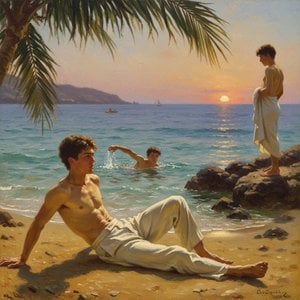
Henry Scott Tuke: Sunlit Masculinity & the Pastoral Ideal in Victorian Painting
Explore the captivating world of Henry Scott Tuke's paintings – a master of British Impressionism renowned for his intimate depictions of youth and sunlit maritime scenes. Discover his legacy & aesthetic influence.

Deconstructing Reality: Analytical Cubism's Formative Years & Lasting Influence
Explore the revolutionary world of Analytical Cubism with ArtsDot. Discover Picasso & Braque's groundbreaking techniques, its philosophical roots, and lasting impact on modern art. Expert insights for collectors.

Deconstructing Reality: Cubism's Revolutionary Impact on 20th-Century Art
Explore the revolutionary world of Cubism with ArtsDot. Discover Picasso & Braque's groundbreaking techniques, its philosophical roots, and lasting impact on modern art. Expert insights for collectors.

Henry Lamb: Reassessing Modern British Primitivism & the Poetics of Discomfort
Explore the compelling work of Henry Lamb, a key figure in British Primitivism. Discover his unsettling portraits, poignant war art & unique artistic vision. A deep dive into his life and legacy.

Henry Moore: Sculpting Modernity – Form, Emotion & the Human Condition
Explore the revolutionary sculptures of Henry Moore – abstract forms, reclining figures & powerful expressions of the human condition. Discover his legacy & artistic process with ArtsDot.


