


 Preverite v realnem okolju
 Pošlji kot čestitko
 Deli
Deli
 Podrobnosti
 Navodila

 Prenesi
 Podobni artefakti
 Rentgenski posnetek
 Predvajaj diaporama
 Statistika
Hibiscus syriacus


 Preberi več
Kupite digitalno sliko visoke ločljivosti z izboljšano kakovostjo, ki je precej višja od spletnega predogleda.
Vsako datoteko naše strokovnjake v ekipi z največjo mero natančnosti pripravijo z uporabo naprednih orodij in strokovne ročne obdelave. Zagotovimo, da je vsaka slika izjemno jasna, barvno natančna in polna finih podrobnosti.
Končna datoteka je po e-pošti dostavljena v 72 urah, optimizirana za takojšnjo uporabo v profesionalnem, uredniškem in tiskarskem okolju. To je kakovost, ki ji zaupajo vrhunska oblikovalna studia, založniki in galerije.
Digitalna slika
Prenesite datoteko visoke ločljivosti za osebno uporabo, tiskanje in kreativne projekte. ( Preklop na tiskanine Naročite ročno slikano reprodukcijo)
Vključeno v vsako naročilo digitalne slike
Zagotovljena strokovna digitalna dostava
Z izbiro ArtsDot.com ne prejmete le slike – prejmete profesionalno urejeno digitalno umetniško delo, izdelano z največjo natančnostjo in zavestno podprto z garancijo za zadovoljstvo. Tukaj je vse, kar bo z vašim naročilom samodejno priloženo:

Hitra dostava po e-pošti
Vaša digitalna slika visoke ločljivosti bo na vaš e-naslov poslana v roku 72 ur od zaklopa naročila – pripravljena za takojšnjo uporabo.

Digitalna datoteka z uporabo AI
Vaše umetniško delo je strokovno optimizirano z uporabo naprednih orodij umetne inteligence in ročne obdelave, kar zagotavlja največjo stopnjo podrobnosti, jasnosti in barvne natančnosti.

Brezplačna doletna ponovna dostava
Ste datoteko zaradi nespremietne napake izgubili ali izbrisali? Ni težav – vam jo bomo ponovno poslali kadar koli in brezplačno.

Brez uvoznih pristojbin – vedno
Svoje umetniško del uživajte takoj, brez carin, davkov ali stroškov dostave – digitalni prenosi so vedno brezdavčni.

Zagotovilo natančnosti barv
Z uporabo profesionalnih orodij in procesov upravljanja barv zagotavljamo, da vaša digitalna slika čim bolj natančno odraža prvotne barve.

100-dnevna garancija zadovoljstva
Če niste zadovoljni s svojo digitalno sliko, jo bomo uredili ali vam v 100 dneh povrnili 100% denarja – brez kakršnih koli vprašanj.

100% Garancija povračila denarja
Niste zadovoljni? Zagotavljamo vam popoln povračilo sredstev v 100 dneh po prejemu digitalne datoteke – brez dodatnih vprašanj.

Popusti pri večjih naročilih
Kupite 3 slike, prihranite 10% - Kupite 5 slik, prihranite 15% - Kupite 10+ slik, prihranite 20%. Odlično za kreativne projekte, galerije in agencije.
Sorodna umetniška dela


Biografija umetnika
Francis Bacon: A Life Etched in Darkness
Born on October 28, 1909, in Dublin, Ireland, Francis Bacon’s life and art were inextricably linked to a profound sense of unease and existential questioning. His early years were marked by instability – his parents separated when he was young, and he spent much of his childhood moving between various relatives. This fragmented upbringing profoundly shaped his artistic vision, fostering a deep-seated preoccupation with isolation, pain, and the fragility of human existence. Unlike many artists who sought to capture beauty or idealized forms, Bacon relentlessly pursued the grotesque, the unsettling, and the raw depiction of psychological torment. He famously stated that he “saw images in series,” suggesting an almost compulsive need to return to recurring motifs – distorted faces, screaming figures, and fragmented bodies – each iteration imbued with a unique layer of anguish.
Bacon’s formal artistic training was minimal; he received only brief instruction at Yale University and the Art Students League in New York. This lack of traditional academic grounding proved liberating, allowing him to develop his intensely personal and idiosyncratic style. He began his career as an interior decorator and bon vivant in London's Soho district, a vibrant hub of artists, writers, and intellectuals. This bohemian lifestyle fueled his artistic exploration, providing him with a network of friends – Lucian Freud, John Deakin, Henrietta Moraes, and others – who became recurring subjects in his work. These figures weren’t simply portraits; they were embodiments of the anxieties and passions that consumed Bacon.
The Evolution of a Style: From Bio-Morphs to Crucifixions
Bacon's artistic journey can be broadly divided into several distinct periods, each characterized by a specific thematic focus. His early work in the 1930s, often referred to as “bio-morphs,” featured distorted, almost embryonic figures – a direct influence of Picasso’s work—that seemed to emerge from a primal darkness. These figures were frequently enclosed within geometric structures, suggesting a sense of confinement and psychological distress. As World War II loomed, Bacon's art became increasingly preoccupied with violence and suffering, culminating in the harrowing *Three Studies for Figures at the Base of a Crucifixion* (1944), a triptych depicting three screaming figures emerging from a pool of blood.
The 1940s saw the emergence of his iconic “male heads” – isolated, staring faces trapped within claustrophobic rooms or enclosed by sharp angles. These images powerfully conveyed feelings of loneliness, paranoia, and impending doom. In the mid-to-late 1950s, Bacon shifted his attention to animals—particularly hens and pigs—and lone figures, often depicted in dramatic, almost theatrical poses. This period marked a move towards greater abstraction, with forms becoming increasingly fragmented and distorted. The 1960s brought a renewed focus on crucifixions, reflecting the artist’s growing interest in mortality and religious iconography. Finally, in his later years, Bacon returned to portraits of friends and companions, often rendered in somber, technical paintings that seemed to capture the passage of time and the inevitability of death – exemplified by *The Black Triptychs* (1982-1985).
Influences and Techniques
Bacon’s art was shaped by a diverse range of influences. He admired the work of artists such as Picasso, whose distorted figures provided a starting point for his own explorations of form and expression. He also drew inspiration from Surrealism, particularly the works of Max Ernst and Salvador Dalí, which explored the subconscious mind and the irrationality of human experience. Bacon’s technique was equally innovative. He employed a distinctive method of applying paint directly to the canvas with minimal preparation, often using rags, knives, and other tools to create textured surfaces and jagged edges. His use of color was deliberately jarring – harsh reds, yellows, and blacks dominated his palette, contributing to the overall sense of unease and drama in his paintings.
Legacy and Significance
Francis Bacon died on April 28, 1992, leaving behind a body of work that continues to challenge and disturb viewers. His art is often described as “nightmarish” or “grotesque,” but it also possesses a profound emotional resonance. Bacon’s unflinching depiction of human suffering—both physical and psychological—has cemented his place as one of the most important artists of the 20th century. He rejected traditional notions of beauty and representation, instead offering a brutally honest and deeply unsettling vision of the human condition. His influence on subsequent generations of artists is undeniable, and his work remains a powerful testament to the enduring power of art to confront us with our own mortality.
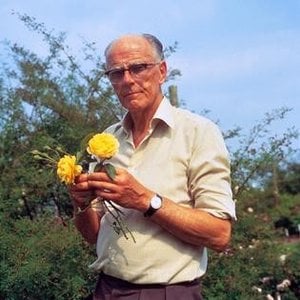
graham stuart thomas
1909 - 2003 , United Kingdom
Kratek pregled
- Artistic Movement Or Style: Figurative painting
- Artists Or Movements Influenced By This Artist: ['Existentialism']
- Artists Who Influenced This Artist:
- Picasso
- Furies
- Date Of Birth: October 28, 1909
- Date Of Death: April 28, 1992
- Full Name: Francis Bacon
- Nationality: British
- Notable Artworks:
- Three Studies for Figures at the Base of a Crucifixion
- Study for a Self-Portrait—Triptych
- Place Of Birth: Dublin, Ireland