
 Oil On Canvas
- WallArt
- High Renaissance
 1525
1525 163.0 x 337.0 cm
 Hermitage Museum

The picture follows your choices: , .
Opis zbirateljskega predmeta
Discover "The Lovers" by Giulio Romano (1525). A sensual Renaissance masterpiece depicting passion & intimacy. Explore this iconic artwork's history & beauty.
 Preberi več
Biografija umetnika
Giulio Romano (1499-1546), Raphaelov učenec in mojster manierizma! Odkrijte osupljive freske v Palazzo Te, inovativno arhitekturo ter trajni vpliv na renesančno umetnost. Pomemben predstavnik prehodnega sloga.
Ročno izdelana oljna reprodukcija
Ročno slikano olje na platnu v vaši izbiri velikosti in okvirja, izdelano po naročilu naših umetnikov. ( Preklop na tiskanine Preklop na digitalno sliko)
More about this painting
 Predogled v realnem okolju
 Pošlji
 Deli
Deli
 Podrobnosti o delu
 Priročnik

 Prenesi sliko
 Podobni izdelki
 Rentgenski posnetek
 Predvajaj diaporama
 Q&A
Q&A Statistika
Order your painting in four simple steps
Take your time. You can change any answer; the price in your order card follows each choice.
1 Step one of four
Which size would you like?
These sizes keep the proportions of the original painting. The drawing shows your choice on a wall, above a two-metre sofa.
Or give your own measurements
Izberite eno od naših vnaprej določenih velikosti, ki ustrezajo prvotnim proporcijam umetničkega dela.

Vnesite širino in višino, ki jih potrebujete, da se slika prilega vašemu okviru ali steni. Ker je delo ročno slikano, lahko umetnik pri različnih oblikih slik pri robovih doda malo več barve ali pa jih malo odreže — izberite sami. Pred začetkom slikanja vam pošljemo digitalni predogled za potrditev. Slika, prikazana na tej strani, ni končni rezultat — le predogled prikazuje dejansko podobo.
2 Step two of four
How should it be prepared: rolled, stretched or framed?
The prices below are for the size you chose in step one.
Choose the edges of the stretched canvas
Choose your frame

White €1

Blurside €1

Extended €1

P118B €10

P118H €10

P118W €10

P438Z €10

P508JH €12

P508YH €12

P805H €10

P805Z €10

P919BZ €10

P919G €10

P919XJ €10

P959ZH €10

P968JZ €12

W106C €8

W218G €10

W218JH €8

W218Y €10

W307PJ €10

W316G €10

W316PJ €8

W316Y €10

W398PJ €8

W4111J €10

W500HY €15

W500JH €15

W692G €12

W849H €8

W940BG €15

W953PJ €8

H24-GOLD €30

H24-SILVER €30

H36-GOLD €45

H36-SILVER €45
V okviru
Moulding: . Overall size with the frame: .
3 Step three of four
Would you like anything changed in the painting?
Most people answer no. Because each painting is made by hand, our artist can also adapt it for you.
After order, ArtsDot.com team will email client for instructions and provide a mockup preview
4 Step four of four
A few finishing options
All of them are optional. The answers already selected cost nothing extra.
Who paints it?
Mednarodna dostava () v 3/4 tednih namesto običajnih 5 tednov. (29 oktober). Brez kompromisov pri kakovosti.
A nameplate, as in a museum?
Podrobnosti o gravirani bronasti plošči
This elegant plaque features the artist's name and the title of the artwork, finely engraved for a timeless presentation.
It is made from bronze with a refined, elegant finish. The text is precisely laser-engraved for a sharp and permanent result. Measuring 9x2 cm, the plaque is compact yet easy to read. It's built to be durable and scratch-resistant, offering a professional, museum-quality look. Mounting is simple thanks to the included adhesive backing.
Podrobnosti o transparentni akrilni plošči
The plaque includes essential engraved details such as the artist's name, the title of the artwork, the date it was created, the type of media used-like oil on canvas or watercolor-a brief description of the piece, and a QR code that links to the complete artwork information.
It is crafted from clear acrylic, offering a sleek, modern appearance. The text is UV-engraved in black to ensure strong visual contrast. With a size of 10x15 cm, it ensures optimal readability. It comes equipped with two metal hooks for secure wall mounting. The plaque is designed to be weather-resistant, making it suitable for various environments, and it includes interactive features that work seamlessly with smartphone scanning.
Podrobnosti o črni akrilni plošči
This elegant plaque includes engraved information such as the artist's name, the title of the artwork, the date it was created, the type of media used (like oil on canvas or watercolor), a short description of the artwork, and a QR code for quick access to more information.
The plaque itself is made from refined black acrylic with a premium finish. The text is laser-engraved in white for high contrast and readability. Its size is 10x15 cm, designed to be easy to read. It comes with two metal hooks for professional mounting. The design is sleek and fits any interior style. It is also weather-resistant and durable, with built-in digital integration for mobile compatibility.
A protective varnish?
When do you need it?
✓ Check and order
Your painting, as you ordered it

The Lovers
Tehnik reprodukcije
Velikost reprodukcije
-

Izbor vrhunskih umetnikov
Več podrobnosti, dovršenosti in dodatnega časa za izdelavo
-

Okvir za reprodukcijo
-
-
Za umetniška dela ali reprodukcije, ki so po katerikoli strani širše od 105 cm (približno 41 palč), bo okvir poslan v razstavljeni obliki kot komplet. Ta metoda zagotavlja varno dostavo in preprečuje poškodbe med transportom.
Potrebna je profesionalna montaža – to ni izdelek za DIY izdelavo.
Komplet mora sestaviti in platno napeti izkušen profesionalni okvirjest, pri čemer bo uporabil lepil za les (ni vključeno), klešče za napetje platna in spone, da bi ohranil pravokotnost letev med sušenjem lepila. Nepravilna montaža ali neenakomerna napetost platna lahko trajno poškoduje umetniško del in
 Za umetniška dela ali reprodukcije, ki so po katerikoli strani širše od 105 cm (približno 41 palč), bo okvir poslan v razstavljeni obliki kot komplet. Ta metoda zagotavlja varno dostavo in preprečuje poškodbe med transportom.
Vključene so vse letve iz masivnega lesa, natančno izrezane po meri.
Montaža poteka s priloženimi vijaki, vendar je za kotiče potrebna lepil za les, ki ga ni v kompletu in ga mora zagotoviti vaš okvirnik.
Za uporabo so potrebna profesionalna orodja, ki niso vključena: klešče za napinjanje platna (napetnik) in sponke za ohranjanje pravokotnosti letev med sušenjem lepila.
Pomembno:
Za stike v kotih potrebujete lepil za les, nosilce je treba z

Značka z imenom
-
-

Zaščitni lak
Sijajni lak (poudarja barve ter zagotavlja zaščito pred svetlobo in vlago)
-

Prilagodi svoje umetniško delo
Primeri možnih prilagoditev: zamenjava obraza s fotografijo kupca; dodajanje hišnega ljubljenčka (npr. zamenjava mačke s psom); vključitev skritega sporočila v ozadje; sprememba krajšave ali elementov ozadja.
-

Hitra dostava
Mednarodna dostava () v 3/4 tednih namesto običajnih 5 tednov. (29 oktober). Brez kompromisov pri kakovosti.
-
Hitra dostava
Globalna dostava () v 5 tednih. (5 november).
Vključeno v ceno
Skupna cena
€ 232
Možnost stekla je na voljo le za velikosti pod 110 cm
Included with every order
- Brezplačna ekspresna dostava po vsem svetu
- Visokokakovostno laneno platno
- Popolno zavarovanje pošiljke
- Garancija povračila carine in uvoznih davkov
- Garancija popolnega barvnega ujemanja
- 100-dnevna politika vračil (le v primeru okvar)
- Garancija 100% povračila denarja
- Popust pri večjem naročilu


The Lovers – A Renaissance Embrace
Giulio Romano’s “The Lovers,” painted around 1525, isn't merely a depiction of intimacy; it’s a meticulously crafted tableau brimming with symbolism and echoing the complex currents of the High Renaissance. Born Giulio Pippi in Rome around 1499, Romano swiftly ascended through the ranks of Raphael’s studio, absorbing the master’s classical ideals while simultaneously forging his own distinctive Mannerist style – a style characterized by heightened emotion, distorted forms, and an exploration of psychological depth. This particular painting, now housed within the hallowed halls of the Hermitage Museum in St. Petersburg, offers a rare glimpse into Romano's artistic vision and his profound understanding of human desire and its attendant anxieties.
The scene unfolds within a lavishly appointed chamber, bathed in an opulent yet subtly shadowed light. At the heart of the composition lie two figures entwined in a passionate embrace – a couple lost in a moment of intense connection. However, Romano deliberately subverts traditional representations of love, imbuing the image with layers of ambiguity and intrigue. The figures themselves are rendered with a cool detachment, almost sculptural in their stillness, reflecting the influence of ancient Greek sculpture. Their skin possesses an unnerving pallor, hinting at a sense of timelessness and perhaps even a touch of melancholy – a departure from the vibrant flesh tones favored by earlier Renaissance masters.
A Dance of Symbolism
The painting’s power resides not just in its sensual depiction but also in the intricate web of symbols woven throughout. Observe, for instance, the carefully positioned slippers resting on the floor – a deliberate disruption of the scene's harmony. They represent a marital bond, yet their placement suggests an absence, a separation that underscores the precariousness of love and the potential for betrayal. The cat curled at the feet of the lady in waiting is a potent symbol of illicit desire, while the loyal dog beside her speaks to the constraints of societal expectations and the enduring nature of fidelity. The keys held by the woman signify children – a responsibility that further complicates the lovers’ situation.
Beyond these immediate details, Romano draws heavily from classical mythology. The arrangement of objects—the bed, the drapery, the architectural elements—echoes the forms found in Roman sarcophagi and tomb decorations. This deliberate allusion to antiquity elevates the scene beyond a simple portrayal of love; it transforms it into an allegory of eternal themes – desire, loss, and the passage of time. The archangel Raphael, positioned above the couple, serves as a silent witness, embodying divine judgment and perhaps hinting at the consequences of their actions.
Technique and Context
Executed in oil on panel, “The Lovers” showcases Romano’s mastery of illusionistic painting – a hallmark of Mannerism. He employs techniques such as *trompe-l'oeil* to create the impression of depth and realism, blurring the boundaries between painted surface and perceived reality. The meticulous detail evident in the rendering of fabrics, textures, and architectural elements speaks to Romano’s exceptional technical skill. It is believed that this painting was commissioned for Federico II Gonzaga, Duke of Mantua, a discerning patron who appreciated both beauty and intellectual complexity.
Interestingly, “The Lovers” emerged during a period of immense upheaval in Italy – the Sack of Rome in 1527 marked a turning point in the Renaissance, disrupting artistic patronage and scattering artists across Europe. Romano’s relocation to Mantua provided him with a new creative environment and allowed him to develop his unique style largely free from the constraints of papal influence. The painting stands as a testament to his resilience and adaptability, showcasing a profound shift away from the idealized beauty of the High Renaissance towards a more emotionally charged and psychologically nuanced aesthetic.
A Timeless Masterpiece
“The Lovers” is more than just a beautiful painting; it’s a complex meditation on love, desire, and the human condition. Its enduring appeal lies in its ability to evoke a wide range of emotions – from passionate longing to quiet melancholy. Reproductions of this iconic work offer an opportunity to bring this captivating scene into any space, inviting contemplation and sparking conversation about the timeless themes it explores. It remains a powerful reminder of Romano’s genius and his lasting contribution to the history of art.
Vprašanja in odgovori
Ali je pravno dovoljeno reproducirati delo "The Lovers" avtorja Giulio Romano, ki se nahaja v muzeju Hermitage Museum?
Status avtorske pravice za "The Lovers" avtorja Giulio Romano je jasen: del pripada v javni domeni – avtorska pravica je zastarela. Njegova prisotnost v muzeju Hermitage Museum ta status ne spreminja.
Kako si lahko ogledam predogled reprodukcije dela "The Lovers" avtorja Giulio Romano?
Stran Predogled dela za delo "The Lovers" vam omogoča ogled umetnin pred naročilom.
Od kod prihajajo obiskovalci dela "The Lovers" avtorja Giulio Romano?
Stran Statistika pregledov za delo "The Lovers" avtorja Giulio Romano prikazuje statistiko javnih obiskov: mesečne število ogledov tega dela, primerjavo z najbolj ogledanimi deli tega umetnika in izvor obiskovalcev.
Sorodna umetniška dela


Giulio Romano
1499 - 1546, Italija
Biografija umetnika
Rimski začetki in vajništvo pri mojstru
Giulio Romano, rojen Giulio Pippi okoli leta 1499 v Rimu, se je pojavil v obdobju izjemne umetniške fermentacije. Podrobnosti o njegovem zgodnjem življenju ostajajo nekoliko nejasne, vendar je znano, da je hitro zašel v krog Rafaela, nedvomno najbolj slavnega slikarja visokega renesansa. To vajništvo se je izkazalo za ključno, saj je oblikovalo ne le njegove tehnične spretnosti, ampak tudi postavilo temelje za njegovo prihodnje stilistične raziskave. Ni bil zgolj studijski pomočnik; Giulio je hitro postal nepogrešljiv sodelavec, prispeval k pomembnim projektom, kot je dekoracija vatikanskih sob – veličastnih prostorov, naročenih s strani papežev Julija II. in Leona X. Njegova roka je prepoznavna na monumentalni freski *Požar v Borgu*, kjer je Rafaelu pomagal upodobiti dramatičen prizor čudežnega posredovanja. Po Rafaelovi prezgodnji smrti leta 1520 je Giulio prevzel odgovornost za dokončanje številnih nedokončanih naročil, vključno z ambiciozno dekoracijo Ville Madama za kardinala Giuliana de' Medicija. Ta zgodnja izpostavljenost velikoprostorskim projektom in zahtevam aristokratskega mecenstva mu je vlila samozavest in ambicije, ki bodo definirale njegovo kasnejšo kariero.Rojstvo manirizma: Odstop od klasične harmonije
Čeprav globoko ukoreninjen v renesančni tradiciji, se je umetniška pot Giulia Romana kmalu oddaljila od prevladujočega poudarka klasičnega ravnovesja in harmonije. Postal je ključna figura v razvoju manirizma – sloga, za katerega so značilne umetenost, eleganca in pogosto nemirni izkrivljanja oblike. Globoko ga je vplival Michelangelov močan lik in dinamične kompozicije ter splošno umetnostno eksperimentiranje. Giulio se je začel sprejemati asimetrijo, napetost in čustveno intenzivnost v svojem delu. To ni bilo zavrnitev renesančnih idealov toliko kot namerna raziskava njihovih meja, ki presega omejitve naturalizma, da bi ustvaril dela, ki so bila bolj ekspresivna in intelektualno spodbudna. Vedno več je spreminjal Rafaelove načrte in v rimsko umetnost vlival novo občutljivost – izjavo manirizma v velikem merilu. Ta premik je jasno razviden v njegovih risbah, ki odlikujejo izjemna svoboda linije in naklon k dramatičnemu skrajševanju perspektive.Mojster Mantove: Palazzo Te in arhitektonska inovacija
Leta 1524 je Giulio sprejel povabilo Federica Gonzage, vojvode mantovskega, da postane dvorni slikar in arhitekt. To je zaznamovalo prelomnico v njegovi karieri, saj mu je zagotovilo brez primere ustvarjalno svobodo in vire. Postal je odgovoren za vse umetniške dejavnosti znotraj vojvodstva, nadzoroval ne le slike in freske, ampak tudi arhitektonske projekte, vrtove in celo gledališke predstave. Njegov najbolj znan dosežek v tem obdobju je nedvomno Palazzo Te, izjemna podeželska vila, ki je dokaz njegove inovativne genialnosti. Notranjost palače krasijo iluzionistične freske osupljive kompleksnosti in psihološke globine. *Sala dei Giganti* (Dvorana velikanov) na primer prikazuje kaotičen boj med bogovi in velikani, ki potopi gledalca v vrtinec figur in arhitektonskih fragmentov. Ta mojstrska manipulacija prostora in perspektive ustvari poglobljeno izkušnjo, ki je hkrati osupljiva in nemirna. Poleg Palazzo Te se je Giulio lotil tudi pomembnih prenov dvorske palače in katedrale v Mantovi ter pustil neizbrisen pečat na mestni pokrajini.Zapuščina in trajni vpliv
Giulio Romano je umrl v Mantovi leta 1546 in za seboj pustil zapuščino, ki se je razprostirala daleč onkraj meja Italije. Njegove risbe so bile zelo cenjene med zbiralci, gravure pa, ki temeljijo na njegovem delu – zlasti tiste Marcantonia Raimondija – so igrale ključno vlogo pri širjenju italijanskega umetniškega sloga po Evropi. Bil je tako znan po smrti, da ga William Shakespeare omenja kot edinega "sodobnega" umetnika v drami - dokaz njegove široke slave. Njegov vpliv je mogoče videti v delih številnih naslednjih umetnikov, ki so sprejeli njegove dinamične kompozicije, podolgovate figure in ekspresivno uporabo barv. Čeprav je manirizem sčasoma popustil drugim stilskim gibanjem, ostajajo prispevki Giulia Romana bistveni za razumevanje evolucije zahodne umetnosti. Predstavlja ključni trenutek – prehod od harmoničnih idealov visokega renesansa do bolj kompleksne in čustveno nabojene estetike poznih 16. stoletja. *Njegovo delo še danes očara in izziva gledalce, kar nas opominja na moč umetnosti, da ne samo odraža, ampak tudi oblikuje naše razumevanje sveta.*
Sorodni članki

Giovanni Fattori: Realism, Identity & the Tuscan Landscape – A Macchiaioli Master
Explore the life & art of Giovanni Fattori, a leading figure of the Macchiaioli movement. Discover his revolutionary realism, captivating Tuscan landscapes, and lasting impact on Italian painting. Learn more at ArtsDot.

Mario Sironi: A Poetic of Modern Italian Identity Through Symbolism & Social Commentary
Explore the profound works of Mario Sironi, a key figure in Italian Modernism. Discover his evolution from Futurism to Metaphysical painting and his powerful social commentary. Learn about his legacy at ArtsDot.
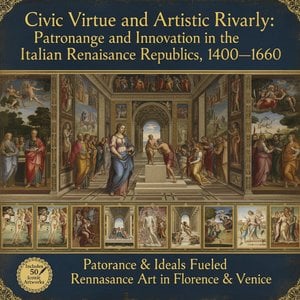
Civic Virtue and Artistic Rivalry: Patronage and Innovation in the Italian Renaissance Republics, 1400–1600
Explore the Italian Renaissance! Discover how competitive patronage & humanist ideals fueled artistic innovation in republics like Florence & Venice. Expert insights for art lovers and collectors.