

 Predogled v realnem okolju
 Pošlji
 Deli
Deli
 Podrobnosti o delu
 Priročnik

 Prenesi sliko
 Podobni izdelki
 Rentgenski posnetek
 Predvajaj diaporama
 Vprašanja in odgovori
 Statistika
Moritz

- 51.0 x 46.0 cm


 Preberi več
Umetniška dela, prikazana na tej strani, so zaščitena z avtorskimi pravicami, kar pomeni, da po zakonu ne moremo ustvarjati ali prodajati identičnih reprodukcij. Ta zaščita se izvaja v skladu z mednarodnimi sporazumi, kot so Bernska konvencija in po nacionalnih zakonih, vključno s tistimi, ki jih določa Zakon o avtorskih pravicah ZDA – naslov 17.
Ta način v celoti upošteva zakonodajo o avtorskih pravicah, saj ne vključuje kopiranja ali podvajanja zaščitenga umetniškega dela. Namesto tega gre za kreativno preinterpretacijo – novo sliko, ki je navdihnjen rezultat originala, vendar ni z njim identična.
Giclée tisk / Umetniški tisk
Giclée ali platnati odtis muzejske kakovosti z hitro proizvodnjo in prilagodljivimi možnostmi končne obdelave. ( Kupite ročno slikano delo Preklop na digitalno sliko)




P118B €10

P118H €10

P118W €10

P438Z €10

P508JH €12

P508YH €12

P805H €10

P805Z €10

P919BZ €10

P919G €10

P919XJ €10

P959ZH €10

P968JZ €12

W106C €8

W218G €10

W218JH €8

W218Y €10

W307PJ €10

W316G €10

W316PJ €8

W316Y €10

W398PJ €8

W4111J €10

W500HY €15

W500JH €15

W692G €12

W849H €8

W940BG €15

W953PJ €8




Izberite eno od naših vnaprej določenih velikosti, ki ustrezajo prvotnim proporcijam umetničkega dela.

Vnesite širino in višino, ki jih potrebujete za svoj okvir ali steno. Tiskanje se lahko le odreže, vendar ga ni mogoče narediti večjega od slike, zato format z drugačno obliko pomeni izgubo dela slike. Pred tiskanjem vam pošljemo digitalni predogled za potrditev. Slika, prikazana na tej strani, ne prikazuje dejanskega izrezka — le predogled to omogoča.
Globalna dostava () v 2 tednih namesto standardnih 4/5 tednov. (12 november)

Brezplačna ekspresna dostava po vsem svetu

Visokokakovostno laneno platno

Popolno zavarovanje pošiljke

Garancija povračila carine in uvoznih davkov

Garancija popolnega barvnega ujemanja

100-dnevna politika vračil (le v primeru okvar)

Garancija 100% povračila denarja

Popust pri večjem naročilu
 Možnost stekla je na voljo le za velikosti pod 110 cm

Moritz
Giclée tisk / Umetniški tisk
Velikost reprodukcije
-


Skupna cena
€ 56
The Enigmatic Figure: An Exploration of Gerhard Richter's "Moritz"
Gerhard Richter’s 2000 painting, “Moritz,” isn’t a portrait in the traditional sense. It’s an invitation to contemplate the elusive nature of memory and identity, rendered through Richter’s signature blend of photographic realism and abstract expressionism. The image depicts a young child, partially obscured by a deliberate haze of paint, seated within a high chair – a scene both familiar and profoundly unsettling. The blurred features, the soft focus, and the muted palette evoke a sense of detachment, as if we are observing a fleeting moment captured from a dream or a faded photograph. This isn’t an attempt to depict a specific child; rather, it's a distillation of childhood itself – its vulnerability, its inherent mystery, and its inevitable passage into the unknown.
Richter’s technique is central to the work’s power. He employs a layering process, building up thin washes of oil paint that are then repeatedly scraped, smudged, and reworked. This creates a surface texture that is both tactile and ethereal, mirroring the way memories can feel – simultaneously vivid and fragmented. The deliberate blurring isn't simply an aesthetic choice; it’s a key element in Richter’s exploration of representation itself. He questions the very act of seeing and recording, suggesting that any attempt to capture reality inevitably involves distortion and loss.
A Fragmented History: Contextualizing "Moritz" within Richter’s Oeuvre
Understanding Gerhard Richter requires acknowledging his deeply personal and historically-charged artistic journey. Born in Dresden in 1932, Richter's childhood was profoundly shaped by the upheavals of post-war Germany – displacement, political uncertainty, and the lingering trauma of Nazi persecution. His father, a schoolteacher, navigated the complexities of life under authoritarian rule, while his mother fostered a love for literature and music within their family. This duality—a pragmatic acceptance of circumstance alongside a yearning for cultural expression—became a recurring theme in Richter’s work.
The late 1990s and early 2000s, the period encompassing “Moritz,” marked a shift in Richter's artistic focus. He increasingly explored photographic sources – not as direct copies, but as starting points for his own abstract compositions. This approach is evident in "Moritz," which can be seen as a meditation on the process of translation—the transformation of a visual image into an entirely new work of art. The photograph itself, likely a source for this piece, becomes merely a catalyst, prompting Richter to engage with the underlying themes and emotions rather than replicating the original scene.
Symbolism and Emotional Resonance: Unpacking the Painting’s Layers
The high chair itself is a potent symbol. It represents childhood, nourishment, and the transition from dependence to independence. However, in “Moritz,” this familiar image is imbued with ambiguity. The child's face is obscured, suggesting a loss of innocence or a detachment from experience. The bottle present in the background further reinforces this sense of vulnerability – a symbol of sustenance that may not be enough to satisfy the child’s needs.
The overall mood of the painting is melancholic and contemplative. It doesn't offer easy answers or resolutions; instead, it invites viewers to confront their own memories and anxieties about the passage of time. Richter’s masterful use of color and texture creates a visual experience that is both beautiful and unsettling, prompting us to consider the fragility of human existence and the enduring power of the past.
A Reproduction for Your Space: Bringing "Moritz" Home
ArtsDot offers meticulously crafted hand-painted reproductions of Gerhard Richter’s “Moritz,” allowing you to bring this iconic work into your home or office. Our skilled artists replicate Richter's unique technique with exceptional precision, capturing the subtle nuances of color, texture, and blurring that define the painting. Available in a range of sizes, our reproductions are printed on archival-quality canvas using vibrant pigments, ensuring long-lasting beauty and authenticity.
Whether you’re an art enthusiast, a collector, or simply seeking to add a touch of intellectual depth to your décor, “Moritz” is a compelling choice. It's more than just a painting; it’s a meditation on memory, identity, and the complexities of human experience – a timeless masterpiece brought to life through ArtsDot’s dedication to artistic excellence.
Vprašanja in odgovori
Ali ima "Moritz" močne svetlo-temne kontraste?
"Moritz" avtorja Gerhard Richter prikazuje Gentle kontrast med svetlim in temnimi cončami.
Kakšen karakter v prostor prinaša "Moritz" avtorja Gerhard Richter?
"Moritz" avtorja Gerhard Richter ima Calm vzdušje in se priporoča za Living Room. Razpoloženje je tisto, kar delo vnese v okoliški prostor.
Kdaj in z kak 싶šnimi materiali je bila izdelana skladba "Moritz"?
"Moritz" je bila izdelana leta 2000 z uporabo tehnike Oil On Canvas.
Sorodna umetniška dela


Sorodni članki

The High Renaissance: A Flourishing of Artistic Innovation & Humanist Ideals
Explore the High Renaissance's artistic brilliance! Discover Da Vinci, Michelangelo & Raphael’s masterpieces, humanist ideals, and groundbreaking techniques. Learn about patronage & its lasting impact on art history.
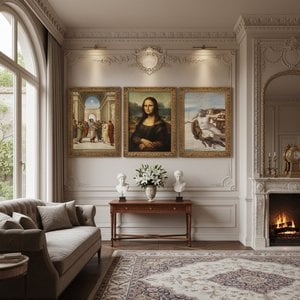
Visoko renesančno umetnost: 10 mojstrovin, ki so definirale obdobje
Odkrijte 10 mojstrovin visoke renesanse, ki so definirale umetnost! Leonardo da Vinci, Michelangelo, Rafael in drugi – spoznajte zgodbe za ikoničnimi deli. Najboljša zbirka reprodukcij slik na ArtsDot.com. Raziskujte polno kolekcijo online!

Gerhard Richter: A Retrospective on Abstraction, Memory & the Photographic Source
Explore the profound world of Gerhard Richter's abstract paintings. Discover his techniques, influences, and lasting impact on contemporary art – a guide for discerning collectors.

High Medieval Art: 10 Masterpieces That Shaped an Era | ArtsDot
Journey through High Medieval Art! Explore 10 iconic masterpieces – from Giotto's frescoes to stunning Gothic cathedrals. Discover the stories behind these timeless paintings, sculptures & illuminated manuscripts. Find museum-quality art reproductions at ArtsDot.com.


