


Slika sledi vašim izbiram: , .
Opis zbirateljskega predmeta
Raziskujte ‘Firenze’ od Gerharda Richtera, dinamično abstraktno ekspresionistično mestno razgled – uprizori urbanega življenja. Pogledate Richterjev edinstven mešanec fotorealisma in barv v tej očarljivi sliki iz leta 2000.
 Preberi več
Biografija umetnika
Gerhard Richter je vodilni nemški umetnik znan po abstraktnih slikah in fotografičnem realizmu ter inovativnih tehnikah, ki so oblikovali sodobno umetnost. Raziskoval je zgodovino, identiteto in pomen življenja v kompleksnem svetu.
Ročno izdelana oljna reprodukcija
Ročno slikano olje na platnu v vaši izbiri velikosti in okvirja, izdelano po naročilu naših umetnikov. ( Preklop na tiskanine Preklop na digitalno sliko)
To umetniško delo je zaščiteno z avtorskimi pravicami
Umetniška dela, prikazana na tej strani, so zaščitena z avtorskimi pravicami, kar pomeni, da po zakonu ne moremo ustvarjati ali prodajati identičnih reprodukcij. Ta zaščita se izvaja v skladu z mednarodnimi sporazumi, kot so Bernska konvencija in po nacionalnih zakonih, vključno s tistimi, ki jih določa Zakon o avtorskih pravicah ZDA – naslov 17.
Kot spoštljiva in zakonita alternativa ponujamo prilagojena, ročno slikana umetniška dela, navzornena na original. Naši sposobni in profesionalni umetniki skrbno preučijo stil, vzdušje in umetniško bistvo originala, da ustvarijo novo, edinstveno delo, ki vzbudi enak občutek – pri čemer ostaja popolnoma nova, samostojna izvirna stvar.
Ta način v celoti upošteva zakonodajo o avtorskih pravicah, saj ne vključuje kopiranja ali podvajanja zaščitenga umetniškega dela. Namesto tega gre za kreativno preinterpretacijo – novo sliko, ki je navdihnjen rezultat originala, vendar ni z njim identična.
Več o tej sliki
 Predogled v realnem okolju
 Pošlji
 Deli
Deli
 Podrobnosti o delu
 Priročnik

 Prenesi sliko
 Podobni izdelki
 Rentgenski posnetek
 Predvajaj diaporama
 Vprašanja in odgovori
 Statistika
Svojo sliko naročite v štirih preprostih korakih
Ne prepohitejte. Svoje odgovore lahko kadar koli spremenite; cena v vaši košarici se samodejno prilagodi vsaki izbiri.
1 Prvi od štirih korakov
Katero velikost želite?
Te velikosti ohranjajo proporcije izvirne slike. Risba prikazuje vašo izbiro na steni, nad dvometrino kavčem.
Ali pa vnesite svoje lastne mere
Izberite eno od naših vnaprej določenih velikosti, ki ustrezajo prvotnim proporcijam umetničkega dela.

Vnesite širino in višino, ki jih potrebujete, da se slika prilega vašemu okviru ali steni. Ker je delo ročno slikano, lahko umetnik pri različnih oblikih slik pri robovih doda malo več barve ali pa jih malo odreže — izberite sami. Pred začetkom slikanja vam pošljemo digitalni predogled za potrditev. Slika, prikazana na tej strani, ni končni rezultat — le predogled prikazuje dejansko podobo.
2 Drugi od štirih korakov
Kako naj bo pripravljeno: v roli, na platnu ali v okvirju?
Cene spodaj veljajo za velikost, ki ste jo izbrali v prvem koraku.
Izberite robove platna
Izberite svoj okvir

Beli rob €1

zamegljen rob €1

Razširjen rob €1

P118B €10

P118H €10

P118W €10

P438Z €10

P508JH €12

P508YH €12

P805H €10

P805Z €10

P919BZ €10

P919G €10

P919XJ €10

P959ZH €10

P968JZ €12

W106C €8

W218G €10

W218JH €8

W218Y €10

W307PJ €10

W316G €10

W316PJ €8

W316Y €10

W398PJ €8

W4111J €10

W500HY €15

W500JH €15

W692G €12

W849H €8

W940BG €15

W953PJ €8

H24-GOLD €30

H24-SILVER €30

H36-GOLD €45

H36-SILVER €45
V okviru
Okvirni rob: . Celotna velikost z okvirjem: .
3 Tretji od štirih korakov
Ali bi želeli v sliki spremeniti kaj?
Večina ljudi odgovori z ne. Ker je vsaka slika izdelana ročno, jo lahko naš umetnik prilagodi tudi vam.
Po oddaji naročila bo ekipa ArtsDot.com stranki po e-pošti poslala navodila in zagotovila predogled makete
4 Četrtti korak od štirih
Nekaj možnosti končne obdelave
Vse so neobvezljive. Za odgovore, ki so že izbrani, ni dodatnih stroškov.
Kdo je avtor?
Mednarodna dostava () v 3/4 tednih namesto običajnih 5 tednov. (8 november). Brez kompromisov pri kakovosti.
Zvešča, kot v muzeju?
Podrobnosti o gravirani bronasti plošči
This elegant plaque features the artist's name and the title of the artwork, finely engraved for a timeless presentation.
It is made from bronze with a refined, elegant finish. The text is precisely laser-engraved for a sharp and permanent result. Measuring 9x2 cm, the plaque is compact yet easy to read. It's built to be durable and scratch-resistant, offering a professional, museum-quality look. Mounting is simple thanks to the included adhesive backing.
Podrobnosti o transparentni akrilni plošči
The plaque includes essential engraved details such as the artist's name, the title of the artwork, the date it was created, the type of media used-like oil on canvas or watercolor-a brief description of the piece, and a QR code that links to the complete artwork information.
It is crafted from clear acrylic, offering a sleek, modern appearance. The text is UV-engraved in black to ensure strong visual contrast. With a size of 10x15 cm, it ensures optimal readability. It comes equipped with two metal hooks for secure wall mounting. The plaque is designed to be weather-resistant, making it suitable for various environments, and it includes interactive features that work seamlessly with smartphone scanning.
Podrobnosti o črni akrilni plošči
This elegant plaque includes engraved information such as the artist's name, the title of the artwork, the date it was created, the type of media used (like oil on canvas or watercolor), a short description of the artwork, and a QR code for quick access to more information.
The plaque itself is made from refined black acrylic with a premium finish. The text is laser-engraved in white for high contrast and readability. Its size is 10x15 cm, designed to be easy to read. It comes with two metal hooks for professional mounting. The design is sleek and fits any interior style. It is also weather-resistant and durable, with built-in digital integration for mobile compatibility.
Zaščitni lak?
Kdaj jo potrebujete?
✓ Preverite in naročite
Vaša slika, natako kot ste jo naročili

Firenze
Tehnik reprodukcije
Velikost reprodukcije
-

Izbor vrhunskih umetnikov
Več podrobnosti, dovršenosti in dodatnega časa za izdelavo
-

Okvir za reprodukcijo
-
-
Za umetniška dela ali reprodukcije, ki so po katerikoli strani širše od 105 cm (približno 41 palč), bo okvir poslan v razstavljeni obliki kot komplet. Ta metoda zagotavlja varno dostavo in preprečuje poškodbe med transportom.
Potrebna je profesionalna montaža – to ni izdelek za DIY izdelavo.
Komplet mora sestaviti in platno napeti izkušen profesionalni okvirjest, pri čemer bo uporabil lepil za les (ni vključeno), klešče za napetje platna in spone, da bi ohranil pravokotnost letev med sušenjem lepila. Nepravilna montaža ali neenakomerna napetost platna lahko trajno poškoduje umetniško del in
 Za umetniška dela ali reprodukcije, ki so po katerikoli strani širše od 105 cm (približno 41 palč), bo okvir poslan v razstavljeni obliki kot komplet. Ta metoda zagotavlja varno dostavo in preprečuje poškodbe med transportom.
Vključene so vse letve iz masivnega lesa, natančno izrezane po meri.
Montaža poteka s priloženimi vijaki, vendar je za kotiče potrebna lepil za les, ki ga ni v kompletu in ga mora zagotoviti vaš okvirnik.
Za uporabo so potrebna profesionalna orodja, ki niso vključena: klešče za napinjanje platna (napetnik) in sponke za ohranjanje pravokotnosti letev med sušenjem lepila.
Pomembno:
Za stike v kotih potrebujete lepil za les, nosilce je treba z

Značka z imenom
-
-

Zaščitni lak
Sijajni lak (poudarja barve ter zagotavlja zaščito pred svetlobo in vlago)
-

Prilagodi svoje umetniško delo
Primeri možnih prilagoditev: zamenjava obraza s fotografijo kupca; dodajanje hišnega ljubljenčka (npr. zamenjava mačke s psom); vključitev skritega sporočila v ozadje; sprememba krajšave ali elementov ozadja.
-

Hitra dostava
Mednarodna dostava () v 3/4 tednih namesto običajnih 5 tednov. (8 november). Brez kompromisov pri kakovosti.
-
Hitra dostava
Globalna dostava () v 5 tednih. (15 november).
Vključeno v ceno
Skupna cena
€ 235
Možnost stekla je na voljo le za velikosti pod 110 cm
Vključeno v vsako naročilo
- Brezplačna ekspresna dostava po vsem svetu
- Visokokakovostno laneno platno
- Popolno zavarovanje pošiljke
- Garancija povračila carine in uvoznih davkov
- Garancija popolnega barvnega ujemanja
- 100-dnevna politika vračil (le v primeru okvar)
- Garancija 100% povračila denarja
- Popust pri večjem naročilu


A City Seen Through a Shimmer: Exploring Gerhard Richter’s Firenze
Gerhard Richter's *Firenze*, created in 2000, is more than just a cityscape; it’s an evocative meditation on perception, memory, and the very nature of representation. As one of the most significant artists of our time, Richter masterfully blends photorealism with abstract expressionism, creating works that are both visually arresting and intellectually stimulating. *Firenze* exemplifies this signature style, offering a fragmented yet compelling vision of urban life.Deconstructing the Urban Landscape
The painting presents a blurred panorama of Florence, Italy – though the city’s iconic landmarks aren't rendered with precise detail. Instead, buildings and water surfaces dissolve into washes of color, suggesting a fleeting glimpse or a memory struggling to surface. The composition isn’t about topographical accuracy; it’s about capturing the *feeling* of being in a bustling urban environment. Hints of architectural forms are visible, alongside suggestions of movement – perhaps cars or pedestrians – but these elements remain indistinct, contributing to the painting's dreamlike quality.Technique and Artistic Process
Richter’s technique is central to understanding *Firenze*. He often begins with a photographic source image, which he then manipulates through various methods, including blurring, scraping, and layering paint. In this work, the application of oil paint appears thick and gestural, creating a textured surface that adds depth and dynamism. The intense reds and browns dominate the palette, punctuated by flashes of blue and pink, generating a sense of energy and even turbulence. This deliberate ambiguity challenges traditional notions of artistic skill, prioritizing emotional impact over precise representation.Historical Context & Richter’s Oeuvre
Born in Dresden, Germany, in 1932, Gerhard Richter experienced firsthand the trauma of World War II and the subsequent division of his country. This historical context profoundly influenced his artistic practice. His early work grappled with themes of memory, loss, and the challenges of representing reality after periods of ideological control. *Firenze* reflects a later stage in his career, where he increasingly explored abstraction while still referencing the visible world. It’s part of a series of cityscapes that demonstrate Richter's ongoing fascination with urban environments as sites of both beauty and alienation.Symbolism & Emotional Resonance
While not explicitly symbolic, *Firenze* evokes powerful emotions. The blurred imagery suggests the impermanence of experience and the subjective nature of perception. The fragmented composition can be interpreted as a metaphor for the complexities of modern life – its constant flux, its overwhelming stimuli, and its inherent uncertainties. The painting doesn’t offer easy answers; instead, it invites viewers to engage with their own memories and associations, creating a deeply personal connection to the artwork.Firenze in Your Collection
- For Art Lovers: *Firenze* is a compelling example of contemporary art that challenges conventional boundaries.
- For Collectors: Richter’s work consistently commands high prices at auction, making his paintings valuable and sought-after investments.
- For Interior Designers: The painting's rich color palette and dynamic composition make it a striking focal point for any modern or contemporary space. Its abstract nature allows it to complement a wide range of interior styles.
Vprašanja in odgovori
Kakšna je svetlobnost dela "Firenze" avtorja Gerhard Michalski?
"Firenze" avtorja Gerhard Michalski ima Mehak senčni del luminanco. Luminanca opisuje, koliko svetlobe se zdi, da barve odražajo.
Kateri umetniški slog pripada "Firenze"?
Umetnostni smer, ki jo zastopa "Firenze" avtorja Gerhard Michalski, je Contemporary Realism. Ta klasifikacija delo uvršča med sorodne umetnike in umetniška dela.
Kje bi morala biti razpostavljena reprodukcija dela "Firenze" avtorja Gerhard Michalski?
Format Kvadratna oblika dela "Firenze" avtorja Gerhard Michalski priporočamo za Dnevna soba. Format in prostor skupaj pomagata pri izbiri optimalne postavnitve reprodukcije.
Sorodna umetniška dela


Gerhard Michalski
1932 - , Nemčija
Biografija umetnika
A Life Shaped by Division: The Early Years and Artistic Formation of Gerhard Richter
Gerhard Richter’s story is inextricably linked to the fractured history of 20th-century Germany. Born in Dresden in 1932, his childhood unfolded under the shadow of a rising National Socialist regime. This formative period, marked by displacement – his family moved several times during the war years – instilled within him a profound sense of uncertainty and a questioning spirit that would permeate his artistic practice for decades to come. The idyllic landscapes of his early upbringing in Reichenau and Waltersdorf were soon disrupted by conflict, leaving an indelible mark on his psyche. His father, though not a fervent supporter of the Nazi party, navigated the complexities of life under authoritarian rule as a schoolteacher, while his mother fostered a love for literature and music within the family. This duality – a pragmatic acceptance of circumstance alongside a yearning for cultural expression – became a defining characteristic of Richter’s own artistic approach. He began formal training at the Dresden Academy of Fine Arts in 1951, initially immersed in the tradition of socialist realism demanded by the East German state. However, even within this constrained environment, a desire for artistic freedom simmered beneath the surface, fueled by a growing dissatisfaction with ideological constraints and a longing to explore more expansive creative possibilities.Escaping Constraints: Düsseldorf and the Exploration of Style
The year 1961 proved pivotal. Richter, along with his wife Marianne Eufinger, made the daring decision to flee East Germany, seeking refuge in the burgeoning art scene of Düsseldorf. This move marked a radical shift in his artistic trajectory. The West German landscape offered a liberating environment where experimentation and innovation were not only permitted but actively encouraged. In Düsseldorf, he encountered a vibrant community of artists grappling with questions of identity, representation, and the legacy of history. He quickly began to dismantle the rigid stylistic conventions of socialist realism, embarking on a period of intense exploration that would define his early mature work. This era saw him oscillate between seemingly disparate approaches – from photorealism, meticulously recreating photographic images with astonishing precision, to abstract compositions characterized by bold colors and dynamic brushstrokes. His collaboration with Sigmar Polke led to the coining of the term ‘Capitalist Realism,’ a deliberately ambiguous label that reflected their shared skepticism towards established artistic norms and their appropriation of imagery from advertising and mass media. This period wasn’t about finding *a* style, but rather questioning the very notion of stylistic coherence, embracing contradiction as a fundamental principle.Blurring Boundaries: Photorealism, Abstraction, and the Power of Chance
Richter's artistic vocabulary expanded throughout the 1960s and beyond, encompassing a remarkable range of techniques and themes. His photorealistic paintings, often based on family photographs or newspaper images, are not merely copies of reality but rather investigations into the nature of perception and representation. By meticulously rendering these images with an almost clinical detachment, he forces viewers to confront the inherent ambiguity of photographic truth. Simultaneously, Richter delved deeper into abstraction, creating canvases layered with vibrant colors and gestural marks. These abstract works are often created using a unique technique involving squeegees – tools typically used for cleaning windows – which he drags across the surface of the canvas, manipulating the paint in unpredictable ways. This embrace of chance and spontaneity is central to his artistic philosophy, allowing him to relinquish control and invite unexpected outcomes. His ‘Color Charts,’ systematic arrangements of colored squares, further challenge traditional notions of artistic expression, questioning the very definition of painting itself. These works are not about individual aesthetic preferences but rather about exploring the inherent properties of color and its organizational possibilities.Major Achievements and Artistic Influence
Richter’s contribution to contemporary art is undeniable. He has consistently resisted easy categorization, defying attempts to pigeonhole his work into a single stylistic framework. This refusal to be defined, coupled with his technical virtuosity and intellectual rigor, has earned him widespread critical acclaim and commercial success – his paintings regularly fetch record prices at auction. Beyond the market value, however, lies a deeper significance. Richter’s art speaks to the complexities of modern existence, grappling with issues of memory, identity, and the search for meaning in a fragmented world. He doesn't offer answers but rather poses questions, prompting viewers to confront their own preconceptions and engage in critical dialogue. His influence can be seen in the work of countless artists who have followed in his footsteps, drawn to his innovative techniques and his unwavering commitment to artistic exploration. Richter’s legacy is not simply about creating beautiful objects; it's about expanding the possibilities of painting itself. He remains a vital force in contemporary art, continuing to inspire and provoke audiences with his challenging and deeply resonant work.


Sorodni članki
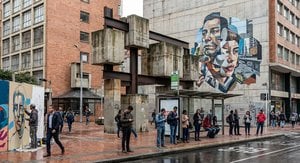
Concrete Narratives: Exploring Urban Life in Modern & Contemporary Art
Explore the evolution of cityscape painting with ArtsDot. Discover key artists from Realism to contemporary movements & invest in timeless urban visions. Expert guidance, museum-quality reproductions.

Absolutni Izrazi: 10 Mojstrin Del, Ki So Definirali Gibanje
Odkrijte 10 mojstrin del abstraktnega ekspresionizma! Pollock, Rothko & De Kooning - zgodbe za kulise ikoničnih umetnin. Inspirirajte se in poiščite reprodukcije na ArtsDot.com!

Gerhard Richter: A Retrospective on Abstraction, Memory & the Photographic Source
Explore the profound world of Gerhard Richter's abstract paintings. Discover his techniques, influences, and lasting impact on contemporary art – a guide for discerning collectors.