

 Predogled
 Pošlji
 Deli
Deli
 Podrobnosti o delu

 Prenesi
 Podobni izdelki
 Rentgenski posnetek
 Predvajaj diaporama
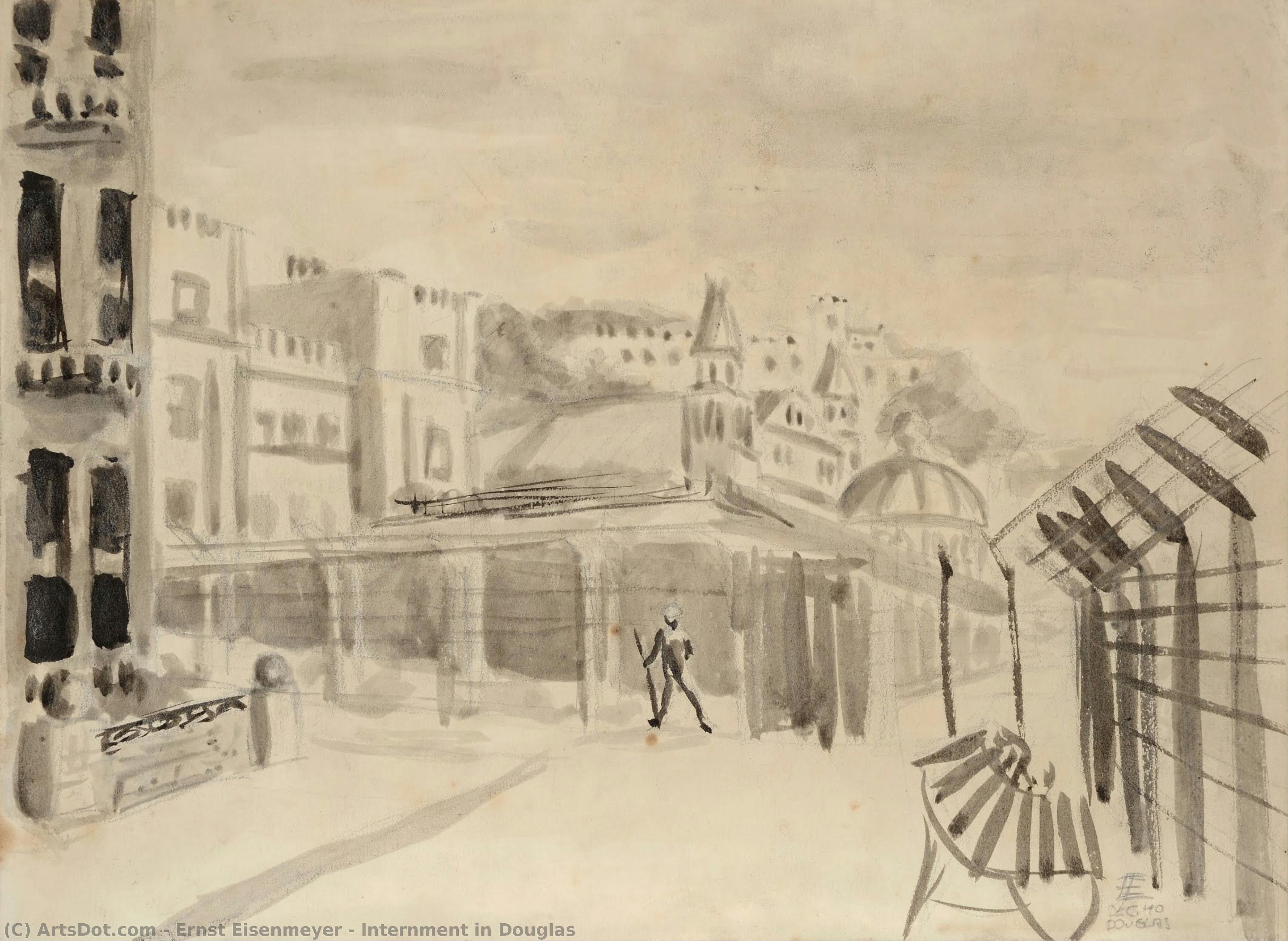
Internment in Douglas
 Drawing
- WallArt
 1940
1940- Modern
 30.0 x 22.0 cm
 Ben Uri Gallery and Museum
 Razviljaj več
Kupite digitalno sliko visoke ločljivosti z izboljšano kakovostjo, ki je precej boljša od spletnega predogleda.
Vsaka datoteka je pod natančnim nadzorom naših strokovnjakov, ki uporabljajo napredna orodja in strokovno ročno obdelavo. Zagotovimo, da ima vsaka slika izjemno jasnost, natančnost barv in fine podrobnosti.
Končna datoteka je po e-pošti dostavljena v 72 urah, optimizirana za takojšnjo uporabo v profesionalnem, uredniškem in tiskarskem okolju. To je kakovost, ki ji zaupajo vrhunska oblikovalna studia, založniki in galerije.
Digitalna slika
Prenesite datoteko visoke ločljivosti za osebno uporabo, tiskanje in kreativne projekte. ( Kupi tisk Kupi ročno naslikano sliko)
Vključeno v vsako naročilo digitalne slike
Zagotovljena strokovna digitalna dostava
Ko izberete ArtsDot.com, ne prejmete le slike – prejmete digitalno umetniško delo, ki je profesionalno urejeno, izdelano z natančnostostjo in zavestno zagotovljeno z garancijo za zadovoljstvo. Tukaj je vse, kar samodejno prejmete z vašim naročilom:

Hitra dostava prek e-pošte
Vaša digitalna slika visoke ločljivosti bo na vaš e-naslov poslana v roku 72 ur od zaklopa naročila – pripravljena za takojšnjo uporabo.

Digitalna datoteka z umetno inteligenco
Vaše umetniško delo je strokovno optimizirano z uporabo naprednih orodij umetne inteligence in ročne obdelave, kar zagotavlja največjo stopnjo podrobnosti, jasnosti in barvne natančnosti.

Brezplačna ponovna dostava za vse življenje
Ste zaradi nespremietne napake izgubili ali izbrisali svojo datoteko? Ni težav – vam jo bomo ponovno poslali kadar koli in brezplačno.

Brez uvoznih pristojbin – vedno
Uživajte v svojem umetniškem delu takoj, brez carin, davkov ali stroškov dostave – digitalni prenosi so vedno brezdavčni.

Zagotovilo natančnosti barv
Z uporabo profesionalnih orodij in upravljanja barv zagotavljamo, da vaša digitalna slika čim bolj natančno odraža prvotne barve.

60-dnevna garancija zadovoljstva
Če niste zadovoljni s svojo digitalno sliko, jo bomo uredili ali vam v 60 dneh povrnili 100% denarja – brez kakršnih koli vprašanj.

100% Garancija povračila denarja
Niste zadovoljni? Zagovрите popoln povračilo sredstev v 60 dneh po prejemu digitalne datoteke – brez kakršnih koli vprašanj.

Popusti pri večjem številu naročil
Kupite 3 slike, prihranite 10% - Kupite 5 slik, prihranite 15% - Kupite 10+ slik, prihranite 20%. Odlično za kreativne projekte, galerije in agencije.
Opis digitalnega artefakta
A Window into Displacement: The Poignant Reality of Internment in Douglas
In the delicate, monochromatic strokes of Internment in Douglas, we are invited to witness a moment frozen in the amber of history. Created in 1940 by the Austrian master Ernst Eisenmeyer, this evocative drawing serves as more than just a depiction of an urban street; it is a profound psychological landscape. The scene captures a bustling city thoroughfare, yet beneath the surface of daily activity lies a heavy layer of historical tension. As Eisenmeyer navigated the turbulent waters of displacement following the Anschluss, his work became a vessel for the anxieties of an era. Here, the rhythmic movement of figures—a man traversing the street with his belongings, the quiet presence of passersby—contrasts sharply with the underlying reality of confinement and the uncertainty of life during the Second World War.
The technique employed in this piece is a masterclass in tonal control and atmospheric depth. Utilizing the stark, honest medium of black and white, Eisenmeyer utilizes light and shadow to sculpt the architecture of the street. The fine lines that define the buildings and the hanging clock create a sense of structural permanence, which stands in poignant opposition to the transient nature of the human figures moving through the frame. Every element, from the parked bicycle to the scattered street furniture, is rendered with a precision that grounds the viewer in this specific time and place. For the collector, this drawing offers a sophisticated interplay of texture and contrast, making it an intellectually stimulating addition to any curated collection.
Beyond its technical prowess, Internment in Douglas resonates through its deep emotional symbolism. The street, while appearing functional, acts as a metaphor for the liminal space inhabited by those in internment—a world that is visible yet unreachable, a life continuing just out of grasp. The presence of personal items, like the suitcase carried by the central figure, speaks to the weight of baggage, both literal and emotional, carried by those fleeing persecution. This piece does not merely document a setting; it captures the very essence of resilience in the face of upheaval. It is an evocative work that invites contemplation on the fragility of peace and the enduring strength of the human spirit.
For interior designers and art enthusiasts alike, a high-quality reproduction of this work offers a unique opportunity to introduce a sense of historical gravity and contemplative elegance into a space. The monochromatic palette allows it to integrate seamlessly into modern, minimalist, or classical settings, providing a focal point that sparks conversation and invites deep reflection. Owning a piece of Eisenmeyer’s legacy is an act of preserving a vital chapter of twentieth-century history, bringing the profound empathy and haunting beauty of his vision into the contemporary home.
Sorodna umetniška dela


Biografija umetnika
The Crucible of Memory: The Life and Art of Ernst Eisenmeyer
To encounter the work of Ernst Eisenmeyer is to witness a profound dialogue between the fragility of human existence and the indomitable strength of the spirit. Born in Vienna in 1920 to a Jewish family of Austro-Hungarian descent, Eisenmeyer’s early years were shadowed by the rising tides of antisemitism that swept through Europe. The annexation of Austria in 1938 did more than just alter his nationality; it shattered his world, thrusting him into a harrowing odyssey of displacement and survival. His journey from the streets of Vienna to the grim confines of the Dachau concentration camp at the age of eighteen remains one of the most poignant chapters of his life. It was within this crucible of unimaginable suffering that Eisenmeyer first grasped the power of the pencil as a tool for bearing witness, producing seminal drawings that captured the dehumanizing reality of the camp with a raw, unflinching honesty.
The trajectory of his life, marked by both peril and resilience, eventually led him to England. After escaping the horrors of the concentration camp through the intervention of family in London, he found himself once again caught in the machinery of war as an "enemy alien" on the Isle of Man. Yet, even amidst the isolation of internment, his artistic impulse flourished. During this period, he turned his gaze toward his fellow detainees, creating a series of intimate portraits that served as a testament to human connection in the face of adversity. These works from the Isle of Man are not merely records of a time; they are soulful explorations of identity and endurance, reflecting a deep empathy for the displaced and the forgotten.
A Synthesis of Tradition and Trauma
Eisenmeyer’s artistic evolution was shaped by a unique confluence of European traditions and personal upheaval. His formal training at the Slade School of Fine Art and later at the Camberwell School of Arts introduced him to the rich textures of British Impressionism and Expressionism. He found a kindred spirit in the unsettling, emotive anatomical explorations of Egon Schiele, whose influence can be seen in Eisenmeyer’s ability to render the human form with both meticulous precision and a palpable sense of vulnerability. This stylistic duality—the marriage of technical mastery with emotional depth—became the hallmark of his oeuvre.
As his career progressed, Eisenmeyer expanded his creative vocabulary far beyond the two-dimensional plane. While he established himself as a significant painter in London during the late 1940s, the mid-1960s saw his emergence as an international sculptor. His sculptural works, crafted from materials such as bronze, stone, and wrought steel, offered a more tactile dimension to his explorations of space and memory. Whether through the delicate line of a drawing or the heavy presence of a metal sculpture, his work consistently grappled with themes of place, encounter, and the indelible marks left by history upon the individual soul.
Legacy of an Émigré Visionary
The significance of Ernst Eisenmeyer lies in his ability to transform personal trauma into universal art. His life was a testament to the complex, multi-sited trajectories of the twentieth-century émigré, and his work serves as a bridge between the shattered landscapes of pre-war Europe and the reconstructed world that followed. Throughout his long career, which saw exhibitions spanning from London and Vienna to Osaka and New York, he remained a steadfast chronicler of the human condition.
His achievements were recognized not only by the art community but also by his homeland; receiving the Medal of Honour from the City of Vienna stands as a profound tribute to an artist who, despite being driven from his birthplace by hatred, returned through his art to honor its history. Today, Eisenmeyer’s legacy endures through:
- The Dachau Drawings: Essential historical documents that provide a visceral, firsthand account of the Holocaust through the eyes of a survivor.
- The Isle of Man Portraits: A compassionate collection of works that celebrate the resilience of the human spirit during wartime internment.
- Sculptural Innovation: His transition into large-scale sculpture, which contributed to the international dialogue of post-war modernism.
- A Universal Language: An artistic style that transcends national boundaries, speaking to the shared experiences of loss, exile, and rebirth.

ernst eisenmeyer
1920 - 2018 , Austria
Ključne informacije
- Artistic Movement Or Style: Vienna School
- Artists Or Movements Influenced By This Artist: ['Pablo Picasso']
- Artists Who Influenced This Artist: ['Egon Schiele']
- Date Of Birth: September 18, 1920
- Date Of Death: 2018
- Full Name: Ernst Eisenmeyer
- Nationality: Austrian
- Notable Artworks:
- Reclining Girl on Pillow
- Internment in Douglas
- Place Of Birth: Vienna, Austria

