


 Predogled
 Pošlji
 Deli
Deli
 Podrobnosti o delu

 Prenesi
 Podobni izdelki
 Rentgenski posnetek
 Predvajaj diaporama
 Statistika
untitled (2235)

 Razviljaj več
Ročno izdelana oljna reprodukcija
Ročno slikano olje na platnu v vaši izbiri velikosti in okvirja, izdelano po naročilu naših umetnikov. ( Preklop na tiskanine Preklop na digitalno sliko)




P118B $10

P118H $10

P118W $10

P438Z $10

P508JH $12

P508YH $12

P805H $10

P805Z $10

P919BZ $10

P919G $10

P919XJ $10

P959ZH $10

P968JZ $12

W106C $8

W218G $10

W218JH $8

W218Y $10

W307PJ $10

W316G $10

W316PJ $8

W316Y $10

W398PJ $8

W4111J $10

W500HY $15

W500JH $15

W692G $12

W849H $8

W940BG $15

W953PJ $8




Izberite eno od naših vnaprej določenih velikosti, ki ustrezajo prvotnim proporcijam umetničkega dela.

Svoje dimenzije lahko vnesete tako, da se prilagodite določenemu okvirju ali prostoru. Če izbrana velikost ne ustreza razmerjem originalne slike, bomo umetniško delo obrezali ali sliko dopolnili z dodatnimi ročno naslikanimi elementi. Pred začetkom proizvodnje vam bo poslan digitalni osnutek v odobritev.
Upoštevajte, da predogled na zaslonu ne odraža dejanskega obrezovanja ali podaljšanja. Le osnutek bo natančno prikazal končno kompozicijo.
Čeprav so na voljo velikosti po meri, priporočamo izbiro dimenzije s preddefiniranega seznama, da ohranimo originalne razmere.
Po oddaji naročila bo ekipa ArtsDot.com stranki po e-pošti poslala navodila in predogled digitalnega predogleda.
Svetska dostava () za 3/4 nedelje umesto uobičajenih 5 nedelja. (9 september). Bez kompromisa po pitanju kvaliteta.

Brezplačna ekspresna dostava po vsem svetu

Visokokakovostno laneno platno

Popolno zavarovanje pošiljke

Garancija povračila carine in uvoznih davkov

Garancija popolnega ujemanja barv

Politika vračilo v 100 dneh (le v primeru okvar)

Garancija 100% povračila denarja

Popust pri večjem naročilu
 Možnost stekla je na voljo le za velikosti pod 110 cm

untitled (2235)
Tehnika reprodukcije
Velikost reprodukcije
-


Skupna končna cena
$ 263
Egon Schiele’s “Untitled (2235)” – A Descent into Psychological Intensity
Egon Schiele's "Untitled (2235)," painted in 1918, stands as a haunting testament to the artist’s profound exploration of human vulnerability and the anxieties simmering beneath the surface of early 20th-century Europe. Created during a period marked by war and societal upheaval, this intensely personal work transcends mere representation, plunging the viewer into a realm of psychological turmoil and raw emotion. It's not simply a depiction of a nude figure; it’s an embodiment of existential questioning rendered in charcoal and graphite with unsettling precision.
The painting immediately commands attention through its stark simplicity and deliberate lack of conventional perspective. A reclining male form dominates the composition, his limbs elongated and twisted into a posture that suggests both surrender and resistance. The background is reduced to a minimal plane, amplifying the figure’s isolation and intensifying the focus on his internal state. This flattening effect, coupled with the almost claustrophobic arrangement, creates a sense of unease—a feeling of being trapped within the subject's experience.
A Symphony of Gray: Color, Line, and Texture
Schiele’s masterful use of color is perhaps the most striking element of this work. The palette is relentlessly monochromatic, dominated by shades of gray, black, white, and muted browns. This deliberate restriction isn't a sign of artistic limitation; rather, it serves to heighten the emotional impact, stripping away any distractions and forcing the viewer to confront the raw essence of the subject’s distress. The lines are equally crucial – harsh, angular, and deliberately broken, they mirror the figure’s fragmented state of mind. Hatching and cross-hatching techniques are employed with meticulous detail, building up tonal variations that suggest volume and texture without resorting to traditional modeling.
The surface itself appears almost tactile, created through the deliberate application of charcoal or graphite. The visible strokes and energetic marks convey a sense of immediacy and spontaneity—as if Schiele were wrestling with his subject in real-time. This directness is characteristic of Expressionism, where the artist’s emotional state is prioritized over objective representation.
Symbolic Weight: Mortality, Vulnerability, and the Male Psyche
Beyond its formal qualities, “Untitled (2235)” resonates with potent symbolism. The nude figure itself represents vulnerability—a stripping away of defenses to reveal a core of exposed emotion. The contorted pose can be interpreted as a struggle against an unseen force, perhaps reflecting the anxieties surrounding war and societal change. Schiele’s recurring fascination with mortality is evident here, not in a morbid way, but as a fundamental aspect of human existence. The painting speaks to the fragility of life and the inevitability of death—themes that were particularly relevant during the turbulent years leading up to World War I.
Considering Schiele’s own life – his early loss of his father, his sister's illness, and his own struggles with mental health – it is clear that this work is deeply autobiographical. The painting can be viewed as a projection of his inner turmoil onto the canvas, offering a glimpse into the artist’s psyche during a period of profound personal crisis.
A Legacy of Intensity: Schiele's Enduring Influence
Egon Schiele was a pivotal figure in the development of Expressionism, and “Untitled (2235)” exemplifies his unique approach to art. His willingness to confront difficult subjects—sexuality, mortality, and psychological distress—challenged conventional artistic norms and paved the way for future generations of artists. Reproductions of this powerful work continue to captivate viewers with their raw emotional intensity and unsettling beauty. It remains a poignant reminder of the complexities of the human condition and the enduring power of art to explore the darkest corners of our inner lives.
Sorodna umetniška dela


Biografija umetnika
Egon Schiele: Austrian Expressionist Painter
Austrian art has since acquired legendary status in interdisciplinary cultural studies. Histories of modern Austrian art generally begin with the architectural boom that swept Vienna in the second half of the nineteenth century. During this period of strong economic growth, the Emperor Franz Josef constructed a necklace of public edifices along the broad Ringstrasse that encircles Vienna’s inner city, prompting artists to flock to the capital from all over to compete for decorative mural commissions. The most renowned painter of the era was Hans Makart, but the young Gustav Klimt also earned his reputation executing commissions on the interior walls of structures such as theaters and museums. The favored style combined a sort of blowsy eroticism with a firm grip on classical and historical allegory. Starting from his masterpiece *The Kiss*, Klimt gradually moved away from the accepted formula, however, evolving a personal symbolism that was less conventionally readable as well as more overtly sexual. This combination proved devastating so far as the tasted of staid Vienna were concerned: Klimt was banished from the ranks of public muralists, and henceforth had to seek support solely from well-heeled private patrons.
Early Life & Influences
Egon Schiele was born in Tulln an der Donau – a picturesque region with vineyards, onion-domed towers and Baroque monasteries. Yet this idyllic setting is hardly reflected in his work.
Instead, many of his landscapes appear melancholic, sometimes sombre. Perhaps he was processing the early death of his father from syphilis and the subsequent loss of his sister Elvira.
Raised initially by his mother and then under the somewhat controlling guardianship of his uncle Leopold Czihaczek, Schiele’s childhood lacked conventional stability but fostered a fiercely independent spirit. Even as a boy, he displayed an intense fascination with trains—a motif that subtly reappeared in later paintings—and a burgeoning talent for drawing, though this was initially met with disapproval from his father who saw it as a distraction from more practical pursuits. The early death of his sister Elvira also cast a long shadow over the young artist’s psyche. These formative experiences instilled within him a sensitivity and an emotional rawness that would become hallmarks of his artistic expression, a constant grappling with themes of life, death, and the human condition.
Vienna Secession & Artistic Breakthrough
Schiele's formal artistic training began at the Kunstgewerbeschule (School of Arts and Crafts) in Vienna, but he quickly found itself stifled by its conservative approach. He transferred to the Akademie der bildenden Künste (Academy of Fine Arts), only to become further disillusioned with its rigid academic traditions. This dissatisfaction led him to abandon formal training altogether, choosing instead to forge his own path, a testament to his unwavering artistic conviction.
The influence of Gustav Klimt was pivotal during these early years; Schiele admired Klimt’s decorative style and exploration of symbolism, even receiving mentorship from the established artist.
He co-founded the Neues Wiener Kunstgruppe (New Viennese Art Group) in 1909, aligning himself with other progressive artists who challenged the prevailing artistic norms. His distinctive style features elongated figures, contorted poses, and expressive lines that convey a sense of unease and emotional intensity.
Style Characteristics & Recurring Themes
Schiele’s art is immediately recognizable for its raw honesty and psychological depth.
He fearlessly confronted themes often considered taboo – sexuality, death, anxiety, isolation – with an unflinching gaze.
His distinctive style features elongated figures, contorted poses, and expressive lines that convey a sense of unease and emotional intensity. The human form, particularly the nude, became his primary subject, not as an object of idealized beauty but as a vessel for exploring the complexities of human experience.
Schiele didn’t shy away from depicting himself in unflattering or vulnerable poses, revealing a profound level of self-awareness and introspection.
Legacy & Recognition
Despite facing censorship and legal challenges – including a brief imprisonment for allegedly corrupting minors with his art – Schiele gained recognition within Vienna’s avant-garde circles.
His work challenged the conventions of the time, provoking both admiration and outrage.
By the time of his untimely death during the Spanish flu pandemic in 1918 at the age of twenty-eight, he had established himself as a leading figure in Austrian Expressionism. Significant works such as *Self-Portrait with Physalis*, *Couple Embracing*, and *Field Landscape (Kreuzberg near Krumau)* stand as testaments to his artistic genius.
His influence on subsequent generations of artists is undeniable, particularly those interested in exploring psychological themes and challenging conventional artistic norms.

Egon Ščile
1890 - 1918 , Avstrija
Hitri podatki
- Artistic Movement Or Style: Expresionismo
- Artists Who Influenced This Artist: ['Gustav Klimt']
- Date Of Birth: 12 giugno 1890
- Date Of Death: 31 octubre 1918
- Full Name: Egon Schiele
- Nationality: Austriaco
- Notable Artworks:
- Autoritratto con Physalis
- Giovane coppia
- Paesaggio campo (Kreuzberg)
- Place Of Birth: Tulln an der Donau, Austria
Sorodni članki

Expressionist Painting: 10 Masterpieces That Defined a Movement | ArtsDot
Explore 10 Expressionist paintings that revolutionized art! Discover Munch, Kirchner & Kandinsky's iconic works. Find museum-quality reproductions and vibrant canvas prints to elevate your home decor on ArtsDot.com.

Egon Schiele: Expressionism, Anxiety & the Modern Condition – A Comprehensive Exploration
Explore the emotionally charged world of Egon Schiele (1890-1918). Discover his Expressionist masterpieces, psychological themes, and lasting impact on modern art. A comprehensive guide for collectors & enthusiasts.
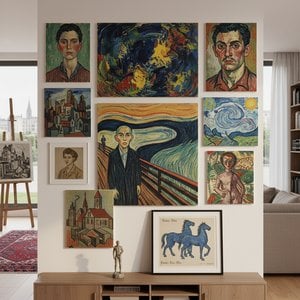
Izrazi čustev: 10 mojstrovin ekspresionizma za vaš dom
Odkrijte 10 mojstrovin ekspresionizma, ki so zaznamovale umetnost! Edvard Munch, Nolde & Kirchner – spoznajte zgodbe in čustva za vsakim delom. Najboljša zbirka reprodukcij na ArtsDot.com!
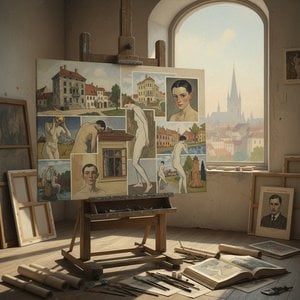
Egon Schiele: 25 Mojstrovin Ekspresionizma za Vaš Dom | ArtsDot
Odkrijte 25 mojstrovin Egona Schieleja – avstrijskega ekspresionista! Preberite zgodbe za vsako sliko, tehnike in simbolizem. Kvalitetne reprodukcije slik za vaš dom na ArtsDot.com. Raziskajte celotno zbirko online!

The Enduring Allure of the Nude: A Historical & Artistic Exploration of the Human Form
Explore the captivating history of nude art! Discover iconic paintings & artists from classical to modern eras. Uncover symbolism, techniques & find museum-quality reproductions at ArtsDot.


